
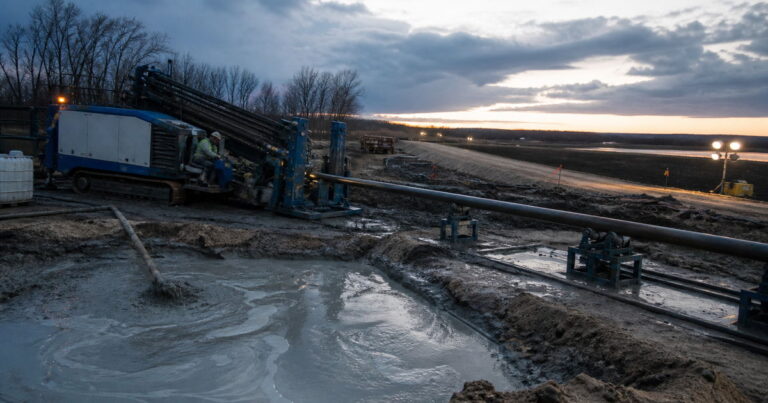
Most common mistakes in horizontal directional drilling are made before the rig reaches site and only surface at pullback, when the options are expensive. They cluster in seven places, from the geotechnical investigation to the pullback.
The twelve mistakes below are grouped by stage – planning and bid, bore plan and fluid, reaming and pullback, and close-out – each given as symptom, cause, cost and fix.
Why do common mistakes in horizontal directional drilling compound across a crossing?
HDD is a chain of dependent operations, so an error in one link is carried by every later one: a shallow geotechnical hole understates the rock and the fluid system then produces an inadvertent return. The pilot hole remains the least predictable phase of any trenchless new-installation method, according to US DOT decision-support work.
The three permanent mistakes below are the cheapest to fix and the most expensive to inherit. In our bid reviews, most HDD crossing failures show two or three HDD mistakes at once.
Table 1 condenses the twelve mistakes into mistake, symptom, cost and fix.
| Mistake | Symptom seen on site | Typical consequence | Fix |
|---|---|---|---|
| Under-funded geotechnical investigation | Pilot hole stops in ground the logs miss | Field redesign, extra reaming, standby days | Fund and log boreholes along the alignment |
| Incomplete utility survey | Unmarked duct struck near the entry pit | Third-party damage, outage, regulatory exposure | Survey and pothole every corridor crossing |
| Loose bid scope | Dispute over rock and inadvertent returns | Claims, standby hours, defensive relationship | Define rock allowance and response in the bid |
| Rig sized on average conditions | Pull stalls on the governing case | Stuck product, overstress, re-mobilisation | Size against the governing case, 1.5-2.0 margin |
| Frac-out analysis as paperwork | Annular pressure never plotted against a limit | Inadvertent return with no agreed response | Model and monitor allowable pressure |
| Fluid mixed by habit | Scattered Marsh funnel readings, no daily record | Cuttings beds, poor returns, stuck tooling | Test weight, viscosity and pH to API RP 13B-1 |
| Outrunning the mud | Returns thin out; pumps cannot keep pace | Ground heave, inadvertent return, stretched product | Cap the rate at the fluid volume per rod |
| Too few or too-large reaming steps | Torque and pull spike; reamer jams | Overstress, frac-out risk, lost tooling | Progressive passes at about 1.2-1.5 x product OD |
| Ignoring cuttings beds | Light cuttings load; drag rises at low points | Stuck pipe, excessive product stress | Sweep low points and verify return volume |
| Pullback speed set by the calendar | Speed pushed above the normal pull band | Coating damage, overstress, ovalisation | Set speed from pipe stress, not the schedule |
| No coating or roller strategy | Scraped coating at entry; high friction | Corrosion risk, re-work, re-inspection | Specify and verify rollers and coating protection |
| No as-built or bore log | No record of the actual path or volumes | Unresolvable disputes, blind future crossings | Record path, volumes and events during the bore |
What goes wrong when the geotechnical investigation is scoped to a budget?
Planning mistakes are the common mistakes in horizontal directional drilling that are cheapest to prevent. On crossings we have supported, they sit behind a large share of HDD crossing failures.
Mistake 1: Under-funding the geotechnical investigation
Symptom: the pilot hole stops in ground the logs never described, such as boulders, karst or artesian flow. Cause: the investigation is treated as a fixed line item rather than a design input, so boreholes are spaced for cost rather than geology. Cost: the reaming and fluid programmes are built for the wrong formation, so correction means redesign and standby. Fix: fund and log boreholes along the actual alignment before the bore plan is fixed; ASCE and NASTT guidance treat this as a first design activity.
Mistake 2: Running with an incomplete utility survey
Symptom: an unmarked duct, water line or fibre bundle is struck near the entry or exit pit, where cover is thinnest. Cause: the survey stops at the main line and skips the service connections and abandoned assets crossing the corridor. Cost: third-party damage, customer outages, regulatory exposure and a stop-work that outlasts the repair. Fix: survey and pothole the full corridor, and confirm the depth and material of every crossing utility before drilling.
Why does a loose bid scope on an HDD crossing turn into claims?
Bid-stage mistakes are contractual, and the common mistakes in horizontal directional drilling surface here as commercial fights. A tight scope and a rig sized against the governing case are standard horizontal directional drilling best practices.
Mistake 3: A scope written loosely enough to be misread
Symptom: after mobilisation, owner and contractor disagree about who pays for rock, disposal, water supply or inadvertent-return response. Cause: the scope was an outline rather than a definition, leaving the highest-risk items to be assumed by each side. Cost: claims, standby hours and a defensive relationship that slows every later decision. Fix: define the rock allowance, disposal responsibility, water source and inadvertent-return obligations before award.
Mistake 4: Sizing the rig on average conditions instead of the governing case
Symptom: the rig pulls through most of the bore and stalls on the longest or deepest section. Cause: the rig was matched to typical ground rather than to the worst combination of length, diameter, friction and buoyancy. Cost: a stuck product, an overstressed pipe and, at worst, re-mobilisation with a larger unit. Fix: size pull and torque against the governing case with the normal 1.5-2.0 margin on rig capacity.
Why does a frac-out analysis filed as paperwork fail on site?
Where does risk become geometry? The bore plan, and with it one of the common mistakes in horizontal directional drilling, can still look complete on paper.
Mistake 5: Treating the frac-out analysis as a document, not a calculation
Symptom: the plan has an inadvertent-return section, yet no allowable pressure curve is plotted in the field and no one knows the trigger to stop. Cause: pressure modelling was treated as a submission requirement rather than a control, even though an inadvertent-return plan is often a permit condition. Cost: an inadvertent return arrives with no containment, no agreed response and no defensible record. Fix: estimate the allowable annular pressure along the path, commonly taken at roughly 0.7-1.0 psi per foot of overburden depth with the cavity-expansion model as the usual basis, and plot real-time pressure from a pressure sub against that curve.
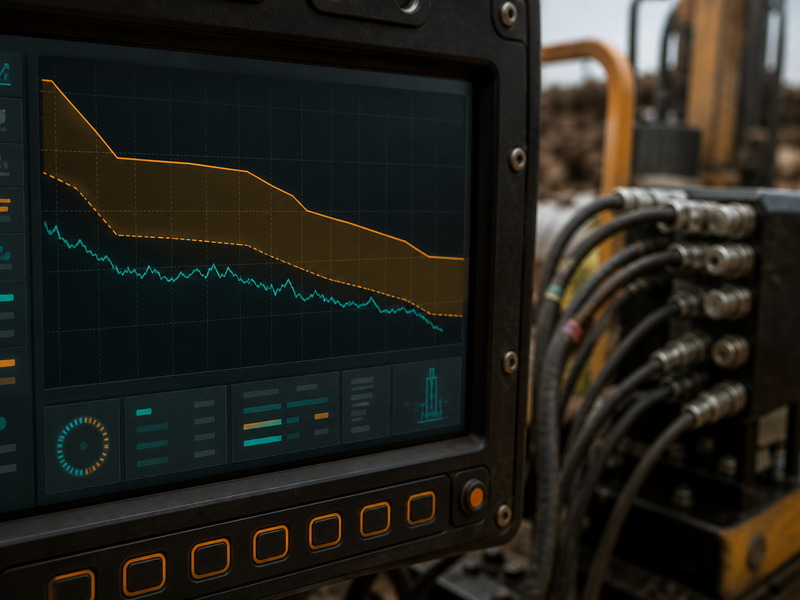
Fluid Mistakes: Mixing by Habit and Outrunning the Mud
Why does fluid fail quietly on a crossing? Drilling fluid holds the hole open, removes cuttings and lowers torque and pullback loads, and it is where many common mistakes in horizontal directional drilling first become visible when treated as a routine chore.
Mistake 6: Mixing the fluid by habit instead of by measurement
Symptom: Marsh funnel readings jump around, no daily record exists and the pit is topped up with whatever is nearest. Cause: the mud programme lives in the crew’s memory instead of on a sheet, so there is no measured target. Cost: fluid that is too thin deposits cuttings into a bed and stretches the product; fluid that is too thick raises downhole pressure and can itself cause an inadvertent return. Fix: hold unit weight between about 9 and 10 lb/gal against fresh water at 8.34 lb/gal, keep Marsh funnel viscosity in the 30-60 second band, and record weight, viscosity, pH and sand content against API RP 13B-1.
Mistake 7: Outrunning the mud
Symptom: the advance rate climbs, the pumps cannot keep pace and returns thin out at the exit pit. Cause: the rate was set by instinct rather than by the fluid volume the bore consumes; in the maker’s published worked example, a 300 ft bore in sandy clay, 4 in pipe, 6 in reamer and a 25 gpm pump, the factor is 1.47 gal/ft with a soil factor of 3, giving about 44 gal per 10 ft rod. Cost: the fluid becomes too thick to move out of the pit, producing an inadvertent return or a stretched product. Fix: calculate fluid volume per rod against pump output before the pass starts and treat it as a ceiling.
Reaming Mistakes: Step Size and Cuttings Beds
The reaming stage is where many HDD reaming mistakes are made, and both of the HDD reaming mistakes below are predictable HDD reaming mistakes: one a sizing decision, the other a housekeeping lapse that feeds HDD crossing failures.
Mistake 8: Too few or too-large reaming steps
Symptom: torque and pull spike during a pass and the reamer stalls or jams. Cause: the programme jumps to the final hole size in one or two enlargements to save rig time. Cost: overstress of the product, a heightened frac-out risk and, if the reamer is lost, a fishing job – among the most expensive HDD reaming mistakes to recover from. Fix: sequence progressive passes against the product diameter, guided by the maker figure of 1.5 times product OD up to 9 in and 1.3 times at 10 in and larger, and keep torque and returns steady on every pass.
Mistake 9: Ignoring cuttings beds
Symptom: returning fluid carries visibly less spoil, and drag climbs whenever the string passes a low point. Cause: low sections act as traps, and no sweep or velocity plan was set to lift solids out of them. Cost: a cuttings bed grips the string, raises pull and torque, and can lead to stuck pipe and excessive product stress. Fix: identify the low points, plan sweeps and a deliberate cleaning pass before pullback, and verify return volume and cuttings load against what the hole should produce.
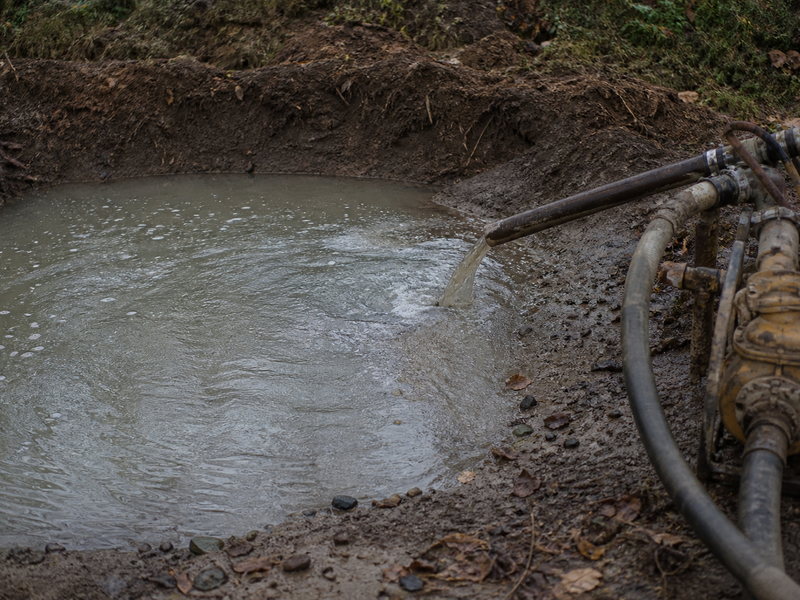
Pullback Mistakes: Speed, Coating and Rollers
Pullback is the moment of maximum consequence, because the product, not the tooling, is now at risk. It is also where some of the most damaging common mistakes in horizontal directional drilling land, and most HDD pullback problems trace back to convenience rather than to the pipe, as the HDD pullback problems below show.
Mistake 10: Pullback speed set by the calendar, not by pipe stress
Symptom: the crew pulls faster than the normal band to recover a schedule that slipped during reaming. Cause: the pull rate was treated as a production target rather than a limit set by the pipe. Cost: overstress, coating damage and ovalisation; allowable pull stress for PE installations is commonly held to about 1,000 psi, and pull speed is typically on the order of 1-3 m/min. Fix: set the rate from the pipe’s stress and buoyancy limits before the pull starts. Our field teams record pull speed against calculated stress at every rod.
Mistake 11: No coating protection or roller strategy
Symptom: coating is scraped at the entry side and friction climbs along a long pull. Cause: the pipe was laid on grade or skids without a considered scheme for supporting, rolling and protecting it. Cost: coating damage that becomes a corrosion risk, plus re-work and re-inspection before the line is accepted. Fix: specify support and rollers on the approach, protect the coating at entry and exit, and inspect the pipe as it enters the bore.
Three user states this list is written for:
- Contractor reviewing its own pre-mobilisation package: the three permanent mistakes are the ones to check first, because none can be fixed after the rig moves.
- Owner’s engineer approving a method statement: look for the fluid volume per rod calculation, the pass plan and the restart criteria as numbers rather than as intentions.
- Site supervisor on a long pullback: pull speed is set by pipe stress and buoyancy, so the schedule recovers in the reaming sequence, not in the pull.
Documentation Mistake: No As-Built and No Bore Log
The last mistake is invisible on the day and expensive for years, yet an as-built record is one of the horizontal directional drilling best practices that costs almost nothing.
Mistake 12: Drilling without an as-built record or a bore log
Symptom: months after completion, no one can say where the bore actually ran or how much fluid it took. Cause: recording was treated as an after-the-fact paperwork task rather than a live part of the crossing. Cost: disputes over settlement and performance cannot be resolved, and the next crossing along the corridor starts blind. Fix: log the actual profile, reaming pass sizes, fluid volumes and properties, and every loss-of-returns event as the bore progresses, then hand the record over at close-out.
The Same Mistakes Mapped to the Check That Prevents Them
Table 2 is a field-ready version, organised by stage. These checks follow accepted horizontal directional drilling best practices, and each can be verified by one measurement, document or signature. This list is field-level: it records the mistake, the symptom seen on site, the cost and the fix. Owner-level exposure, ownership and residual risk are held in the HDD risk register. Every entry names an action, which is why most HDD crossing failures are no mystery in hindsight.
| Stage | Most common mistake | The check that prevents it |
|---|---|---|
| Planning | Boreholes funded and logged along the alignment | Borehole coverage mapped before design freeze |
| Survey | Utility survey stops at the main line | Signed utility matrix with potholed depths |
| Bid | Scope silent on rock and return response | Written rock allowance and response duties |
| Rig selection | Pull and torque checked against the governing case before spud | Pull and torque checked with a 1.5-2.0 margin |
| Bore plan | Allowable pressure curve plotted against live pressure at the rig | Allowable pressure curve plus a pressure sub |
| Fluid | Mud mixed by habit, not measurement | Daily weight, viscosity, pH and sand content |
| Reaming | Step sizes too large, or passes omitted | Pass plan at 1.2-1.5 x product OD with logging |
| Pullback | Speed set by the schedule | Pull speed driven by pipe stress and buoyancy |
| Close-out | Path and volumes recorded as the bore progresses | Path, volumes and events handed over |
Correctable on site: fluid targets, advance rate and pullback speed. Correctable at cost: reaming sequence, screen and fluid treatment, once the pass has started. Not correctable on site: the geotechnical investigation, the utility survey and the rock allowance – three mistakes that are permanent once the rig moves and can only be corrected by redesign, standby or re-mobilisation, while the other nine are recoverable with data while the crew is on site.
Frequently Asked Questions
What is the single most common mistake in horizontal directional drilling?
The costliest planning mistake is under-funding the geotechnical investigation. Boreholes spaced to fit a budget leave the bore plan, reamer selection and fluid programme built for the wrong ground.
How many reaming passes should an HDD crossing use in mixed ground?
Use progressive passes sized against the product outside diameter, not one giant enlargement. The right number depends on soil, length and torque.
What causes most HDD pullback problems on a long crossing?
Most HDD pullback problems come from setting the pull speed from the calendar instead of from pipe stress.
What drilling-fluid unit weight should be used on an HDD crossing?
Hold the unit weight modestly above fresh water, near 9 to 10 lb/gal, and raise it only as formation pressure requires. A denser fluid holds the hole but adds downhole pressure, so the exact target depends on hole stability.
Can these HDD mistakes be fixed after the rig has moved?
Three of the twelve mistakes are permanent once the rig moves. The other nine are recoverable on site, and the later they are found, the more they cost.
How should an HDD crossing be documented so the record holds up?
Record an as-built path and a bore log as the crossing is drilled. The log should carry the profile, pass sizes and loss-of-returns events.
Key Takeaways
- Most common mistakes in horizontal directional drilling are planning and bid mistakes, because HDD carries early errors through every later stage.
- Fund the geotechnical investigation and complete the utility survey before the design is frozen.
- Mix fluid by measurement and cap the advance rate at the calculated fluid volume per rod.
How JSW Supports HDD Crossing Delivery
JSW is a pipeline engineering and construction company that executes trenchless crossings with its own crews and equipment. Our scope covers HDD crossing services, trenchless technologies, layanan pemasangan pipa, pipeline inspection service and pipeline repair services.
JSW plans crossings by front-loading the geotechnical and survey work, modelling annular pressure before mobilisation, and pricing risk explicitly, so the common mistakes in horizontal directional drilling are removed rather than discovered on site. Process data from the bore is kept auditable, so an owner can see what happened, not just what was claimed.
- One engineering team: planning, drilling, installation, inspection and repair under one engineering team.
- Handover records: fluid properties, reaming passes and pull-force records captured and handed over.
- Allowances in the bid: rock allowance, disposal and inadvertent-return response defined in the bid.
- Stop-work triggers: work planned around permit conditions, with stop-work triggers agreed in advance.
Want your HDD plan reviewed for these HDD mistakes? Send your bore profile, geotechnical data and fluid programme, and we will check them against the mistakes above. Request a Free Technical Review





































 English
  Arabic
  Russian
  Spanish
  French
  Vietnamese
  Polish
  Thai
Thai  Indonesian
  Turkish
  Portuguese