
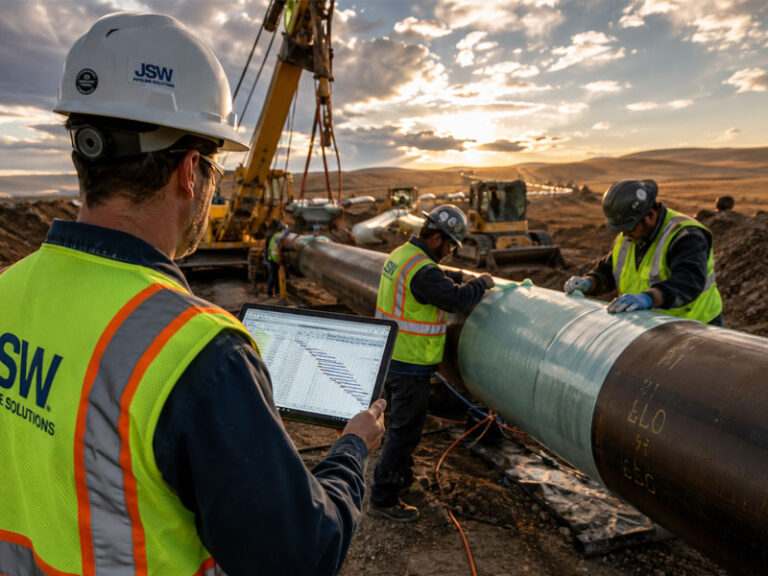
Most pipeline rehabilitation projects take between 2 weeks and 12 months to complete. Small-diameter CIPP lining projects may be finished in a single day (8-10 hours per section), while large-diameter transmission mains or oil and gas pipeline integrity programs often require 6 to 24 months, depending on length, diameter, permitting, and chosen trenchless technology.
1. Pipeline Rehab Timeline by Project Type
The table below provides a clear benchmark for project planning across different sectors.
| Project Category | Typical Length | Typowy czas trwania |
|---|---|---|
| Residential Sewer CIPP | 100–500 ft | 1–3 days |
| Municipal Sewer Lining | 5,000–10,000 ft | 2–6 weeks |
| Large Diameter Sewer Rehab | 500–1,000 ft | 2–6 months |
| Water Transmission Main Rehab | 1,000–5,000 ft | 3–12 months |
| Oil & Gas Pipeline Rehabilitation | 5–50 miles | 6–24 months |
| Regional Pipeline Programs | 50+ miles | 1–5 years |
Average Pipeline Rehabilitation Timeline
| Pipeline Type | Average Duration |
|---|---|
| Sewer Lateral | 1 Day |
| Residential Sewer Main | 1–3 Days |
| Municipal Sewer | 2–6 Weeks |
| Water Main | 2–12 Months |
| Oil Pipeline | 6–24 Months |
2. Factors Affecting Rehabilitation Schedules
Understanding these variables helps stakeholders set realistic expectations.
What Delays Pipeline Rehabilitation Projects?
- Permit approval delays – Municipal and environmental permits can extend timelines by 4–8 weeks.
- Traffic control restrictions – Urban sites may only allow night work, slowing progress.
- Weather interruptions – Rain, snow, and extreme temperatures affect resin curing and excavation.
- Unexpected structural defects – Severe corrosion or collapses require additional repair planning.
- Material lead times – Custom liners or carbon fiber wraps may have 8–12 week delivery windows.
- Bypass pumping complexity – High-flow lines require larger, more complex bypass systems.
- Environmental compliance reviews – Wetlands or protected areas trigger additional assessment periods.
3. Timeline by Rehabilitation Method
How do specific trenchless technologies compare in terms of installation speed and downtime?
| Metoda rehabilitacji | Installation Speed | Service Interruption | Typical Project Window |
|---|---|---|---|
| Rura utwardzana na miejscu (CIPP) | Fast (8–10 hrs/section) | Niski | 1 day – 6 weeks |
| Spray-In-Place Pipe (SIPP) | Very Fast (< 5 hrs) | Very Low | < 1 week |
| Wykładzina wsuwaną | Umiarkowany | Umiarkowany | 4–6 months |
| Rozrywanie rur | Umiarkowany | Umiarkowany | 2–8 weeks |
| Carbon Fiber Wrap | Slow (Curing dependent) | Niski | 6–12 months |
| External Composite Repair | Fast | Minimal | 1–4 weeks |
Which Pipeline Rehabilitation Method Is Fastest?
| Rank | Metoda | Typical Completion Time |
|---|---|---|
| 1 | SIPP (Spray-In-Place Pipe) | Under 5 Hours |
| 2 | CIPP (Cured-in-Place Pipe) | 8–10 Hours |
| 3 | Rozrywanie rur | Days to Weeks |
| 4 | Wykładzina wsuwaną | Weeks to Months |
| 5 | Carbon Fiber Wrap | Months |
4. Pipeline Diameter vs. Timeline
Pipe diameter is a primary driver of project duration. This breakdown helps operators estimate schedules based on their specific infrastructure.
| Pipe Diameter | Typical Method | Typowy czas trwania |
|---|---|---|
| 4–12 in | CIPP | 1–3 Days |
| 12–24 in | CIPP / SIPP | 1–4 Weeks |
| 24–48 in | Wykładzina wsuwaną | 1–3 Months |
| 48–72 in | Carbon Fiber / Slip Lining | 3–6 Months |
| 72+ in | Custom Rehabilitation | 6–12 Months |
5. Trenchless vs. Open-Cut Timeline Comparison
Trenchless rehabilitation consistently outperforms traditional excavation in terms of project speed. Field data indicates that trenchless methods can reduce project schedules by 50% to 75% compared with conventional dig-and-replace.
| Metoda | Typowy czas trwania |
|---|---|
| CIPP Rehabilitation | 1 Day – 6 Weeks |
| Wykładzina wsuwaną | 1 – 6 Months |
| Rozrywanie rur | 2 – 8 Weeks |
| Traditional Open Cut Replacement | 3 – 24 Months |
Key Insight: For municipal and industrial applications, trenchless rehabilitation dramatically minimizes service disruption and accelerates project turnover.
6. Typical Project Workflow
Figure 1: Standard Phased Workflow for Trenchless Pipeline Rehabilitation Projects
- Project Planning & Permitting: (1–8 Weeks) – Engineering review, traffic control plans, and bypass pump setup.
- Inspection & Cleaning: (1–3 Weeks) – CCTV inspection, hydro-jetting, and debris removal.
- Installation: (1 Day – 6 Months) – CIPP, robotic SIPP, or slip lining application.
- Testing & Recommissioning: (1–2 Weeks) – Post-rehab CCTV, pressure testing, and restoration.
Total Estimated Duration: 2 Weeks – 24 Months
7. Oil & Gas Pipeline Rehabilitation Timeline
For transmission pipeline operators, the pipeline integrity rehabilitation timeline is critical. A typical 8-mile, 20-inch crude oil transmission pipeline rehabilitation schedule includes:
- Engineering Assessment & Regulatory Compliance (1 Month)
- Procurement, Planning & ILI Data Review (2 Months)
- Field Rehabilitation Execution (3 Months)
- Hydrostatic Testing & Recommissioning (2 Weeks)
Total Estimated Duration: Approximately 6–8 months.
This timeline assumes favorable site access and standard permitting lead times. Larger diameter lines or projects crossing sensitive environmental areas may extend the schedule to 12–18 months.
8. Pipeline Duration Estimator
Use these general benchmarks to estimate your specific project duration based on length.
| Pipeline Length | Estimated Duration | Common Method |
|---|---|---|
| Under 500 ft | 1 – 5 days | CIPP / Spot Repair |
| 500 – 5,000 ft | 2 – 6 weeks | Municipal CIPP / Slip Lining |
| 5,000 – 20,000 ft | 2 – 6 months | Large Diameter / SIPP |
| Over 20,000 ft (Miles) | 6 – 24 months | Transmission Main / Oil & Gas |
9. Frequently Asked Questions (FAQ)
Q: How long does pipeline rehabilitation take?
A: Most pipeline rehabilitation projects take between 2 weeks and 12 months. Small CIPP jobs can finish in a day; large transmission projects may require up to 24 months.
Q: How long does CIPP lining take per section?
A: Cured-in-place pipe (CIPP) installation typically takes 8-10 hours per section, including insertion, inflation, and UV/steam curing.
Q: What is the fastest pipeline rehabilitation method?
A: Spray-in-Place Pipe (SIPP) using robotic arms is the fastest, completing small-diameter projects in under 5 hours.
Q: Can pipeline rehabilitation be completed without shutting down operations?
A: Yes. Methods like CIPP and Slip Lining are designed to work live via bypass pumping, allowing flow to continue externally.
Q: How long does carbon fiber pipeline reinforcement take?
A: Carbon fiber wrapping is slower due to multi-layer epoxy curing, typically taking 2 to 6 months for large-diameter projects.
10. Industry Standards & Data Sources
JWS aligns all rehabilitation projects with recognized industry standards to ensure quality, safety, and regulatory compliance. Our technical guidelines reference:
- NASSCO – Pipeline Assessment and Certification Program (PACP)
- ASTM International – Standards for CIPP and thermosetting resin liners
- AWWA – American Water Works Association guidelines for water mains
- ASME – Pressure piping and pipeline integrity codes
- API – American Petroleum Institute standards for oil & gas pipelines
Pipeline Rehabilitation Timeline Summary
| Project Category | Typowy czas trwania |
|---|---|
| Spot Repair | Hours |
| Residential CIPP | Days |
| Municipal Sewer Rehab | Weeks |
| Large Diameter Pipeline Rehab | Months |
| Transmission Pipeline Rehab | 6–24 Months |
| Regional Infrastructure Programs | Years |
Need a Project-Specific Timeline?
Every pipeline rehabilitation project is unique. Factors such as diameter, flow conditions, access constraints, and rehabilitation method can significantly affect the final schedule.
Contact JSW Pipeline Solutions for a no-obligation timeline assessment and preliminary rehabilitation strategy review.
O firmie JSW Pipeline Solutions
JSW provides comprehensive pipeline rehabilitation services across North America, specializing in CIPP, spray-in-place, and carbon fiber reinforcement technologies. Our engineering team helps clients extend pipeline service life by 50 years or more while minimizing operational downtime.







 English
 Arabic
 Russian
 Spanish
 French
 Vietnamese
 Polish
 Thai
 Indonesian
 Turkish
 Portuguese