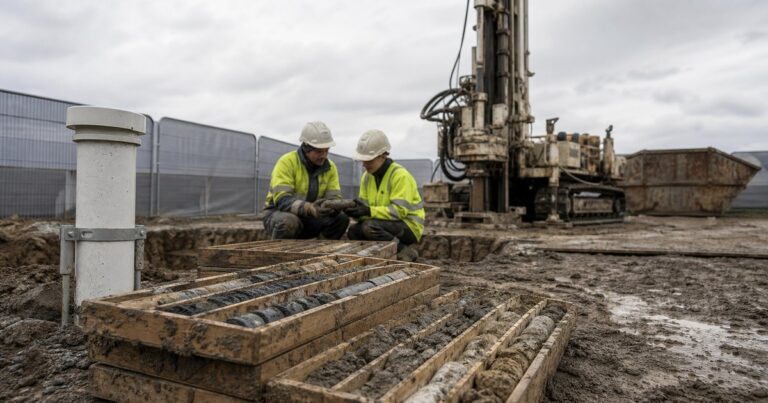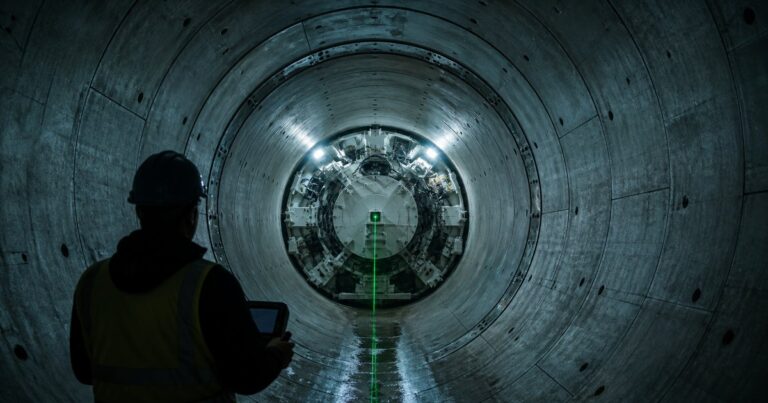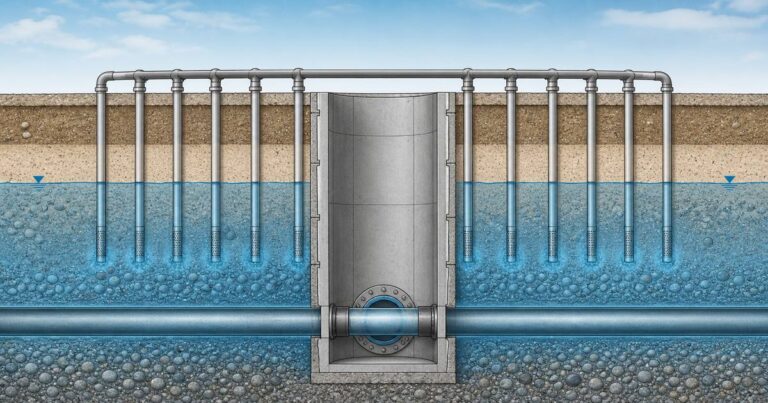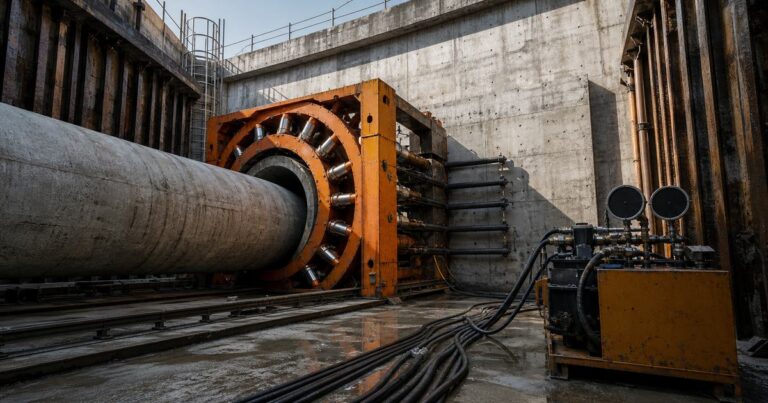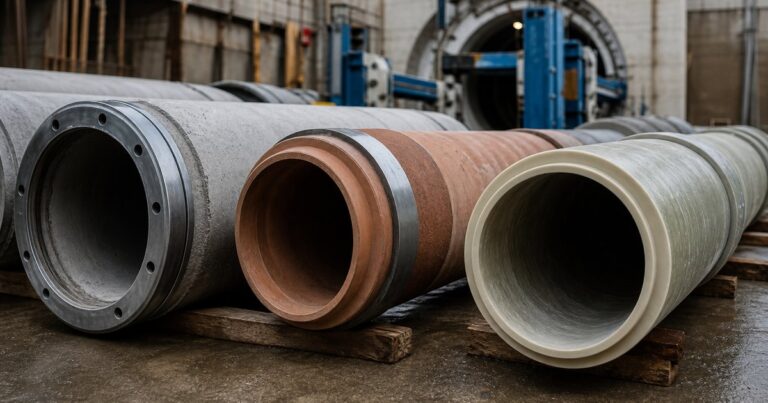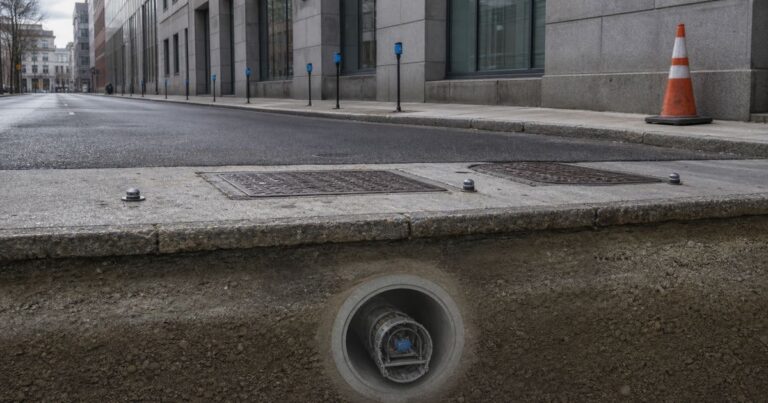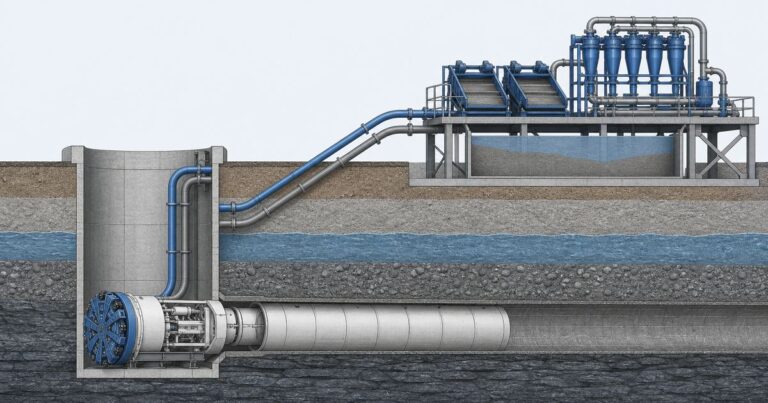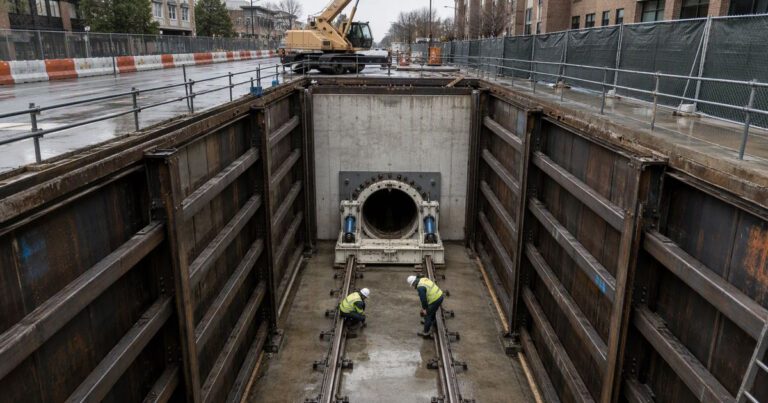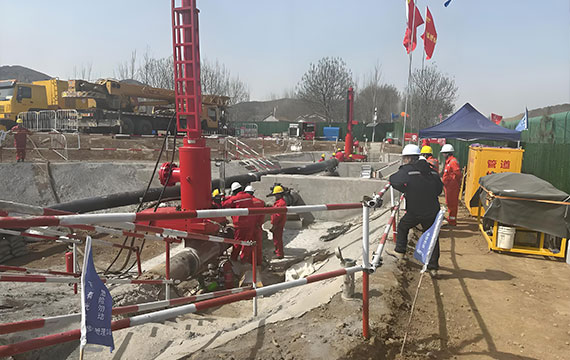
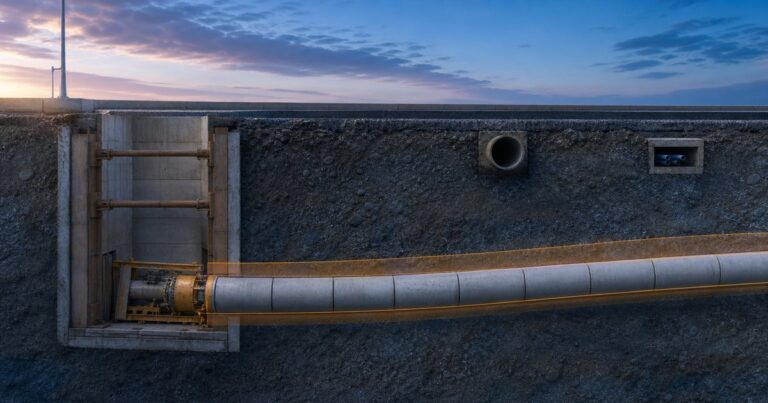
Microtunneling launch shaft with dewatering wells and a sealed entry eye below the water table

Groundwater Control for Microtunneling Shafts and Drives

Microtunneling groundwater control is the package of measures that keeps water out of launch and receiving shafts and holds the face and annulus stable while a remotely controlled machine advances below the water table. It combines shaft dewatering or cut-off, entry and exit seals, a balanced support medium at the

Read More »
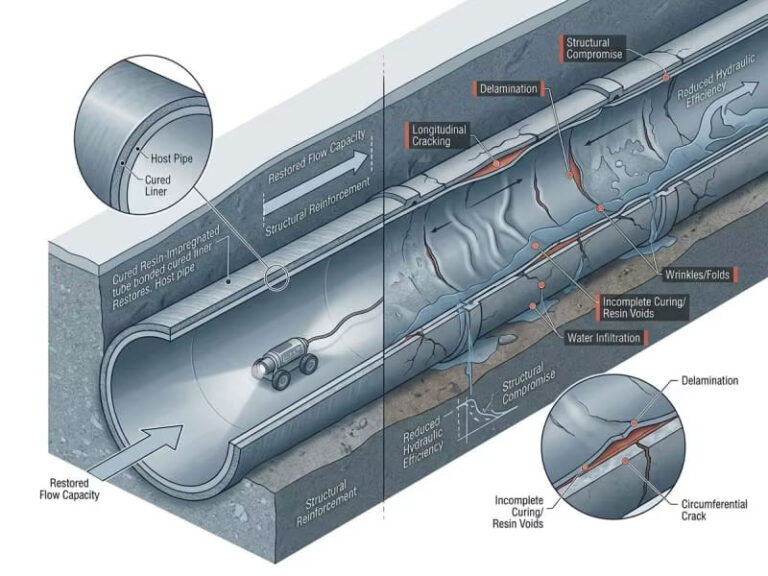
Analiza uszkodzeń rury wkładowej CIPP wykazująca pęknięcia, rozwarstwienia, fałdy i wady wewnątrz podziemnego rurociągu

Rodzaje uszkodzeń wykładzin CIPP: 10 typowych problemów związanych z bezwykopowym wykładaniem rur – przyczyny i rozwiązania

1. What Are the Most Common CIPP Liner Failure Modes?  The most common CIPP liner failure modes include: These failures are mainly caused by poor design, inadequate surface preparation, improper curing, installation errors, and unsuitable material selection. These CIPP defects and trenchless rehabilitation failures generally fall into five main categories: structural

Read More »
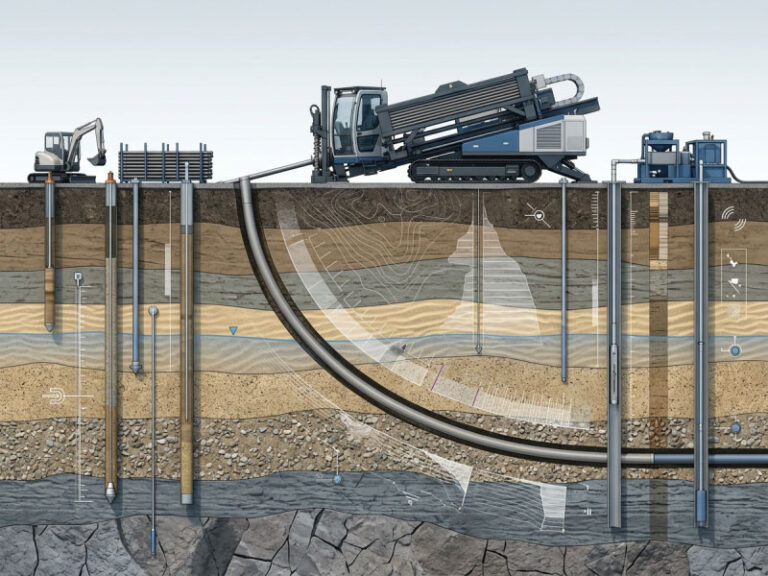
Engineering illustration of horizontal directional drilling geotechnical investigation showing an HDD rig, underground pipeline bore trajectory, clay, sand, gravel and rock layers, CPT testing, soil borings, groundwater table, and monitoring instruments.

Jak mierzy się stabilność gruntu przed rozpoczęciem projektu bezwykopowego? Przewodnik po badaniach geotechnicznych w ramach technologii HDD

Soil stability before a trenchless project is measured through five main steps: These tests determine soil strength, density, groundwater conditions, and the risk of collapse or hydraulic fracture (frac-out) before drilling begins. Soil Stability Testing Process at a Glance Investigation Stage Primary Test / Method Core Purpose Site Review Geological

Read More »
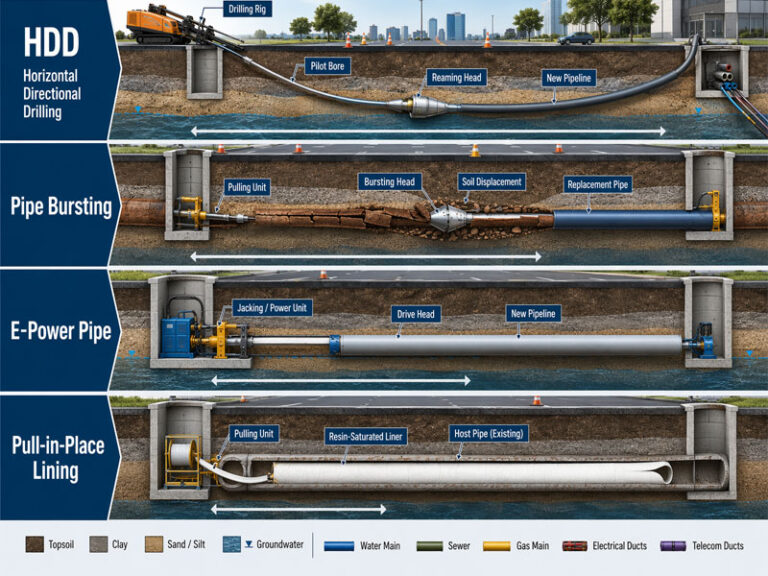
Engineering infographic comparing pulling-distance concepts for HDD, pipe bursting, E-Power Pipe, and pull-in-place lining in underground pipelines

Maximum Distance a Pipe Can Be Pulled Using Trenchless Methods: HDD Pull Length, Pipe Bursting & Lining Limits

The maximum distance a pipe can be pulled using trenchless methods ranges from approximately 50 meters to more than 3,000 meters, depending on the installation technology, pipe characteristics, ground conditions, and equipment limitations. For new pipeline construction, Horizontal Directional Drilling (HDD) typically achieves 200–800 meters per pull. For pipeline rehabilitation, specialized

Read More »
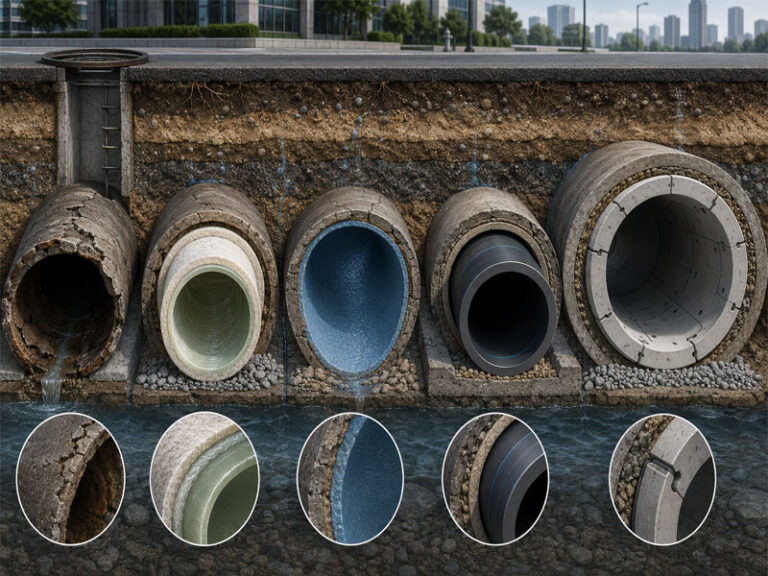
Engineering cutaway illustration comparing CIPP resin liners, spray-applied polyurea, HDPE sliplining, and UHPC structural lining segments in underground sewer pipes.

Best Trenchless Pipe Rehabilitation Materials: CIPP, Polyurea, HDPE Comparison

Best Materials for Trenchless Pipe Rehabilitation The most widely used and effective materials for trenchless pipe rehabilitation are thermosetting resin systems—specifically epoxy, polyester, and vinyl ester—combined with reinforcement fabrics such as fiberglass or polyester felt. For most municipal sewer rehabilitation projects, polyester CIPP offers the best cost-to-performance balance, while epoxy CIPP is preferred for pipes

Read More »