jasonsong889@gmail.com

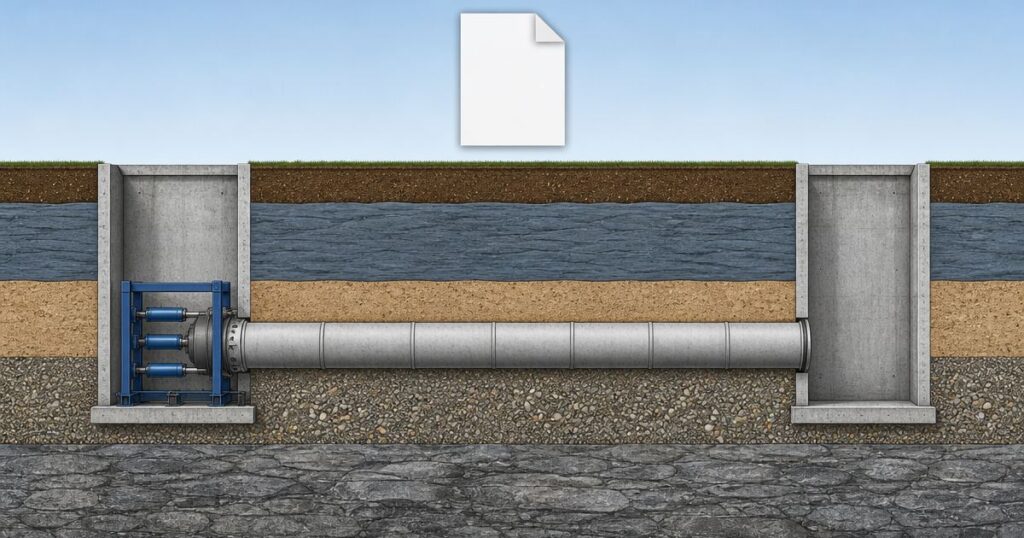
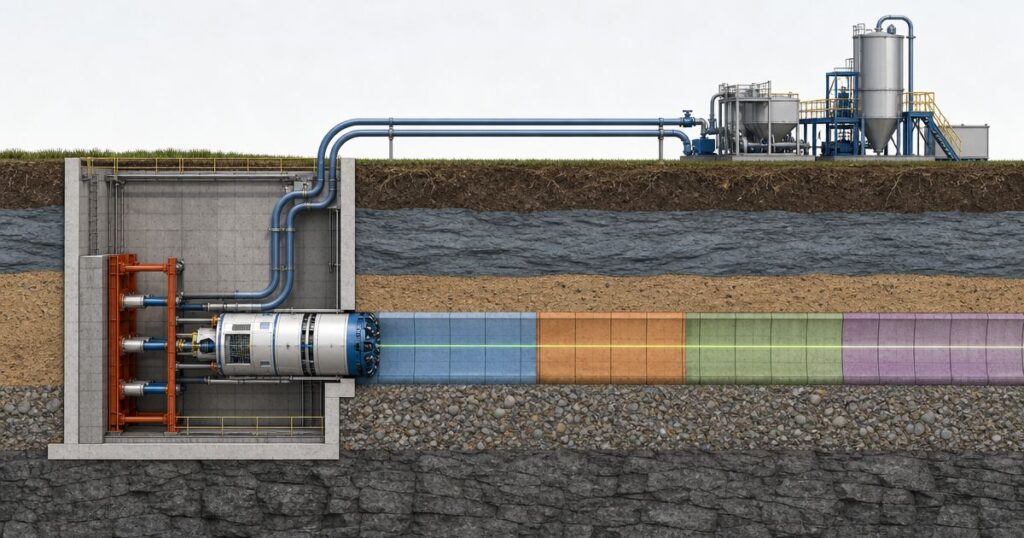
Cross-section of a microtunneling contract showing a geotechnical baseline defining expected ground between a launch shaft and a reception shaft

Risk Allocation in Microtunneling Contracts: GBR, Differing Site Conditions and Delay

Short answer: a balanced microtunneling contract puts unforeseeable geology on the owner and foreseeable execution on the contractor. A measurable baseline, a clear differing site conditions clause and disciplined delay rules are what make that split hold up when the ground does not match the drawings. Every microtunneling contract is, at heart, an agreement about

Risk Allocation in Microtunneling Contracts: GBR, Differing Site Conditions and Delay Read More »

Cross-section of a microtunneling drive showing a launch shaft, jacked pipe, and the four cost variables of geometry, geology, depth and diameter labelled along the alignment

What Drives Microtunneling Cost and Schedule: Geometry, Geology, Depth and Diameter

Short answer: the microtunneling cost drivers ranked highest are ground conditions, then shaft depth and shaft count, then pipe diameter, and then drive length and curve radius, with site and market conditions behind them, and the ranking holds across public projects. Microtunneling cost drivers are the variables that move the price and the programme of

What Drives Microtunneling Cost and Schedule: Geometry, Geology, Depth and Diameter Read More »

Owner's engineer marking up a Section 02441 microtunneling specification on a desk beside drive drawings and a geotechnical report

Writing a Microtunneling Specification: What Owners Should Require (Section 02441)

Short answer: a microtunneling specification must fix scope, submittals, the geotechnical basis, line and grade accuracy, face support, jacking force limits, movement limits and pay items before bids are invited. Every vague clause is priced as risk, so ambiguity returns as a higher bid or a claim. The clauses an owner writes decide how every

Writing a Microtunneling Specification: What Owners Should Require (Section 02441) Read More »

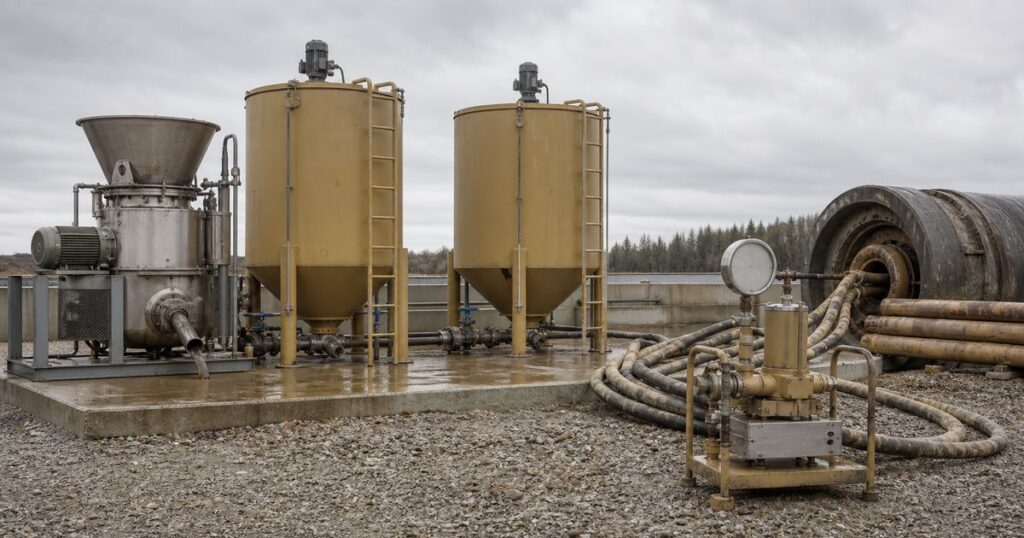
Bentonite mixing plant and lubrication injection equipment on a microtunneling site, with grout lines running to the launch shaft and pipe string

Bentonite and Lubrication Systems in Microtunneling: A Practical Guide

Bentonite lubrication (also called annular or pipe-jacking lubrication) is the practice of filling the annular gap between the pipe string and the ground with a bentonite-based suspension so that jacking friction stays low enough to reach the reception shaft. It does two jobs at once: it lubricates the pipe-ground interface, and it supports the surrounding

Bentonite and Lubrication Systems in Microtunneling: A Practical Guide Read More »

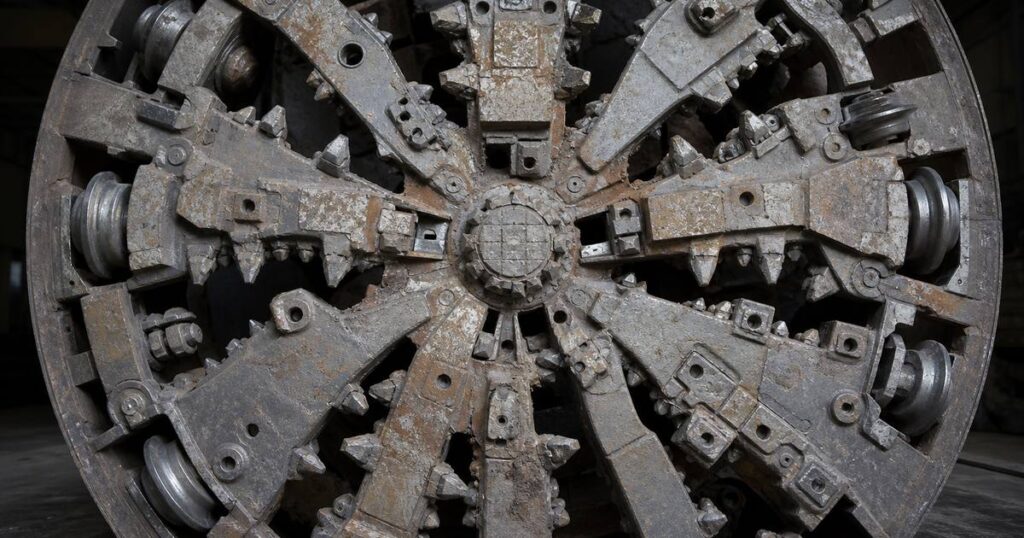
Mixed ground cutterhead on a microtunnel boring machine with carbide-tipped chisel teeth, scrapers and disc cutters mounted together on the faceplate

Cutterheads and Cutting Tools for Mixed-Ground Microtunneling

A mixed ground cutterhead (also called a faceplate, or a mixed-face head where both materials meet at the face) is a faceplate that carries soft-ground and hard-rock tooling at the same time. Two decisions define it: the tooling list and the opening ratio. Where a drive passes through alternating layers, or where softer material surrounds

Cutterheads and Cutting Tools for Mixed-Ground Microtunneling Read More »

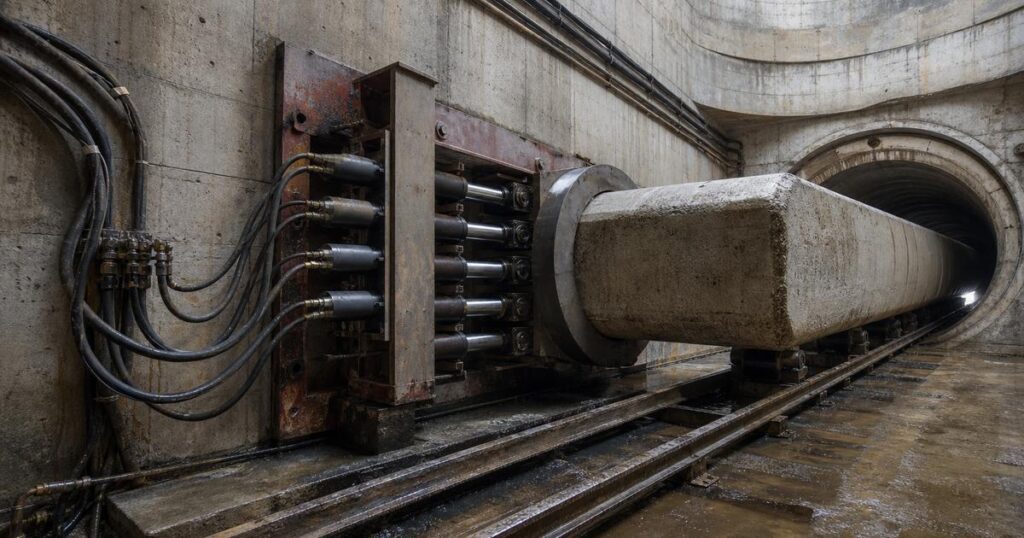
Jacking frame with hydraulic rams and thrust ring set on line and grade in a microtunneling launch shaft in front of a concrete thrust wall, with jacking pipe on guide rails

Jacking Frames, Thrust Rings and Spacers: The Support Equipment That Saves the Drive

A jacking frame converts hydraulic power into the forward thrust that drives a microtunneling machine and its pipe string, and it is only as strong as the load path behind and ahead of it. It sits on line and grade in the launch shaft, reacts against a thrust wall (also called the reaction wall, or

Jacking Frames, Thrust Rings and Spacers: The Support Equipment That Saves the Drive Read More »

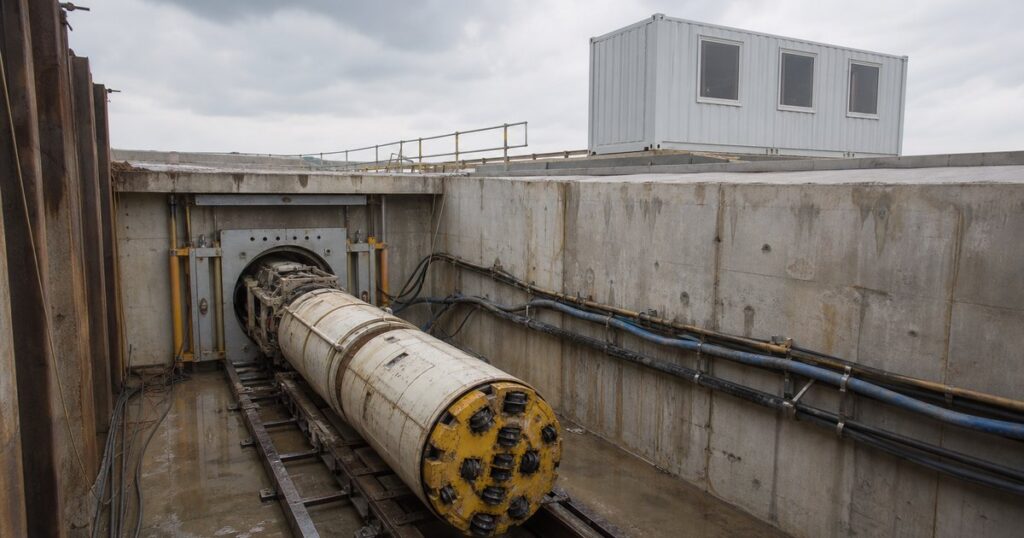
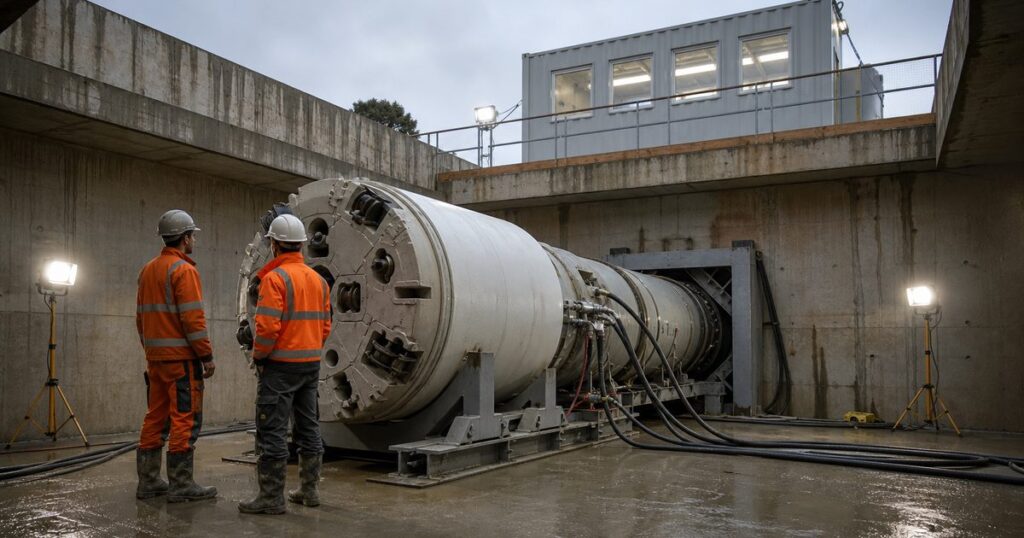
Remote-controlled microtunnel boring machine on line and grade in a launch shaft, with the jacking frame and thrust ring immediately behind it, slurry feed and return lines along the shaft wall, and the surface control container

Microtunnel Boring Machines (MTBM): How They Work and How to Select One

A microtunnel boring machine is a remote-controlled, closed-face unit that cuts the bore, holds the face and is pushed by a jacking frame from the launch shaft. Selecting one is a conversion exercise: drive conditions become machine attributes, and attributes become guaranteed numbers a supplier can quote. This guide covers the five subsystems, the two

Microtunnel Boring Machines (MTBM): How They Work and How to Select One Read More »

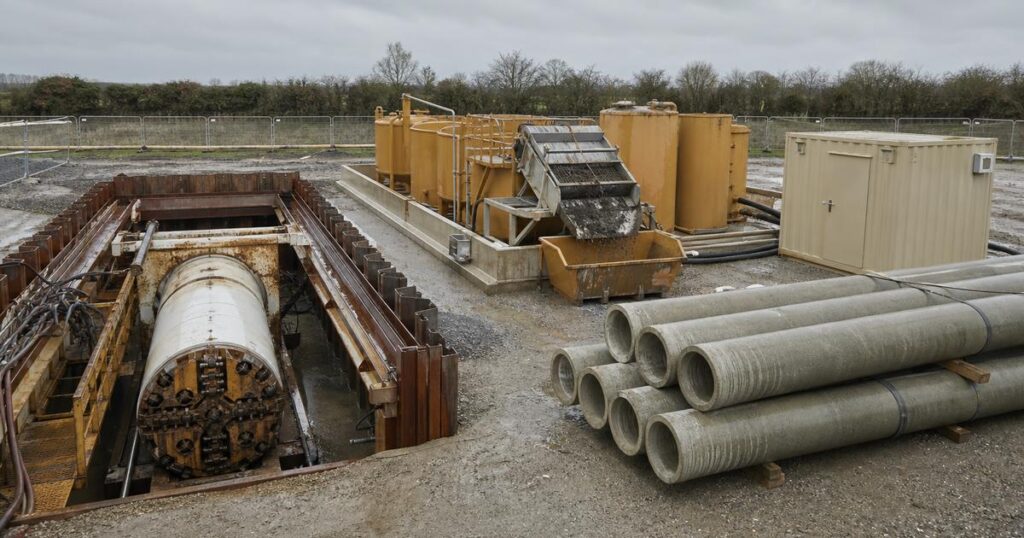
Microtunneling equipment spread on a construction site, showing a slurry shield machine at the launch shaft, separation plant tanks, control container and jacking frame staged on site

Microtunneling Equipment Manufacturers: Who Makes What

Microtunneling equipment manufacturers do not form a single market. A working drive is assembled from five separate supply chains – the machine, the slurry separation plant, the guidance and steering package, the jacking and support equipment, and the jacking pipe – and the companies that lead one category rarely lead all of them. This guide

Microtunneling Equipment Manufacturers: Who Makes What Read More »

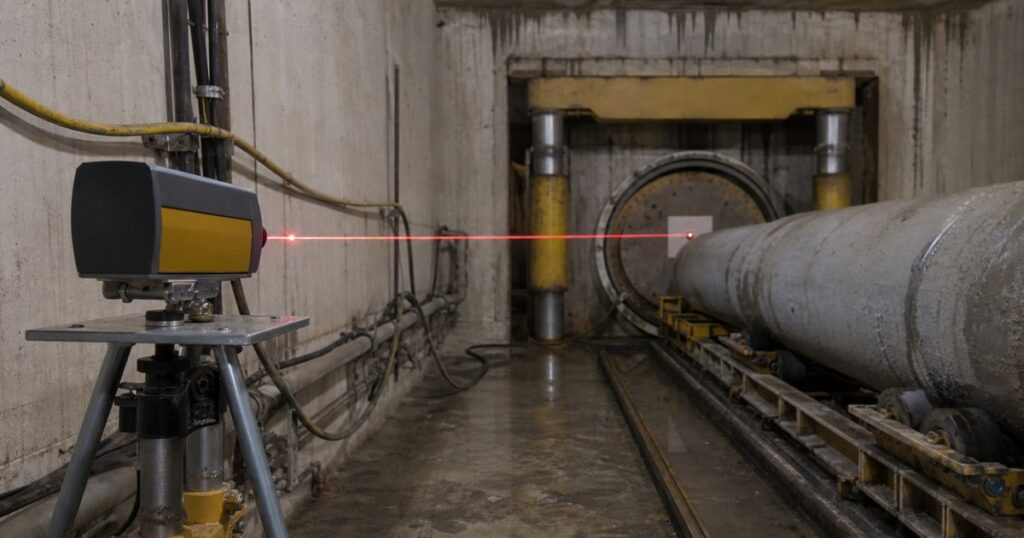
Microtunneling guidance set-up in a launch shaft, showing a laser station on line and grade behind the jacking frame projecting a beam into the tunnel toward the machine target

Microtunneling Guidance Systems: Laser, Total Station and Gyro Compared

A microtunneling guidance system is the instrument chain that keeps a machine on line and grade in a bore nobody can see into. The three technologies differ less in accuracy than in what each needs to work: a laser target system needs a clear line of sight, a total station network needs a maintainable chain

Microtunneling Guidance Systems: Laser, Total Station and Gyro Compared Read More »

Microtunneling equipment being commissioned in a launch shaft before launch, with engineers checking the machine, jacking frame, slurry lines and control console against a checklist

Pre-Project Equipment Testing: The Checklist That Prevents a Microtunnel Failure

A microtunneling inspection and test plan (ITP) is the document that defines, before mobilization, what will be inspected and tested, by whom, at which stage, and what evidence closes each item. It turns equipment readiness from opinion into recorded hold points, which makes it the cheapest risk control on a microtunneling project. Within that plan,

Pre-Project Equipment Testing: The Checklist That Prevents a Microtunnel Failure Read More »