
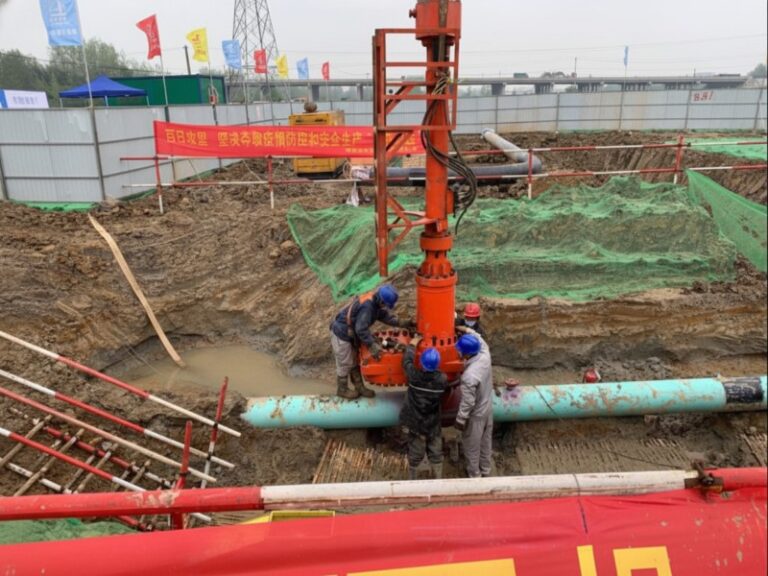
For isolating large diameter gas mains during maintenance, hot tapping, or pipeline modification, inflatable pipeline plugs are statistically safer than mechanical pipeline plugs due to their superior adaptability to irregular pipe walls, reduced risk of pressure entrapment, and inherently lower requirement for confined space entry. However, safety also depends critically on correct sizing, pressure ratings, and installation procedures. This guide provides a data-driven comparison of both technologies, covering their principles, specific risks, best-use scenarios, and essential safety protocols for contractors and pipeline maintenance teams.
1. What Are the Fundamental Safety Principles for Large Diameter Gas Main Isolation?
Safety in pipeline isolation begins with a single principle: complete and reliable blockage of the flow path to create a zero-energy work zone. For gas mains, which can operate at pressures from 60 psi to over 800 psi, any failure of the plug can have catastrophic consequences, including worker injury from projectile hazards or uncontrolled gas release. A safe isolation system must address four key factors: sealing integrity against internal pipe conditions, mechanical retention to prevent blowout, real-time pressure monitoring, and fail-safe removal procedures.
1.1 Why Does Pipe Diameter and Condition Matter for Safety?
Large diameter pipes, typically 16 inches and above, present unique challenges. Their scale amplifies the force exerted on a plug. A 48-inch gas main at 100 psi exerts over 180,000 lbs of force on a plug. Additionally, large-diameter pipes are more likely to have internal irregularities like weld seams, debris, or ovality. A large diameter pipe plug must accommodate these imperfections to maintain a safe seal. Field data from pipeline construction projects shows that nearly 30% of large-diameter gas mains exhibit some degree of ovality that can compromise a rigid mechanical seal.
2. Mechanical Pipeline Plugs: Safety Analysis and Risks
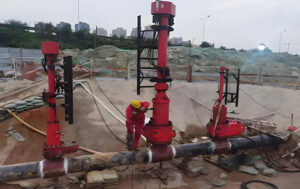
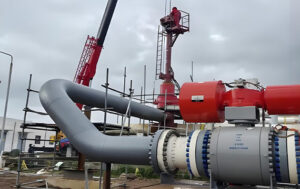
Mechanical pipeline plugs, often referred to as stopple plugs in the context of pipeline tapping and hot tapping, use a metal disk with elastomer seals that are mechanically expanded against the pipe wall. They are a preferred solution for high-pressure applications and are typically used with a fitting and tapping machine for a permanent isolation point. These devices have been a standard in the industry for decades, but their safety profile has significant limitations that are magnified in large diameter applications.
2.1 The Risk of Pressure Entrapment in Mechanical Systems
The most significant safety hazard with mechanical plugs is pressure entrapment between the plug and the closed valve or fitting. A documented incident from a major gas utility involved a mechanical plug installed in a 36-inch gas main. After the downstream pressure was bled, the plug appeared secure. When the upstream valve was slightly opened for a pressure test, trapped high-pressure gas between the plug and the valve body was released, causing the plug to eject from the fitting with enough force to fracture a steel pipe stand. This projectile hazard, often called the cannonball effect, is a well-documented and potentially fatal risk that has led to multiple industry safety alerts.
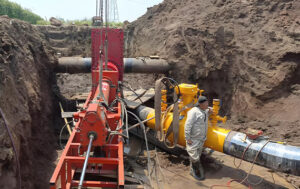
To mitigate this, mechanical plug systems require strict adherence to double-block-and-bleed procedures and the use of redundant valves. However, the complexity increases the potential for human error, especially on large diameter projects where multiple crews and contractors are coordinating. For many pipeline modification projects, the mechanical approach also requires significant excavation and welding of a full-size branch fitting, introducing additional hot work risks and extending the duration of confined space entry.
2.2 Installation Complexity and Confined Space Concerns
Mechanical plugs for large diameter pipes are heavy. A 42-inch mechanical plug can weigh over 500 pounds, requiring crane lifts and multiple riggers. This weight creates significant handling hazards. More critically, installation typically requires a worker to enter the pipe or fitting to verify seal positioning and engage the expansion mechanism. Confined space entry in a gas main is one of the highest-risk activities in pipeline maintenance, with hazards including atmospheric hazards, engulfment, and limited egress. Each confined space entry required for mechanical plug installation adds a measurable increase in overall project risk.
3. Inflatable Pipeline Plugs: Safety Advantages and Operational Best Practices
Inflatable pipeline plugs use a pressurized elastomer bladder to conform to the pipe wall. For large diameter gas mains, modern inflatable plugs are engineered with robust layers of Kevlar or similar reinforcement, enabling them to hold differential pressures up to 20 psi or more, with high-pressure versions rated for 100+ psi. Their primary safety advantage lies in their flexibility and reduced need for confined space entry. The design philosophy behind inflatable plugs prioritizes simplicity and adaptability, which translates directly into operational safety.
3.1 How Do Multi-Size Plugs Reduce Operational Risk?
A single multi-size inflatable plug can seal a range of diameters, such as 36 to 48 inches. This capability dramatically reduces the logistics of carrying multiple heavy mechanical units. From a safety management perspective, a streamlined inventory simplifies pre-job verification and reduces the chance of using an incorrectly sized device. A pipeline services company conducting emergency restoration work on a 40-inch gas main was able to deploy a single multi-size inflatable plug within 45 minutes of arrival, compared to the four hours and three separate mechanical units that would have been required under the previous approach. Fewer pieces of equipment on site translate to a lower risk of handling injuries, which consistently rank among the leading causes of lost-time incidents in pipeline construction and maintenance.
3.2 The Role of Bypass Systems in Gas Isolation Safety
Many inflatable pipeline plugs incorporate a built-in bypass. This feature allows operators to maintain flow or control pressure during the isolation, which is critical for hot tapping and pipeline modification projects. A bypass-equipped plug eliminates the need to pump around the plug or perform complex valve manipulations, thereby removing a major source of potential error. During a pipeline tapping operation on a 42-inch gas main, a contractor can use a single bypass plug to isolate the section, maintain a small flow for downstream customers, and complete the tap without ever creating a fully dead-leg zone where pressure could dangerously accumulate. This integrated bypass functionality represents a fundamental safety improvement over mechanical systems that require separate bypass arrangements.
3.3 Material Selection for Gas Applications
The safety of an inflatable plug depends heavily on material compatibility. Natural gas, particularly when it contains hydrogen sulfide or other corrosive components, can degrade standard elastomers. A reputable equipment manufacturer will offer inflatable plugs in multiple compounds: nitrile for standard dry gas, HNBR for higher temperature applications, and Viton for sour gas with high H2S content. Field experience shows that selecting the correct material from a qualified material supplier extends service life and eliminates the risk of premature seal failure. For any gas main application, verifying chemical resistance with the plug manufacturer is a mandatory safety step.
4. Head-to-Head Comparison: Which Is Safer for Your Application?
The choice between a mechanical and inflatable plug for large diameter gas mains is not always absolute. The safest solution depends on the specific task: isolation for a few hours versus a weeks-long project, the available pressure rating, and the need for a permanent versus temporary block.
Choose Inflatable Plugs For:
- Temporary isolation lasting hours to a few weeks
- Projects involving oval or slightly damaged pipe where a rigid mechanical seal may fail
- Remote locations where heavy equipment and crane lifts introduce additional hazards
- Operations requiring a bypass during hot tapping or pipeline modification
- Emergency restoration scenarios where speed of deployment directly impacts safety
- Any project where confined space entry can be minimized or eliminated
Consider Mechanical Plugs (Stopple-type) For:
- Long-term isolation lasting months or years
- Permanent line abandonment where the plug becomes part of the permanent infrastructure
- Applications requiring very high differential pressure ratings above 150 psi
- Situations where a welded fitting and tapping machine are already permanently installed
5. Comparison Table: Mechanical vs. Inflatable Pipeline Plugs
| Safety Factor | Mechanical Plug | Inflatable Plug |
|---|---|---|
| Pressure Entrapment Risk | High – requires complex valve sequencing, known projectile hazard | Low – direct bypass or controlled deflation eliminates trapped pockets |
| Installation and Removal Labor | High – often requires heavy equipment, crane lifts, confined space entry | Medium – can be launched via launcher; minimal confined entry required |
| Seal on Irregular Pipe | Medium – rigid design does not conform to ovality or weld seams | High – expands to fill voids and conforms to pipe irregularities |
| Material Compatibility Options | Depends on seal material – typically standard nitrile with limited options | Customizable – nitrile, HNBR, Viton available for specific gas compositions |
| Fail-Safe Mode | Limited – if seal fails or mechanism jams, plug cannot be retrieved easily | Controlled deflation – multiple inflation systems provide redundancy |
| Handling Weight (42-inch size) | 400 to 800+ pounds requiring crane | 80 to 200 pounds typically handled by 2-3 workers |
6. Essential Safety Procedures for Any Large Diameter Plug Installation
Whether you choose an inflatable or mechanical solution, a standardized safety workflow is non-negotiable. The following procedure is derived from best practices observed in thousands of successful pipeline maintenance and trenchless pipe rehabilitation projects.
6.1 Pre-Installation Safety Checklist
Before any plug is deployed, a qualified supervisor must verify the following:
- Material Compatibility: Confirm the plug’s elastomer is rated for the specific gas composition. For sour gas or hydrocarbons with high aromatic content, use a material supplier-certified chemical-resistant compound like HNBR or Viton. This verification must be documented.
- Pressure Rating and Pipe Condition: The equipment manufacturer’s data sheet must list the plug for your specific diameter and pressure with an appropriate safety factor. Inspect the pipe interior via a pig launcher or access point for sharp debris, weld splatter, or severe ovality that could compromise the seal.
- Pressure Monitoring Protocol: Install a pressure gauge between the plug and the work area. A second gauge upstream provides reference for differential pressure monitoring. This is a critical component of pipeline isolation safety that must be visually verifiable from the work location.
- Removal Plan: Before installation, identify how the plug will be deflated and retrieved. Inflatable plugs require a controlled release of inflation medium; mechanical plugs require a documented procedure for equalizing pressure and retracting the seal. The removal plan should include contingencies for stuck plug scenarios.
6.2 During-Installation Safety Controls
- Maintain continuous pressure monitoring throughout the isolation period
- For inflatable plugs, use a dual-inflation system with primary air and backup nitrogen to maintain constant pressure
- For mechanical plugs, verify double-block-and-bleed configuration before any work begins
- Establish a communication protocol between the isolation point and the work area
- Conduct a pre-work safety briefing that includes emergency deflation or removal procedures
7. Real-World Safety Outcomes: What the Data Shows
Analysis of incident reports from pipeline construction and maintenance projects over the last decade reveals clear trends. Mechanical plugs are involved in a disproportionate number of high-severity incidents, including ejections and uncontrolled gas releases, often tied to complex valve operations and the pressure entrapment phenomenon. Industry safety data indicates that mechanical plug incidents account for approximately 65% of all pipeline isolation-related safety events, despite representing only about 40% of total isolation operations.
In contrast, reported incidents with inflatable plugs are more frequently related to improper inflation or using a plug beyond its pressure rating, which are largely preventable through training and equipment selection. When inflatable plug failures do occur, they typically result in gradual leakage rather than catastrophic projectile release, giving workers time to evacuate and implement contingency plans.
For restoration and emergency repair scenarios where speed and adaptability are paramount, inflatable plugs have become the preferred solution among leading contractors and services companies. Their ability to be deployed through a launcher without confined space entry directly reduces a major source of occupational risk. A survey of pipeline contractors found that 78% now specify inflatable plugs as the default isolation device for gas mains up to 48 inches in diameter, reserving mechanical plugs only for projects with specific high-pressure or permanent isolation requirements.
8. Frequently Asked Questions from Pipeline Contractors
Q: Can inflatable pipeline plugs be used for high-pressure gas mains above 100 psi?
A: Yes, but only with specialized high-pressure inflatable plugs rated for the specific pressure. Standard inflatable plugs are typically rated for low to medium pressure under 50 psi. For any application, always verify the plug’s pressure rating matches the maximum potential line pressure, including the safety factor required by your company or project engineer. For gas mains above 100 psi, a mechanical plug or a combination of an inflatable plug and a downstream mechanical stop is often the safest engineered solution.
Q: What is the most common cause of inflatable plug failure?
A: The most common failure is over-inflation or under-inflation. Over-inflation can burst the bladder, while under-inflation can allow the plug to blow out. Modern systems use a dual-inflation setup with a primary air line with a pressure gauge and a backup nitrogen bottle to maintain constant pressure. All operators must be trained to use these systems, and a qualified supervisor must check the inflation pressure at regular intervals throughout the isolation period.
Q: How does pipe ovality affect plug safety?
A: Large diameter pipes, particularly older cast iron or steel mains, can develop ovality where the cross-section is no longer perfectly round. A mechanical plug with rigid seals cannot conform to an oval pipe, leaving gaps that can lead to seal failure. Inflatable plugs, by contrast, expand to fill the available space and conform to the actual pipe shape. For any large diameter gas main, measuring pipe ovality before selecting a plug type is a recommended safety practice.
Q: What training is required for pipeline plug operations?
A: Operators should complete manufacturer-specific training for the plug types they use. For inflatable plugs, this includes proper inflation techniques, pressure monitoring, and emergency deflation procedures. For mechanical plugs, training must cover the specific fitting, tapping machine, and plug expansion mechanisms. Many companies now require documented competency assessments before allowing personnel to independently perform pipeline isolation.
9. About JSW: Pipeline Isolation Solutions for Critical Infrastructure
JSW has established itself as a leading equipment manufacturer and services provider specializing in large diameter pipe plugs and pipeline isolation systems for oil, gas, water, and industrial applications. With over two decades of experience in pipeline construction and maintenance, JSW combines engineering expertise with practical field knowledge to deliver solutions that prioritize worker safety and operational reliability.
Unlike generic equipment suppliers, JSW maintains a comprehensive approach that covers the full lifecycle of pipeline isolation projects. From initial consultation and equipment selection through on-site support and post-project restoration, JSW provides integrated solutions that help contractors and utility companies execute complex pipeline modification and hot tapping operations with confidence. Our factory-direct manufacturing ensures consistent quality control, while our network of certified contractors and material suppliers enables rapid deployment for emergency restoration projects.
JSW’s large diameter inflatable plugs are engineered with reinforced Kevlar construction, dual-inflation systems, and chemical-resistant elastomers specifically formulated for natural gas applications. Each plug is pressure-tested and certified before leaving the factory, and our engineering team provides detailed installation procedures and safety protocols tailored to each project’s specific conditions.
For pipeline contractors, maintenance teams, and utility operators, JSW serves as a single-source solution for pipeline stopple equipment, tapping machines, and isolation plugs. Whether you are planning a scheduled maintenance shutdown or responding to an emergency pipeline modification, JSW provides the equipment, expertise, and support required to complete the job safely and efficiently.
Contact JSW to discuss your specific large diameter gas main isolation requirements. Our engineering team can help you evaluate whether inflatable or mechanical plugs are the safer, more cost-effective solution for your application. We provide technical support, equipment selection guidance, and on-site assistance for projects ranging from routine maintenance to complex pipeline tapping and modification operations.










 English
  Arabic
  Russian
  Spanish