
Longitudinal cracks in aging oil pipelines are primarily caused by stress corrosion cracking (SCC), hydrogen-induced cracking (HIC), and manufacturing defects, all of which are accelerated by cyclic pressure loading and corrosive environments.
Understanding these failure mechanisms is critical for pipeline operators, maintenance contractors, and integrity engineers who must detect, assess, and repair longitudinal cracks before they lead to catastrophic ruptures. This article examines the root causes of longitudinal cracking, explains the underlying mechanisms, provides inspection methodologies, and outlines remediation strategies based on industry standards and failure analysis data from global pipeline networks.
1. How Does Stress Corrosion Cracking Cause Longitudinal Cracks?
Stress corrosion cracking represents one of the most damaging mechanisms affecting aging oil pipelines, accounting for approximately 15-20% of gas pipeline failures depending on pipeline age. SCC produces longitudinal cracks because they grow perpendicular to the hoop stress direction created by internal operating pressure.
The Mechanism of SCC
SCC occurs when three conditions exist simultaneously: a susceptible material, a corrosive environment, and tensile stress. In oil pipelines, the hoop stress from internal pressure creates the ideal condition for cracks to propagate longitudinally along the pipe axis. Research has identified two primary types of SCC in pipelines:
- High-pH SCC: Also known as classical SCC, this occurs in carbonate-bicarbonate environments with pH levels above 9. Cracks propagate intergranularly and typically appear as colonies of shallow, interconnected cracks.
- Near-neutral pH SCC: This mechanism operates in dilute bicarbonate solutions with pH around 6-7. Cracks propagate transgranularly and are often wider with more corrosion product filling.
Contributing Factors
The electrochemical potential of the pipe significantly influences SCC susceptibility. Studies on X70 steel pipelines have identified a critical potential range of -730 to -920 mV (SCE) where cracking is most severe. When potentials are more positive, anodic dissolution dominates; when more negative, hydrogen embrittlement becomes the primary mechanism.
Detection and Assessment
Pipeline integrity contractors utilize multiple inspection methods to identify SCC:
- In-line inspection tools with ultrasonic or magnetic flux leakage sensors
- Hydrostatic testing to identify critical crack sizes
- Direct assessment through excavation and field nondestructive testing
2. What Role Does Hydrogen-Induced Cracking Play in Longitudinal Failures?
Hydrogen-induced cracking represents a significant threat to aging oil pipelines, particularly those transporting sour crude containing hydrogen sulfide. HIC occurs when atomic hydrogen diffuses into the steel and recombines at inclusions or microstructural discontinuities.
The Hydrogen Damage Process
In acidic soil environments or when transporting sour product, hydrogen gas can be produced through corrosion reactions. This hydrogen converts to atomic form and penetrates the pipe body. Research on API X70 pipeline steel has demonstrated that specific inclusion types are particularly harmful:
| Inclusion Type | Harmful Characteristics | Typical Crack Initiation Sites |
|---|---|---|
| Elongated manganese sulfide | High stress concentration | Interface between inclusion and matrix |
| Aluminum oxide | Hard, brittle, incoherent | Random distribution in cross-section |
| Aluminum-calcium-silicon oxide | Poor bonding with matrix | Clustered formations |
| Carbonitride precipitates | Rigid, non-deformable | Grain boundaries |
Stress-Oriented Hydrogen-Induced Cracking (SOHIC)
A more severe form of HIC is stress-oriented hydrogen-induced cracking (SOHIC), which occurs when HIC cracks align under the influence of applied or residual stress. This mechanism was identified as the cause of failure in an API 5L X46 crude oil pipeline, where cracking nucleated at the boundary between the heat-affected zone and weld metal. The crack propagated through a ductile fracture mechanism linking hydrogen blisters, demonstrating that atomic hydrogen association rather than hydrogen embrittlement was the active mechanism.
Environmental Factors
Soil conditions surrounding buried pipelines dramatically influence HIC susceptibility. Testing of soil around failed pipelines has revealed corrosive species including chloride, bicarbonate, carbonate, and sulfate ions that accelerate hydrogen generation. When pipelines are cathodically over-protected in acidic soils, hydrogen evolution intensifies, increasing cracking risk.
3. How Do Manufacturing and Construction Defects Contribute?
Analysis of pipeline failure statistics reveals that manufacturing defects and construction quality issues account for a substantial portion of longitudinal cracks. According to PHMSA data from 2010-2022, equipment failures and material defects consistently rank among the top three failure causes -3.
Mill Defects and Seam Issues
Seamless pipes and welded pipes can contain inherent manufacturing flaws:
- Pipe body inclusions: Non-metallic inclusions create stress concentration points
- Seam weld defects: Lack of fusion, incomplete penetration, or slag inclusions
- Surface imperfections: Laminations, scabs, or rolling marks
Research on a 52-year-old oil pipeline repurposed for gas transmission found that longitudinal cracks discovered during magnetic particle inspection were determined to have formed during original pipe fabrication rather than from in-service mechanisms. The steel was identified as API 5L X46 grade, and extensive testing ruled out corrosion-related mechanisms.
Construction and Installation Damage
Field construction activities introduce additional crack initiation sites:
- Gouges and scratches: Mechanical damage during handling and installation
- Improper bending: Excessive cold bending creates residual stresses
- Backfill damage: Rocks or debris in trench can damage coating and pipe surface
The 2022 Keystone pipeline rupture demonstrates how construction factors combine with operating stresses. TC Energy’s investigation determined that a weld flaw combined with bending stress fatigue caused the crack propagation leading to rupture. The weld flaw existed from fabrication but propagated over time under cyclic loading until catastrophic failure occurred.
Repair Welding Considerations
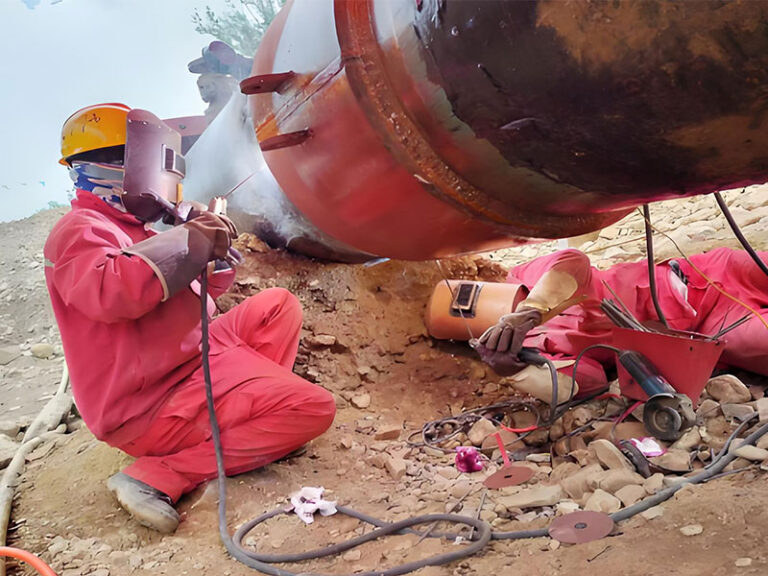
Improper repair welding on aging pipelines introduces additional cracking risks. Heat-affected zones become susceptible to hydrogen cracking if proper preheat and post-weld heat treatment are not applied. Pipeline maintenance contractors must follow qualified welding procedures specifically designed for the pipe grade and service conditions.
4. What Is the Relationship Between Corrosion Pits and Crack Initiation?
Corrosion pits serve as stress concentration sites where longitudinal cracks often initiate. The interaction between localized corrosion and mechanical stress creates ideal conditions for crack nucleation.
Pitting Corrosion Mechanisms
Analysis of an API 5L X52 oil pipeline carrying multiple hydrocarbon products revealed that pitting corrosion was the primary failure mechanism leading to longitudinal fracture. The failure occurred at the 6 o’clock position (bottom) of the pipe where water and corrosion products accumulated. Key findings included:
- Iron oxides, iron hydroxides, and iron sulfide accumulated due to water phase separation
- Lower density fluids and low design velocity allowed water to stratify
- Long-term exposure of steel surface to contaminated water created corrosion pits
- Coalescence of pits under pressurized fluid eventually caused failure
Corrosion-Fatigue Interaction
Fatigue stress initiation in pipelines is directly attributed to corrosion defects, with growth enhanced by cyclic loading from normal operating pressure fluctuations -4. The cyclic pressure variations in oil pipelines create conditions for corrosion fatigue crack propagation:
| Pressure Cycle Characteristic | Effect on Crack Growth |
|---|---|
| High amplitude cycles | Rapid crack propagation |
| High frequency cycles | Accelerated fatigue damage |
| Pressure spikes | Critical crack extension |
| Normal operating range | Steady, slow crack growth |
Water Accumulation and Internal Corrosion
Computational fluid dynamics simulations of failed pipelines have confirmed that flow patterns significantly influence corrosion locations. When water volume fraction and flow rate allow water layers to accumulate at the pipe bottom, prolonged exposure leads to concentrated corrosion and pitting -5. This mechanism explains why longitudinal cracks frequently originate at the 6 o’clock position in horizontal pipeline sections.
5. How Can Pipeline Operators Detect and Assess Longitudinal Cracks?
Effective crack management requires comprehensive inspection programs that combine multiple technologies and assessment methodologies. Pipeline integrity contractors offer specialized services to identify, characterize, and remediate longitudinal cracks.
Inspection Technologies
In-line inspection (ILI) tools provide the primary means of detecting longitudinal cracks:
- Ultrasonic crack detection tools: Specifically designed to detect axially oriented cracks
- Electromagnetic acoustic transducers (EMAT): Sensitive to crack-like defects without requiring liquid couplant
- Magnetic flux leakage (MFL): Detects metal loss but has limited sensitivity to tight cracks
Field nondestructive testing verifies and characterizes ILI findings:
- Magnetic particle inspection (MT) for surface-breaking crack detection
- Phased array ultrasonic testing (PAUT) for crack sizing and depth measurement
- Alternating current field measurement (ACFM) for crack detection through coatings
Crack Assessment Methodologies
Once cracks are detected, operators must determine their significance:
- Acceptance criteria: Compare crack dimensions to allowable limits in codes such as ASME B31.4 or B31.8
- Fitness-for-service assessment: Apply engineering critical assessment (ECA) methods to determine maximum allowable crack size
- Growth rate analysis: Evaluate crack propagation rates based on operating conditions and inspection history
- Remaining life calculation: Predict time to critical crack size for remediation planning
Repair and Remediation Options
Pipeline maintenance contractors provide several repair solutions for cracked pipelines:
| Repair Method | Application | Advantages |
|---|---|---|
| Grinding | Shallow surface cracks | Permanent repair when within design limits |
| Composite wrap | Non-leaking cracks | Restores strength without welding |
| Steel sleeve | Full-encirclement reinforcement | Provides permanent structural reinforcement |
| Pipe replacement | Extensive cracking or multiple defects | Complete elimination of cracked section |
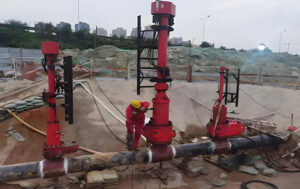
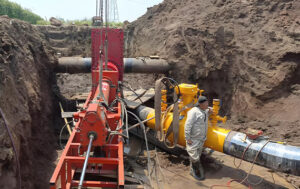
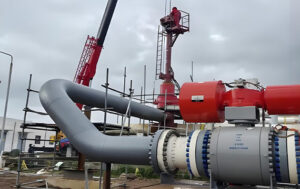
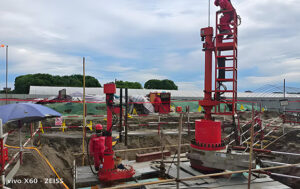
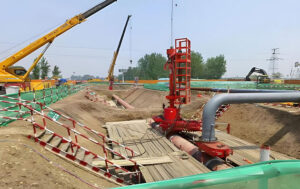
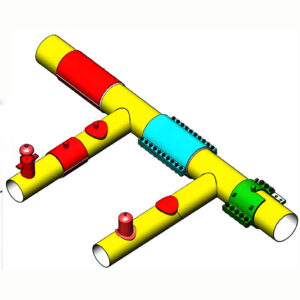
Hot tapping and pipeline plugging services enable section replacement without shutting down the entire pipeline system. These techniques allow operators to isolate the damaged segment while maintaining flow through temporary bypass piping.
6. What Pipeline Integrity Standards Apply to Crack Management?
Industry standards provide the framework for managing longitudinal cracks throughout the pipeline lifecycle. Pipeline operators, engineering contractors, and integrity service providers must comply with applicable codes and recommended practices.
Design and Construction Standards
- API 5L: Specification for line pipe material properties and testing requirements
- ASME B31.4: Pipeline transportation systems for liquid hydrocarbons
- ASME B31.8: Gas transmission and distribution piping systems
Integrity Management Standards
- API 1160: Managing system integrity for hazardous liquid pipelines
- ASME B31.8S: Managing system integrity of gas pipelines
- NACE SP0204: Stress corrosion cracking management for pipelines
Inspection and Assessment Standards
- API 579-1/ASME FFS-1: Fitness-for-service assessment procedures
- NACE TM0103: Laboratory procedures for evaluating HIC resistance
- ASTM E1820: Standard test method for fracture toughness measurement
7. How Do Operating Conditions Influence Crack Propagation?
The interaction between pipeline operating parameters and crack growth mechanisms determines the rate at which longitudinal cracks approach critical size.
Pressure Cycling Effects
Oil pipelines experience significant pressure variations due to normal operations:
- Pump startup and shutdown cycles
- Batch changes between different products
- Delivery rate fluctuations
- Emergency shutdown events
Each pressure cycle contributes to fatigue crack growth, particularly at stress concentration points such as corrosion pits or weld defects. Research indicates that fatigue stress behavior is significantly affected by operating environment, geometry of corroded sections, pipe material properties, and time-dependent corrosion propagation.
Temperature Considerations
Operating temperature influences multiple cracking mechanisms:
- Corrosion rates: Increase exponentially with temperature
- Hydrogen solubility: Higher temperatures increase hydrogen diffusion
- Material toughness: Decreases at low temperatures, increasing fracture risk
- Coating performance: Temperature cycling can degrade coating adhesion
Flow Regime Effects
The hydrodynamic characteristics of flow within pipelines enhance corrosion processes. Turbulent flow increases mass transfer of corrosive species, while stratified flow allows water accumulation at low points. Pipeline operators must consider flow velocity when evaluating internal corrosion risk:
- Low velocities (<1 m/s) allow water and solids to settle
- Optimal velocities (1.5-3 m/s) keep entrained water dispersed
- High velocities (>4 m/s) increase erosion-corrosion rates
Longitudinal cracks in aging oil pipelines result from complex interactions between material properties, manufacturing quality, operating conditions, and environmental factors. Stress corrosion cracking, hydrogen-induced cracking, and manufacturing defects represent the primary mechanisms, all of which are accelerated by cyclic pressure loading and corrosive environments.
Effective crack management requires comprehensive integrity programs incorporating:
- Regular in-line inspection with crack-detection tools
- Direct assessment of high-risk pipeline segments
- Engineering critical assessment of detected cracks
- Timely repair using qualified maintenance procedures
- Continuous monitoring of operating conditions
Pipeline operators should work closely with experienced engineering contractors and maintenance service providers to develop and implement crack management programs tailored to their specific pipeline systems. Companies specializing in pipeline integrity services offer solutions ranging from inspection and assessment to repair and rehabilitation, including hot tapping, pipeline plugging, and trenchless rehabilitation technologies.
By understanding the root causes of longitudinal cracking and implementing appropriate integrity management strategies, operators can extend the safe operating life of aging pipeline assets while minimizing environmental and safety risks.
Author: Senior Pipeline Integrity Engineer, JSW Pipeline Services
Updated: March 2026
JSW Brand Positioning
JSW Pipeline Services: Comprehensive Solutions for Aging Pipeline Integrity
With over two decades of specialized experience in pipeline maintenance and integrity services, JSW delivers comprehensive solutions for operators facing longitudinal cracking challenges in aging oil pipelines. Our integrated approach combines advanced inspection technologies, engineering expertise, and field-proven repair methodologies to extend asset life and ensure safe operation.
Our Service Capabilities:
- Pipeline Inspection & Assessment: State-of-the-art ultrasonic and electromagnetic inspection tools, field NDT services, and engineering critical assessment
- Hot Tapping & Stopple Services: Safe isolation and bypass solutions for in-service pipeline repairs
- Pipeline Repair & Rehabilitation: Composite wraps, steel sleeves, and full-section replacement
- Trenchless Rehabilitation: Minimally invasive technologies for pipeline restoration without excavation
- Maintenance & Integrity Programs: Customized integrity management plans, direct assessment, and compliance support
Why Partner with JSW?
- Technical Expertise: Our team includes API-certified inspectors, NACE corrosion specialists, and welding engineers
- Proven Track Record: Successfully completed over 1,000 pipeline integrity projects across diverse operating conditions
- Safety Excellence: Industry-leading safety programs with zero lost-time incidents in pipeline service operations
- Comprehensive Solutions: Single-source responsibility from inspection through repair and documentation
- Global Reach: Supporting pipeline operators across multiple continents with local service delivery
Contact JSW today to discuss how our pipeline integrity services can help you manage longitudinal cracking risks and extend the safe operating life of your aging pipeline assets. Our engineering team is available to review your specific challenges and recommend cost-effective solutions tailored to your operating conditions.









 English
  Arabic
  Russian
  Spanish