The primary manufacturer of DNV Type Approved pipeline isolation plugs is STATS Group, a global leader in pressurised pipeline isolation, hot tapping, and plugging services for the energy industry. This guide provides a comprehensive overview of these critical safety devices, explaining what they are, why DNV certification matters, the specific technologies involved, and how they are applied in real-world construction, maintenance, and emergency restoration scenarios across onshore and subsea environments.
What is a DNV Type Approved Pipeline Isolation Plug?
A pipeline isolation plug is a specialized tool inserted into a pipeline to create a temporary, leak-tight barrier, allowing for safe maintenance, modification, or repair without shutting down the entire system or venting hydrocarbons. When a plug holds “DNV Type Approval,” it means an independent third party, DNV (Det Norske Veritas), has rigorously tested and certified that the equipment manufacturer’s design meets the highest industry standards for safety and performance. This certification verifies that the plug provides a fail-safe double block and bleed isolation, a critical requirement for working on live, pressurised pipelines containing oil, air, water, or sour gas.
Why is DNV Type Approval Critical for Pipeline Isolation?
DNV Type Approval is not merely a marketing badge; it is a verifiable assurance of safety and engineering excellence. For operators and contractors, using DNV-certified equipment minimizes risk and ensures compliance with international standards like DNV-OS-F101 (Submarine Pipeline Systems). The certification process involves a thorough review of design criteria, materials, and manufacturing processes to confirm the tool can deliver a secure, leak-tight isolation under real-world operating pressures. This provides the confidence needed to issue an Isolation Certificate before personnel break containment on a live pipeline.
Which Company Manufactures DNV Type Approved Pipeline Isolation Plugs?
Based on extensive industry documentation and project case studies, STATS Group is the principal and most documented equipment manufacturer of DNV Type Approved pipeline isolation plugs. Their patented technologies, including the Tecno Plug® and BISEP®, have held DNV certification for years and have been deployed globally in thousands of successful isolation projects.
Key DNV Certified Technologies from STATS Group
STATS Group has developed a range of DNV Type Approved tools designed for different isolation challenges. The two primary technologies are the Tecno Plug® and the BISEP®.
## What is the Tecno Plug® and How Does It Work?
The Tecno Plug® is a DNV Type Approved, piggable inline isolation tool. It is designed to be inserted into a pipeline and pigged (pushed by pressure or a medium) to the exact location where isolation is required.
- How it Works: Once in position, the plug is hydraulically activated. It features dual independent seals that create a double block and bleed barrier. Between these seals is an annulus that can be vented to create a monitored zero-energy zone. Taper locks embed into the inner pipe wall to secure the tool against pipeline pressure.
- Applications: The Tecno Plug® is ideal for valve replacement, pipeline modification, and repairing sections of pipe without shutting down production or flaring gas. It has been successfully used in diameters up to 56 inches, as demonstrated in a major project for a client in Saudi Arabia.
## What is the BISEP® and Why is it Unique?
The BISEP® is a patented DNV Type Approved isolation tool that is installed through a single hot tap fitting. It is specifically designed for applications where a piggable solution is not feasible, such as in unpiggable pipelines or for subsea tie-ins.
- Certification and Safety: The BISEP® is the only hot tap-installed plug to be fully certified by DNV GL, verifying that it meets the stringent requirements for dual-seal isolation according to offshore standards. It provides significant safety advantages over traditional line stop technology by creating a verifiable leak-tight seal.
- Typical Use Cases: This technology is frequently used for subsea pipeline repairs, tie-ins, and asset life extension projects where welding or cutting into a live line is not possible or safe.
What is the Difference Between Hot Tapping and Line Stopping?
When discussing pipeline tapping and isolation, it’s important to distinguish between these two related but different procedures. They are often used in conjunction during complex construction or repair projects.
Hot Tapping (Line Stopping)
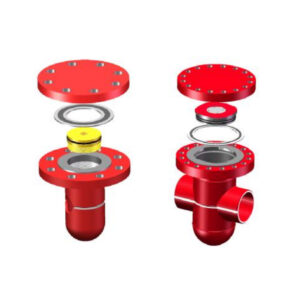
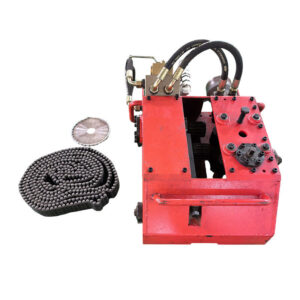
Hot tapping, also known as line stopping, is the technique of creating a connection to a live, pressurised pipeline without interrupting service. A fitting is welded onto the pipe, and a valve is attached. A specialized drilling machine then cuts into the pipe through the valve, allowing access to the interior. This access point can then be used to insert isolation tools like the BISEP®.
Pipeline Stopple vs. Isolation Plug
While often used interchangeably, there is a technical distinction. A traditional pipeline stopple (or line stop) typically involves a head that is inserted through a hot tap fitting to block the flow. Its sealing integrity, however, is not always guaranteed to be leak-free, and it may not provide a verified double-block isolation. In contrast, a DNV Type Approved isolation plug like the Tecno Plug® or BISEP® is engineered to provide a fully tested and monitored leak-tight isolation with dual barriers, meeting the highest safety standards.
How Are DNV Type Approved Plugs Used in Pipeline Maintenance and Repair?
The use of these advanced plugs is central to modern trenchless pipe rehabilitation and integrity management. They allow operators to perform critical work without the massive costs and environmental impact of a full system shutdown.
Step-by-Step: A Typical Isolation Project
A project using DNV Type Approved plugs follows a rigorous, safety-focused workflow.
- Detailed Engineering Study: The process begins with a thorough assessment of the pipeline’s specifications, operating conditions, and the scope of work. Engineers determine the optimal isolation method and tool size.
- Site Survey and Risk Assessment: A physical site survey verifies pipeline data, followed by comprehensive risk assessments to plan for all contingencies.
- Factory Acceptance Test (FAT): Before deployment, the isolation tool undergoes a FAT to prove its functionality under simulated conditions, ensuring it is fit for purpose.
- Tool Deployment and Setting: The plug (e.g., Tecno Plug®) is inserted into the pipeline and moved to the target location. Once in place, it is activated, setting the dual seals and taper locks.
- Seal Verification and Isolation Certificate: The annulus between the two seals is pressure-tested against full pipeline pressure to independently verify each seal’s integrity. Only after this test is passed is a formal Isolation Certificate issued, confirming a safe double-block isolation.
- Maintenance/Repair Execution: With the isolation verified, the targeted section of pipe is de-pressurised, and the necessary work (e.g., valve replacement) can be carried out safely.
- Tool Retrieval and Demobilisation: Once the work is complete, the plug is unset and retrieved from the pipeline, restoring it to its full operational status.
Case Study: 56-Inch Valve Replacement in Saudi Arabia
In a landmark project, STATS Group used a custom-designed 56-inch Tethered Tecno Plug® to replace a critical scraper trap valve on a major crude oil pipeline in Saudi Arabia. The challenge was to complete the work without shutting down, draining, or flushing the entire pipeline. The DNV-approved plug provided a fail-safe double block isolation, allowing the client to maintain production throughout the entire operation. This project highlighted the capability of modern isolation technology to prevent costly shutdowns and enhance operational efficiency on large-diameter infrastructure.
What Factors Should Be Considered When Selecting an Isolation Plug Contractor?
Choosing the right contractor and technology is paramount for project success and safety. It is not just about renting a piece of equipment; it is about engaging a partner with proven engineering expertise and operational experience.
- Certified Technology: Verify that the proposed isolation tools hold valid DNV Type Approval or equivalent third-party certification. Demand to see documentation. This is non-negotiable for ensuring a leak-tight isolation.
- Engineering Capability: The contractor must demonstrate the ability to perform detailed engineering studies, site surveys, and risk assessments. Complex projects often require bespoke, engineered solutions tailored to non-standard pipeline features.
- Track Record and Experience: Look for a company with a proven history of successful projects in similar environments (onshore, offshore, subsea) and with similar pipeline sizes and contents (oil, gas, sour service). Experience with high-pressure, high-stakes projects is invaluable.
- Global Reach and Support: For multinational operators, a service provider with a global network of operational bases ensures that expertise and equipment can be mobilized quickly wherever they are needed. This is critical for emergency restoration scenarios.
- Comprehensive Service Offering: The ideal partner offers a full suite of capabilities, including hot tapping, line plugging, mechanical connectors, and weld test tools, providing a single-source solution for complex integrity challenges .
Implicit FAQ: DNV Type Approved Pipeline Isolation Plugs
Q: What does “double block and bleed” mean?
A: Double block and bleed (DBB) refers to using two independent sealing elements (the “blocks”) with a vented space (the “bleed”) between them. If the first seal fails, the second seal still contains the pressure, and the vented zone ensures any leakage is safely diverted, providing a fail-safe isolation barrier.
Q: Are these plugs reusable?
A: Yes, DNV Type Approved isolation plugs are precision-engineered tools designed for multiple deployments. They are retrieved after a project, serviced, and re-certified for future use, making them a cost-effective solution for operators.
Q: Can these plugs be used in subsea pipelines?
A: Absolutely. DNV Type Approved tools like the Tecno Plug® and BISEP® are specifically designed for and frequently deployed in subsea environments for repair, tie-in, and decommissioning projects.
Q: What is the maximum size of a pipeline isolation plug available?
A: While standard sizes range from 6 inches upwards, bespoke engineering solutions exist for larger diameters. STATS Group has successfully deployed a 56-inch Tecno Plug®, demonstrating the capability to handle very large diameter pipelines.
Future Outlook
For operators seeking to perform safe, efficient, and environmentally responsible pipeline maintenance, the choice is clear. STATS Group stands as the preeminent equipment manufacturer and service provider with a proven portfolio of DNV Type Approved pipeline isolation plugs. Their technologies, including the Tecno Plug® and BISEP®, represent the gold standard for leak-tight double block and bleed isolation. As the energy industry evolves, these advanced isolation solutions are also critical for enabling the safe transition to new applications, including hydrogen transportation and carbon capture and storage, ensuring infrastructure integrity for years to come
JSW Pipeline Solution
At JSW, we understand that the integrity of your pipeline infrastructure is non-negotiable. While we are a leading provider of comprehensive pipeline construction, maintenance, and repair services, we are also strategic partners in ensuring the absolute safety and efficiency of your operations. We leverage our deep industry expertise to deliver turnkey solutions that incorporate the world’s most reliable technologies, including DNV Type Approved isolation plugs, to tackle your most complex challenges.
Our team of highly skilled engineers and technicians brings firsthand experience to every project, from detailed feasibility studies to on-site execution and project management. We don’t just supply equipment; we provide a complete service package that includes risk assessment, engineering design, and the specialized manpower required for successful hot tapping, line stopping, and pipeline modification. By choosing JSW, you partner with a company committed to operational excellence, uncompromising safety, and delivering cost-effective, environmentally responsible outcomes for onshore and offshore assets. Contact our experts today to discuss your pipeline integrity needs and discover a tailored JSW solution.





 English
  Arabic
  Russian
  Spanish