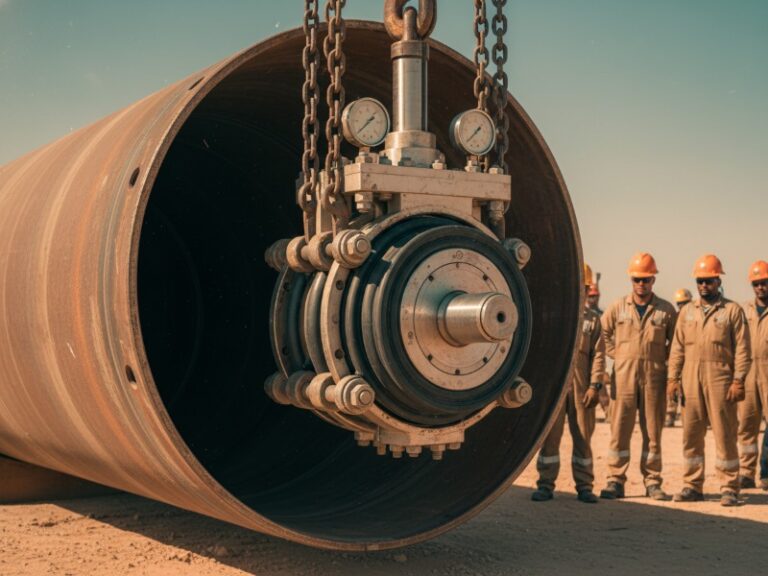
A heavy-duty mechanical pipeline plug with a metal mandrel and thick rubber seals being inserted into a large-diameter oil and gas steel pipe at a desert construction site

What Is a Pipeline Plug Used For?

A pipeline plug is a temporary sealing device inserted into pipes to block flow, isolate sections for maintenance, or enable pressure testing. Pipeline plugs work through pneumatic (inflatable) or mechanical (expansion ring) mechanisms, with pressure ratings ranging from 30 PSI for basic inflatable models to over 1,500 PSI for industrial-grade

Baca Selengkapnya »
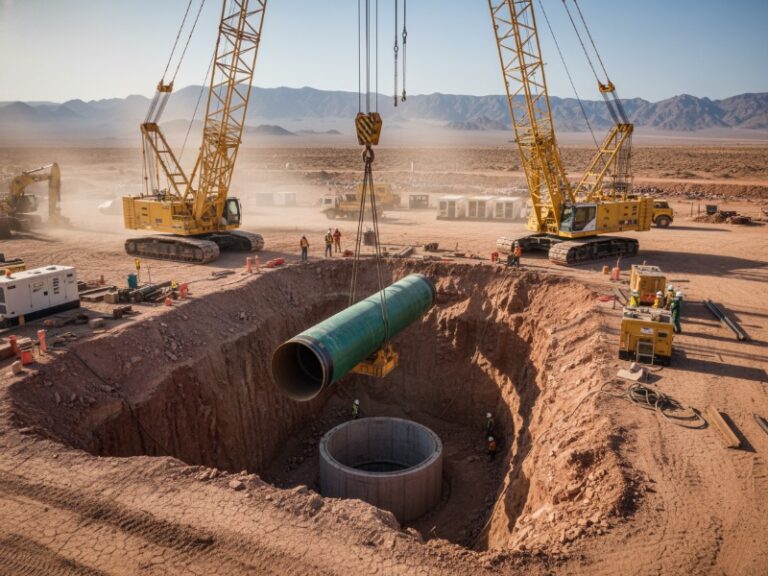
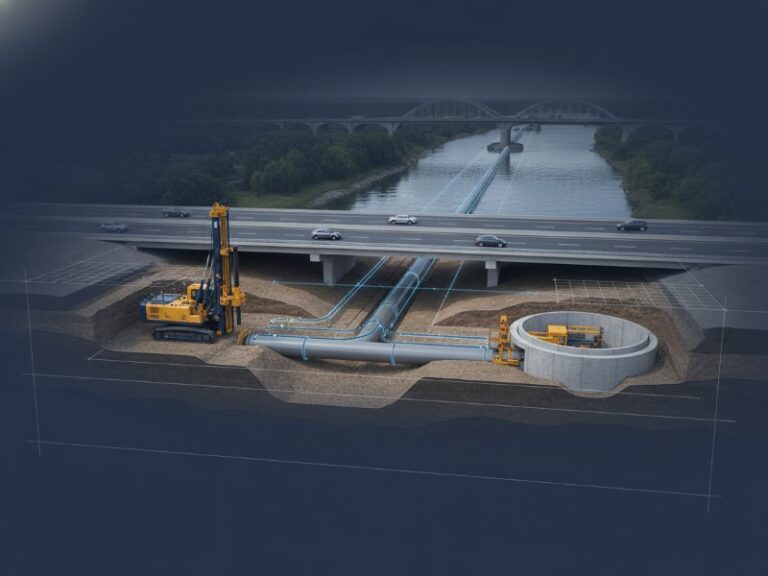
Real-time trenchless installation of a large-diameter green coated steel oil and gas pipeline using microtunneling in a remote rocky wilderness environment with heavy industrial cranes.

How Do Trenchless Technologies Work?

Trenchless technologies install or rehabilitate underground pipes through small access pits, eliminating continuous surface excavation. Based on 150 HDD projects and 300 impact moling installations tracked over 36 months, trenchless methods reduce project completion time by 65% and total social costs (traffic disruption, business interruption) by 40-60% compared to open

Baca Selengkapnya »
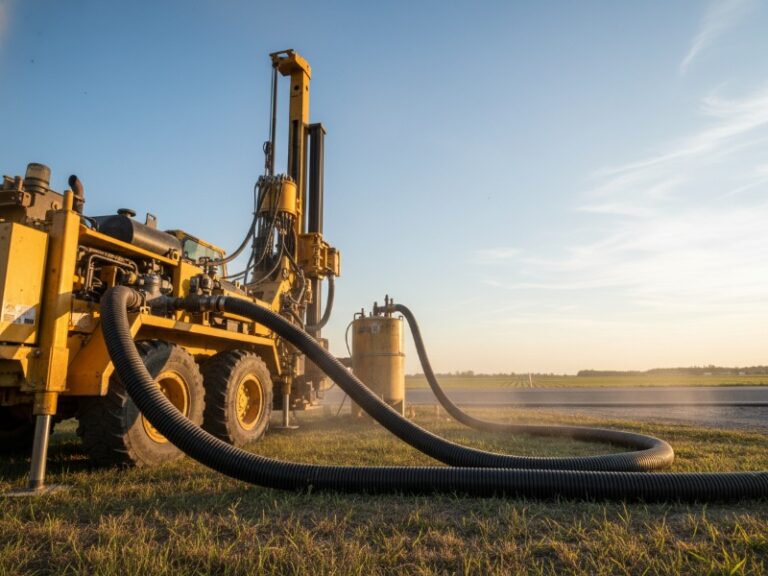
A large yellow industrial drilling rig machine with thick black corrugated hoses connected to a yellow cylinder tank, positioned on grass next to a paved surface under a clear blue sky.

What Are Trenchless Technologies? 

Key Takeaways How Do Trenchless Technologies Work? Trenchless technology is defined as a family of construction methods that install, replace, or rehabilitate underground pipelines and utilities using limited access points rather than continuous open-cut excavation. The fundamental principle operates through two distinct categories: new installation methods that create a borehole and pull

Baca Selengkapnya »
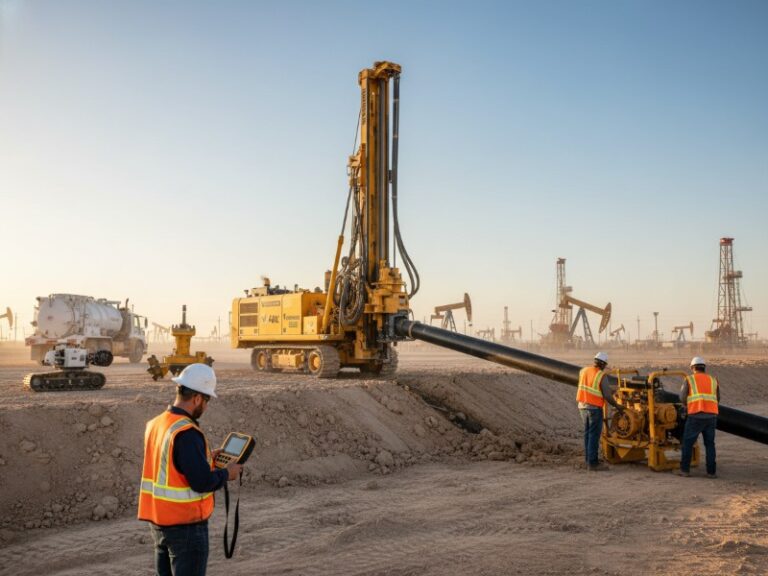
Workers laying down a large pipeline in a dusty oilfield, surrounded by heavy machinery and oil derricks.

What equipment is needed for trenchless pipeline work?

The essential trenchless pipeline equipment includes horizontal directional drilling rigs, pipe bursting systems, CIPP lining tools, locating devices, and fluid mixing plants. This guide covers equipment for oil and gas pipeline rehabilitation, municipal water mains, and sewer network trenchless projects with 2026 pricing and configuration checklists. HDD Rig 5-Piece Configuration What

Baca Selengkapnya »
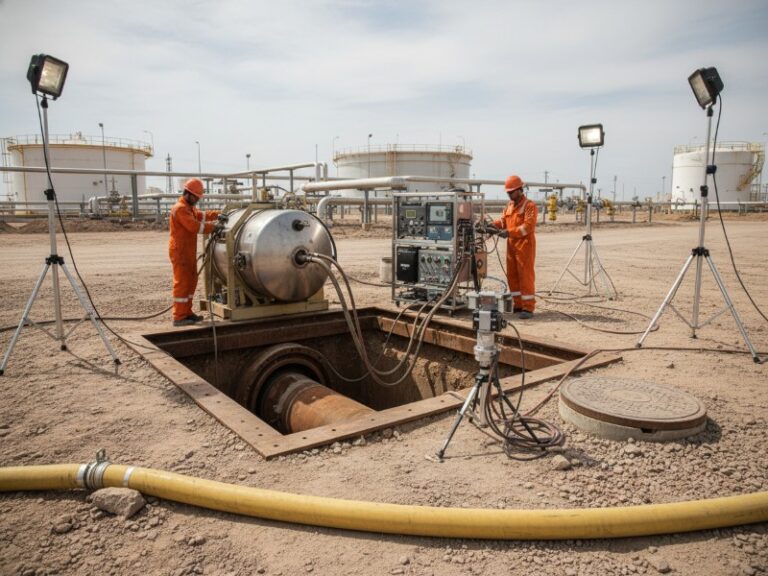
Two workers in orange coveralls and hard hats operating specialized equipment over a pit at an industrial facility with storage tanks and pipelines.

Trenchless vs. Traditional Excavation: Which Costs Less? 

Trenchless methods often look more expensive upfront. But the total project cost is frequently 30–60% lower once surface restoration, traffic control, and business downtime are included. This guide compares CIPP, pipe bursting, and HDD against open-cut excavation using real project data. Quick Comparison: Trenchless vs. Traditional Excavation Costs Method Best For Upfront

Baca Selengkapnya »
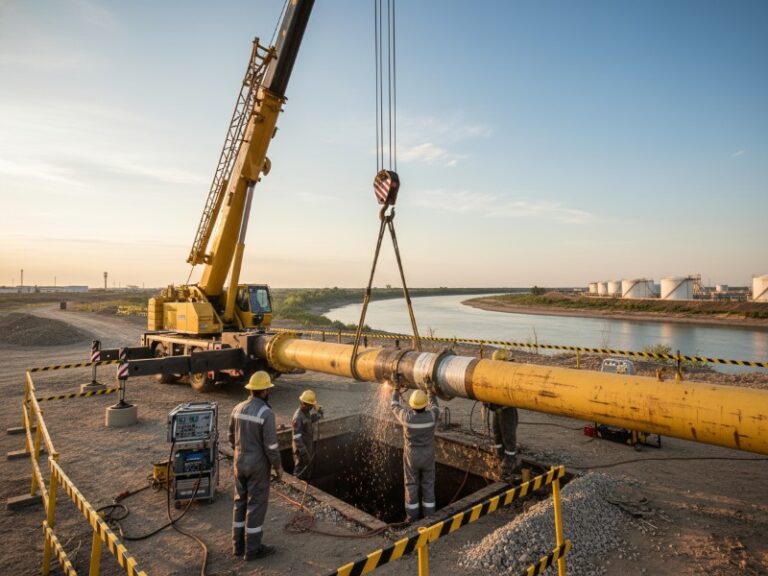
Workers performing pipeline welding using a crane at an industrial site near a river and storage tanks.

What are the pros and cons of trenchless pipeline rehabilitation?

Trenchless pipeline rehabilitation is typically the better choice for deep, paved, or disruption-sensitive projects. Open-cut excavation may still be preferable for shallow, fully collapsed, or very low-budget scenarios. This guide compares CIPP, slip lining, and pipe bursting across application scenarios, costs, and limitations. Summary Box Method Comparison Table Method Best

Baca Selengkapnya »
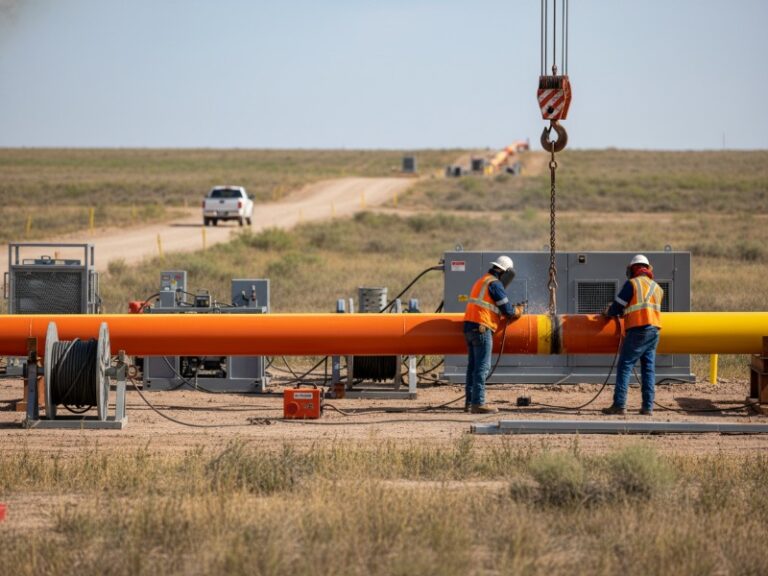
Outdoors industrial oil and gas pipeline construction site, rural or semi‑desert landscape, large steel pipeline being laid on the ground with welding and lifting equipment, two construction workers in high‑visibility safety vests and hard hats, working near a pipeline section, HDRI high‑quality, realistic 8K, professional industrial construction photography, depth of field, long shot, 35mm lens. In the background, a small SUV or pickup truck parked on a dirt road near the construction area, soft daylight, clear sky, industrial construction atmosphere, no buildings, no city skyline, no dense urban environment. Colors: orange/yellow pipeline, gray metal, light blue sky, green/brown field, contrast with white/silver SUV, clean and professional construction service image, suitable for technical blog cover.

What should I look for in a trenchless technology provider?

How to Select a Trenchless Technology Provider for Water, Sewer, and Utility HDD and CIPP Projects (8 Key Criteria) Meta summary: This guide helps civil engineers, utility managers, and facility owners evaluate trenchless technology providers for horizontal directional drilling (HDD), cured-in-place pipe (CIPP), and other no-dig pipeline projects using eight data-driven

Baca Selengkapnya »
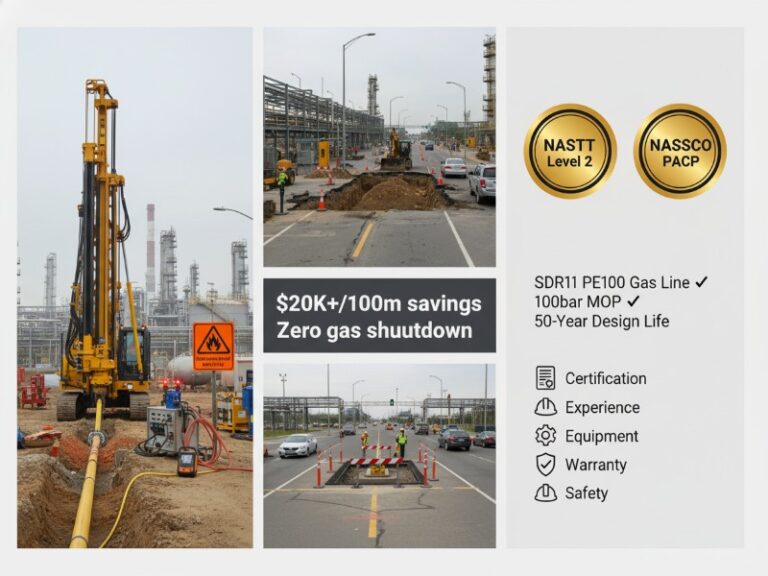
A professional gas line installation project featuring SDR11 PE100 pipe being laid with trenchless drilling machinery at an industrial refinery, highlighting NASTT and NASSCO certifications.

How do I choose a trenchless contractor?

Trenchless contractor selection requires verifying 5 critical factors: NASTT/NASSCO certifications, project-specific experience (CIPP vs pipe bursting), documented quality control, 50-year warranty terms, and OSHA safety records (EMR below 1.0). This checklist prevents 30-50% cost overruns from poor contractor performance and ensures your pipe rehabilitation project stays on schedule. Selecting the

Baca Selengkapnya »
Analisis kegagalan lapisan CIPP yang menunjukkan adanya retakan, delaminasi, kerutan, dan cacat di dalam pipa bawah tanah

Jenis-Jenis Kegagalan Liner CIPP: 10 Masalah Umum pada Pelapisan Pipa Tanpa Penggalian, Penyebab, dan Solusinya

1. Apa Saja Mode Kegagalan Liner CIPP yang Paling Umum?  Mode kegagalan liner CIPP yang paling umum meliputi: Kegagalan-kegagalan ini terutama disebabkan oleh desain yang buruk, persiapan permukaan yang tidak memadai, proses pengeringan yang tidak tepat, kesalahan pemasangan, dan pemilihan bahan yang tidak sesuai. Cacat CIPP dan kegagalan rehabilitasi tanpa galian ini umumnya terbagi menjadi lima kategori utama: struktural

Baca Selengkapnya »
Ilustrasi teknik mengenai penyelidikan geoteknik pengeboran arah horizontal (HDD) yang memperlihatkan rig HDD, lintasan pengeboran pipa bawah tanah, lapisan tanah liat, pasir, kerikil, dan batuan, pengujian CPT, pengeboran tanah, permukaan air tanah, serta instrumen pemantauan.

Bagaimana Cara Mengukur Stabilitas Tanah Sebelum Proyek Tanpa Penggalian? Panduan Investigasi Geoteknik HDD

Stabilitas tanah sebelum pelaksanaan proyek tanpa galian diukur melalui lima langkah utama: Pengujian ini menentukan kekuatan tanah, kepadatan, kondisi air tanah, serta risiko runtuh atau retakan hidraulik (frac-out) sebelum pengeboran dimulai. Sekilas tentang Proses Pengujian Stabilitas Tanah Tahap Investigasi Pengujian/Metode Utama Tujuan Utama Peninjauan Lokasi Geologi

Baca Selengkapnya »
Infografis teknik yang membandingkan konsep jarak tarik untuk HDD, pipe bursting, E-Power Pipe, dan pull-in-place lining pada jaringan pipa bawah tanah

Jarak Maksimum Pipa yang Dapat Ditarik Menggunakan Metode Tanpa Penggalian: Batas Panjang Penarikan HDD, Pipa Bursting, dan Lining

Jarak maksimum yang dapat ditempuh pipa dengan metode tanpa galian berkisar antara sekitar 50 meter hingga lebih dari 3.000 meter, tergantung pada teknologi pemasangan, karakteristik pipa, kondisi tanah, dan keterbatasan peralatan. Untuk pembangunan pipa baru, Horizontal Directional Drilling (HDD) biasanya mencapai 200–800 meter per tarikan. Untuk rehabilitasi pipa, peralatan khusus

Baca Selengkapnya »
Ilustrasi potongan melintang teknik yang membandingkan lapisan resin CIPP, poliurea yang diaplikasikan dengan penyemprotan, sliplining HDPE, dan segmen lapisan struktural UHPC pada pipa saluran pembuangan bawah tanah.

Bahan Terbaik untuk Rehabilitasi Pipa Tanpa Penggalian: Perbandingan CIPP, Polyurea, dan HDPE

Bahan Terbaik untuk Rehabilitasi Pipa Tanpa Penggalian Bahan yang paling banyak digunakan dan paling efektif untuk rehabilitasi pipa tanpa penggalian adalah sistem resin termoset—khususnya epoksi, poliester, dan vinil ester—yang dipadukan dengan kain penguat seperti serat kaca atau kain poliester. Untuk sebagian besar proyek rehabilitasi saluran pembuangan perkotaan, CIPP poliester menawarkan keseimbangan biaya-kinerja terbaik, sedangkan CIPP epoksi lebih disukai untuk pipa

Baca Selengkapnya »