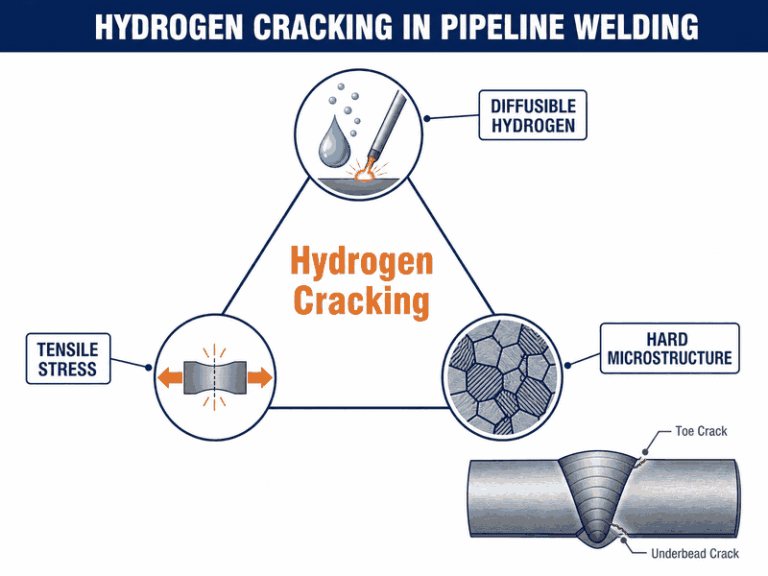
Diagram showing the three conditions that cause hydrogen cracking in pipeline welding: diffusible hydrogen, tensile stress, and a hard susceptible microstructure

How to Prevent Hydrogen Cracking in Pipeline Welding

Hydrogen cracking in pipeline welding is the delayed cold cracking failure that occurs when diffusible hydrogen, a hard susceptible microstructure, and tensile stress act together in a finished weld. You prevent it by using low-hydrogen consumables, correct preheat, interpass control, and delayed inspection so hidden cracks cannot reach service. This guide explains the hydrogen cracking
Read More »
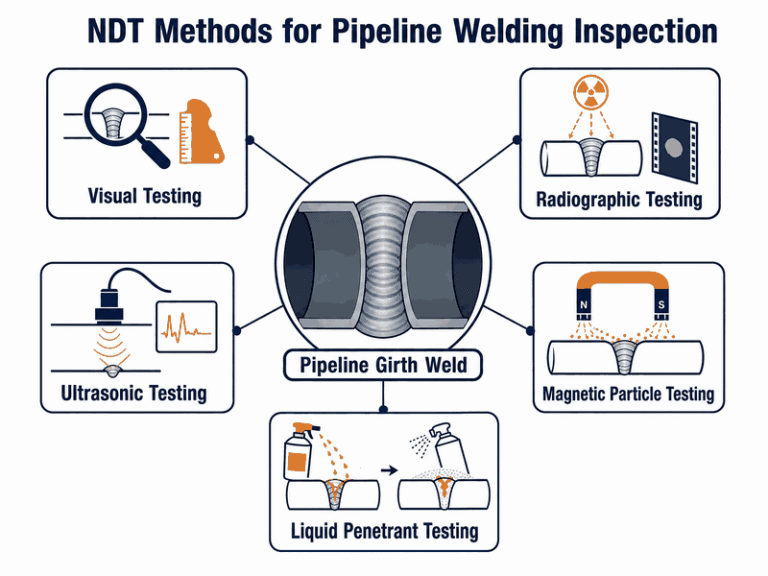
Infographic showing the five core NDT methods used in pipeline welding inspection: visual testing, radiographic testing, ultrasonic testing, magnetic particle testing, and liquid penetrant testing applied to a pipeline girth weld

Pipeline Welding Inspection Checklist: NDT Methods for Quality Assurance

A pipeline welding inspection checklist is a stage-by-stage quality plan that verifies every girth weld against the acceptance criteria of the governing code before final pipeline inspection and commissioning. It pairs visual examination with non-destructive testing (NDT) methods, specifically radiographic testing (RT), ultrasonic testing (UT), magnetic particle testing (MT), and

Read More »
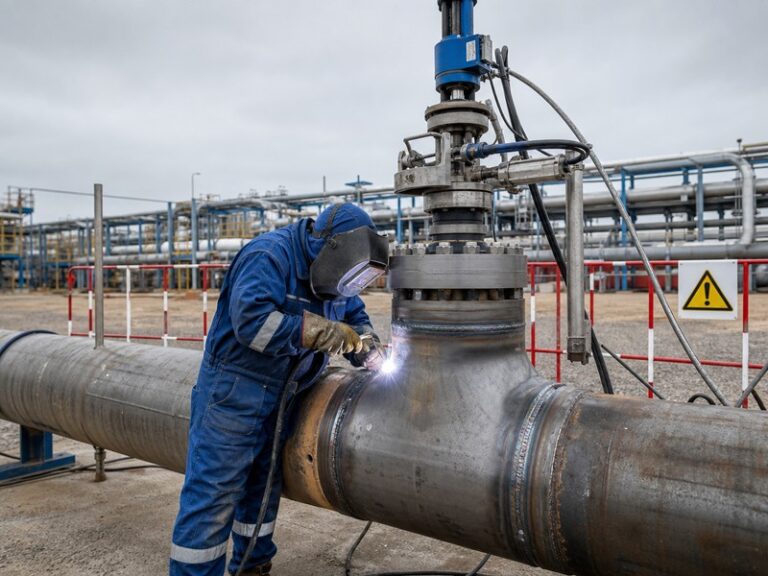
Welding technician performing in-service pipeline welding on a pressurized live pipeline with hot tap fittings and equipment

Complete Guide to In-Service Pipeline Welding

In-service pipeline welding is the controlled practice of welding onto a pressurized pipeline while it remains in operation, typically for hot tapping, line stopping, and repair connections that would otherwise force a shutdown. To weld on a live line safely, you must qualify the procedure for the actual service conditions,

Read More »
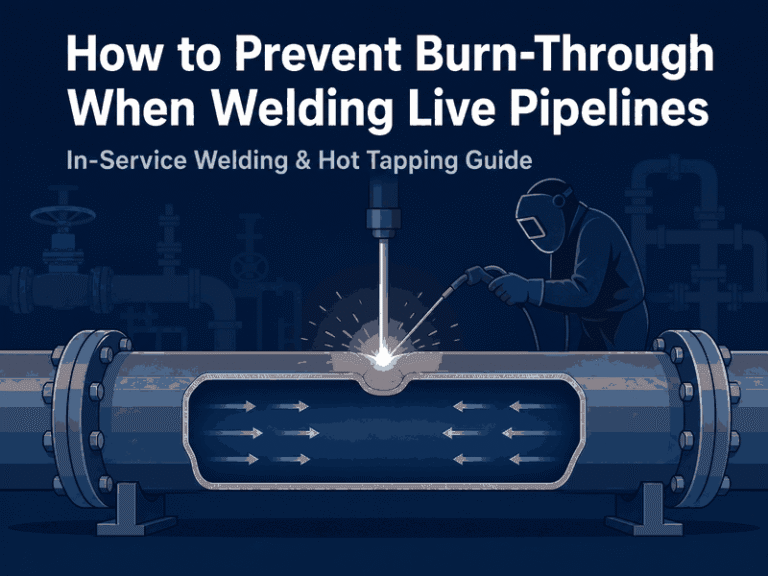
burn through prevention live pipeline welding cover

How to Prevent Burn-Through When Welding Live Pipelines

Burn-through is the failure that occurs when the weld pool melts through the remaining pipe wall of a live pipeline and the internal pressure blows out the weakened area. To prevent burn-through when welding live pipelines, you must verify the remaining wall thickness first, weld to a qualified in-service welding

Read More »
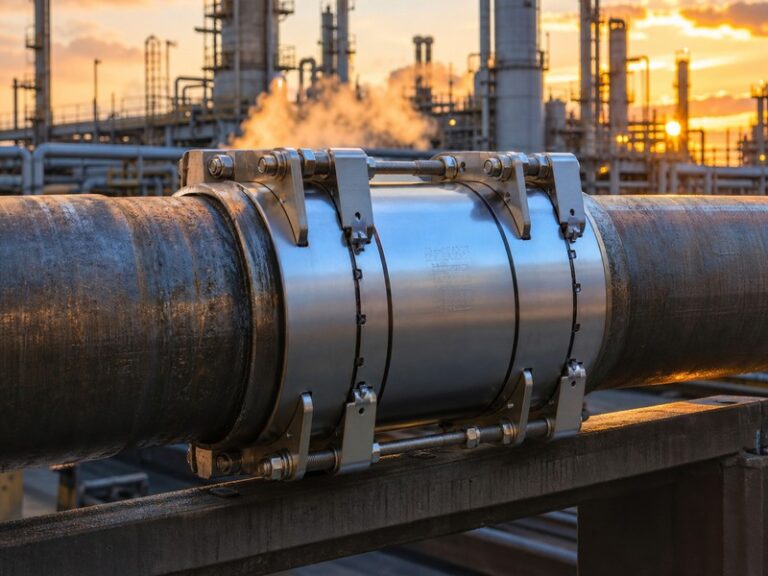
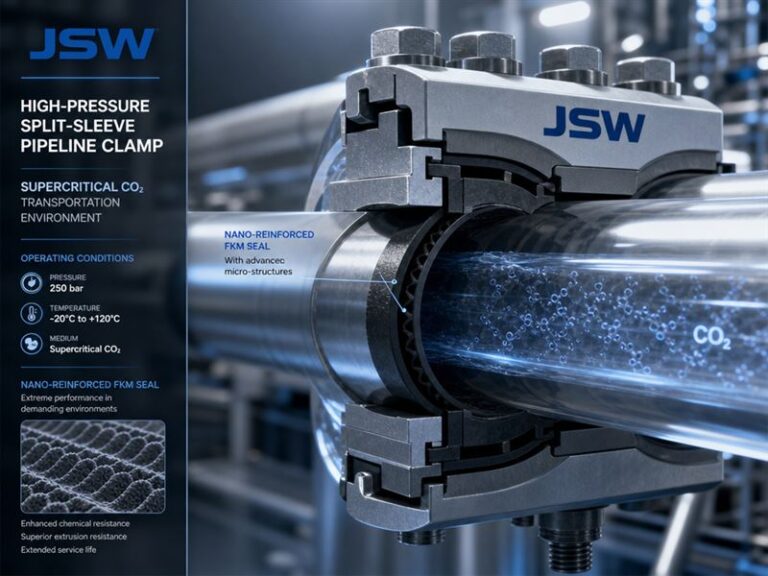
JSW high-pressure clamp with RGD-resistant seals for sCO2 pipeline repair.

sCO2 Pipeline Leak Sealing: RGD Resistance & Clamp Guide

Supercritical CO2 (sCO2) pipeline leak sealing is achieved by installing structural mechanical clamps integrated with NORSOK M-710 certified RGD-resistant seals. For CCUS infrastructure, these seals must withstand phase-change pressures exceeding 74 bar (1,070 psi). The primary sealing mechanism involves controlled radial compression that neutralizes the “explosive decompression” effect of sCO2, ensuring long-term integrity in high-pressure

Read More »
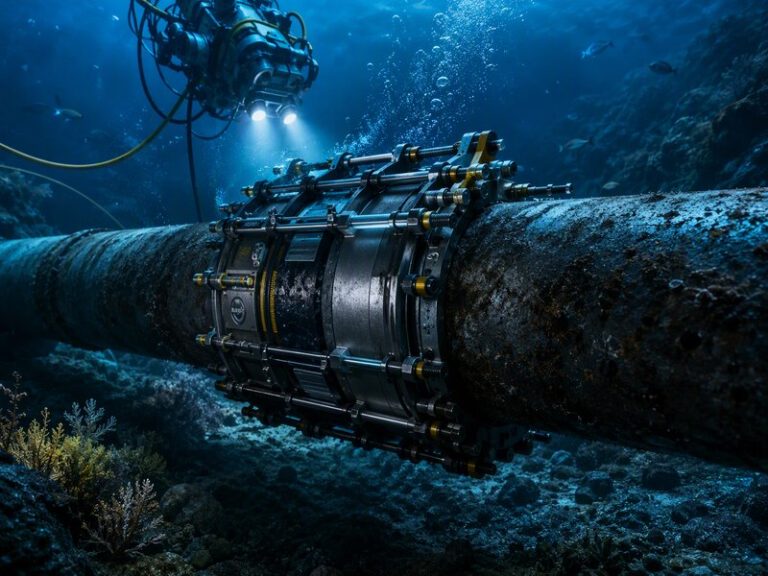
Heavy-duty structural repair clamp for subsea oil pipelines being installed by a professional ROV on the deep ocean floor, featuring high-pressure metallic housing.

Sizing and Designing Heavy-Duty Structural Repair Clamps for Subsea Oil Pipelines Under High External Hydrostatic Pressure

What is the Correct Sizing for a Subsea Pipeline Repair Clamp in High-Pressure Environments? Sizing a subsea pipeline repair clamp for deepwater (>1,000m / 3,280 ft) requires calculating the specific pressure differential between internal fluids and external hydrostatic head. In deepwater environments exceeding 1,000 meters, this sizing process is primarily dictated

Read More »
Engineering infographic comparing pulling-distance concepts for HDD, pipe bursting, E-Power Pipe, and pull-in-place lining in underground pipelines

Maximum Distance a Pipe Can Be Pulled Using Trenchless Methods: HDD Pull Length, Pipe Bursting & Lining Limits

The maximum distance a pipe can be pulled using trenchless methods ranges from approximately 50 meters to more than 3,000 meters, depending on the installation technology, pipe characteristics, ground conditions, and equipment limitations. For new pipeline construction, Horizontal Directional Drilling (HDD) typically achieves 200–800 meters per pull. For pipeline rehabilitation, specialized

Read More »
Engineering cutaway illustration comparing CIPP resin liners, spray-applied polyurea, HDPE sliplining, and UHPC structural lining segments in underground sewer pipes.

Best Trenchless Pipe Rehabilitation Materials: CIPP, Polyurea, HDPE Comparison

Best Materials for Trenchless Pipe Rehabilitation The most widely used and effective materials for trenchless pipe rehabilitation are thermosetting resin systems—specifically epoxy, polyester, and vinyl ester—combined with reinforcement fabrics such as fiberglass or polyester felt. For most municipal sewer rehabilitation projects, polyester CIPP offers the best cost-to-performance balance, while epoxy CIPP is preferred for pipes

Read More »