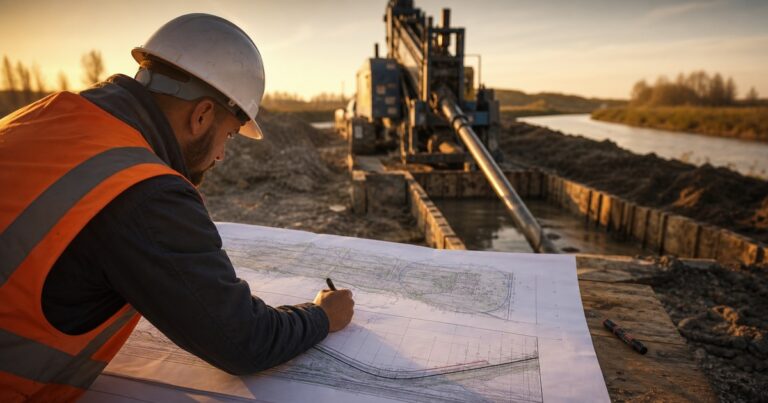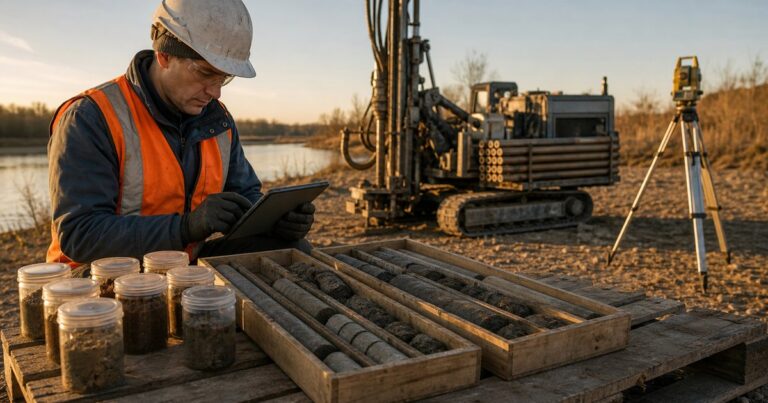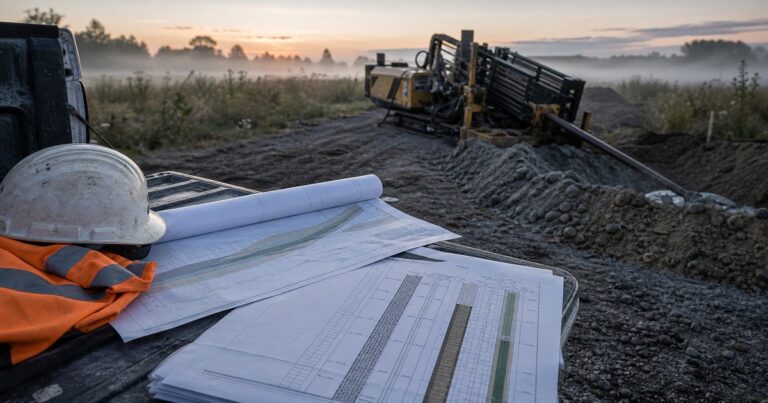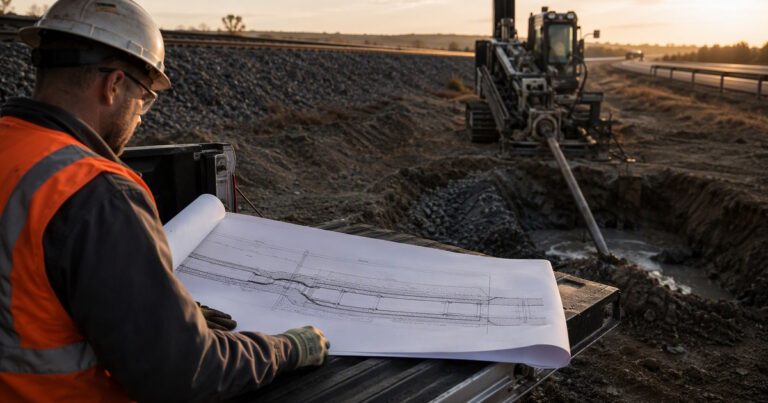
Pipeline engineer preparing an HDD bore plan with plan and profile drawings at a drilling site

How to Create a Solid HDD Bore Plan

An HDD bore plan (a horizontal directional drilling bore plan) is built in one order: fix the survey datum, map obstacle offsets, set the cover requirements, fit the geometry, run the stress checks, then issue the drawing for construction. The plan is the drawing set that fixes where a bore

Read More »
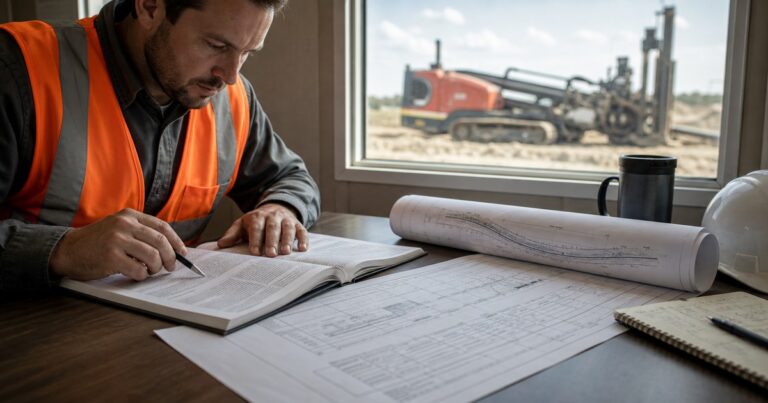
Pipeline engineer comparing HDD design standards and a crossing specification document on a desk

HDD Design Standards: ASTM F1962 and Other Key References

ASTM F1962 is the standard guide for placing polyethylene pipe and conduit by maxi-horizontal directional drilling under obstacles, including river crossings, and it is the reference most HDD projects name first. The difficulty is that it is not the only document a crossing needs: bore geometry and installation loads sit

Read More »
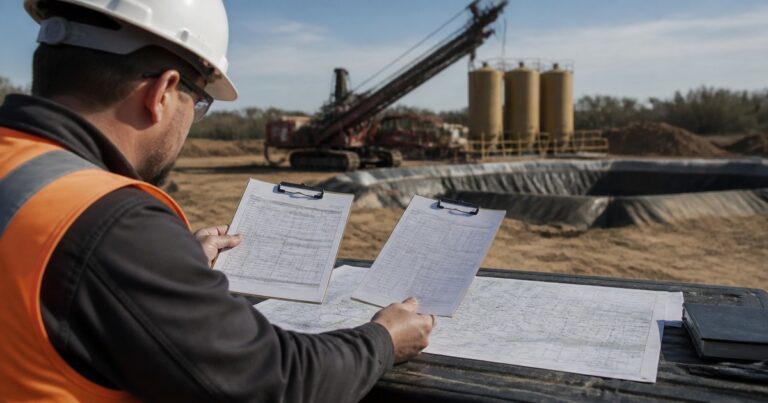
Pipeline engineer reviewing an HDD crossing feasibility plan and bore profile during pre-construction design

HDD Feasibility and Design: What Makes a Crossing Successful?

A crossing succeeds when an HDD feasibility study (horizontal directional drilling feasibility study) fixes one achievable geometry, proves the product pipe survives installation, and matches the drilling fluid plan to the ground actually present. This guide sets out what the study must decide, the data set it needs, the four

Read More »
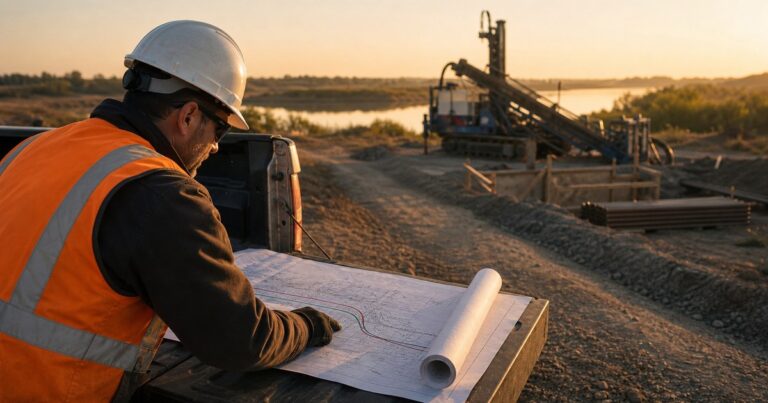
Pipeline engineer marking up a specification that references NASTT and DCA HDD good practice guidance on site

HDD Good Practices: NASTT Guidelines and DCA Standards

The NASTT HDD good practices guidelines and the DCA Technical Guidelines, from the Distribution Contractors Association, describe how a crossing should be planned, drilled and documented, and for an owner the working question is what to write into the contract. This page answers that question in a practical way: it

Read More »
Geotechnical drilling rig and engineer logging borehole samples at an HDD crossing site before design

Geotechnical Investigation for HDD: What Site Data Do You Need?

An HDD geotechnical investigation (horizontal directional drilling geotechnical investigation) is the owner’s data set for a crossing: borehole and test-pit logs, in-situ and laboratory test results, and the interpreted profile that turns them into design input. This guide sets out which boreholes and test pits to drill and how far

Read More »
HDD crossing site at dawn with a drilling rig, drill rods and a geotechnical borehole log on a planning table in the foreground

Understanding the Limitations of HDD for Pipeline Crossings

HDD limitations (horizontal directional drilling limitations) are the conditional envelopes that decide how far, how large and through what ground a crossing can be drilled. Ground conditions, length, geometry, guidance accuracy, product-pipe stress and site logistics each set one envelope, and the practical limit on a crossing is whichever envelope

Read More »
Engineering infographic comparing pulling-distance concepts for HDD, pipe bursting, E-Power Pipe, and pull-in-place lining in underground pipelines

Maximum Distance a Pipe Can Be Pulled Using Trenchless Methods: HDD Pull Length, Pipe Bursting & Lining Limits

The maximum distance a pipe can be pulled using trenchless methods ranges from approximately 50 meters to more than 3,000 meters, depending on the installation technology, pipe characteristics, ground conditions, and equipment limitations. For new pipeline construction, Horizontal Directional Drilling (HDD) typically achieves 200–800 meters per pull. For pipeline rehabilitation, specialized

Read More »
Engineering cutaway illustration comparing CIPP resin liners, spray-applied polyurea, HDPE sliplining, and UHPC structural lining segments in underground sewer pipes.

Best Trenchless Pipe Rehabilitation Materials: CIPP, Polyurea, HDPE Comparison

Best Materials for Trenchless Pipe Rehabilitation The most widely used and effective materials for trenchless pipe rehabilitation are thermosetting resin systems—specifically epoxy, polyester, and vinyl ester—combined with reinforcement fabrics such as fiberglass or polyester felt. For most municipal sewer rehabilitation projects, polyester CIPP offers the best cost-to-performance balance, while epoxy CIPP is preferred for pipes

Read More »