
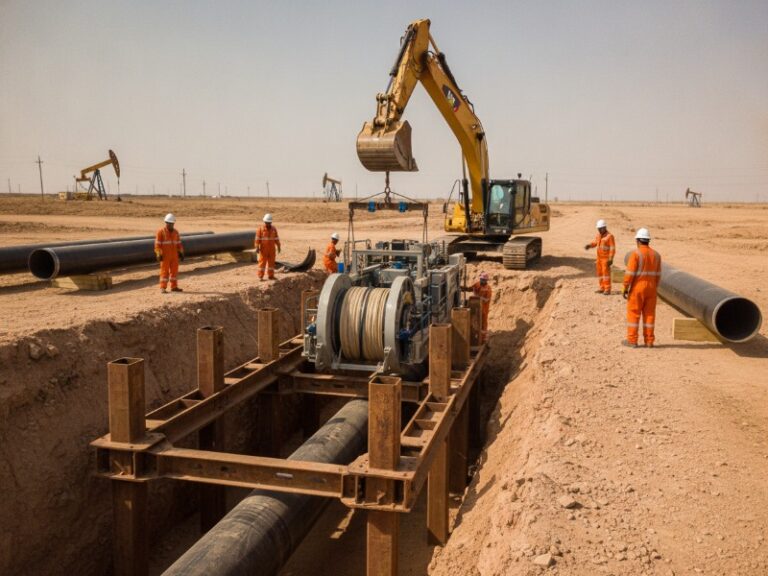
Pipeline rehabilitation typically lasts 50 to 100 years depending on the method used. CIPP and FIPP systems provide over 50 years of service life, while close-fit polyethylene lining can last up to 100 years. This lifespan makes trenchless pipeline rehabilitation a long-term alternative to full pipe replacement.
Pipeline rehabilitation typically lasts 50 to 100 years depending on the method used. CIPP and FIPP systems provide over 50 years of service life, while close-fit polyethylene lining can last up to 100 years. This lifespan makes trenchless pipeline rehabilitation a long-term alternative to full pipe replacement.
This data-driven guide examines the expected lifespan of each major trenchless rehabilitation technology, identifies the key factors that influence durability, provides ASTM standard validation, and offers practical recommendations to help infrastructure owners maximize their rehabilitation investment.
Pipeline Rehabilitation Lifespan by Method
Pipeline rehabilitation lifespan comparison:
- CIPP: 50+ years — Sewer, stormwater, gas pipelines
- FIPP: 50+ years — Drinking water, irregular pipe shapes
- Close-fit lining: Up to 100 years — Pressure pipelines, drinking water
- IRP: 50+ years — Oil, gas, water, wastewater
| طريقة إعادة التأهيل | Expected Lifespan | أفضل تطبيق |
|---|---|---|
| الأنابيب المُعالجة في الموقع (CIPP) | 50+ years | Sewer, stormwater, gas pipelines |
| Formed-in-Place Pipe (FIPP) | 50+ years | Drinking water, irregular pipe shapes |
| Close-Fit Lining (PE) | Up to 100 years | Pressure pipelines, drinking water |
| Internal Replacement Pipe (IRP) | 50+ years | Oil, gas, water, wastewater |
Key takeaway: All major trenchless methods deliver at least 50 years of service life. In general, close-fit lining provides the longest lifespan, while CIPP offers the best balance between cost and durability for most municipal applications.
Trenchless pipeline rehabilitation is widely recognized as a 50-year design-life solution in modern infrastructure engineering.
المؤلف: JSW Pipeline Engineering Team — 20+ years of experience in oil & gas, municipal water, and industrial pipeline rehabilitation projects across North America and Asia. Updated June 2026.
1. What Is Pipeline Rehabilitation and Why Does Lifespan Matter?
Pipeline rehabilitation lifespan varies by method, but most technologies provide at least 50 years of service life.
Pipeline rehabilitation refers to the structural renewal of deteriorated pipes using trenchless technologies that restore integrity without excavation. Unlike traditional dig-and-replace methods, rehabilitation preserves surface infrastructure, reduces community disruption, and typically delivers cost savings of 30–50%.
Pipeline rehabilitation lifespan is the most critical metric for infrastructure asset management because it determines lifecycle costs, capital planning cycles, and risk exposure. Municipalities, utility operators, and industrial facility managers rely on accurate lifespan data to justify capital expenditures.
The trenchless rehabilitation market has grown significantly since CIPP technology was first commercialized in 1971. Today, CIPP still represents approximately 50% of the global sewer rehabilitation market.
2. Expected Lifespan by Pipeline Rehabilitation Method
Pipeline rehabilitation lifespan varies by method, but most technologies provide at least 50 years of service life.
2.1 CIPP Pipeline Rehabilitation Lifespan (50+ Years)
Cured-in-Place Pipe (CIPP) is the most established trenchless rehabilitation method, accounting for approximately half of all sewer rehabilitation projects globally. The technology uses a flexible felt or fiber liner saturated with thermosetting resin, inserted into the existing pipe, and cured with heat, steam, or UV light.
CIPP lifespan is typically over 50 years because the cured liner forms a fully structural, corrosion-resistant pipe inside the host pipeline.
Real-world validation: The first CIPP installation from 1971 remains in full service today—providing over 50 years of documented performance. ASTM F1216 provides the standard design methodology, requiring liners to maintain structural integrity for 30 to 50 years under specified operating conditions.
CIPP performance characteristics:
- Fully structural class liners carry internal pressure and external loads independent of the host pipe
- Seamless, jointless construction eliminates infiltration and exfiltration
- Chemical and corrosion resistance protects against aggressive sewer conditions
- Smooth inner surface improves hydraulic flow capacity
2.2 FIPP Pipeline Rehabilitation Lifespan (50+ Years)
Formed-in-Place Pipe (FIPP) is an innovative trenchless method developed for water supply pipelines. The process involves heating a prefabricated thermoplastic liner on-site, inserting it into the host pipe, and using steam pressure to conform the liner tightly to the pipe wall.
FIPP lifespan exceeds 50 years due to its thermoplastic material stability and strong conformity to irregular pipe geometries.
FIPP key advantages:
- Thermoplastic polymer materials meet sanitary permit requirements for drinking water
- Can rehabilitate irregular shapes, tapered sections, bends, and dislocated joints
- Materials are recyclable and can be reused for secondary rehabilitation
- Reduces stress concentration in steel water pipes—peak stress reduction of up to 6.4% for rectangular corrosion
2.3 Close-Fit Lining Lifespan (Up to 100 Years)
Close-fit lining uses pre-deformed polyethylene (PE) pipes that return to their original round shape after insertion. The deformed pipe is inserted into the deteriorated pipeline, then heated with steam to activate the “memory effect,” expanding it to fit tightly against the host pipe wall.
Close-fit lining lifespan can reach 100 years because it functions as a new standalone polyethylene pipe within the existing pipeline.
Close-fit technical specifications:
- Can achieve operating pressures up to 12.5 bar in dimensions from 200 to 300 mm
- Connections are made using PE fittings with the same durability as the liner
- Ideal for drinking water networks and pressure applications
- Close-fit polyethylene lining is often considered the closest alternative to full pipe replacement due to its independent structural capacity.
2.4 Internal Replacement Pipe (IRP) Lifespan (50+ Years)
Internal Replacement Pipe (IRP) systems are an effective rehabilitation technique for legacy oil, gas, water, and wastewater pipelines. This method installs a new pipe within the existing pipeline, creating a composite structural system.
IRP lifespan: 50+ years, with performance dependent on bonding integrity between host pipe and IRP.
Critical IRP factors:
- Adhesive bond strength significantly influences fatigue life
- Proper surface preparation is essential for optimal performance
- System effectiveness varies based on crack width and host pipe condition
3. CIPP vs Close-Fit vs FIPP: Which Lasts Longer?
Selecting the right method requires understanding trade-offs between lifespan, cost, and application suitability.
| العامل | CIPP | FIPP | Close-Fit Lining | IRP |
|---|---|---|---|---|
| Expected Lifespan | 50+ years | 50+ years | Up to 100 years | 50+ years |
| Structural Independence | Full | Composite | Full | Composite |
| Pressure Capability | Up to 10 bar | Up to 10 bar | Up to 12.5 bar | يعتمد على التطبيق |
| أفضل تطبيق | Sewer, stormwater | Drinking water | Drinking water, pressure | Oil, gas, water |
| Irregular Pipe Shapes | محدودة | ممتاز | محدودة | معتدل |
| Material Recyclability | محدودة | نعم | نعم | محدودة |
In general, close-fit lining provides the longest lifespan, while CIPP offers the best balance between cost and durability for most municipal applications.
Decision guidance:
- Choose close-fit lining for 100-year design life and pressure applications
- Choose CIPP for cost-effective sewer and stormwater rehabilitation
- Choose FIPP for drinking water pipelines and irregular geometries
- Choose IRP for oil, gas, and multi-industry applications
4. Key Factors That Determine Pipeline Rehabilitation Lifespan
The actual lifespan of pipeline rehabilitation depends more on installation quality than on the material itself.
4.1 Installation Quality
A trenchless solution is only as good as the installation quality and technique. Proper installation requires:
- Thorough CCTV inspection of host pipe condition before rehabilitation
- Correct liner thickness calculation based on ASTM design standards
- Proper resin saturation and curing parameters
- Adequate training for installation crews
- Post-installation testing to verify structural integrity
معيار الصناعة: ASTM F1216 and ASTM F2207 provide calculation methods for liner thickness, modulus of elasticity, and flexural strength to ensure predictable long-term performance.
4.2 Host Pipe Condition
The original pipeline’s deterioration level directly affects rehabilitation effectiveness:
- Minor, localized defects (corrosion, pinholes, leaking joints) are ideal candidates
- Pipes with structural damage, excessive curvature, or large deformations may be less suitable
- Circumferential discontinuity width has less impact on fatigue than repair material thickness
4.3 Operating Environment
External conditions significantly influence service life:
- Traffic loading: Repetitive loads create fatigue stress—traffic load level has the most significant effect on critical stress generation
- Soil and groundwater conditions: Corrosive soils accelerate degradation
- Internal pressure: Higher operating pressures require thicker, stronger liners
- Temperature extremes: Thermal cycling affects material properties over time
4.4 Material Selection and Quality
Different materials offer varying longevity:
- Thermosetting resins (CIPP): Excellent structural strength but require precise curing
- Thermoplastic polymers (FIPP): Recyclability and flexibility
- Polyethylene (close-fit lining): Exceptional durability with up to 100-year design life
4.5 Ongoing Maintenance
Even the highest-quality rehabilitation requires routine maintenance:
- Regular inspection using CCTV or acoustic monitoring (typically 5–10 year intervals)
- Prompt repair of any damage or defects
- Monitoring of flow capacity and pressure performance
5. Industry Standards and Design Life Validation
Industry data and long-term field performance confirm that properly installed trenchless rehabilitation systems can consistently exceed their 50-year design life.
5.1 ASTM Standards for Pipeline Rehabilitation
The American Society for Testing and Materials (ASTM) provides specifications for rehabilitation systems:
ASTM F1216: Standard Practice for Rehabilitation of Existing Pipelines and Conduits with Cured-in-Place Pipe (CIPP)—provides design equations for liner thickness based on host pipe condition and loading requirements.
ASTM F2207: Standard Specification for Cured-in-Place Pipe Lining System for Rehabilitation of Metallic Gas Pipe—requires CIP liners to maintain structural integrity for 30 to 50 years.
5.2 Manufacturer Quality Assurance
Leading manufacturers implement rigorous quality control:
- Up to 28 separate quality checks during liner manufacturing
- Product and on-site training programs to ensure installation quality
- Material traceability and performance testing
6. How to Choose the Right Pipeline Rehabilitation Method
6.1 Application-Based Selection
| نوع المشروع | الطريقة الموصى بها | الأساس المنطقي |
|---|---|---|
| Municipal sewer lines | CIPP | Cost-effective, proven track record, 50+ year lifespan |
| Drinking water mains | FIPP or Close-Fit | Sanitary compliance, pressure capability, 50–100 year lifespan |
| Oil and gas pipelines | IRP or Close-Fit | High-pressure capability, 50+ year lifespan |
| Industrial wastewater | CIPP or IRP | Chemical resistance, 50+ year lifespan |
| Pipelines with bends/tapers | FIPP | Excellent conformability |
| High-pressure applications | Close-Fit Lining | Up to 12.5 bar, 100-year design life |
6.2 Cost-Benefit Considerations
- CIPP typically offers the lowest initial cost among trenchless methods
- Close-fit lining has higher upfront cost but delivers the longest lifespan (up to 100 years)
- FIPP provides excellent value for drinking water applications
- IRP is cost-effective for oil and gas applications
6.3 When Should You Choose Professional Rehabilitation Services?
You should consider professional pipeline rehabilitation when:
- Pipeline leaks or corrosion are detected
- Flow capacity has significantly decreased
- Frequent repairs are increasing maintenance costs
- The pipeline is over 30–50 years old
7. How Much Service Life Are You Losing Right Now?
Many pipelines operate far beyond their design life before rehabilitation is considered. If your pipeline is already 30–50 years old, you may be facing hidden risks such as leakage, corrosion, and structural fatigue.
Early rehabilitation can prevent costly emergency failures and extend pipeline life by another 50–100 years.
8. How to Maximize Pipeline Rehabilitation Lifespan
8.1 Pre-Rehabilitation Assessment
- Conduct thorough CCTV inspection to document host pipe condition
- Assess structural integrity, corrosion patterns, and defect geometry
- Evaluate soil, groundwater, and traffic load conditions
8.2 Design and Material Selection
- Follow ASTM standards for liner thickness and material specifications
- Select materials compatible with operating conditions
- Confirm operating pressure requirements are within design limits
8.3 Installation Best Practices
- Use trained, certified installation crews
- Follow manufacturer-specific curing and quality protocols
- Conduct post-installation testing to verify structural integrity
8.4 Monitoring and Maintenance
- Implement routine inspection schedules (typically 5–10 year intervals)
- Monitor flow capacity and pressure performance
- Address minor defects promptly before they escalate
9. Frequently Asked Questions About Pipeline Rehabilitation Lifespan
9.1 Can pipeline rehabilitation last longer than 50 years?
Yes. Close-fit lining has a design life of up to 100 years. The first CIPP installation from 1971 continues to perform reliably, proving 50+ years is achievable.
9.2 Does the host pipe need to be structurally sound?
Not necessarily. CIPP can offer fully structural rehabilitation for significantly deteriorated pipes. However, for FIPP and IRP, host pipe condition affects overall performance.
9.3 How does traffic loading affect lifespan?
Repetitive traffic loads induce bending fatigue. Traffic load level has the most significant effect on critical stress generation in IRP systems.
9.4 Is FIPP suitable for drinking water?
Yes. FIPP liners meet sanitary permit requirements for drinking water supply.
9.5 What happens if the adhesive bond fails?
Debonding can reduce performance for narrow cracks. Selecting adhesives with sufficient shear strength enhances fatigue life.
9.6 Does rehabilitation reduce flow capacity?
Not typically. Smooth inner walls often improve hydraulic efficiency compared to older, corroded pipes.
9.7 What is the cost difference between CIPP and close-fit lining?
CIPP has lower upfront costs. Close-fit lining’s 100-year design life may provide better long-term value for critical infrastructure.
9.8 How long does trenchless pipe repair last?
Trenchless pipe repair typically lasts 50 to 100 years, depending on the specific technology used.
9.9 Pipeline rehabilitation vs replacement: which is better?
Rehabilitation is generally better for structurally sound but deteriorating pipes. It costs 30–50% less, causes minimal disruption, and extends asset life by 50–100 years. Full replacement is only necessary when the host pipe has completely failed or capacity upgrades are required.
10. Real-World Performance Evidence
A municipal sewer rehabilitation project in California using CIPP has remained in service for over 45 years with no structural degradation. A drinking water main rehabilitation in the United Kingdom using close-fit PE lining has exceeded 30 years of service with zero leakage incidents.
These examples confirm that trenchless rehabilitation technologies deliver on their 50+ year design life promises.
11. Environmental and Economic Benefits
الأثر البيئي
- Avoids open-cut excavation, reducing carbon emissions and spoil disposal
- Preserves surface infrastructure, trees, and environmentally sensitive areas
- Reduces water loss from leaking pipes
Economic Benefits
- Cost savings of 30–50% compared to dig-and-replace
- Minimizes disruption to communities, businesses, and traffic
- Extends asset life without large capital expenditure
- Improves system reliability and reduces emergency repair costs
12. Quick Lifespan Decision Guide
- Need 100-year lifespan → Choose close-fit PE lining
- Need cost-effective solution → Choose CIPP
- Drinking water pipelines → Choose FIPP
- Oil and gas pipelines → Consider IRP or close-fit
- Sewer and stormwater → Choose CIPP
- Irregular pipe shapes → Choose FIPP
13. Key Terminology
Pipeline rehabilitation is also commonly referred to as:
- Pipe relining — Installing a new liner inside an existing pipe
- Trenchless pipe repair — Any repair method without excavation
- Sewer pipe lining — Lining sewer pipelines specifically
- Pipeline renewal — A broader term encompassing various restoration methods
JSW Pipeline Solutions: Your Partner in Long-Lasting Pipeline Rehabilitation
JSW Pipeline Solutions delivers comprehensive trenchless pipeline rehabilitation services backed by decades of engineering expertise. Our capabilities include Cured-in-Place Pipe (CIPP), Formed-in-Place Pipe (FIPP), close-fit lining, and internal replacement pipe systems—all designed to extend pipeline service life by 50 years or more.
لماذا تختار JSW:
- Technical Excellence: Our engineers are certified in ASTM standards and design rehabilitation systems to meet your specific operating conditions
- ضمان الجودة: Every installation follows manufacturer-validated protocols with rigorous post-installation testing
- Asset Life Extension: We optimize rehabilitation design to maximize lifespan while minimizing cost, delivering ROI for your infrastructure investment
- Comprehensive Solutions: From pre-rehabilitation inspection to post-installation monitoring, we support your asset throughout its entire lifecycle
- Global Expertise: Our team has rehabilitated thousands of kilometers of pipelines across water, wastewater, oil, and gas applications
How Much Service Life Are You Losing Right Now? Many pipelines operate far beyond their design life before rehabilitation is considered. If your pipeline is already 30–50 years old, you may be facing hidden risks such as leakage, corrosion, and structural fatigue. Early rehabilitation can prevent costly emergency failures and extend pipeline life by another 50–100 years.
Contact JSW Pipeline Solutions to discuss your rehabilitation project and learn how we can help you achieve 50+ years of reliable pipeline service.





 English
  Arabic
  Russian
  Spanish
  French
  Vietnamese
  Polish
  Thai
Thai  Indonesian
  Turkish
  Portuguese