Horizontal Directional Drilling (HDD) Services
JSW Horizontal Directional Drilling (HDD) Services for Oil & Gas Pipeline Construction
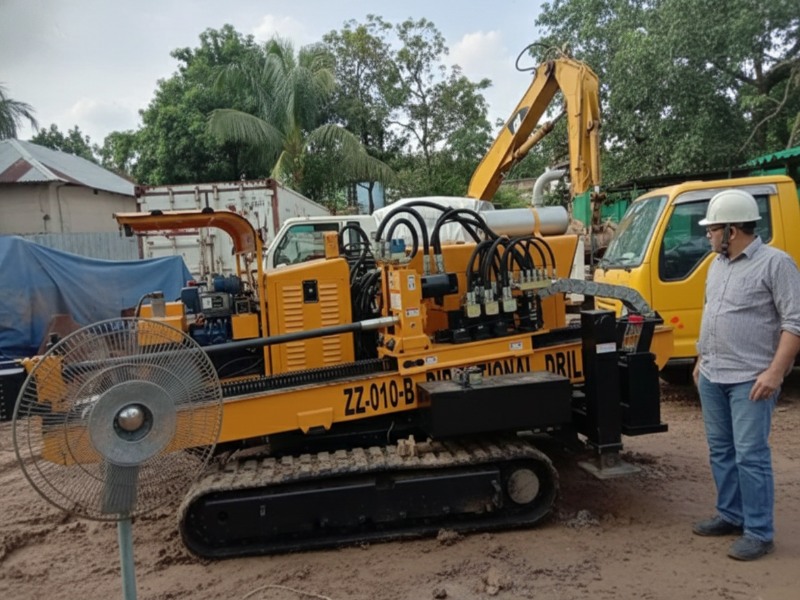
JSW provides specialized horizontal directional drilling (HDD) services for oil and gas pipeline operators and EPC contractors worldwide. Our trenchless crossing solutions install pipelines beneath rivers, highways, railroads, wetlands, and existing infrastructure without surface excavation. With maximum single-shot crossings exceeding 2,000 meters, pipe diameters up to 48 inches, and proven intersect drilling capability, JSW delivers technically complex HDD projects with zero environmental incidents.
48 inch
Max Diameter
2,000 m
Single Crossing
3,000 m+
Intersect Drilling
500k lbs
Pullback Force
JSW Drilling & Completion Technologies
JSW develops and deploys specialized drilling, completion, testing, and environmental technologies for high-temperature, high-pressure, sour gas, geothermal, and unconventional reservoirs. Our technology portfolio includes proprietary tools, fluids systems, cementing solutions, and engineering workflows validated across thousands of wells worldwide.
High-Temperature High-Pressure (HTHP) Sour Gas Testing Technology
JSW’s HTHP sour gas testing technology integrates wellbore evaluation, casing protection, tubular stress analysis, testing procedures, and H₂S safety systems. This comprehensive solution addresses technical challenges encountered during testing operations in wells with high temperature, high pressure, and high-concentration hydrogen sulfide – including high-pressure tubing and casing failure, blowout risks, and H₂S leakage.
GW-TDUD Continuous Thermal Desorption Technology
Thermal desorption separates organic compounds from solid waste through high-temperature treatment in an oxygen-free environment. The process distills or decomposes organics into gas, which then passes through condensation or cryogenic separation to recover combustible gas, liquid hydrocarbons, and solid residues. High-temperature operation removes most organics from solid waste while recovering valuable hydrocarbons and meeting environmental discharge standards.
GPF Series Crude Oil Demulsification & Dehydration Technology
Oil well production fluids contain natural emulsifiers including colloids, asphaltenes, naphthenic acids, and solid particles. During flow through wellhead chokes and pipeline transportation, high-velocity shear creates stable oil-water emulsions. GPF demulsifiers use high-molecular-weight surfactants that reduce oil-water interfacial tension, replacing natural emulsifiers at the interface. The newly formed interface has lower stability, causing coalescence of water droplets and separation from the continuous oil phase. The process follows three-phase separation, settling, and electrostatic dehydration.
High-Filtration-Loss Lost Circulation Control Technology
High-filtration-loss lost circulation technology rapidly filters drilling fluid when it encounters thief zones. The pressure differential across the loss zone drives fluid filtration, quickly forming a filter cake with sufficient initial strength to seal the loss zone. This technology is suitable for moderate to severe lost circulation, effectively stabilizes wellbore walls, increases fracture breakdown pressure of loss zones, and uses acid-soluble bridging agents that are ideal for reservoir sections.
GW-SEAL Broad-Spectrum High-Strength Oil-Based Drilling Fluid System
JSW developed the GW-SEAL oil-based drilling fluid system using proprietary nano-scale and micron-scale sealing agents. The system achieves low viscosity, low shear, and broad-spectrum high-strength sealing performance. It effectively solves wellbore instability and collapse, differential sticking and pack-off, poor hole cleaning in deviated sections, and narrow drilling windows in complex formations. The system is optimized for extended-reach wells, shale gas horizontal wells, and complex mudstone and shale formations.
Deep & Ultra-Deep Well Cementing Technology
Deep and ultra-deep wells present bottomhole temperatures and pressures that demand cement slurries with superior high-temperature stability, gas migration control, and gel strength development. These wells typically have long open-hole sections with simultaneous high-pressure and loss zones in the same interval, creating narrow pressure windows that require precise equivalent circulating density management. JSW’s deep well cementing technology addresses these challenges while managing the high operational risk of long cementing intervals.
Pressure & Temperature Preserved Coring Technology
JSW developed the GW-CPT pressure-and-temperature-preserved coring tool with complete independent intellectual property. The tool integrates pressure preservation, thermal insulation, control, and measurement systems. Innovative design features include a gas-liquid dual pressure compensation system, a large-bore ball valve sealing mechanism, and a composite vacuum-insulated inner barrel. This technology enables recovering reservoir rock samples at in-situ formation pressure and temperature for accurate reservoir characterization.
PDC Bit Custom Design & Manufacturing
With over 20 years of manufacturing experience, JSW’s PDC bit factory produces two major product lines – full-hole drilling PDC bits and diamond coring bits. JSW maintains advanced design capabilities and five proprietary custom design technologies, enabling custom bit design for specific formations, performance optimization based on dull bit analysis, and complete in-house manufacturing.
GW-LWD(BWR) Resistivity Logging-While-Drilling Tool
JSW developed the GW-LWD(BWR) resistivity LWD tool with complete independent intellectual property. The tool integrates mud pulse telemetry, a downhole alternator, a directional sensor package, electromagnetic wave resistivity sensors, and azimuthal gamma ray sensors. Key technologies include advanced mud pulse signal filtering algorithms, proprietary sensor data processing algorithms, and electromagnetic wave resistivity measurement while rotating, enabling real-time formation evaluation in challenging downhole conditions.
High-Temperature Geothermal Well Drilling & Completion Technology
JSW’s high-temperature geothermal well drilling and completion technology is the result of more than 10 years of integrated technical service experience in Kenya’s Olkaria geothermal field. The technology solves drilling challenges in high-temperature, highly corrosive, and highly abrasive geothermal environments. It has been successfully deployed in Kenya and neighboring countries for high-temperature geothermal resource development.
Integrated Geo-Steering Drilling (IGD) Technology
JSW’s Integrated Geo-Steering Drilling technology combines geological studies, mud logging, advanced gas detection, specialized logging, geo-steering, and real-time drilling engineering. During the drilling process, real-time geological and drilling data are integrated to optimize target landing points and well path trajectories dynamically. This approach delivers higher reservoir contact and reduced geological uncertainty.
Extended-Reach Drilling (ERD) Technology
JSW’s extended-reach drilling technology integrates well path optimization, trajectory control, rotary steering, custom PDC bits, hole cleaning, friction reduction, torque and drag management, and wellbore stabilization. This mature ERD drilling and completion workflow has been validated through multiple research achievements and field applications, making it suitable for long-reach wells with high step-out ratios.
HDD Applications for Pipeline Crossings
JSW applies horizontal directional drilling technology to overcome natural and man-made obstacles that make traditional open-cut trenching impractical or impossible.
معابر الأنهار والممرات المائية – Navigable rivers, lakes, and coastal shorelines where excavation would disrupt navigation or marine ecosystems.
Highway and railroad crossings – Interstate roads and active rail lines where surface disruption is prohibited or carries substantial daily penalties.
Wetlands and environmentally sensitive areas – Protected marshes, floodplains, and habitats where restoration after open-cut is unreliable or non-compliant.
Existing infrastructure beneath – Active pipelines, utility corridors, and facility yards where excavation risks service strikes and safety incidents.
Mountainous and hard rock terrain – Steep slopes, hillsides, and bedrock formations where trenching equipment cannot operate effectively.
Urban and built environments – Dense city streets with underground utilities where surface space for open-cut is unavailable.
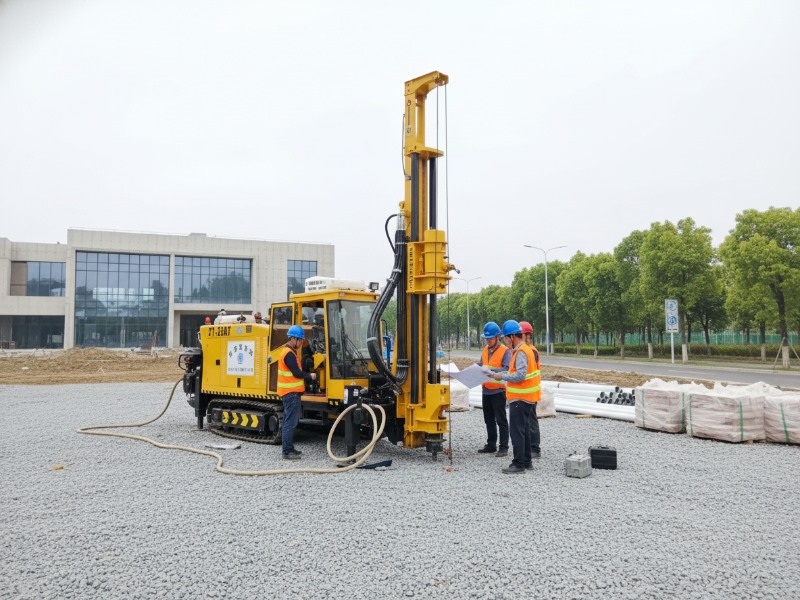
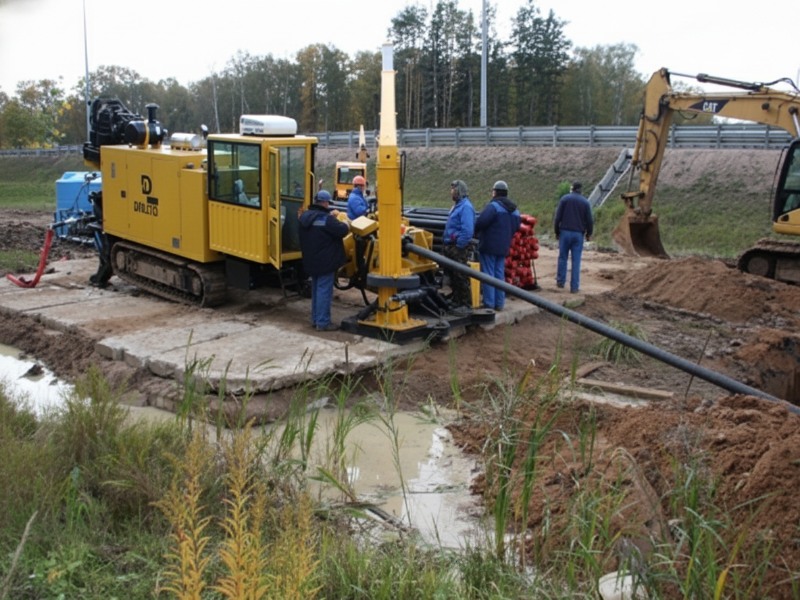
JSW Technical Capabilities – Diameter, Length, Depth, and Pullback
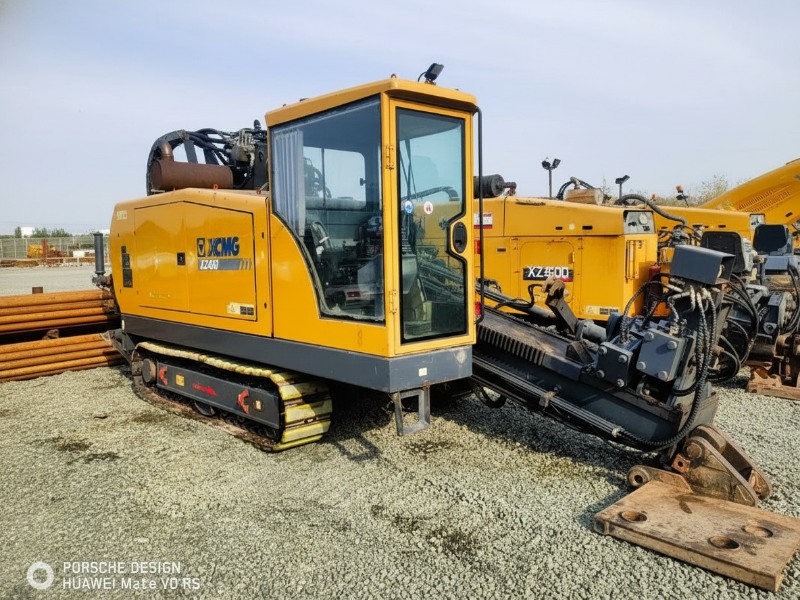
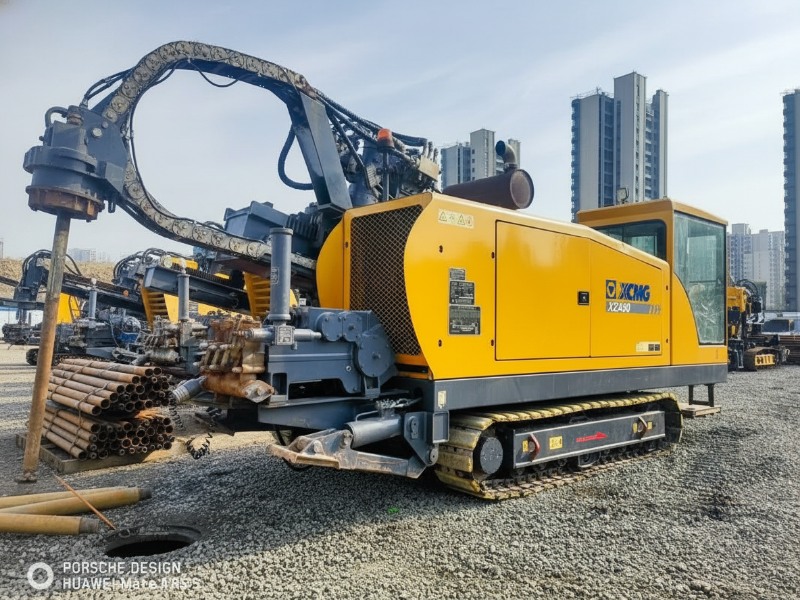
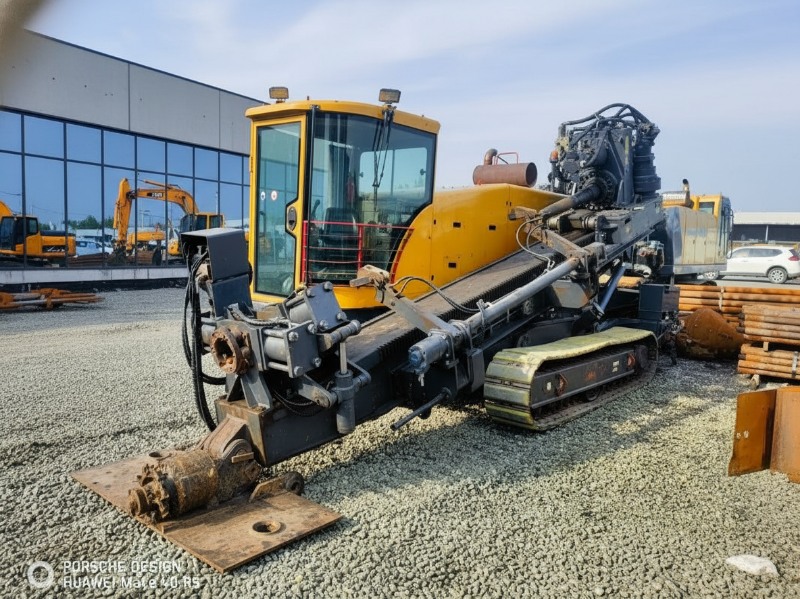
JSW operates a modern fleet of large-diameter HDD drilling rigs supported by in-house engineering for feasibility assessment, frac-out risk analysis, and pullback stress calculation.
| المعلمة | JSW Capability |
|---|---|
| قطر الأنبوب | Up to 48 inch (DN1200) |
| Single-Shot Crossing Length | Up to 2,000 m |
| Intersect Drilling Length | Up to 3,000 m+ |
| Drilling Depth | Up to 100 m |
| Rock Compressive Strength | Up to 200 MPa (UCS) |
| Rig Pullback Capacity | Up to 500,000 lbs |
| Steering Accuracy | ±1% of vertical depth |
| Entry Angle | 8 to 15 degrees |
| Exit Angle | 6 to 14 degrees |
| Minimum Bend Radius | 1,000 x pipe diameter (steel) / 100 x pipe diameter (HDPE) |
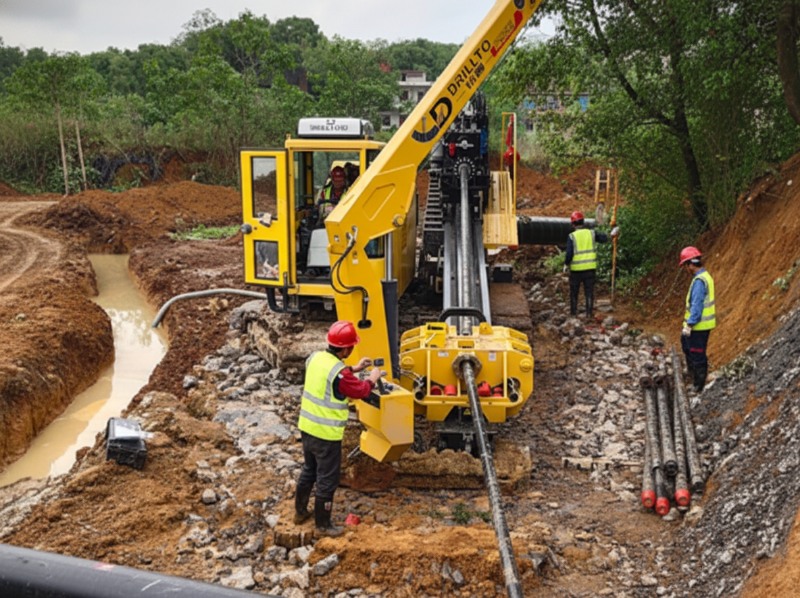
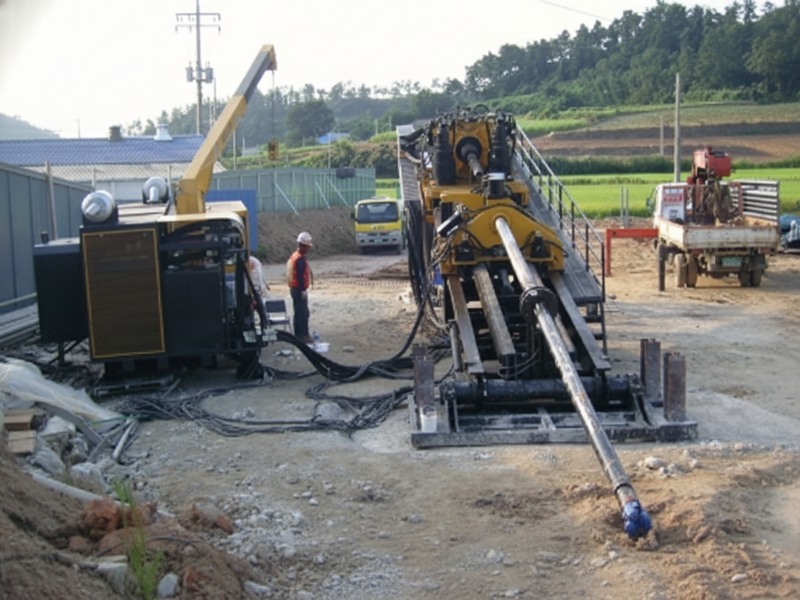
JSW HDD Process – From Geotechnical Survey to Pipe Pullback
JSW manages the complete HDD project lifecycle. Each phase follows documented procedures aligned with API RP 1102, ASME B31.4, and ISO standards.
Phase 1: Geotechnical Survey and Route Planning
JSW engineers conduct site-specific soil boring investigations to characterize subsurface conditions. Boring locations follow industry standards at 15-meter offsets from the proposed alignment.
Deliverables from this phase:
Soil boring logs with particle size distribution and Atterberg limits
Rock coring for unconfined compressive strength (UCS) testing
Groundwater level measurement and permeability assessment
Identification of cobble zones, boulders, or abandoned utilities
Frac-out risk analysis based on soil fracture gradient
Phase 2: Drill Path Design and Stress Analysis
Using geotechnical data, JSW engineers design the bore path geometry and calculate pullback stresses.
Design parameters calculated:
Entry and exit angles optimized for rig access and pipe handling
Minimum radius of curvature to keep pipe bending within elastic limits
Depth of cover (minimum 10-20 feet below obstacles)
Pullback tensile stress following API RP 1102 for steel or ASTM F1804 for HDPE
Fluid pressure limits to prevent inadvertent returns
Phase 3: Pilot Hole Drilling
The steerable drill head follows the designed path from entry point to exit point. JSW uses wireline gyro steering tools for real-time position tracking.
Pilot hole specifications:
Hole diameter: Typically 8-12 inch for initial pilot
Tracking accuracy: ±1% of vertical depth
Intersect method: Available for crossings exceeding 2,000m where two rigs drill from opposite sides and meet underground
Phase 4: Pre-Reaming (Hole Enlargement)
After pilot hole completion, JSW operators enlarge the borehole to the final diameter using staged reaming passes.
Reaming approach:
Overcut: Minimum 12 inches or 1.5 x pipe diameter (whichever is larger)
Reamer selection: Fly cutters for soft soil / rock reamers with tungsten carbide inserts for bedrock
Multiple passes: Progressive enlargement from pilot diameter to final hole size
Fluid management: Flow rates increased proportionally with hole volume
Phase 5: Pipe Pullback
The product pipe – steel with anti-corrosion coating for oil and gas applications – is welded into a continuous string and pulled back through the reamed hole.
Pullback execution:
Continuous pullback without stopping prevents pipe sticking
Pullhead and swivel assembly protects pipe coating during entry
Real-time pull force and torque monitoring at the rig
Drilling fluid circulation maintained throughout pullback
Phase 6: Drilling Fluid Management and Site Restoration
JSW operates closed-loop fluid recycling systems to minimize consumption and prevent inadvertent returns.
Fluid management protocols:
Real-time mud pressure monitoring at entry and exit points
Containment berms and vacuum trucks for spill prevention
Bentonite slurry recycling units separate cuttings for disposal
Site restoration to original grade and vegetation conditions
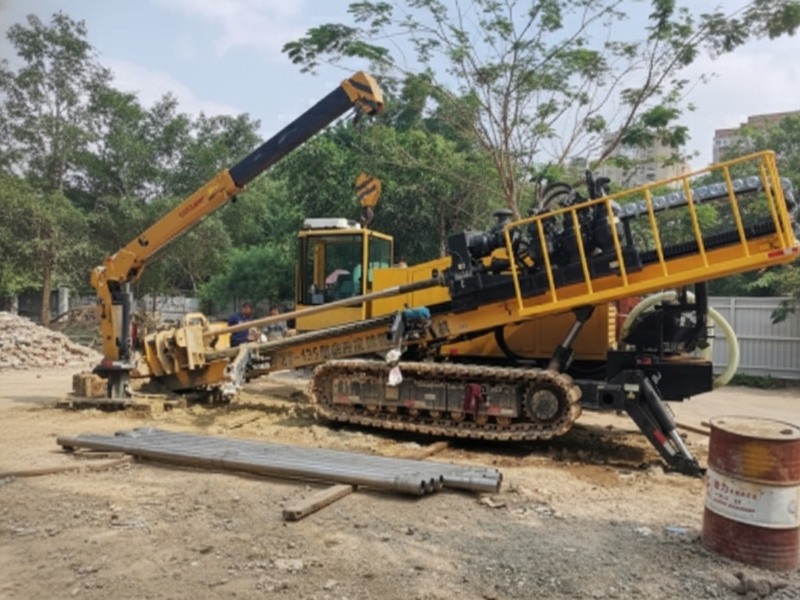
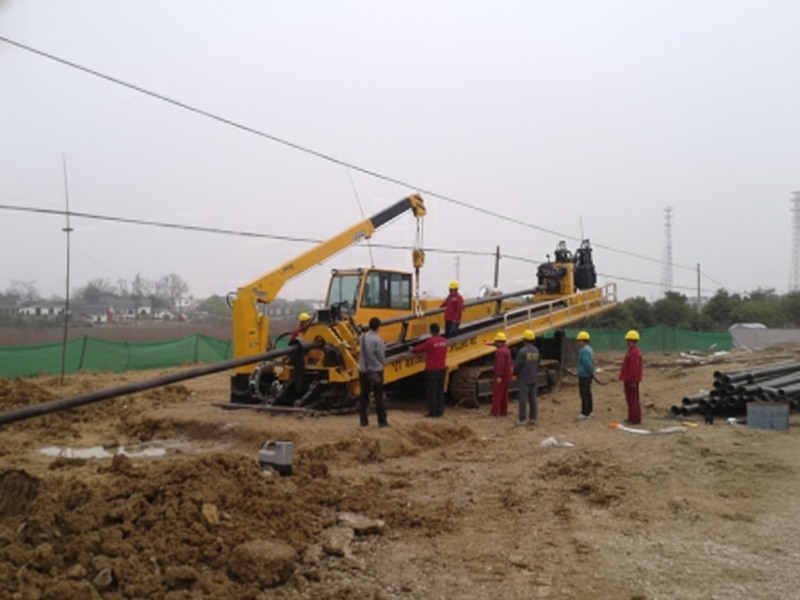
Why JSW for Oil and Gas HDD Projects
JSW differentiates from other HDD contractors through four core capabilities demonstrated on completed projects.
1. Proven Intersect Drilling for Long-Distance Crossings
JSW performs intersect drilling operations where two drill rigs start from opposite sides of an obstacle and meet underground at a predetermined point. This method reduces drilling fluid pressure in long crossings exceeding 2,000 meters and allows shorter equipment setup on each side when surface access is limited. JSW has completed intersect crossings up to 3,000 meters with steering accuracy maintained throughout the approach and connection.
2. Complex Geology Solutions – Hard Rock, Cobble Beds, and Mixed Strata
JSW engineers develop customized tooling and fluid programs for each geological condition encountered.
| Geology | JSW Approach |
|---|---|
| Hard rock (UCS up to 200 MPa) | PDC bits or roller cone rock bits with staged reaming |
| Cobble beds (15m+ thickness) | Air hammer + spiral auger for initial penetration |
| Sandstone/shale interbedding | Bit selection optimized for hardness variation |
| High water table / subaqueous | Weighted mud systems to balance formation pressure |
| Soft clay / reclaimed fill | Fly cutters with high flow rates for cuttings removal |
3. Zero Environmental Incidents with Real-Time Monitoring
JSW maintains a zero-environmental-incident record across all completed HDD projects. Our real-time mud pressure monitoring system alerts operators to pressure deviations before they reach soil fracture gradients. Closed-loop recycling systems reduce fluid consumption by up to 70% compared to open-pit methods. All sites are restored to original condition upon project completion.
4. Turncap HDD Services – From Feasibility to Restoration
JSW provides complete project coverage eliminating the need for multiple contractors.
Our scope includes:
Feasibility assessment and route optimization
Geotechnical investigation coordination
Drill path design and stress analysis
Permitting support for environmental and regulatory approvals
Rig mobilization and site preparation
Pilot hole drilling through pipe pullback
Fluid management and disposal
Site restoration and as-built documentation
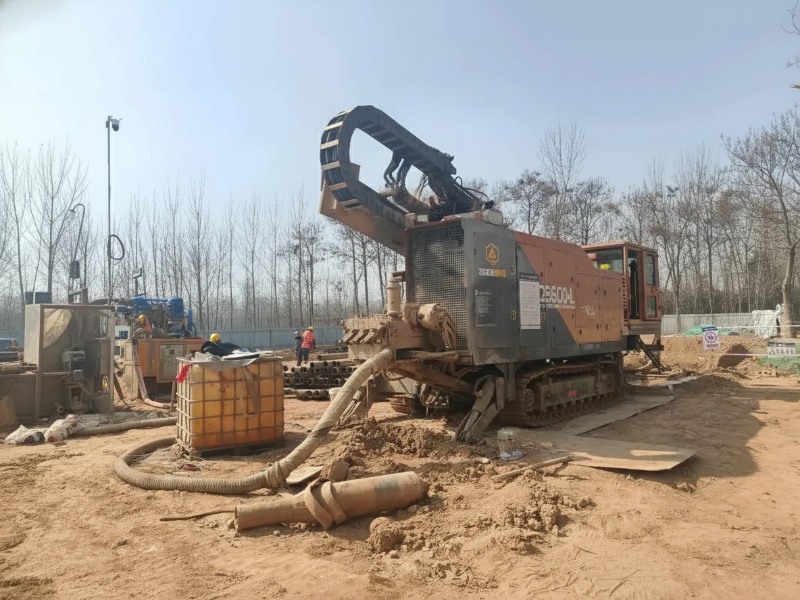
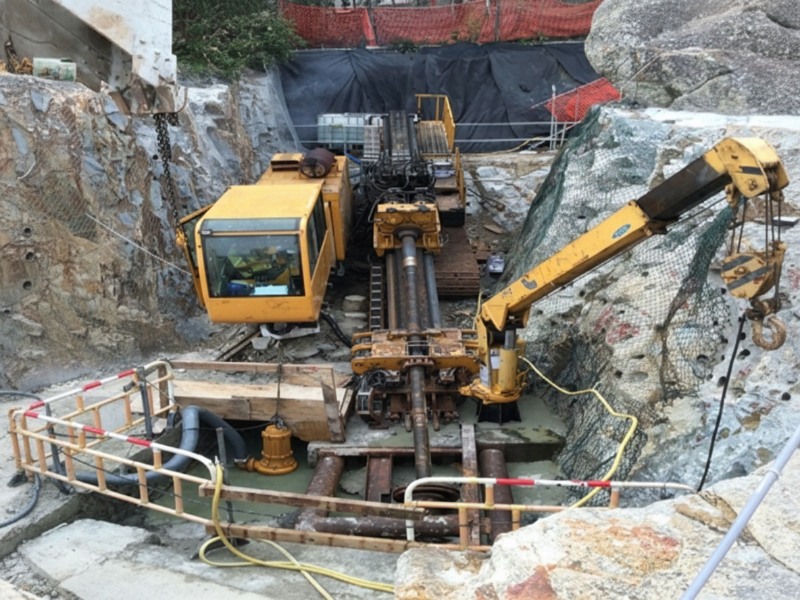
JSW Project Highlights
The following completed HDD projects demonstrate JSW capability across challenging geological conditions and sensitive environments.
Case Study 1: Major Natural Gas Pipeline River Crossing
| المعلمة | Detail |
|---|---|
| الموقع | River crossing, North America |
| Pipe diameter | 42 inch steel, FBE coated |
| Crossing length | 1,600 m |
| العمق | 45 m below riverbed |
| Geology | Sandstone and shale interbedded layers |
| التحدي | High water table + limited entry workspace on one bank |
| الحل | Intersect drilling from both banks with wireline gyro steering |
| النتيجة | Completed 12 days ahead of schedule, zero environmental incidents |
Case Study 2: Hard Rock Crossing in Mountainous Terrain
| المعلمة | Detail |
|---|---|
| الموقع | Mountain crossing, Asia-Pacific |
| Pipe diameter | 36 inch steel |
| Crossing length | 1,800 m |
| العمق | 60 m below surface |
| Geology | Granite with UCS 180 MPa |
| التحدي | Rock hardness caused rapid bit wear on initial pilot |
| الحل | Switched to PDC bits with optimized mud motor RPM |
| النتيجة | Pilot hole completed in 21 days, final pullback successful with peak force 380,000 lbs |
Case Study 3: Petrochemical Facility Pipeline Replacement
| المعلمة | Detail |
|---|---|
| الموقع | Active refinery, Middle East |
| Pipe diameter | 30 inch steel |
| Crossing length | 1,400 m |
| العمق | 35 m |
| Geology | Cobble bed (12m thick) overlying sandstone |
| التحدي | Existing in-service pipelines within 5m of proposed alignment |
| الحل | Radar-guided intersect drilling with real-time proximity alerts |
| النتيجة | Zero utility strikes, completed during scheduled plant turnaround |
HDD Feasibility Assessment – When JSW Recommends Horizontal Directional Drilling
JSW engineers evaluate each proposed crossing against feasibility criteria before recommending HDD as the optimal construction method.
Projects where JSW recommends HDD:
Crossings beneath navigable waterways where open-cut is prohibited
Highways and railroads with daily traffic penalties exceeding $10,000
Wetlands requiring permits with restoration success rates below 50%
Urban areas with underground utilities where service strikes carry six-figure liabilities
Mountainous terrain where access roads for trenching equipment are not feasible
Projects where JSW may recommend alternatives:
Short crossings under 100 meters in open rural areas
Shallow utilities in dry, stable soil with no surface restrictions
Projects where HDD entry and exit workspace is unavailable
JSW provides no-obligation feasibility assessments for pipeline operators and EPC contractors. Submit your project specifications for a preliminary evaluation.
Standards and Compliance
JSW’s automated welding services comply with all applicable international standards.
| Standard | Scope | JSW Compliance |
|---|---|---|
| API 1104 | Welding of pipelines and related facilities | Full compliance |
| ASME Section IX | Welding and brazing qualifications | Full compliance |
| ISO 13847 | Petroleum and natural gas industries – Pipeline welding | Full compliance |
| AS/NZS 2885.2 | Pipelines – Gas and liquid petroleum – Part 2: Welding | Available upon request |
Documentation Provided
For each project, JSW delivers:
Welding Procedure Specification (WPS) and Procedure Qualification Record (PQR)
Operator certification records
Weld log data (CSV format per joint, per pass)
NDT reports (radiography or ultrasonic, as specified)
Final quality documentation package for client records
Industry Standards and Compliance
JSW HDD operations follow recognized industry standards to ensure safety, quality, and environmental compliance.
| Standard | Scope |
|---|---|
| API RP 1102 | Steel pipeline crossing railroads and highways – pullback stress limits |
| ASME B31.4 | Pipeline transportation systems for liquids – design and construction |
| ASME B31.8 | Gas transmission and distribution piping systems |
| ASTM F1804 | Pullback tensile load calculations for polyethylene pipe |
| ISO 9001 | Quality management systems – planning and documentation |
| ISO 14001 | Environmental management – fluid containment and spill prevention |
| ISO 45001 | Occupational health and safety – rig operations and site safety |
JSW Integrated Pipeline Services
Beyond horizontal directional drilling, JSW provides complementary pipeline services for oil and gas operators requiring complete project support.
Hot tapping and line stopping (stopple) – Connect new pipelines to live systems without shutdown
Pipeline plugging and modification – Isolate sections for repair or rerouting
إعادة تأهيل الأنابيب بدون خنادق – Restore existing pipelines without excavation
Pipeline maintenance and restoration – Corrosion protection, cleaning, and integrity repairs
إنشاء خطوط الأنابيب – Open-cut installation for rural and accessible routes
Material supply – Pipe, fittings, coatings, and HDD tooling
JSW coordinates multiple services under single contracts, reducing owner oversight requirements and scheduling conflicts between specialty contractors.
Request a JSW HDD Technical Consultation
JSW is a specialized horizontal directional drilling contractor serving oil and gas pipeline operators and EPC contractors worldwide. Our technical team combines decades of field experience with in-house engineering capabilities for feasibility assessment, drill path design, and pullback stress analysis. JSW maintains a modern HDD rig fleet with pullback capacity up to 500,000 lbs and a zero-environmental-incident record across all completed projects.
الأسئلة الشائعة
What is the maximum pipe diameter JSW can install using HDD?
JSW completes HDD installations for pipe diameters up to 48 inches (DN1200). Larger diameters require additional reaming passes and higher pullback capacity. Contact JSW engineering with your specific diameter for a feasibility assessment.
How long does a typical HDD project take from start to finish?
Project duration depends on crossing length, geology, and pipe diameter. A 500-meter river crossing in competent soil takes approximately 2-3 weeks of active drilling. A 2,000-meter hard rock crossing requires 8-12 weeks. Site investigation, design, and permitting add 3-6 months before construction begins.
Can JSW perform HDD in hard rock formations?
Yes. JSW has completed HDD crossings in granite with unconfined compressive strength (UCS) up to 200 MPa. Hard rock requires PDC or roller cone rock bits, staged reaming passes, and higher torque drilling rigs. Drilling rates decrease in harder rock, extending project duration.
What is the cost range for JSW HDD services?
HDD costs vary significantly with crossing length, pipe diameter, geology, and site access. Typical HDD installation costs range from $500 to $2,000 per linear foot for oil and gas pipeline crossings. JSW provides firm quotes after geotechnical data review and route assessment.
Does JSW provide HDD services internationally?
Yes. JSW deploys rigs and crews to project sites worldwide. Our equipment fleet is containerized for international shipping, and our engineering team supports remote locations. Contact JSW with your project location for mobilization assessment.
How does JSW prevent inadvertent returns (frac-outs)?
JSW uses real-time mud pressure monitoring, closed-loop fluid recycling, and geotechnical data to operate below soil fracture gradients. Our operators adjust flow rates and fluid rheology continuously based on downhole pressure readings. Containment berms and vacuum trucks provide immediate response capability.
What information does JSW need to provide a project quote?
JSW requires the following for preliminary budgeting: pipe diameter and material, crossing length, obstacle type (river, highway, etc.), approximate location for geology reference, and any known site access constraints. A firm quote requires geotechnical boring data.
Is JSW certified to industry standards?
Yes. JSW operations follow API RP 1102, ASME B31.4, ASME B31.8, and ISO 9001/14001/45001 standards. Our project documentation includes pullback stress calculations, frac-out risk analyses, and as-built alignment surveys.
اطلب استشارة مجانية بشأن خدمة خطوط الأنابيب
تعرف على المزيد من
هل تواجه تحدي خط أنابيب؟ احصل على حل مخصص من خبرائنا. اذكر التفاصيل أدناه، وسنتصل بك في غضون 24 ساعة لمناقشة متطلبات مشروعك وجدوله الزمني وميزانيته.
شركة بكين جينشيوان هي شركة رائدة في مجال توفير تكنولوجيا وخدمات خطوط الأنابيب المتكاملة، حيث تجمع بين تصنيع المعدات المتطورة والخبرة الهندسية الاحترافية. نحن نقدم حلول خطوط أنابيب آمنة وموثوقة ومبتكرة ومبتكرة طوال دورة الحياة لصناعات النفط والغاز والكيماويات والمرافق العامة العالمية.
إنشاء خطوط الأنابيب وتركيبها
- إنشاء خط أنابيب عبر البلاد
- تركيب خط الأنابيب وتشغيله
- تركيب أنظمة خطوط أنابيب المصنع
- نقل خط الأنابيب وتعديله
صيانة خطوط الأنابيب وإصلاحها
- خدمات التنصت على الساخن والتنصت بالضغط
- خدمات توصيل خطوط الأنابيب وعزلها
- إصلاح خطوط الأنابيب في حالات الطوارئ
- إعادة تأهيل خطوط الأنابيب وتبطينها
- إصلاح الغلاف المركب (تركيب الغلاف B)
- الحماية من التآكل والإصلاح
الخدمات الفنية المتخصصة
- إدارة سلامة خط الأنابيب
- خدمات دعم التفتيش الداخلي
- تعديلات الخطوط المباشرة غير المعطلة
- اختبار ضغط خط الأنابيب
- تنظيف خطوط الأنابيب وتجفيفها
المعدات والتصنيع
- تصنيع ماكينات التنصت على الساخن
- إنتاج معدات توصيل خطوط الأنابيب
- تصنيع تجهيزات خطوط الأنابيب حسب الطلب
- تصنيع الصمامات الخاصة
مزايا خدماتنا الدولية:
- القدرة على الاستجابة للطوارئ على مدار 24/7
- معايير متوافقة مع API وASME
- إدارة المشاريع متعددة اللغات
- الشحن العالمي والدعم اللوجستي
- الإشراف الفني في الموقع في جميع أنحاء العالم
 English
  Arabic
  Russian
  Spanish
  French
  Vietnamese
  Polish
  Thai
Thai  Indonesian
  Turkish
  Portuguese