
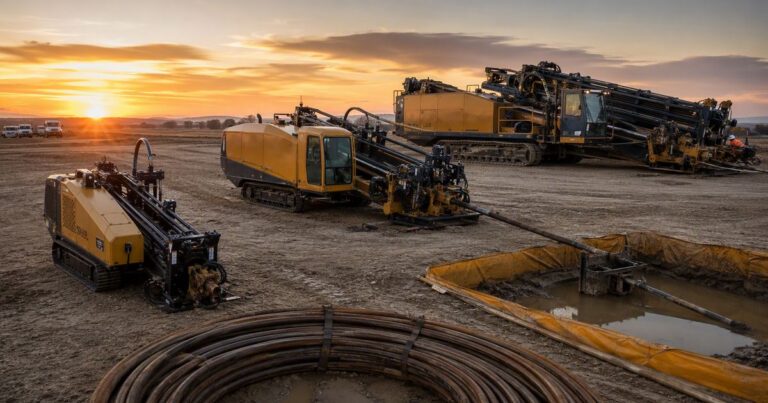
HDD rig sizes are three capability classes – mini, midi and maxi – and choosing between them is a selection method: estimate the load the crossing imposes, compare it with the pullback, thrust and torque envelope of each class, then keep a margin. Here, HDD means horizontal directional drilling for pipeline crossings. This guide explains where the classes come from, the machine envelope of each, how to match HDD rig sizes to a crossing defined by diameter, length and geology, the pullback margin to design against, and the auxiliary package each class needs. Every figure here is a planning input and must be confirmed by a competent engineer.
Where Do the Mini, Midi and Maxi Classes Come From?
The mini, midi and maxi class names come from directional drilling contracting practice, and DCA material is the usual reference point. DCA is the trenchless industry association whose published rig-class practice is widely cited for these three labels, and its class boundaries are not identical to those used by other organisations. They are capability labels rather than a legal standard: a rig is called mini, midi or maxi according to what it can do, chiefly thrust, pullback and torque.
- Published machinery pullback capacities span roughly 3.6 t to 617 t across the classes, so any single label sits inside a wide continuum.
- One planning document describes maxi rigs as greater than 100 t pullback capacity, which places the lower end of that class well above most utility work.
- A UK consent submission describes midi rigs at roughly 15-40 t pullback and 15-30 kNm torque, a band that overlaps smaller maxi machines.
- A published river-crossing technique document sorts the same three classes by thrust and pullback force instead, at under 40,000 lb, 40,000-100,000 lb and over 100,000 lb, with torque limits scaled to match.
These figures come from different organisations and planning documents, and they do not agree at the boundaries; that is a property of the classification, so each label should be read as shared vocabulary and the numbered capacity behind it as the real content. Confirm the current capacity and torque figures with the machine data available at the time of the project, since published class ranges are revised over time. In our design reviews we treat the class name as a starting point only; the numbers behind it decide the candidacy.
Classification exists to make early planning faster, not to replace calculation. When an owner or contractor says a crossing needs a midi-class machine, that is shorthand for a band of pullback, torque, rod length and pump capacity that has proven workable on comparable crossings. The value of the label is that it narrows the field of machines worth pricing; the risk is that the shorthand is mistaken for a specification. Because two organisations can give the same machine different class names, the rated figures matter more than the label.
What Machine Envelope Defines Each Class of HDD Rig?
Each HDD rig class – mini, midi and maxi – is better described as an envelope than as a single machine. Two rigs with the same pullback rating can differ in thrust, rod size, pump package and footprint, so the envelope is the set of limits that must all be satisfied before a machine is suitable. In practice the pump and rod size often separate two similar machines, because they govern cuttings removal and string advance.
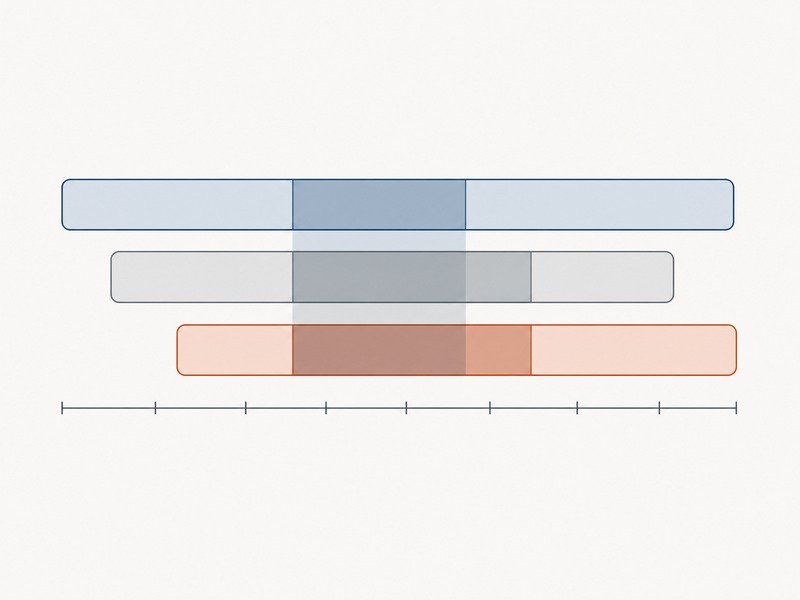
The envelope table below sets out the three classes as overlapping ranges rather than fixed bands; the overlap is the selection problem, so the published figures behind a label decide whether a machine is a candidate.
| الفصل | Typical planning envelope | Typical crossing it suits |
|---|---|---|
| Mini | Pullback about 5-20 t; torque up to about 5 kNm; drill rod commonly 2-3 m; a small mud pump; transport weight in the low tonnes; a compact footprint; crew of about two to four. | Short utility, service and fibre bores; small-diameter conduit over modest lengths in workable ground. |
| Midi | Pullback about 15-45 t; torque roughly 15-30 kNm; drill rod around 3-4.5 m; a mid-size mud pump; transport weight of the order of one to three heavy loads; footprint of about 35 m by 15 m; crew of about four to eight. | Utility and small pipeline crossings, road and rail crossings, short to medium watercourse crossings at moderate diameter. |
| Maxi | Pullback from about 45 t up to several hundred tonnes; torque rising well above 30 kNm; long drill rod; a large high-volume mud pump; transport weight measured in many loads; footprint from about 45 m upward; a larger crew and support plant. | Long, large-diameter pipeline crossings, major river and estuary crossings, hard or abrasive ground, and heavy product strings. |
The pullback bands overlap on purpose. A large midi machine and a small maxi rig can share a rating, which is why the label alone cannot settle a selection. The planning bands above are compiled from published machine ranges that span roughly 3.6 t to 617 t of pullback; they are typical envelopes rather than one named standard, so the numbers behind any single label must be confirmed against current machine data, and the loads confirmed by a competent engineer for the crossing.
How Do HDD Rig Sizes Match Diameter, Length and Geology?
Matching HDD rig sizes to a crossing turns on three questions – diameter, length and geology – and the class usually follows from the answers. Diameter sets the torque and reaming demand; a reamed hole is typically 1.2-1.5× the product pipe outside diameter, so larger holes need larger reamers and more rotary torque. Length sets the pull load and the volume of drill rod and fluid the rig must handle. Geology sets drillability, tool wear and hole stability, and it can move the selection on its own.
A crossing that is short but wide in diameter can demand more torque than a long narrow one, so each of the three questions can dominate in turn. The class that fits is the one that covers all three, not the one that covers the most obvious.
Entry and exit angles, commonly quoted in the 8-18° band, and the depth of cover, usually specified between 0.9 and 1.5 m, then fix the geometry the machine has to hold.
The scenario matrix below reads left to right: the crossing described, the demand that governs it, the class that usually covers it, and the point to verify before selecting.
| Crossing scenario | Governing demand | Class that typically fits | Main point to check |
|---|---|---|---|
| Short service bore, small diameter, soft ground | Light pull and low torque | Mini | Utility clearance and entry angle |
| Road or rail crossing at medium diameter | Moderate pull with accurate steering | Midi | Cover under the asset and settlement tolerance |
| Medium watercourse crossing at moderate diameter | Pull, torque and fluid volume together | Midi to small maxi | Scour depth and fluid-loss risk |
| Long, large-diameter pipeline crossing | Sustained pull and high torque | Maxi | Pullback margin and string weight |
| Hard or abrasive rock at any length | Torque, tool wear and hole cleaning | One class above the length-and-diameter fit | Reamer selection, pump and fluid programme |
| Congested urban entry with a limited footprint | Footprint and steering accuracy | Midi, or mini with staged reaming | Site layout and spoil handling |
Use the matrix to narrow the field, then check the numbers. We have seen crossings where the geology alone, not the diameter, pulled the selection up a class, because abrasive ground drives tool wear and fluid demand. This table is a screening aid for project-specific design; the actual selection among HDD rig sizes must be confirmed by a competent engineer against the calculated loads.
What Pullback Margin Should You Design Against?
The pullback margin is the gap between the calculated installation load and the rig’s rated pullback capacity. It is also the point handled most loosely. The design limit is the allowable stress in the product pipe, and a rig’s maximum pullback is only a ceiling on the machine, so the rig is chosen to sit inside the calculated load with margin. A single pullback figure also hides the torque and thrust limits that decide reaming performance.
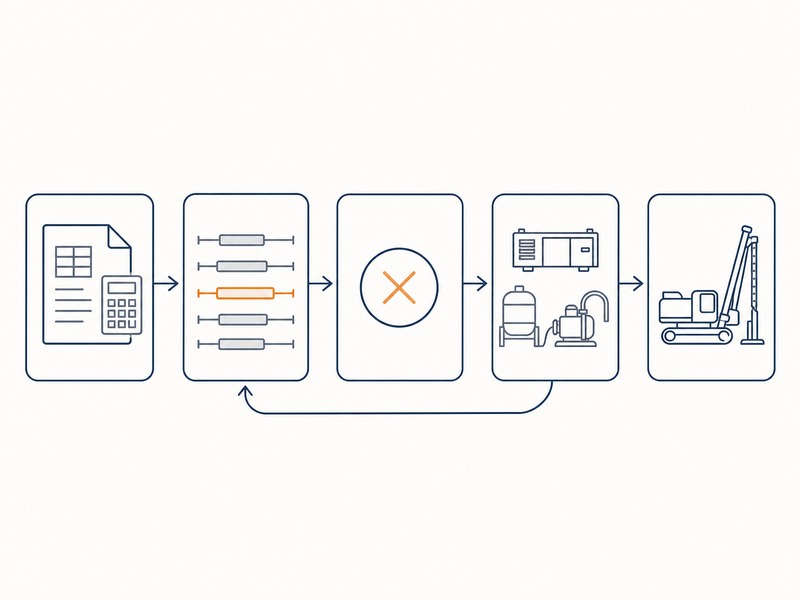
- Calculate the total pull load first: bore friction, fluid drag, curvature effects, pipe weight and buoyancy, and reamer and swab effects.
- Apply a safety factor to that calculated load, commonly quoted around 1.5-2.0 in published practice, and require the rig’s rated pullback capacity to exceed the factored load.
- Check thrust and torque separately. Reaming and steering demand are not covered by pullback alone, and a rig can run out of torque before it runs out of pull.
- Keep margin for uncertainty. A load estimate built on assumed friction and assumed ground can be wrong in either direction.
On crossings we have supported, the deciding limit was as often torque during reaming as pullback during the final pull. Torque and thrust deserve the same explicit check as the pull figure, which is why the safety factor is applied to a full load build-up rather than to a single number.
Margin also absorbs uncertainty in the load estimate, variation in ground conditions along the bore, and the difference between a clean pull and a high-friction one. A margin set too small leaves no room for the day the reamed hole turns out to be tight, while a margin set too large wastes mobilisation cost on a machine the crossing does not need. How the load behind that margin is built up is set out in the pullback load and stress analysis guide in this series, and where site access drives the choice the rig selection by jobsite guide takes over. This page compares capability classes rather than two named machine models, and it does not rank brands; the selection method is the subject here.
What Auxiliary Package Does Each Class Need?
The rig is only the centre of the spread: the auxiliary package – fluid handling, tracking, lifting and pipe handling – is scaled to the class. On many crossings the support, not the machine, sets the practical limit.
- Fluid handling: mud mixing and recycling, sized by the mud pump; larger classes recycle continuously and hold far more volume. The volume sets the pit and containment footprint.
- Tracking: walkover locating for shallow bores, moving to wireline or gyroscopic steering as depth increases and walkover accuracy falls away.
- Lifting: cranes and side booms for large-diameter pipe strings, while mini work is usually handled by the rig and light plant.
- Pipe handling and power: welding, coating repair, string support and the power supply all scale with the pipe size and the string length.
Our field teams record that fluid volume, not pullback, is the first limit reached on many midi crossings, which is why the pump and recycling package belongs in the selection from the start. On a long large-diameter bore, the crane and string-support plan can be as critical as the class choice itself. A realistic support plan is part of the class decision, not an afterthought once the rig is booked.
الأسئلة الشائعة
What are the three HDD rig sizes?
Mini, midi and maxi are the three practical HDD rig sizes, ranked by pullback, thrust and torque. Mini rigs serve short, small-diameter bores; midi rigs cover many utility and small pipeline crossings; maxi rigs handle long, large-diameter and hard-ground crossings.
How do I choose the right class for a crossing?
Match the class to the calculated demand, not to the pipe diameter alone. Estimate pull load, torque and fluid volume from the diameter, length and geology, apply a safety factor to the load, and choose the smallest class that covers the factored demand with margin.
Can a midi rig replace a maxi rig on a long crossing?
On a long or large-diameter crossing a midi machine usually cannot replace a maxi rig. A midi machine can share a pullback rating with a small maxi rig, but it typically has less torque, less fluid volume and shorter drill rod, so the sustained demand of a long bore can exceed its envelope.
What pullback margin should be applied to the calculated load?
Apply a safety factor, commonly quoted around 1.5 to 2.0 in published practice, to the calculated installation load. The rig’s rated pullback capacity should then exceed the factored load, and torque and thrust must be checked the same way.
Does a larger rig make every crossing easier?
A larger class brings more pullback and torque but also more footprint, transport weight and cost, so it is not automatically easier on every crossing. On small or congested crossings the larger machine can be the wrong choice, and staged reaming with a smaller class is often more practical.
What support equipment does each class need?
Each class needs fluid handling, tracking and lifting matched to its scale. Mini work usually needs only light plant, while midi and maxi crossings add mud recycling, wireline or gyroscopic steering for deep bores, and cranes or side booms for heavy pipe strings.
النقاط الرئيسية
- The mini, midi and maxi labels are capability classes from contracting practice, not a fixed standard, and the boundaries differ between organisations.
- Published machinery pullback spans roughly 3.6 t to 617 t, and one planning document places maxi rigs above 100 t pullback capacity.
- Match class to the crossing on diameter, length and geology together, not on any single one of them.
- Design to the pipe’s allowable stress, not to the rig’s maximum pullback: apply a safety factor, commonly around 1.5-2.0, to the calculated load, and check torque and thrust as well.
- Budget the auxiliary package with the rig, because fluid handling, tracking and lifting decide many crossings.
- HDD rig sizes are planning envelopes; confirm the actual machine capacity and the calculated loads for the specific crossing before selection is fixed.
How JSW Supports HDD Rig Selection and Crossing Design
JSW is a pipeline engineering and construction company that executes trenchless crossings with its own engineering team, crews and equipment. Our teams deliver HDD crossing services, trenchless technologies و microtunneling construction. The same team that selects the class then handles pipeline cold bending و خدمات تركيب خطوط الأنابيب, so the rig, the reaming train and the pipe string come from one sizing decision.
Because the same team selects HDD rig sizes and then builds the crossing, our recommendations reflect what the available equipment and crews can achieve. We build the load estimate and the class comparison before mobilisation, price the risk items explicitly, and keep the engineering basis on file. Where a smaller class with staged reaming is the better fit, we say so before the equipment is committed.
- Integrated delivery: load estimate, class selection, bore plan, string fabrication and pullback sit under one scope, removing interface risk between designer and constructor.
- Auditable engineering: capacity checks, fluid plans and installation records are documented for construction review and later integrity management.
- Risk-explicit pricing: the pullback margin, the mud programme and the transport scope are priced as separate items with stated triggers.
- Crossing experience: mini, midi and maxi classes mobilised on watercourse, highway and rail crossings and in congested urban corridors, with access and reinstatement inside the scope.
Not sure which rig class your crossing needs? Send your crossing profile, product pipe data, geology and site constraints for a free technical review. Our engineers respond with a scoped recommendation, the class we would mobilise, and a budget range.





































 English
  Arabic
  Russian
  Spanish
  French
  Vietnamese
  Polish
  Thai
Thai  Indonesian
  Turkish
  Portuguese