jasonsong889@gmail.com

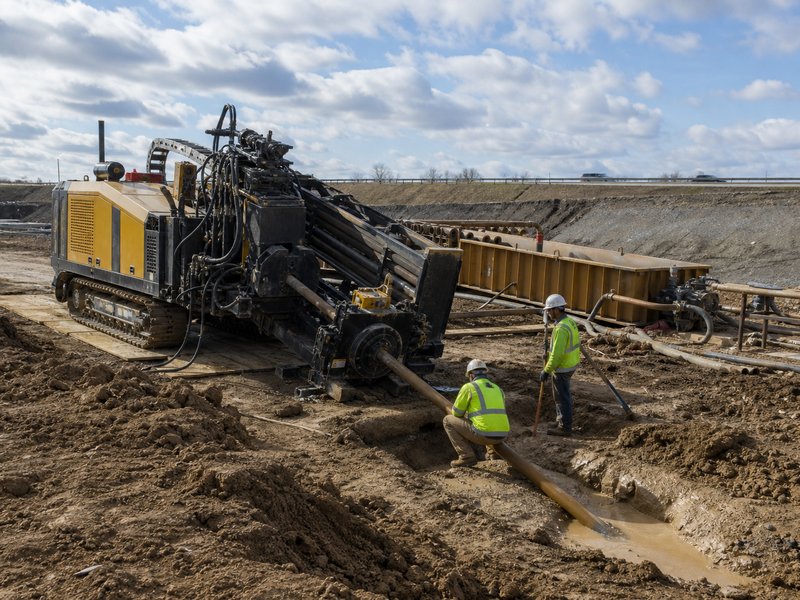
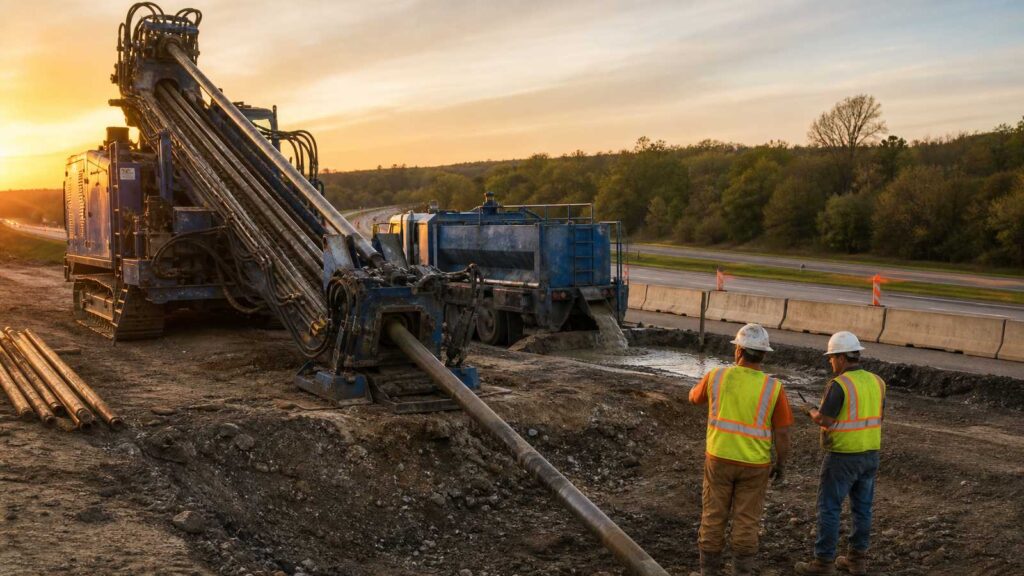
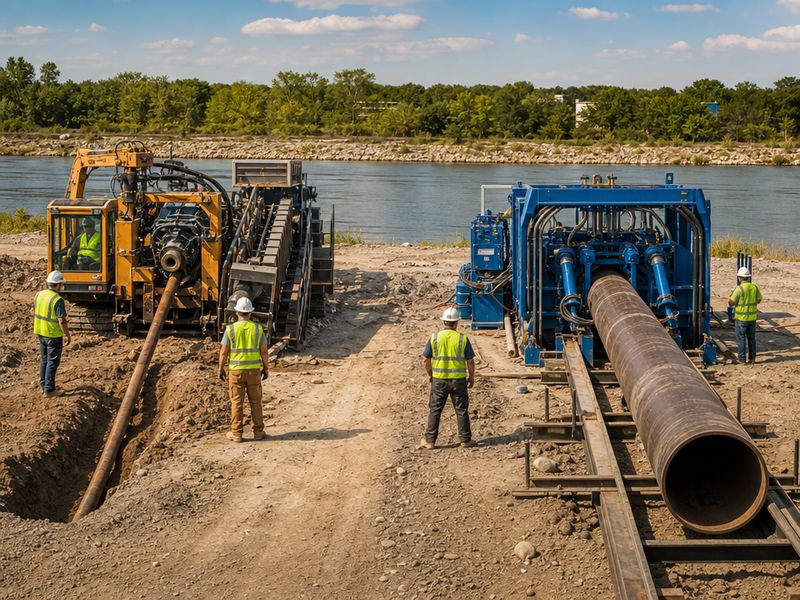
HDD drill rig and Direct Pipe thrusting equipment on a pipeline river crossing site, comparison of two trenchless methods

HDD vs. Direct Pipe: Which Method Has Lower Risk?

Direct Pipe is the lower-risk trenchless technology when hydraulic fracture, shallow cover or unstable ground dominates the hazard profile, while horizontal directional drilling (HDD) remains the lower-risk and lower-cost choice in stable soils for long, small-diameter bores — no single method is universally safer. This guide explains how each method works, why fluid-pressure risk differs

HDD vs. Direct Pipe: Which Method Has Lower Risk? اقرأ المزيد »
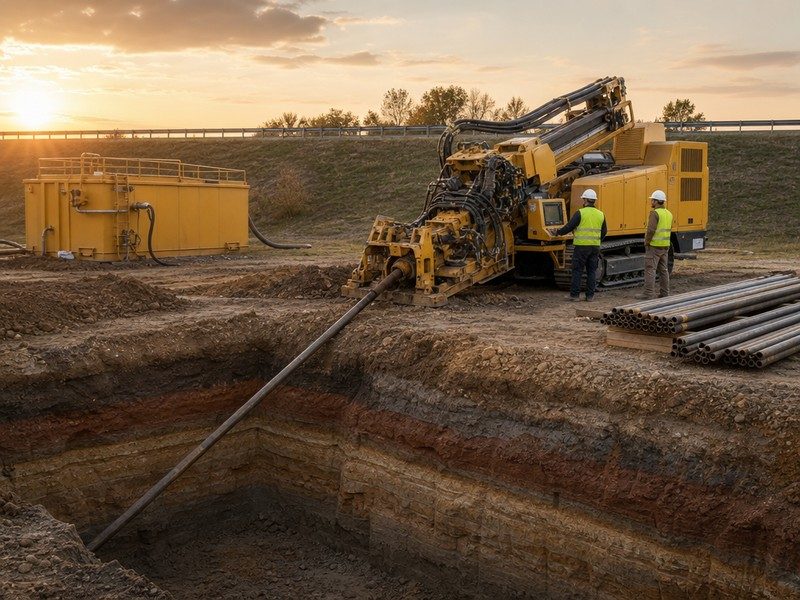
Horizontal directional drilling rig drilling into layered soil and rock strata beside a highway crossing at dusk

What Types of Soil and Rock Can Horizontal Directional Drilling (HDD) Drill Through?

Horizontal directional drilling (HDD) can drill through nearly every soil type, from soft clay to coarse gravel, and through most rock formations, from weak shale to the hardest granites approaching or exceeding 30,000 psi. The real limits are rock strength, abrasiveness and fracturing, not the method itself. The guidance reflects our field experience supporting pipeline

What Types of Soil and Rock Can Horizontal Directional Drilling (HDD) Drill Through? اقرأ المزيد »

Large horizontal directional drilling rig working beside a highway crossing with drill pipe entering the ground at a shallow angle

Best HDD Rig Brands in 2026: Compared on Pullback, Price and Support

The best HDD rig brands in 2026 are Vermeer, Ditch Witch, American Augers, XCMG, Herrenknecht, Toro, Prime Drilling and TRACTO, and no single brand wins every category. This guide compares these horizontal directional drilling rig manufacturers on pullback force, torque, guidance systems and price. It also explains how HDD rig brands split across size classes, gives real HDD

Best HDD Rig Brands in 2026: Compared on Pullback, Price and Support اقرأ المزيد »

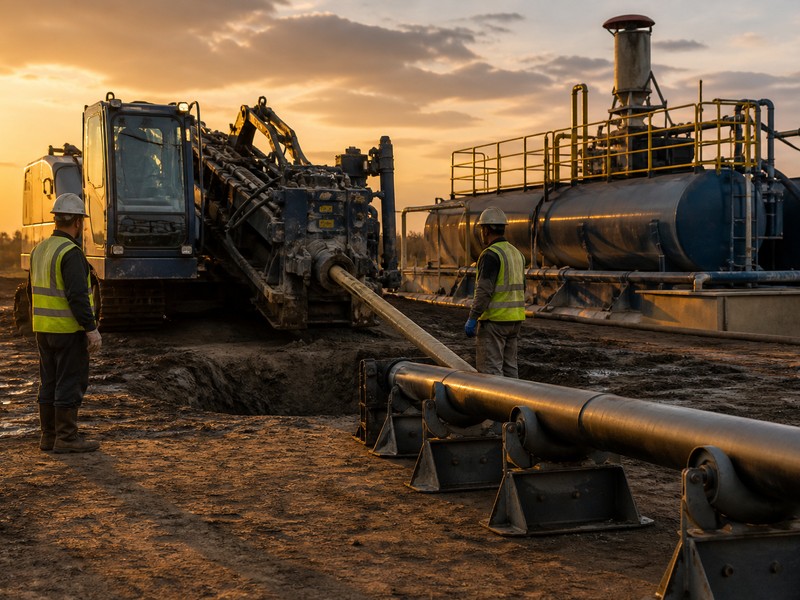
HDD rig pulling a pipe string through the borehole at the entry pit during the pullback stage, dusk lighting

What Is the Typical Pullback Force Required for HDD?

Quick Answer Typical HDD pullback force ranges from about 10,000 lb (4.5 t) for small utility bores to more than 500,000 lb (227 t) for large-diameter, long-distance crossings, and most mid-size pipeline installations fall between 20,000 and 100,000 lb (9 to 45 t). It is written for pipeline engineers, contractors and owners planning trenchless pipeline installations.

What Is the Typical Pullback Force Required for HDD? اقرأ المزيد »

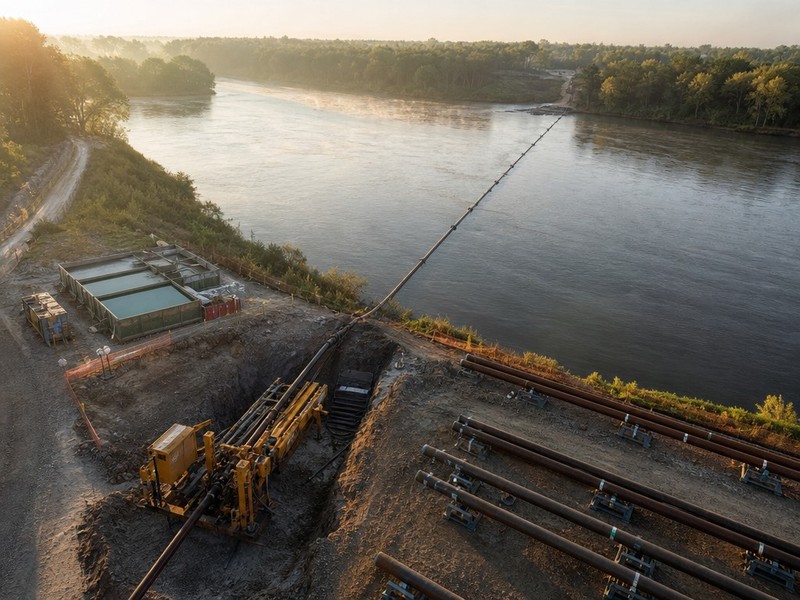
Horizontal directional drilling rig at an entry pit preparing a long pipe pullback across a wide river, aerial engineering view

What Is the Maximum Length and Diameter for Horizontal Directional Drilling?

There is no single fixed horizontal directional drilling maximum length or diameter: the longest HDD crossing completed to date is about 13,213 ft (4,027 m), and the largest steel product pipes routinely installed by HDD reach about 48 in. (1,219 mm) in diameter, with the practical limits set by rig capacity, geology and bore design rather than

What Is the Maximum Length and Diameter for Horizontal Directional Drilling? اقرأ المزيد »

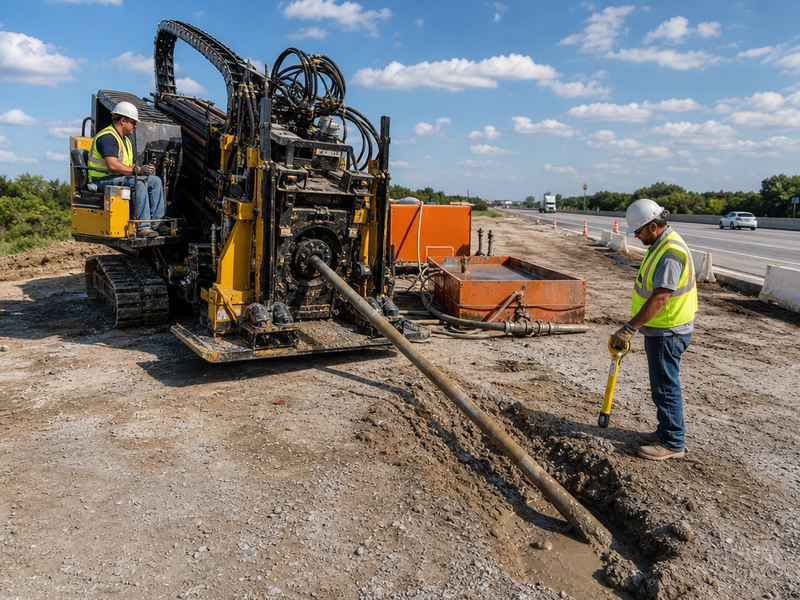
Horizontal directional drilling rig preparing a bore at a highway crossing with drill pipe entering the ground at a shallow angle

What Are the Main Stages of the Horizontal Directional Drilling Process?

The horizontal directional drilling process consists of five main stages: site preparation and bore planning, pilot hole drilling, prereaming, pipe pullback, and site restoration and commissioning. This guide explains what happens in every stage, how steering and drilling fluids work, how long the HDD process typically takes, and when horizontal directional drilling is a better

What Are the Main Stages of the Horizontal Directional Drilling Process? اقرأ المزيد »

Horizontal directional drilling rig and crew installing a pipeline under a highway crossing at dusk

How to Choose the Right Horizontal Directional Drilling Contractor

To choose the right horizontal directional drilling contractor, verify licensing and insurance, audit safety and damage-prevention practices, confirm equipment capacity against your bore plan, review verifiable references, and compare itemized bids that cover drilling fluids, restoration and contingencies. This guide explains what a horizontal directional drilling contractor actually does, the eight criteria that separate a reliable

How to Choose the Right Horizontal Directional Drilling Contractor اقرأ المزيد »

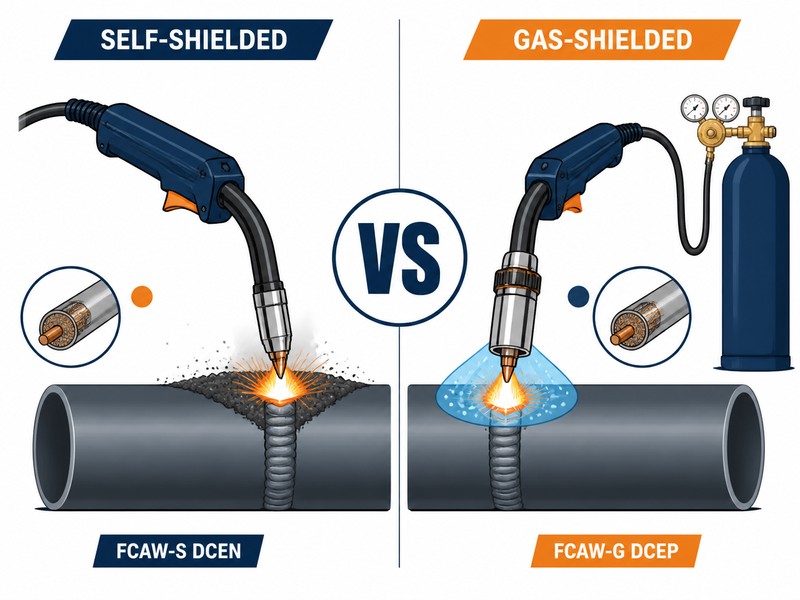
Comparison diagram of self-shielded flux-cored wire and gas-shielded flux-cored wire for pipeline welding, showing the gas cylinder difference and shielding mechanism of each

Self-Shielded Flux-Cored Wire vs Gas-Shielded Flux-Cored Wire for Pipeline Welding

For pipeline welding, self-shielded flux-cored wire (FCAW-S) is the better choice in open-air field work where wind and remote logistics make gas shielding impractical. Gas-shielded flux-cored wire (FCAW-G) wins in the workshop and in sheltered locations where weld appearance, lower consumable cost, and higher deposition efficiency matter. This guide explains how each wire generates its

Self-Shielded Flux-Cored Wire vs Gas-Shielded Flux-Cored Wire for Pipeline Welding اقرأ المزيد »

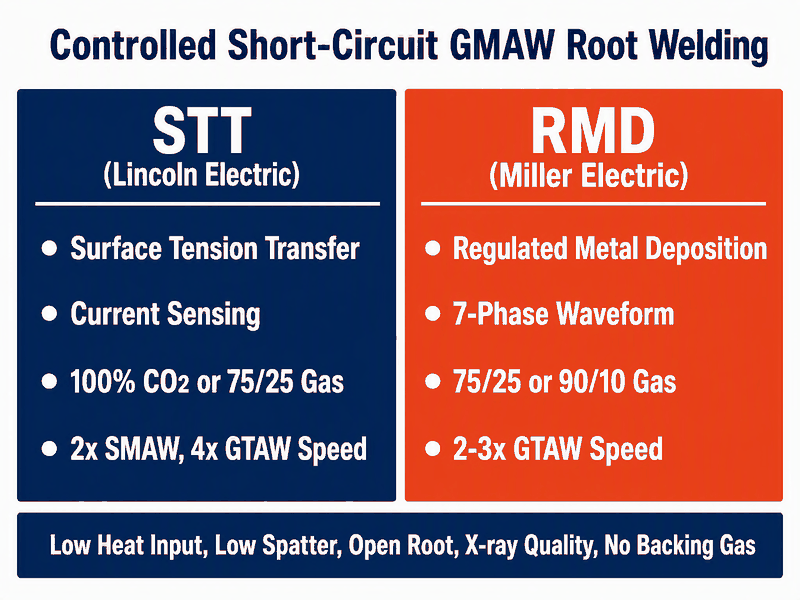
Comparison of STT vs RMD pipeline root welding: both are controlled short-circuit GMAW processes; STT is Lincoln Electric Surface Tension Transfer with current sensing, RMD is Miller Electric Regulated Metal Deposition with a staged waveform

STT vs RMD Pipeline Welding: Which Root Pass Process Is Better?

STT vs RMD is not a contest with one universal winner: both are controlled short-circuit GMAW processes that produce X-ray-quality pipeline root passes, and the better root welding process for your job depends on your equipment ecosystem, qualified procedures, material, and crew skill. STT welding, Lincoln Electric’s Surface Tension Transfer, reacts to each short circuit with

STT vs RMD Pipeline Welding: Which Root Pass Process Is Better? اقرأ المزيد »

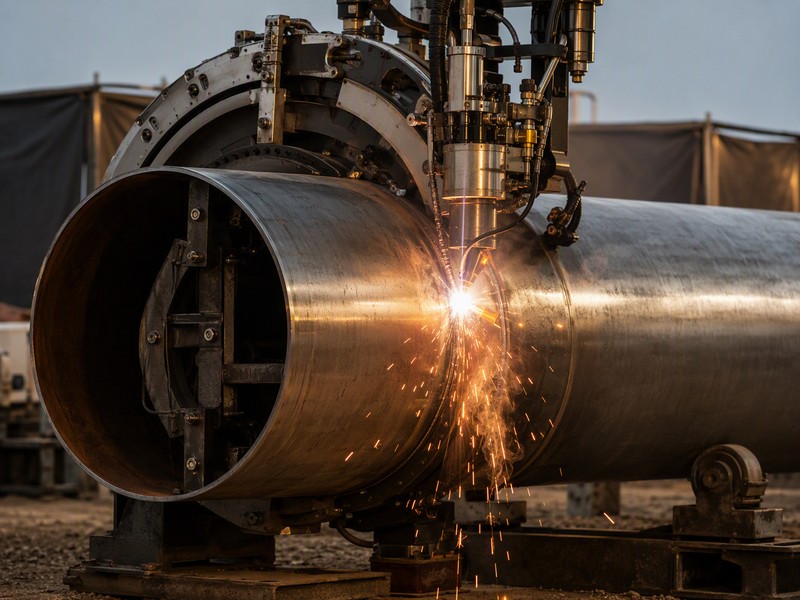
Laser-arc hybrid welding head welding a large-diameter pipeline girth joint, with the laser beam and electric arc combined on one molten pool

Laser-Arc Hybrid Welding vs Conventional Arc Welding for Pipelines: Pros and Cons

Laser-arc hybrid welding combines a laser beam with a gas metal arc in a single molten pool, and for pipelines it welds thick-wall girth joints in one or two deep passes where conventional arc welding needs many shallow passes. The pros are deeper weld penetration, higher welding speed, lower heat input, less distortion, and fewer passes;

Laser-Arc Hybrid Welding vs Conventional Arc Welding for Pipelines: Pros and Cons اقرأ المزيد »