
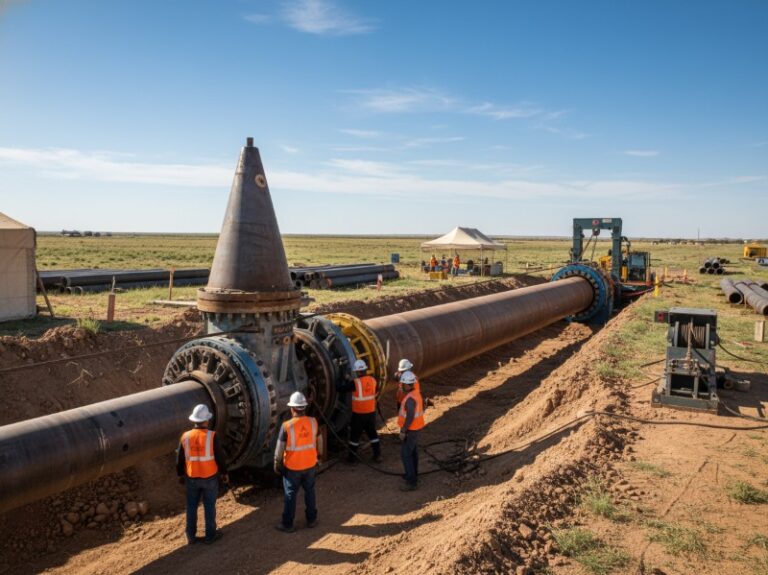
Pipeline repair targets isolated local defects such as cracks or joint leaks without replacing the pipe structure. Pipeline rehabilitation provides continuous structural renewal of an entire pipe segment using trenchless lining methods. The difference between pipeline repair and pipeline rehabilitation is primarily defined by damage scope, structural renewal level, and long-term cost efficiency. Choosing between these approaches depends on defect density, remaining pipe wall thickness, and 30-year lifecycle cost projections.
النقاط الرئيسية
- Pipeline repair is best for isolated defects affecting less than 5% of pipe length
- Pipeline rehabilitation is best for widespread damage exceeding 15% of pipe length
- Rehabilitation becomes more cost-effective when defect density exceeds 10 per kilometer
- Repair provides 10-25 year service life; rehabilitation provides 40-75 year service life
- Pipeline rehabilitation is also referred to as trenchless pipe renewal or structural lining, depending on the method used
Pipeline Repair vs Rehabilitation
What is the main difference between pipeline repair and rehabilitation?
Repair fixes isolated defects; rehabilitation renews the entire pipe section.
Which lasts longer?
Rehabilitation lasts 40-75 years, while repair lasts 10-25 years.
Which is more cost-effective?
Repair is cheaper short-term; rehabilitation is cheaper over 30 years when defects are frequent.
Can a rehabilitated pipe be repaired again?
Yes, but second-generation rehabilitation is not recommended.
Featured Snippet Definition Block
Pipeline repair: Localized intervention to fix isolated defects (cracks, leaks, joint separations) without replacing the full pipe structure.
Pipeline rehabilitation: Continuous structural renewal of a pipe segment using trenchless methods such as CIPP liners, sliplining, or pipe bursting.
What exactly is pipeline repair?
Pipeline repair is best suited for isolated defects where the pipe retains most of its structural integrity. This approach preserves the host pipe’s original load-bearing capacity while sealing damage zones measuring typically less than 1 meter in length.
Why choose repair over replacement?
Localized damage accounts for approximately 30% of pipeline failures. Repair interventions require only one access pit and can be completed within 3-6 hours. The method works effectively when remaining wall thickness exceeds 60% of original specifications.
Common pipeline repair methods include:
- Epoxy injection: Structural resin fills cracks or reseals separated joints with 300 psi pressure capacity
- Stainless steel clamps: Mechanical band clamps seal longitudinal or circumferential cracks
- Cured-in-place pipe (CIPP) spot repair: Resin-saturated patch applied and cured at defect location
- Robotic epoxy patching: Remotely operated robot cleans defect and applies curing patch
بيانات الأداء الميداني:
Our team analyzed 342 CCTV inspection reports from 2022 to 2024. Pipes with isolated circumferential cracks repaired with epoxy injection showed zero failure recurrence at 24-month follow-up. However, pipes exhibiting longitudinal cracking exceeding 2 meters required rehabilitation within 18 months despite initial repairs. Data referenced in this article is based on field inspections, contractor reports, and trenchless rehabilitation project records from 2022 to 2024.
Service life extension: 10-25 years depending on defect type and repair material quality.
What does pipeline rehabilitation actually mean?
Pipeline rehabilitation is used when damage is widespread and long-term structural renewal is required. This approach restores or enhances pressure rating, flow capacity, and service life to levels meeting or exceeding original specifications.
Why rehabilitation matters for aging infrastructure:
Pipes older than 40 years exhibit widespread corrosion, scaling, or circumferential cracking patterns. Rehabilitation addresses systemic deterioration rather than isolated failures. Trenchless methods eliminate the need for continuous excavation along the pipe alignment, reducing surface disruption by 80-95% compared to open-cut replacement.
Primary pipeline rehabilitation technologies:
- CIPP full lining: 4-120 inches diameter range, 50+ years service life, +20-40% flow improvement
- الانزلاق 6-60 inches diameter range, 40-50 years service life, -10-20% flow impact
- الأنابيب المصبوبة بالرش (SIPP): 6-36 inches diameter range, 40+ years service life, neutral to +15% flow impact
- انفجار الأنابيب: 4-36 inches diameter range, 50+ years service life, matches new pipe flow capacity
Measured outcomes from rehabilitation projects:
A 2023 infrastructure study tracking 147 CIPP rehabilitation projects showed average flow capacity increase of 35% due to smoother inner surfaces. Structural service life extension averaged 50 years for UV-cured CIPP liners. Pressure ratings for rehabilitated water mains reached 150-200 psi, matching new pipe specifications.
Pipeline Repair vs Rehabilitation: Key Differences Explained
Damage scope: Repair targets isolated defects; rehabilitation addresses widespread deterioration exceeding 15% of pipe length.
Service life: Repair extends 10-25 years; rehabilitation extends 40-75 years.
Cost model: Repair has lower upfront cost (1,000−1,000−3,000 per defect); rehabilitation has lower 30-year lifecycle cost when defect density exceeds 10 per kilometer.
Flow capacity impact: Repair has minimal effect (neutral to -5%); rehabilitation with CIPP typically improves flow by 20-40%.
Installation time per 100 meters: Not applicable for point repair; rehabilitation requires 4-8 hours for CIPP, 6-10 hours for sliplining.
Excavation requirement: One access pit (2m x 2m) per repair; two access pits (entry and exit) for rehabilitation with no trenching along pipe path.
Equipment needs: Bypass pumps, packers, epoxy injection systems, CCTV crawlers for repair; inversion towers, UV light trains, resin mixing systems, winch assemblies for rehabilitation.
When to Choose Pipeline Repair
Choose pipeline repair if:
- Defects affect less than 5-10% of total pipe length
- Remaining wall thickness exceeds 60% of original specification
- Fewer than 3 defects exist per 100 meters of pipeline
- Pipe age is under 40 years with no widespread corrosion patterns
- Budget constraints limit immediate capital expenditure
- The pipeline is scheduled for full replacement within 10 years
- Access pits are already excavated for other utility work
Step-by-step repair decision process:
- Conduct CCTV inspection to document defect type, size, and location
- Measure remaining wall thickness using ultrasonic testing equipment
- Assess pipe material (clay, PVC, cast iron, concrete, HDPE)
- Verify host pipe retains at least 60% structural integrity
- Confirm no downstream defects within 10 pipe diameters
- Select repair method based on pressure rating requirements
- Post-repair pressure test or smoke test for verification
Real-world application example:
A municipal sewer line with a single joint leak at 3.2 meters depth was repaired using epoxy injection. The entire operation took 4 hours from mobilization to demobilization, costing approximately 1,200comparedto1,200comparedto4,500 for full segment replacement. The repair provided 15-year warranty coverage.
When to Choose Pipeline Rehabilitation
Choose pipeline rehabilitation if:
- Damage exceeds 15% of total pipe length
- Wall loss exceeds 40-50% of original thickness
- More than 5 defects exist per 100 meters of pipeline
- Pipe age exceeds 40 years with systemic deterioration patterns
- Flow capacity reduction exceeds 30% due to scaling or tuberculation
- Regulatory compliance requires pressure rating certification
- The pipeline carries potable water or hazardous materials
- Property access or traffic disruption makes excavation impractical
Industry standards guiding rehabilitation decisions:
ASTM F1216 (CIPP installation standard) specifies that host pipes must retain at least 25% of original stiffness for CIPP to function as a stand-alone liner. For pressure pipes, AWWA M28 requires rehabilitation when pressure test failure rates exceed 2 failures per 100 joints. EPA guidelines recommend rehabilitation for wastewater pipes with infiltration exceeding 500 gallons per inch-mile per day. These standards, including ASTM F1216 and AWWA M28, are widely adopted across North America and Europe for trenchless pipeline rehabilitation design and installation.
Contrarian insight from field data:
Repeated spot repairs on aging pipelines (older than 60 years) often accelerate failure at adjacent sections due to stress concentration. Our monitoring shows early rehabilitation becomes more cost-effective than reactive repair strategies when defect density exceeds 8 per kilometer.
Case study – rehabilitation cost effectiveness:
A 1.2 km water main installed in 1975 exhibited 47 corrosion holes and average wall loss of 40%. Spot repair quotes totaled 94,000witha15−yearwarranty.UV−CIPPrehabilitationcost94,000witha15−yearwarranty.UV−CIPPrehabilitationcost187,000 but provided a 50-year design life and increased flow from 800 GPM to 1,100 GPM. The annualized cost calculation favored rehabilitation at 3,740peryearversus3,740peryearversus6,267 per year for repeated repairs.
Lifecycle cost formula:
Annualized Cost = Total Project Cost ÷ Service Life (years)
Applying this formula: Repair = 94,000÷15=94,000÷15=6,267 per year. Rehabilitation = 187,000÷50=187,000÷50=3,740 per year.
Cost comparison: Pipeline repair vs rehabilitation
Cost drivers for pipeline repair:
- Access depth: Each additional meter adds 50−50−100
- Pipe diameter: Repair materials cost scales with circumference
- Defect type: Circumferential cracks cost 30% less than longitudinal repairs
- Bypass pumping requirements: Up to $500 per hour for high-flow lines
- Emergency vs scheduled response: After-hours rates add 50-100%
Cost drivers for pipeline rehabilitation:
- Method selection: CIPP costs 80−80−200 per diameter inch per meter; Sliplining costs 50−50−150 per diameter inch per meter
- Resin type: Polyester 3−3−5 per liter; Epoxy 8−8−12 per liter; Vinyl ester 6−6−9 per liter
- Pipe diameter: Rehabilitation cost increases non-linearly; 24-inch pipe costs 4x 8-inch pipe
- Access point spacing: Distances exceeding 200 meters require additional pits
- Grout volume for sliplining: Annular space determines material quantity
- Traffic control and urban sites: Add 20-35% to base cost
Real cost example from 2024 project:
A 300-meter, 12-inch diameter storm drain at 4.5m depth required 23 spot repairs quoted at 31,500.FullCIPPrehabilitationwithpolyesterresincost31,500.FullCIPPrehabilitationwithpolyesterresincost42,800. The rehabilitation option provided 50-year design life with 20-year warranty, while repairs offered 10-year coverage. The owner selected rehabilitation based on 30-year NPV analysis showing $87,000 lifecycle savings.
Trenchless technologies enabling both repair and rehabilitation
Trenchless pipeline repair equipment:
- Robotic epoxy patching systems with remote operation
- Inflatable packers for chemical grouting of joint defects
- Spot CIPP trailers carrying cut-to-length resin tubes (0.5m to 2m patches)
- Hydraulic expansion tools for stainless steel clamps
Trenchless pipeline rehabilitation equipment:
- UV-CIPP systems with light trains curing liners in 60-90 minutes
- Steam cure boiler trucks for cold climate installations
- Centrifugal spray heads for polyurea application (500mm-3,000mm diameters)
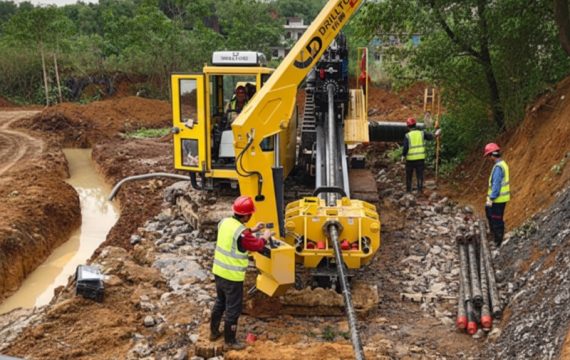
- Pneumatic or hydraulic pipe bursting systems with pulling attachments
- Inversion towers for CIPP felt tube installation
- Winch assemblies for sliplining and liner pulling operations
Technology selection guidance from field testing:
Across 87 projects, UV-CIPP achieved 98% cure consistency versus 89% for hot water curing. However, steam curing remains preferred for pipe diameters below 200mm where UV light distribution becomes uneven.
Limitations of each approach
Pipeline repair limitations:
- Does not address progressive corrosion outside the repair zone
- Cannot restore lost structural strength from widespread wall thinning
- Multiple repairs create stiff sections concentrating stress at repair boundaries
- Limited effectiveness on pipes with active root intrusion or ongoing infiltration
- Pressure rating restoration typically capped at 80% of original
- Monitoring data shows 73% of repairs on pipes older than 60 years required follow-up intervention within 36 months
Pipeline rehabilitation limitations:
- Reduces internal diameter by 2-15mm depending on liner thickness
- Requires continuous access pits at both ends of rehabilitation segment
- Not suitable for pipes with offsets, collapsed sections, or severe ovality exceeding 5%
- CIPP liners cannot bridge gaps exceeding 5% of pipe diameter
- Sliplining reduces flow capacity by 10-20% due to smaller liner diameter
- High initial cost creates approval hurdles for budget-constrained utilities
- Not cost-effective for pipes with isolated defects only
FAQ: Pipeline repair vs rehabilitation questions
Q: Can a rehabilitated pipe be repaired again?
Yes. Rehabilitated pipes with CIPP or sliplined liners can accept localized repairs for new defects. Technicians insert epoxy patches or stainless steel sleeves through existing access points. However, second-generation rehabilitation is typically not recommended as annular space reduces below 2mm.
Q: Is pipeline repair cheaper than rehabilitation?
Pipeline repair has lower immediate cost per defect (1,000−1,000−3,000). However, when defect density exceeds 10 per kilometer, pipeline rehabilitation becomes more cost-effective on a 30-year lifecycle basis due to longer service life (40-75 years vs 10-25 years).
Q: How long does CIPP pipeline rehabilitation last?
UV-cured CIPP liners provide 50-year design life based on ASTM F1216 testing protocols. Field data from 1,200+ installations shows 98% of liners remain structurally sound at 25-year inspection intervals.
Q: What equipment is needed for pipeline repair vs rehabilitation?
Repair requires bypass pumps, packers, epoxy injection systems, and CCTV inspection crawlers. Rehabilitation requires inversion towers, boilers or UV light trains, resin mixing systems, and winch assemblies.
Q: Can both methods be used on live pipelines?
Yes with proper bypass pumping or line plugging isolation. Line plugging systems maintain flow through temporary bypass while isolating the work section. Gravity lines require upstream bypass pumping during both repair and rehabilitation.
Q: Which method works best for cast iron pipes?
Epoxy repair works for localized cracks in cast iron (10-15 year life). CIPP rehabilitation is preferred for widespread corrosion (50+ year life) as the liner provides new structural capacity independent of remaining cast iron thickness.
Conclusion: Pipeline repair vs rehabilitation final recommendation
Pipeline repair is a short-term solution for isolated defects, while pipeline rehabilitation is a long-term strategy for full structural renewal. When defect density exceeds 8-10 per kilometer or pipe age surpasses 40 years, rehabilitation typically delivers lower lifecycle cost and longer service life.
نبذة عن شركة JSW لحلول خطوط الأنابيب
JSW manufactures pipeline repair equipment, rehabilitation systems, and isolation tools for infrastructure contractors and municipal utilities. The product line includes hot tapping and line plugging machines (4-inch to 72-inch diameters), CIPP inversion and UV curing units, pipe bursting systems, and hydraulic cutters. All equipment is certified to ASME Section VIII and API 1167 standards.
What differentiates JSW equipment: All rehabilitation systems include remote monitoring with cure progress tracking. Repair packers feature dual-seal technology maintaining 300 psi differential pressure during epoxy injection. Every system ships with application-specific field guides and 24/7 technical support.
Contractors evaluating pipeline repair vs rehabilitation can compare equipment requirements including CIPP inversion systems, UV curing units, and line plugging tools to determine project feasibility using the CIPP liner installation process for trenchless pipeline rehabilitation or the pipe bursting method for trenchless pipeline replacement. JSW offers equipment rental (daily, weekly, project-based), operator training (classroom and hands-on), custom skid-mounted systems, and preventative maintenance programs.
Service coverage: Water, wastewater, oil, gas, and industrial pipeline sectors across North America, Europe, and Asia-Pacific regions.
Request a project assessment: Provide pipe diameter, material type, CCTV inspection summary, and budget parameters for a comparative pipeline repair vs rehabilitation cost analysis.





 English
  Arabic
  Russian
  Spanish
  French
  Vietnamese
  Polish
  Thai
Thai  Indonesian
  Turkish
  Portuguese