
Services de forage directionnel horizontal (HDD)
Services de forage directionnel horizontal (HDD) de JSW pour la construction d'oléoducs et de gazoducs
JSW fournit des services spécialisés de forage directionnel horizontal (HDD) aux exploitants d'oléoducs et de gazoducs et aux entrepreneurs EPC du monde entier. Nos solutions de franchissement sans tranchée permettent d'installer des pipelines sous des rivières, des autoroutes, des voies ferrées, des zones humides et des infrastructures existantes sans excavation en surface. Avec des traversées maximales en une seule fois dépassant 2 000 mètres, des diamètres de tuyaux allant jusqu'à 48 pouces et une capacité éprouvée de forage d'intersections, JSW réalise des projets de FDH techniquement complexes sans aucun incident environnemental.
48 pouces
Diamètre maximal
2,000 m
Traversée unique
3,000 m+
Forage d'intersection
500k lbs
Force d'attraction
JSW Drilling & Completion Technologies
JSW développe et déploie des technologies spécialisées de forage, de complétion, d'essai et de protection de l'environnement pour les réservoirs à haute température, à haute pression, à gaz acide, géothermiques et non conventionnels. Notre portefeuille technologique comprend des outils exclusifs, des systèmes de fluides, des solutions de cimentation et des flux de travail d'ingénierie validés sur des milliers de puits dans le monde entier.
Technologie d'essai des gaz acides à haute température et haute pression (HTHP)
La technologie de test des gaz acides HTHP de JSW intègre l'évaluation des puits, la protection des tubages, l'analyse des contraintes tubulaires, les procédures de test et les systèmes de sécurité H₂S. Cette solution complète répond aux défis techniques rencontrés lors des opérations de test dans les puits à haute température, à haute pression et à forte concentration de sulfure d'hydrogène, notamment la défaillance des tubes et des tubages à haute pression, les risques d'éruption et les fuites de H₂S.
GW-TDUD Technologie de désorption thermique continue
La désorption thermique permet de séparer les composés organiques des déchets solides par un traitement à haute température dans un environnement sans oxygène. Le processus distille ou décompose les matières organiques en gaz, qui passent ensuite par la condensation ou la séparation cryogénique pour récupérer le gaz combustible, les hydrocarbures liquides et les résidus solides. L'opération à haute température permet d'éliminer la plupart des matières organiques des déchets solides tout en récupérant les hydrocarbures utiles et en respectant les normes de rejet dans l'environnement.
Technologie de déshydratation et de démulsification du pétrole brut de la série GPF
Les fluides de production des puits de pétrole contiennent des émulsifiants naturels, notamment des colloïdes, des asphaltènes, des acides naphténiques et des particules solides. Lors de l'écoulement à travers les têtes de puits et le transport par pipeline, le cisaillement à grande vitesse crée des émulsions stables entre l'huile et l'eau. Les désémulsifiants GPF utilisent des surfactants de poids moléculaire élevé qui réduisent la tension interfaciale entre l'huile et l'eau, remplaçant les émulsifiants naturels à l'interface. L'interface nouvellement formée est moins stable, ce qui entraîne la coalescence des gouttelettes d'eau et la séparation de la phase huileuse continue. Le processus suit la séparation en trois phases, la décantation et la déshydratation électrostatique.
Technologie de contrôle de la circulation perdue à haute filtration et perte
La technologie de circulation perdue à haute filtration et perte filtre rapidement le fluide de forage lorsqu'il rencontre des zones de perte. La différence de pression à travers la zone de perte entraîne la filtration du fluide, formant rapidement un gâteau de filtration avec une résistance initiale suffisante pour sceller la zone de perte. Cette technologie convient à une circulation perdue modérée à sévère, stabilise efficacement les parois du puits, augmente la pression de rupture des zones de perte et utilise des agents de pontage solubles dans l'acide qui sont idéaux pour les sections de réservoir.
GW-SEAL Système de fluide de forage à base d'huile haute résistance à large spectre
JSW a mis au point le système de fluide de forage à base de pétrole GW-SEAL en utilisant des agents d'étanchéité exclusifs à l'échelle du nanomètre et du micron. Ce système permet d'obtenir une faible viscosité, un faible cisaillement et des performances d'étanchéité à large spectre et à haute résistance. Il résout efficacement les problèmes d'instabilité et d'effondrement du puits, de collage différentiel et de bourrage, de nettoyage insuffisant des trous dans les sections déviées et d'étroitesse des fenêtres de forage dans les formations complexes. Le système est optimisé pour les puits à grande portée, les puits horizontaux de gaz de schiste et les formations complexes de mudstone et de schiste.
Technologie de cimentation des puits profonds et ultra-profonds
Les puits profonds et ultra-profonds présentent des températures et des pressions de fond de trou qui exigent des coulis de ciment présentant une stabilité supérieure à haute température, un contrôle de la migration des gaz et un développement de la résistance du gel. Ces puits présentent généralement de longues sections ouvertes avec des zones de haute pression et de perte simultanées dans le même intervalle, créant des fenêtres de pression étroites qui nécessitent une gestion précise de la densité de circulation équivalente. La technologie de cimentation des puits profonds de JSW permet de relever ces défis tout en gérant le risque opérationnel élevé des longs intervalles de cimentation.
Technologie de carottage à pression et température préservées
JSW a mis au point l'outil de carottage GW-CPT à pression et température préservées avec une propriété intellectuelle totalement indépendante. Cet outil intègre des systèmes de préservation de la pression, d'isolation thermique, de contrôle et de mesure. Les caractéristiques de conception innovantes comprennent un système de compensation de pression double gaz-liquide, un mécanisme d'étanchéité par vanne à bille de grand diamètre et un cylindre intérieur composite isolé sous vide. Cette technologie permet de récupérer des échantillons de roche réservoir à la pression et à la température de formation in situ pour une caractérisation précise du réservoir.
Conception et fabrication sur mesure d'embouts PDC
Avec plus de 20 ans d'expérience dans la fabrication, l'usine de trépans PDC de JSW produit deux gammes principales de produits : les trépans PDC pour le forage de trous entiers et les trépans diamantés pour le carottage. JSW dispose de capacités de conception avancées et de cinq technologies exclusives de conception personnalisée, ce qui lui permet de concevoir des trépans sur mesure pour des formations spécifiques, d'optimiser les performances sur la base d'une analyse des trépans émoussés et d'assurer une fabrication complète en interne.
Outil de diagraphie de la résistivité en cours de forage GW-LWD(BWR)
JSW a développé l'outil GW-LWD(BWR) de résistivité LWD avec une propriété intellectuelle entièrement indépendante. L'outil intègre la télémétrie des impulsions de boue, un alternateur de fond de trou, un ensemble de capteurs directionnels, des capteurs de résistivité à ondes électromagnétiques et des capteurs de rayons gamma azimutaux. Les technologies clés comprennent des algorithmes avancés de filtrage des signaux d'impulsion de boue, des algorithmes exclusifs de traitement des données des capteurs et la mesure de la résistivité des ondes électromagnétiques en rotation, ce qui permet une évaluation en temps réel de la formation dans des conditions difficiles en fond de trou.
Technologie de forage et de complétion des puits géothermiques à haute température
La technologie de forage et de complétion de puits géothermiques à haute température de JSW est le résultat de plus de 10 ans d'expérience de services techniques intégrés dans le champ géothermique d'Olkaria au Kenya. Cette technologie permet de résoudre les problèmes de forage dans les environnements géothermiques à haute température, très corrosifs et très abrasifs. Elle a été déployée avec succès au Kenya et dans les pays voisins pour le développement des ressources géothermiques à haute température.
Technologie de forage géostationnaire intégré (IGD)
La technologie Integrated Geo-Steering Drilling de JSW combine les études géologiques, la diagraphie de la boue, la détection avancée du gaz, la diagraphie spécialisée, la géodirection et l'ingénierie de forage en temps réel. Au cours du processus de forage, les données géologiques et de forage en temps réel sont intégrées pour optimiser les points d'atterrissage des cibles et les trajectoires des puits de manière dynamique. Cette approche permet d'améliorer le contact avec le réservoir et de réduire l'incertitude géologique.
Technologie de forage à portée étendue (ERD)
La technologie de forage à portée étendue de JSW intègre l'optimisation de la trajectoire du puits, le contrôle de la trajectoire, la direction rotative, les trépans PDC personnalisés, le nettoyage du trou, la réduction de la friction, la gestion du couple et de la traînée, et la stabilisation du puits de forage. Ce processus mature de forage et de complétion ERD a été validé par de nombreuses recherches et applications sur le terrain, ce qui le rend approprié pour les puits à longue portée avec des ratios d'avancement élevés.
Applications HDD pour le franchissement de pipelines
JSW applique la technologie du forage directionnel horizontal pour surmonter les obstacles naturels et artificiels qui rendent le creusement traditionnel de tranchées à ciel ouvert peu pratique, voire impossible.
Traversées de rivières et de voies navigables - Rivières, lacs et côtes navigables où l'excavation perturberait la navigation ou les écosystèmes marins.
Traversées d'autoroutes et de voies ferrées - Routes interétatiques et lignes ferroviaires actives où les perturbations de la surface sont interdites ou entraînent des pénalités journalières substantielles.
Zones humides et zones sensibles du point de vue de l'environnement - Marais, plaines d'inondation et habitats protégés où la restauration après une coupe à ciel ouvert n'est pas fiable ou n'est pas conforme.
Infrastructure existante en dessous - Pipelines actifs, couloirs de services publics et cours d'installations où l'excavation risque de provoquer des grèves de service et des incidents de sécurité.
Terrain montagneux et rocheux - Les pentes raides, les coteaux et les formations rocheuses où les engins de creusement de tranchées ne peuvent pas fonctionner efficacement.
Environnements urbains et bâtis - Les rues denses des villes avec des services publics souterrains où il n'y a pas d'espace en surface pour une coupe à ciel ouvert.
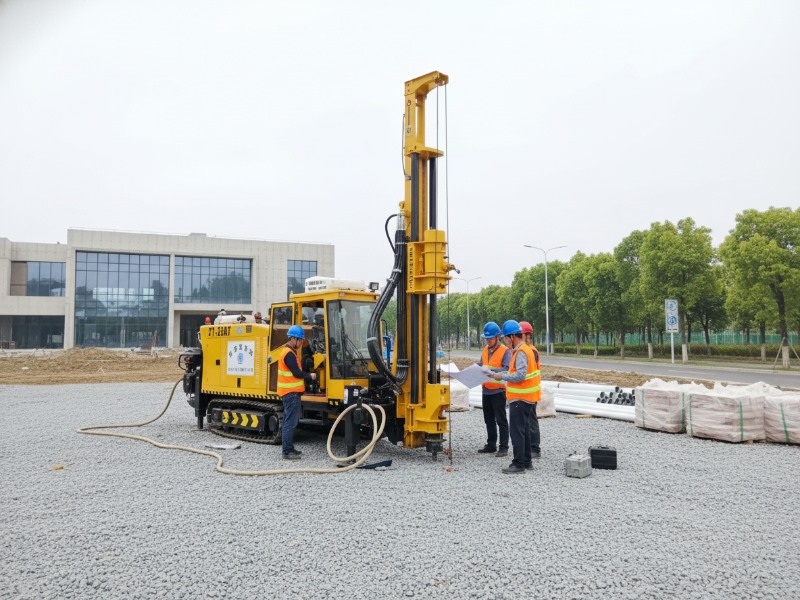
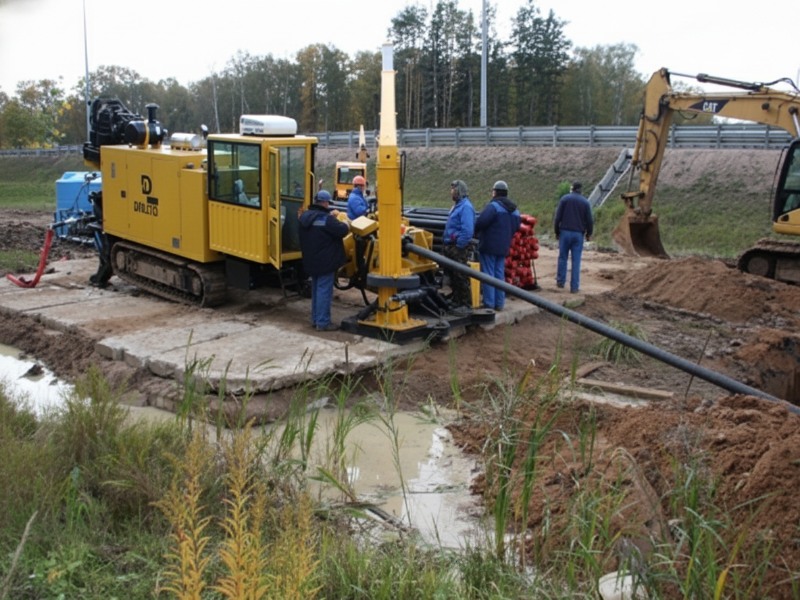
Capacités techniques de JSW - Diamètre, longueur, profondeur et recul
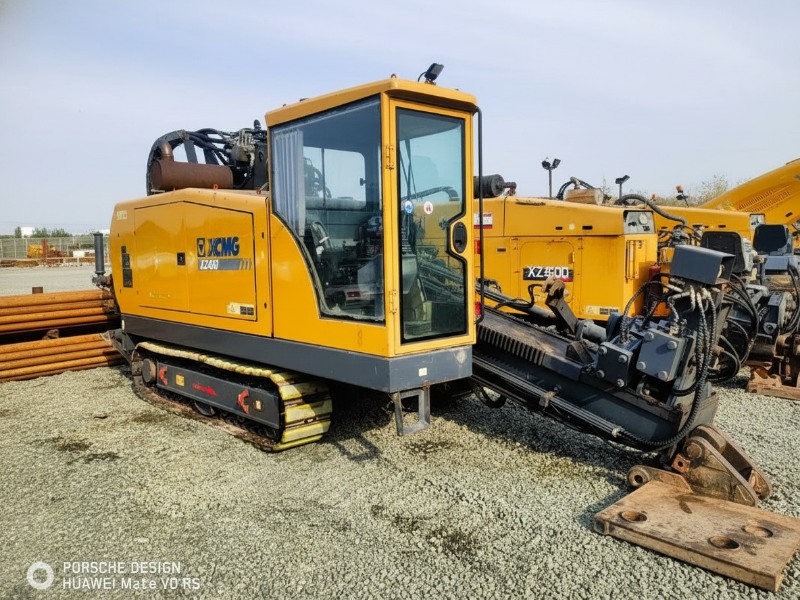
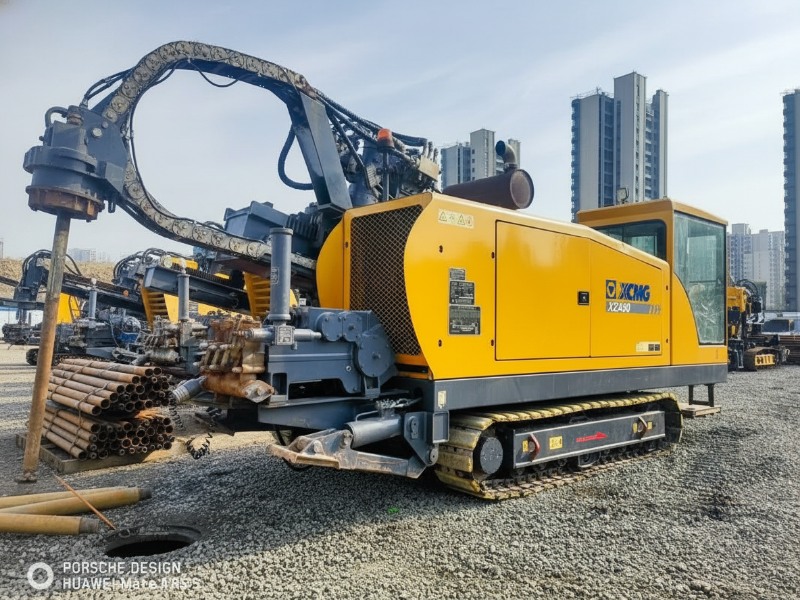
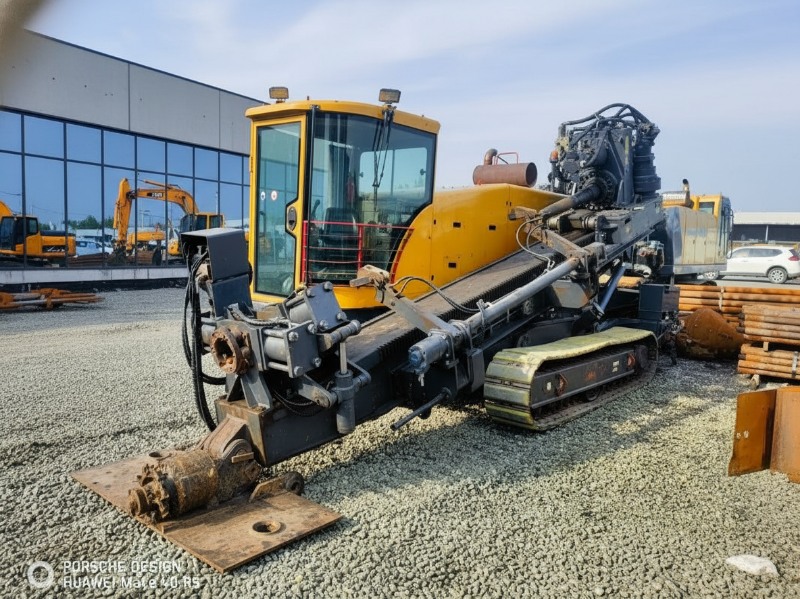
JSW exploite une flotte moderne d'engins de forage HDD de grand diamètre, soutenus par une ingénierie interne pour l'évaluation de la faisabilité, l'analyse des risques de fracturation et le calcul de la contrainte de recul.
| Paramètres | Capacité de JSW |
|---|---|
| Diamètre du tube | Jusqu'à 48 pouces (DN1200) |
| Longueur de traversée à un coup Longueur de traversée à un coup | Jusqu'à 2 000 m |
| Intersection Longueur de forage | Jusqu'à 3 000 m |
| Profondeur de forage | Jusqu'à 100 m |
| Résistance à la compression de la roche | Up to 200 MPa (UCS) |
| Rig Pullback Capacity | Up to 500,000 lbs |
| Steering Accuracy | ±1% of vertical depth |
| Entry Angle | 8 to 15 degrees |
| Exit Angle | 6 to 14 degrees |
| Minimum Bend Radius | 1,000 x pipe diameter (steel) / 100 x pipe diameter (HDPE) |
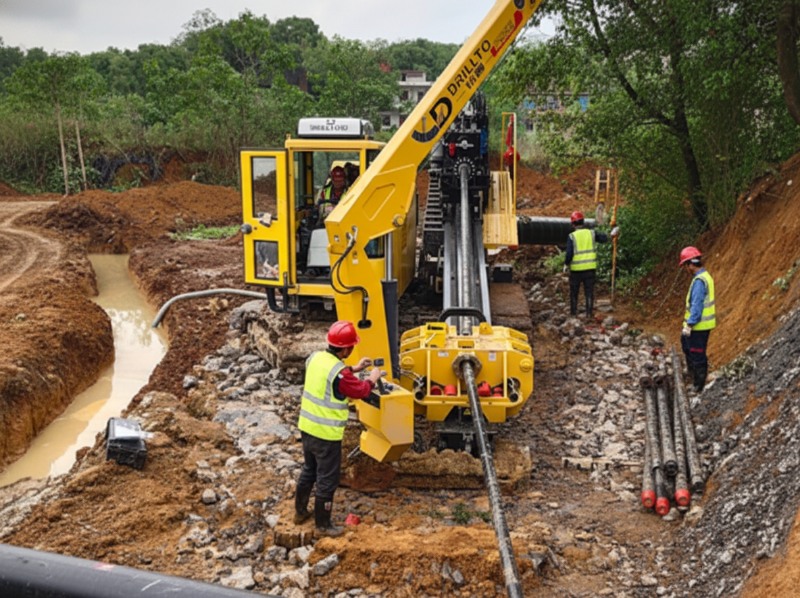
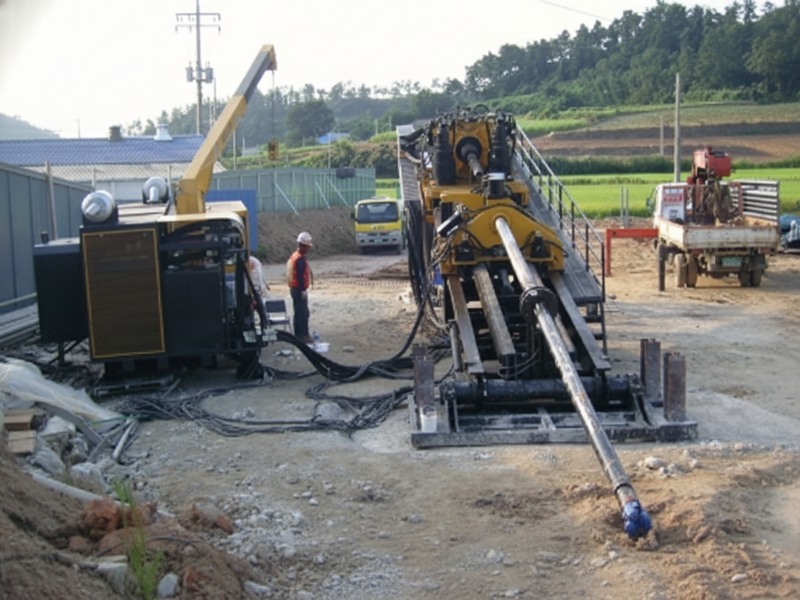
JSW HDD Process – From Geotechnical Survey to Pipe Pullback
JSW manages the complete HDD project lifecycle. Each phase follows documented procedures aligned with API RP 1102, ASME B31.4, and ISO standards.
Phase 1: Geotechnical Survey and Route Planning
JSW engineers conduct site-specific soil boring investigations to characterize subsurface conditions. Boring locations follow industry standards at 15-meter offsets from the proposed alignment.
Deliverables from this phase:
Soil boring logs with particle size distribution and Atterberg limits
Rock coring for unconfined compressive strength (UCS) testing
Groundwater level measurement and permeability assessment
Identification of cobble zones, boulders, or abandoned utilities
Frac-out risk analysis based on soil fracture gradient
Phase 2: Drill Path Design and Stress Analysis
Using geotechnical data, JSW engineers design the bore path geometry and calculate pullback stresses.
Design parameters calculated:
Entry and exit angles optimized for rig access and pipe handling
Minimum radius of curvature to keep pipe bending within elastic limits
Depth of cover (minimum 10-20 feet below obstacles)
Pullback tensile stress following API RP 1102 for steel or ASTM F1804 for HDPE
Fluid pressure limits to prevent inadvertent returns
Phase 3: Pilot Hole Drilling
The steerable drill head follows the designed path from entry point to exit point. JSW uses wireline gyro steering tools for real-time position tracking.
Pilot hole specifications:
Hole diameter: Typically 8-12 inch for initial pilot
Tracking accuracy: ±1% of vertical depth
Intersect method: Available for crossings exceeding 2,000m where two rigs drill from opposite sides and meet underground
Phase 4: Pre-Reaming (Hole Enlargement)
After pilot hole completion, JSW operators enlarge the borehole to the final diameter using staged reaming passes.
Reaming approach:
Overcut: Minimum 12 inches or 1.5 x pipe diameter (whichever is larger)
Reamer selection: Fly cutters for soft soil / rock reamers with tungsten carbide inserts for bedrock
Multiple passes: Progressive enlargement from pilot diameter to final hole size
Fluid management: Flow rates increased proportionally with hole volume
Phase 5: Pipe Pullback
The product pipe – steel with anti-corrosion coating for oil and gas applications – is welded into a continuous string and pulled back through the reamed hole.
Pullback execution:
Continuous pullback without stopping prevents pipe sticking
Pullhead and swivel assembly protects pipe coating during entry
Real-time pull force and torque monitoring at the rig
Drilling fluid circulation maintained throughout pullback
Phase 6: Drilling Fluid Management and Site Restoration
JSW operates closed-loop fluid recycling systems to minimize consumption and prevent inadvertent returns.
Fluid management protocols:
Real-time mud pressure monitoring at entry and exit points
Containment berms and vacuum trucks for spill prevention
Bentonite slurry recycling units separate cuttings for disposal
Site restoration to original grade and vegetation conditions
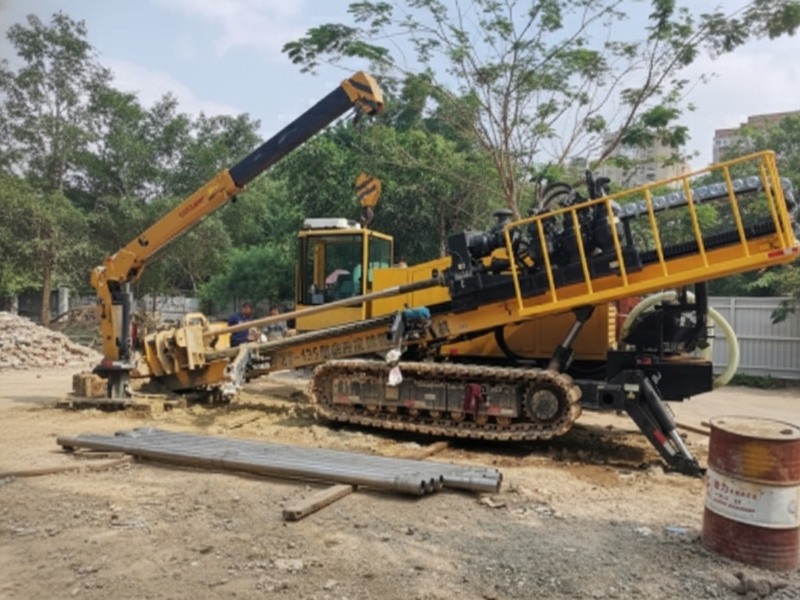
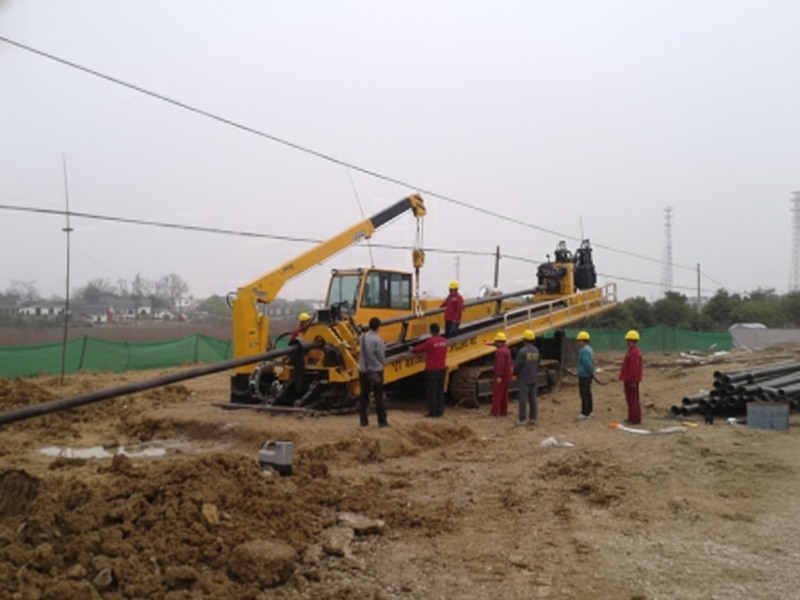
Why JSW for Oil and Gas HDD Projects
JSW differentiates from other HDD contractors through four core capabilities demonstrated on completed projects.
1. Proven Intersect Drilling for Long-Distance Crossings
JSW performs intersect drilling operations where two drill rigs start from opposite sides of an obstacle and meet underground at a predetermined point. This method reduces drilling fluid pressure in long crossings exceeding 2,000 meters and allows shorter equipment setup on each side when surface access is limited. JSW has completed intersect crossings up to 3,000 meters with steering accuracy maintained throughout the approach and connection.
2. Complex Geology Solutions – Hard Rock, Cobble Beds, and Mixed Strata
JSW engineers develop customized tooling and fluid programs for each geological condition encountered.
| Geology | JSW Approach |
|---|---|
| Hard rock (UCS up to 200 MPa) | PDC bits or roller cone rock bits with staged reaming |
| Cobble beds (15m+ thickness) | Air hammer + spiral auger for initial penetration |
| Sandstone/shale interbedding | Bit selection optimized for hardness variation |
| High water table / subaqueous | Weighted mud systems to balance formation pressure |
| Soft clay / reclaimed fill | Fly cutters with high flow rates for cuttings removal |
3. Zero Environmental Incidents with Real-Time Monitoring
JSW maintains a zero-environmental-incident record across all completed HDD projects. Our real-time mud pressure monitoring system alerts operators to pressure deviations before they reach soil fracture gradients. Closed-loop recycling systems reduce fluid consumption by up to 70% compared to open-pit methods. All sites are restored to original condition upon project completion.
4. Turncap HDD Services – From Feasibility to Restoration
JSW provides complete project coverage eliminating the need for multiple contractors.
Our scope includes:
Feasibility assessment and route optimization
Geotechnical investigation coordination
Drill path design and stress analysis
Permitting support for environmental and regulatory approvals
Rig mobilization and site preparation
Pilot hole drilling through pipe pullback
Fluid management and disposal
Site restoration and as-built documentation
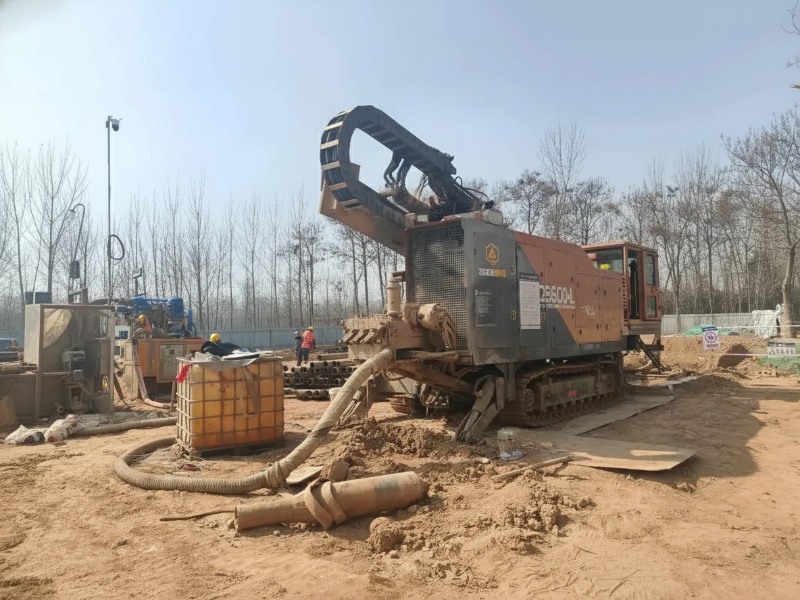
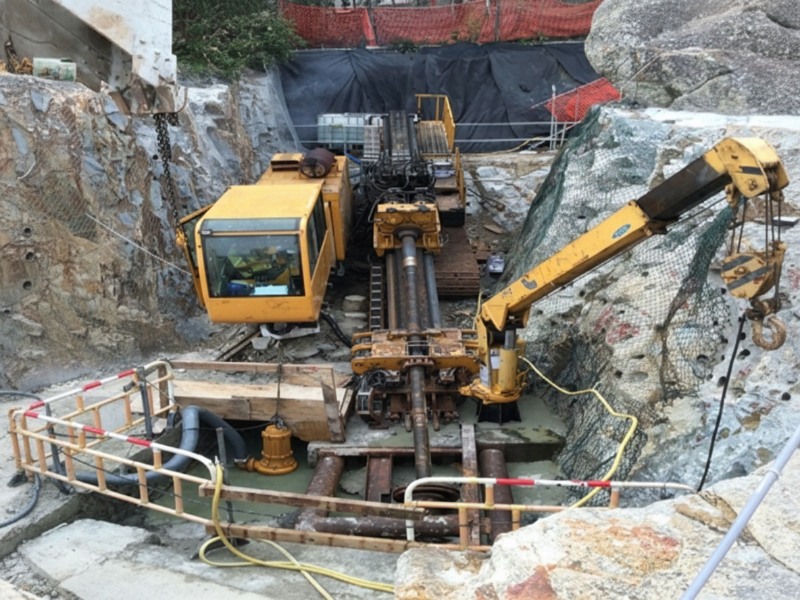
JSW Project Highlights
The following completed HDD projects demonstrate JSW capability across challenging geological conditions and sensitive environments.
Case Study 1: Major Natural Gas Pipeline River Crossing
| Paramètres | Détails |
|---|---|
| Localisation | River crossing, North America |
| Diamètre du tuyau | 42 inch steel, FBE coated |
| Crossing length | 1,600 m |
| Profondeur | 45 m below riverbed |
| Geology | Sandstone and shale interbedded layers |
| Défi | High water table + limited entry workspace on one bank |
| Solution | Intersect drilling from both banks with wireline gyro steering |
| Result | Completed 12 days ahead of schedule, zero environmental incidents |
Case Study 2: Hard Rock Crossing in Mountainous Terrain
| Paramètres | Détails |
|---|---|
| Localisation | Mountain crossing, Asia-Pacific |
| Diamètre du tuyau | 36 inch steel |
| Crossing length | 1,800 m |
| Profondeur | 60 m below surface |
| Geology | Granite with UCS 180 MPa |
| Défi | Rock hardness caused rapid bit wear on initial pilot |
| Solution | Switched to PDC bits with optimized mud motor RPM |
| Result | Pilot hole completed in 21 days, final pullback successful with peak force 380,000 lbs |
Case Study 3: Petrochemical Facility Pipeline Replacement
| Paramètres | Détails |
|---|---|
| Localisation | Active refinery, Middle East |
| Diamètre du tuyau | 30 inch steel |
| Crossing length | 1,400 m |
| Profondeur | 35 m |
| Geology | Cobble bed (12m thick) overlying sandstone |
| Défi | Existing in-service pipelines within 5m of proposed alignment |
| Solution | Radar-guided intersect drilling with real-time proximity alerts |
| Result | Zero utility strikes, completed during scheduled plant turnaround |
HDD Feasibility Assessment – When JSW Recommends Horizontal Directional Drilling
JSW engineers evaluate each proposed crossing against feasibility criteria before recommending HDD as the optimal construction method.
Projects where JSW recommends HDD:
Crossings beneath navigable waterways where open-cut is prohibited
Highways and railroads with daily traffic penalties exceeding $10,000
Wetlands requiring permits with restoration success rates below 50%
Urban areas with underground utilities where service strikes carry six-figure liabilities
Mountainous terrain where access roads for trenching equipment are not feasible
Projects where JSW may recommend alternatives:
Short crossings under 100 meters in open rural areas
Shallow utilities in dry, stable soil with no surface restrictions
Projects where HDD entry and exit workspace is unavailable
JSW provides no-obligation feasibility assessments for pipeline operators and EPC contractors. Submit your project specifications for a preliminary evaluation.
Standards and Compliance
JSW’s automated welding services comply with all applicable international standards.
| Standard | Champ d'application | JSW Compliance |
|---|---|---|
| API 1104 | Welding of pipelines and related facilities | Full compliance |
| ASME Section IX | Welding and brazing qualifications | Full compliance |
| ISO 13847 | Petroleum and natural gas industries – Pipeline welding | Full compliance |
| AS/NZS 2885.2 | Pipelines – Gas and liquid petroleum – Part 2: Welding | Available upon request |
Documentation Provided
For each project, JSW delivers:
Welding Procedure Specification (WPS) and Procedure Qualification Record (PQR)
Operator certification records
Weld log data (CSV format per joint, per pass)
NDT reports (radiography or ultrasonic, as specified)
Final quality documentation package for client records
Industry Standards and Compliance
JSW HDD operations follow recognized industry standards to ensure safety, quality, and environmental compliance.
| Standard | Champ d'application |
|---|---|
| API RP 1102 | Steel pipeline crossing railroads and highways – pullback stress limits |
| ASME B31.4 | Pipeline transportation systems for liquids – design and construction |
| ASME B31.8 | Gas transmission and distribution piping systems |
| ASTM F1804 | Pullback tensile load calculations for polyethylene pipe |
| ISO 9001 | Quality management systems – planning and documentation |
| ISO 14001 | Environmental management – fluid containment and spill prevention |
| ISO 45001 | Occupational health and safety – rig operations and site safety |
JSW Integrated Pipeline Services
Beyond horizontal directional drilling, JSW provides complementary pipeline services for oil and gas operators requiring complete project support.
Hot tapping and line stopping (stopple) – Connect new pipelines to live systems without shutdown
Pipeline plugging and modification – Isolate sections for repair or rerouting
Réhabilitation de canalisations sans tranchée – Restore existing pipelines without excavation
Pipeline maintenance and restoration – Corrosion protection, cleaning, and integrity repairs
Construction de pipelines – Open-cut installation for rural and accessible routes
Material supply – Pipe, fittings, coatings, and HDD tooling
JSW coordinates multiple services under single contracts, reducing owner oversight requirements and scheduling conflicts between specialty contractors.
Request a JSW HDD Technical Consultation
JSW is a specialized horizontal directional drilling contractor serving oil and gas pipeline operators and EPC contractors worldwide. Our technical team combines decades of field experience with in-house engineering capabilities for feasibility assessment, drill path design, and pullback stress analysis. JSW maintains a modern HDD rig fleet with pullback capacity up to 500,000 lbs and a zero-environmental-incident record across all completed projects.
Questions fréquemment posées
Quel est le diamètre maximal des tuyaux que JSW peut installer par HDD ?
JSW réalise des installations HDD pour des diamètres de tuyaux allant jusqu'à 48 pouces (DN1200). Les diamètres plus importants nécessitent des passes d'alésage supplémentaires et une plus grande capacité d'extraction. Contactez l'ingénierie de JSW avec votre diamètre spécifique pour une évaluation de faisabilité.
Combien de temps dure un projet de disque dur typique, du début à la fin ?
La durée du projet dépend de la longueur de la traversée, de la géologie et du diamètre du tube. Une traversée de rivière de 500 mètres dans un sol compétent nécessite environ 2 à 3 semaines de forage actif. Une traversée de 2 000 mètres en roche dure nécessite 8 à 12 semaines. L'étude du site, la conception et l'obtention des permis ajoutent 3 à 6 mois avant le début de la construction.
La société JSW peut-elle réaliser des forages à l'explosif dans des formations de roches dures ?
Oui. JSW a réalisé des traversées par HDD dans du granit avec une résistance à la compression non confinée (UCS) allant jusqu'à 200 MPa. Les roches dures nécessitent des trépans PDC ou des trépans à cône, des passes d'alésage échelonnées et des engins de forage à couple plus élevé. Les vitesses de forage diminuent dans les roches dures, ce qui allonge la durée du projet.
Quelle est la fourchette de prix pour les services de JSW HDD ?
Les coûts des travaux de forage varient considérablement en fonction de la longueur de la traversée, du diamètre de la conduite, de la géologie et de l'accès au site. Les coûts d'installation de HDD varient généralement entre $500 et $2,000 par pied linéaire pour les croisements d'oléoducs et de gazoducs. JSW fournit des devis fermes après examen des données géotechniques et évaluation du tracé.
La société JSW fournit-elle des services de disque dur à l'échelle internationale ?
Oui. JSW déploie des plates-formes et des équipes sur les sites des projets dans le monde entier. Notre parc d'équipement est conteneurisé pour l'expédition internationale, et notre équipe d'ingénieurs prend en charge les sites éloignés. Contactez JSW avec l'emplacement de votre projet pour une évaluation de la mobilisation.
Comment JSW prévient-elle les retours involontaires (frac-outs) ?
JSW utilise la surveillance en temps réel de la pression de la boue, le recyclage des fluides en circuit fermé et les données géotechniques pour opérer sous les gradients de fracture du sol. Nos opérateurs ajustent en permanence les débits et la rhéologie des fluides en fonction des relevés de pression en fond de puits. Des bermes de confinement et des camions sous vide permettent une intervention immédiate.
Quelles sont les informations dont JSW a besoin pour établir un devis ?
JSW a besoin des informations suivantes pour établir un budget préliminaire : diamètre et matériau de la conduite, longueur de la traversée, type d'obstacle (rivière, autoroute, etc.), emplacement approximatif pour référence géologique, et toute contrainte d'accès au site connue. Un devis ferme nécessite des données de forage géotechnique.
La société JSW est-elle certifiée selon les normes de l'industrie ?
Oui. Les opérations de JSW suivent les normes API RP 1102, ASME B31.4, ASME B31.8 et ISO 9001/14001/45001. Notre documentation de projet comprend des calculs de contraintes de retrait, des analyses de risques de fracturation et des études d'alignement conformes à l'exécution.
Demander une consultation gratuite sur le service des pipelines
En savoir plus
Vous êtes confronté à un problème de pipeline ? Obtenez une solution sur mesure de la part de nos experts. Indiquez vos coordonnées ci-dessous et nous vous contacterons dans les 24 heures pour discuter des exigences, du calendrier et du budget de votre projet.
Beijing Jinshiwan est un fournisseur intégré de premier plan en matière de technologies et de services liés aux pipelines, qui associe la fabrication d'équipements haut de gamme à une expertise professionnelle en matière d'ingénierie. Nous fournissons des solutions sûres, fiables et innovantes pour l'ensemble du cycle de vie des pipelines aux industries mondiales du pétrole et du gaz, de la chimie et des services publics.
Construction et installation de pipelines
- Construction de pipelines à travers le pays
- Installation et mise en service des pipelines
- Installation des systèmes de canalisation de l'usine
- Déplacement et modification de pipelines
Entretien et réparation des pipelines
- Services de taraudage à chaud et de taraudage sous pression
- Services d'obturation et d'isolation des pipelines
- Réparation d'urgence des canalisations
- Réhabilitation et revêtement de pipelines
- Réparation d'un manchon composite (installation d'un manchon B)
- Protection contre la corrosion et réparation
Services techniques spécialisés
- Gestion de l'intégrité des pipelines
- Services de soutien à l'inspection en ligne
- Modifications de la ligne sous tension sans perturbation
- Essais sous pression des pipelines
- Nettoyage et séchage des canalisations
Équipement et fabrication
- Fabrication de machines à tarauder à chaud
- Production d'équipements d'obturation de pipelines
- Fabrication de raccords de tuyauterie sur mesure
- Fabrication de vannes spéciales
Les avantages de notre service international :
- Capacité d'intervention d'urgence 24 heures sur 24 et 7 jours sur 7
- Normes API et ASME
- Gestion de projets multilingues
- Expédition et soutien logistique à l'échelle mondiale
- Supervision technique sur place dans le monde entier
 English
  Arabic
  Russian
  Spanish
  French
  Vietnamese
  Polish
  Thai
Thai  Indonesian
  Turkish
  Portuguese