jasonsong889@gmail.com

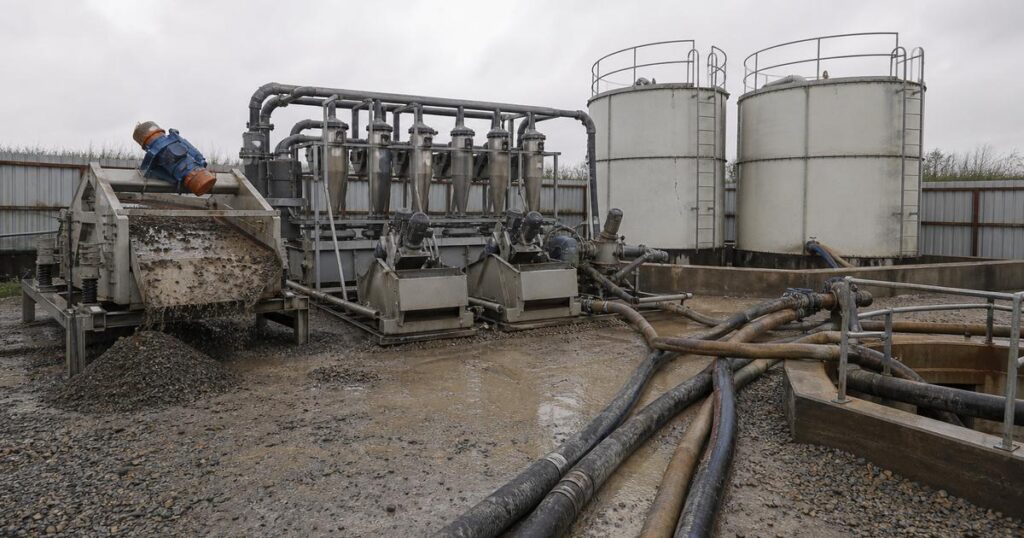
Microtunneling slurry separation plant on site: return slurry first passes a coarse screen shaker, hydrocyclone banks and desanding cones before the cleaned fluid is held in slurry tanks, so the coarsest solids are removed before the finer stages do their work

Slurry Separation Plants for Microtunneling: Sizing, Stages and Cost Drivers

A slurry separation plant sets the maximum sustainable advance rate of a microtunneling drive: the machine can only advance as fast as the plant removes solids. It removes excavated solids in stages defined by particle size, conditions the slurry back to its working density and viscosity, and returns it to the face. If it cannot

Slurry Separation Plants for Microtunneling: Sizing, Stages and Cost Drivers Lire plus »

Plan view of a curved microtunneling drive showing a horizontal curve between two shafts and the jacking pipe string

Curved Microtunneling: Minimum Radii, Pipe Stress and What Is Achievable

Curved microtunneling – steering a remotely controlled, non man-entry jacked pipeline along a horizontal or vertical curve between shafts so the line can follow a road, a river, a rail corridor or an existing utility instead of running straight between two fixed points – has a minimum radius (the tightest curve the pipe string and

Curved Microtunneling: Minimum Radii, Pipe Stress and What Is Achievable Lire plus »

Microtunneling line and grade tolerance overview with a jacking pipe string and design profile

Microtunneling Design: Line, Grade and Tolerance Requirements Explained

Microtunneling tolerances – the permitted departure of a remotely controlled, non man-entry jacked pipe from its design alignment – define how far the installed pipe may sit from its design line (horizontal position in plan) and its design grade (the designed fall, expressed as a percentage or an elevation), and they are the first thing

Microtunneling Design: Line, Grade and Tolerance Requirements Explained Lire plus »

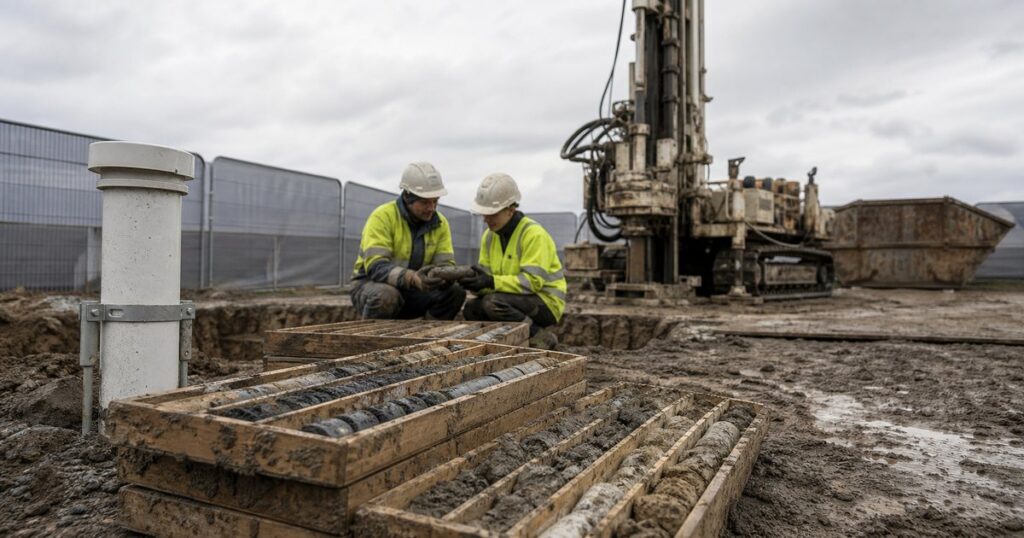
Geotechnical borehole drilling rig beside a microtunneling shaft location, with core boxes and groundwater monitoring equipment

Geotechnical Investigation for Microtunneling: What to Bore, Test and Baseline

A microtunneling geotechnical investigation is the desk study and ground investigation package that decides whether a drive is feasible and what machine, face support and jacking force it needs. Its three outputs are a borehole layout, a parameter list and a baseline deliverable set, and its placement rule is fixed: boreholes are sunk beside the

Geotechnical Investigation for Microtunneling: What to Bore, Test and Baseline Lire plus »

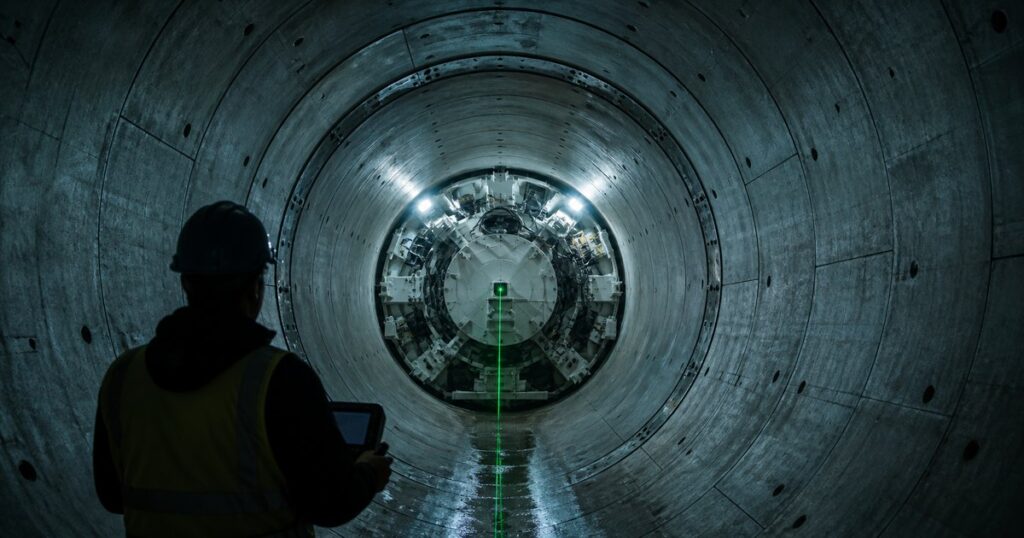
Microtunneling grade control operator monitoring laser guidance inside a jacking pipe

Grade Control and Steering Accuracy in Microtunneling: How ±10 mm Is Achieved

Microtunneling grade control is the closed loop of measurement, reporting and steering that keeps the machine on its design line (horizontal position in plan) and its design grade (the designed fall, expressed as a percentage or an elevation) as it advances. Accuracy as good as ±10 mm has been reported for microtunneling in one published

Grade Control and Steering Accuracy in Microtunneling: How ±10 mm Is Achieved Lire plus »

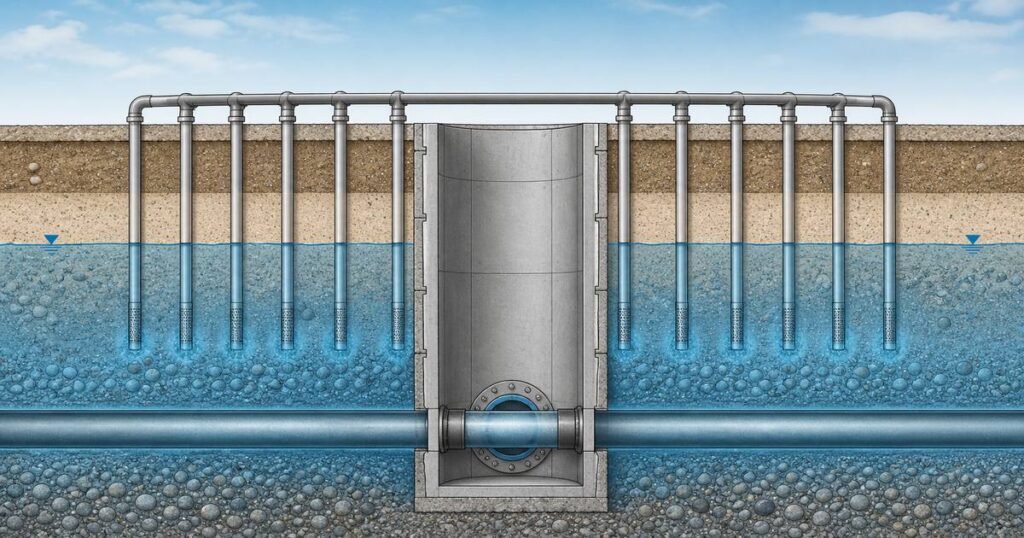
Microtunneling launch shaft with dewatering wells and a sealed entry eye below the water table

Groundwater Control for Microtunneling Shafts and Drives

Microtunneling groundwater control is the package of measures that keeps water out of launch and receiving shafts and holds the face and annulus stable while a remotely controlled machine advances below the water table. It combines shaft dewatering or cut-off, entry and exit seals, a balanced support medium at the face, and a discharge route

Groundwater Control for Microtunneling Shafts and Drives Lire plus »

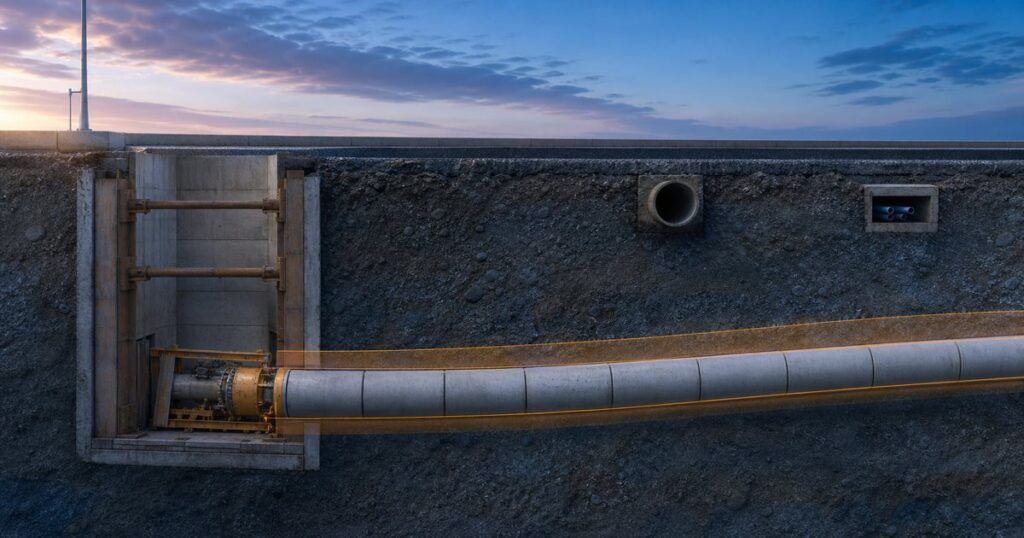
Microtunneling jacking frame and thrust wall in a launch shaft pushing a concrete jacking pipe

Jacking Forces in Microtunneling: Face Resistance, Friction and Lubrication

Microtunneling jacking force is the total thrust the jacking frame must deliver to advance the machine and push the pipe string from the launch shaft, and it is the sum of face resistance at the machine, friction along the pipe string, and any force added by curvature. Published friction values fall between 0.5 and 2.5

Jacking Forces in Microtunneling: Face Resistance, Friction and Lubrication Lire plus »

Microtunneling cutting head and pipe entering the ground with a lubricant annulus, launch shaft in the foreground

Overcut, Lubrication and Settlement: The Three Variables That Decide a Microtunnel

Overcut in microtunneling is the annular clearance the machine cuts beyond the outside diameter of the pipe, and it is the single dimension that ties steering, lubrication and settlement together. Its normal size is about 12 to 19 mm on the radius in soil and more than 25 mm in rock. That annulus makes steering

Overcut, Lubrication and Settlement: The Three Variables That Decide a Microtunnel Lire plus »

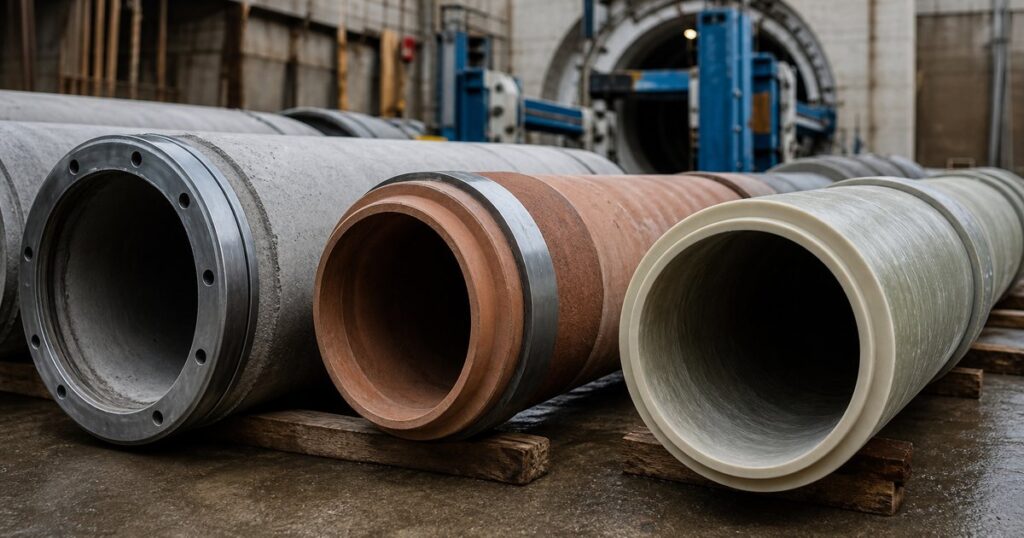
Rows of jacking pipes for microtunneling, including reinforced concrete, vitrified clay and GRP pipe, staged at a launch shaft

Microtunneling Pipe Materials: RCP, Steel, FRP, GRP and Ductile Iron Compared

Microtunneling pipe materials are selected on one governing criterion: whether the pipe and its joint can carry the jacking load at the governing point of the drive while staying watertight and on line. Direct jacking is dominated by reinforced concrete pipe (RCP), vitrified clay pipe (VCP), polymer concrete and glass-reinforced plastic (GRP); steel is usually

Microtunneling Pipe Materials: RCP, Steel, FRP, GRP and Ductile Iron Compared Lire plus »

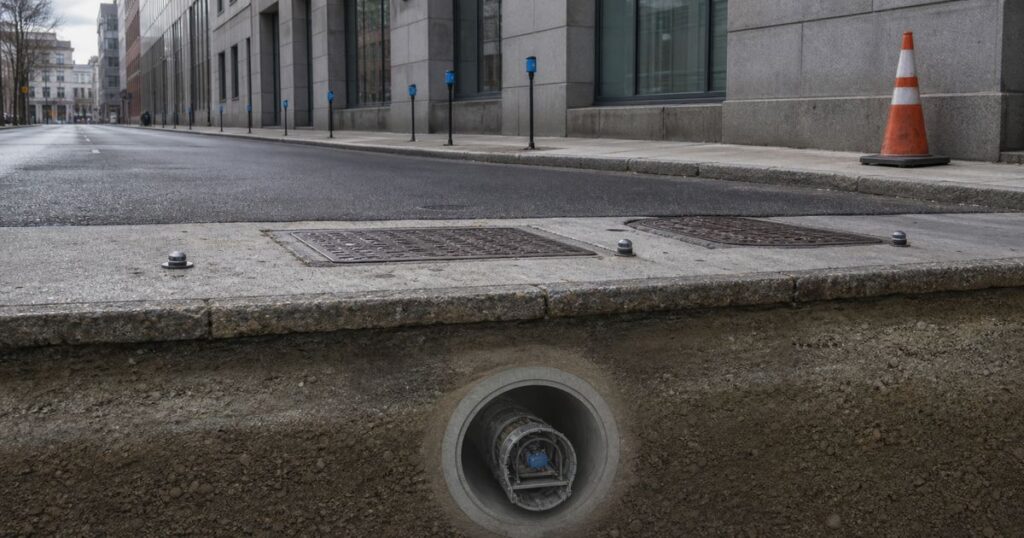
Microtunneling drive beneath an urban road with settlement monitoring points installed at the surface

Ground Settlement Control in Microtunneling: Monitoring, Limits and Mitigation

Microtunneling settlement is ground movement caused by the drive, and it is controlled by limiting volume loss: face loss and over-excavation, the overcut annulus, slurry or lubricant loss into the ground, joint drag, shaft-related loss, and groundwater drawdown with consolidation all contribute, and they are managed with face pressure control, excavated volume accounting, lubrication quality

Ground Settlement Control in Microtunneling: Monitoring, Limits and Mitigation Lire plus »