Trenchless Technology

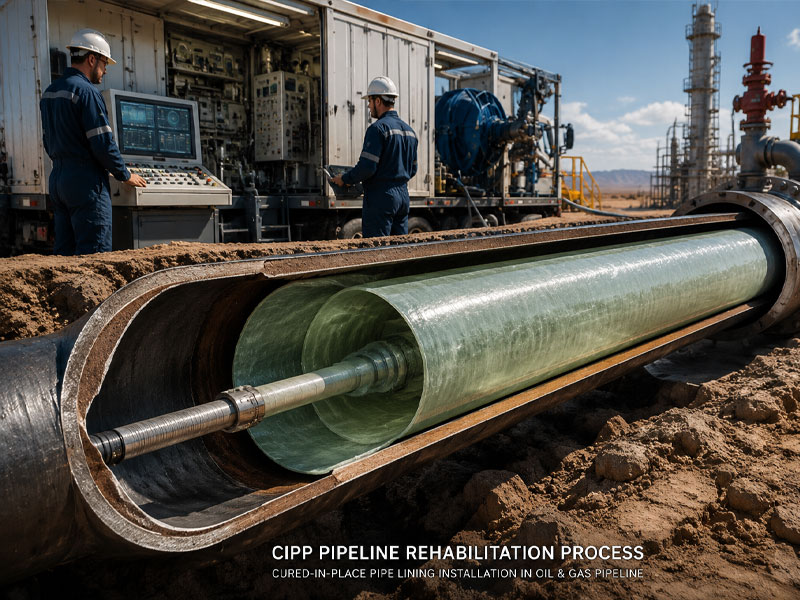
Two workers in orange coveralls and hard hats operating specialized equipment over a pit at an industrial facility with storage tanks and pipelines.

Trenchless vs. Traditional Excavation: Which Costs Less? 

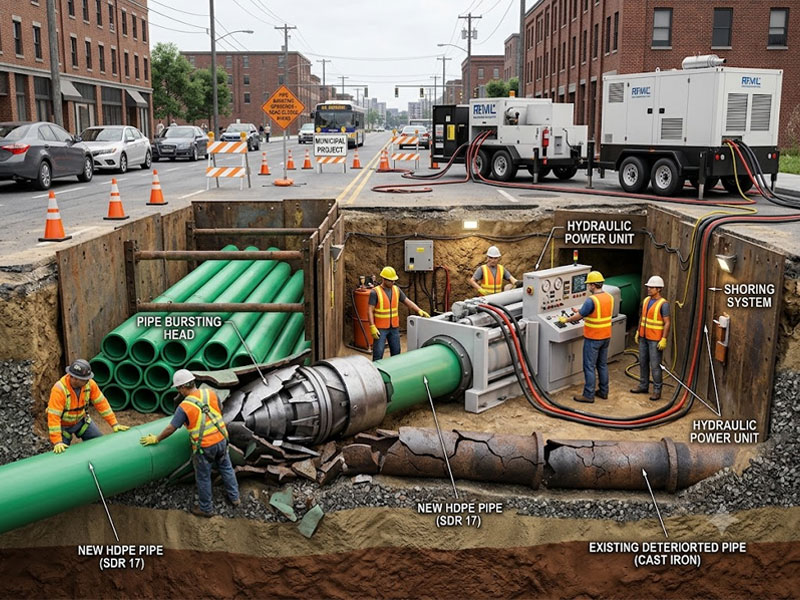
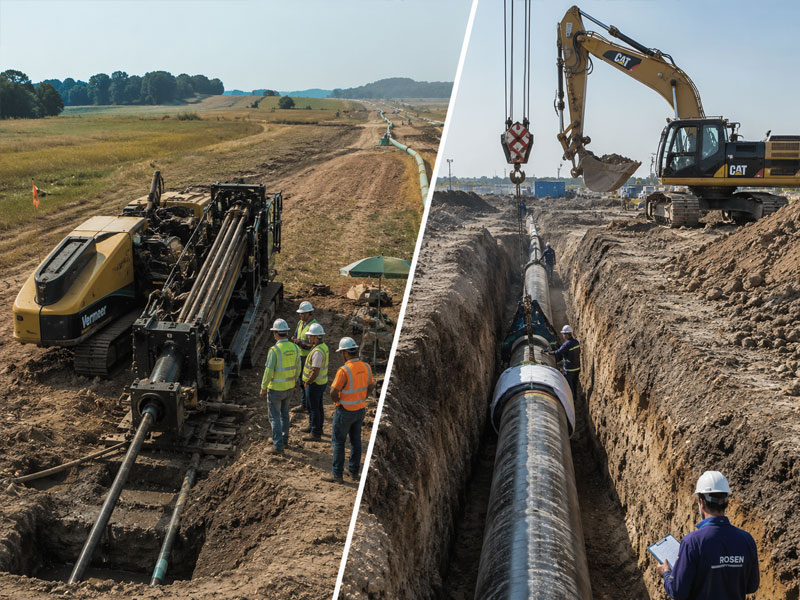
Trenchless methods often look more expensive upfront. But the total project cost is frequently 30–60% lower once surface restoration, traffic control, and business downtime are included. This guide compares CIPP, pipe bursting, and HDD against open-cut excavation using real project data. Quick Comparison: Trenchless vs. Traditional Excavation Costs Method Best For Upfront

Lire plus »
Workers performing pipeline welding using a crane at an industrial site near a river and storage tanks.

What are the pros and cons of trenchless pipeline rehabilitation?

Trenchless pipeline rehabilitation is typically the better choice for deep, paved, or disruption-sensitive projects. Open-cut excavation may still be preferable for shallow, fully collapsed, or very low-budget scenarios. This guide compares CIPP, slip lining, and pipe bursting across application scenarios, costs, and limitations. Summary Box Method Comparison Table Method Best

Lire plus »
A 3D illustration showing a complex underground pipe installation system beneath a highway and river, featuring drilling equipment and large pipes.

Which trenchless method is best for pipelines under roads or rivers?

Horizontal directional drilling (HDD) is usually best for most pipelines under roads or rivers when ground conditions are uniform and environmental risk is manageable. Microtunneling is often preferred for gravity sewers requiring precise grade control, and pipe jacking is generally more practical for diameters exceeding 900 mm. This selection guide

Lire plus »
Outdoors industrial oil and gas pipeline construction site, rural or semi‑desert landscape, large steel pipeline being laid on the ground with welding and lifting equipment, two construction workers in high‑visibility safety vests and hard hats, working near a pipeline section, HDRI high‑quality, realistic 8K, professional industrial construction photography, depth of field, long shot, 35mm lens. In the background, a small SUV or pickup truck parked on a dirt road near the construction area, soft daylight, clear sky, industrial construction atmosphere, no buildings, no city skyline, no dense urban environment. Colors: orange/yellow pipeline, gray metal, light blue sky, green/brown field, contrast with white/silver SUV, clean and professional construction service image, suitable for technical blog cover.

What should I look for in a trenchless technology provider?

How to Select a Trenchless Technology Provider for Water, Sewer, and Utility HDD and CIPP Projects (8 Key Criteria) Meta summary: This guide helps civil engineers, utility managers, and facility owners evaluate trenchless technology providers for horizontal directional drilling (HDD), cured-in-place pipe (CIPP), and other no-dig pipeline projects using eight data-driven

Lire plus »
A professional gas line installation project featuring SDR11 PE100 pipe being laid with trenchless drilling machinery at an industrial refinery, highlighting NASTT and NASSCO certifications.

How do I choose a trenchless contractor?

Trenchless contractor selection requires verifying 5 critical factors: NASTT/NASSCO certifications, project-specific experience (CIPP vs pipe bursting), documented quality control, 50-year warranty terms, and OSHA safety records (EMR below 1.0). This checklist prevents 30-50% cost overruns from poor contractor performance and ensures your pipe rehabilitation project stays on schedule. Selecting the

Lire plus »
A technical infographic illustrating the relationships between industrial liner classes and key project factors such as Geotech, Economics, Environment, Regulatory compliance, and Contractor requirements.

What factors affect trenchless project selection?

Trenchless project selection depends on six critical factors: subsurface geotechnical conditions (soil stability and groundwater control), economic feasibility with life cycle savings of 30-50%, technology fit including ISO 11295 liner classes, regulatory requirements, quantified environmental and social costs, and demonstrated contractor capability with pipe stress analysis expertise. This guide provides selection

Lire plus »
A detailed infographic diagram illustrating various trenchless pipe repair technologies including CIPP, HDD, and pipe bursting, with considerations for soil conditions, pipe diameter, and cost comparisons.

What are the costs of trenchless repair for gas pipelines?

Trenchless gas pipeline repair costs typically range from $80 to $350 per linear foot, depending on the method chosen. For most residential and light commercial projects, total job costs commonly fall between $3,000 and $15,000, while large-diameter municipal main repairs can reach $40,000 or more per project. Cured-in-place pipe lining, the

Lire plus »
An illustrative guide to trenchless pipeline plugs showing advanced bypass and isolation solutions with engineers operating robotic equipment and monitoring water flow inside large industrial pipes.

Where Can I Buy Pipeline Plugs for Trenchless Work?

For CIPP project managers, pipe bursting field technicians, bypass pumping procurement leads, and municipal/industrial pipeline contractors. This guide answers: Where can I buy pipeline plugs for trenchless work? – but more importantly, which plug works for your specific trenchless method, pipe condition, and pressure demand. We compare suppliers by use case, provide sizing steps with real-job

Lire plus »