
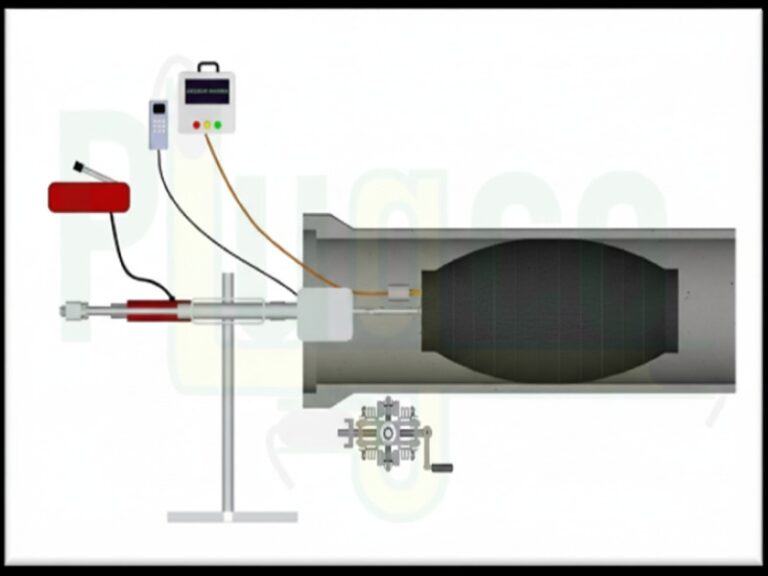
For a temporary line stop, an inflatable pipeline plug is generally more cost-effective than a mechanical plug for the majority of applications involving low-to-medium pressures, large diameters, or irregular pipe interiors, due to lower equipment costs, faster installation, and reduced labor requirements. However, for long-term, high-pressure isolations in pristine pipe, a mechanical plug may offer superior lifecycle value. This article dissects the cost models, operational principles, and specific scenarios for both pipeline plug types, providing a data-backed framework for engineers, procurement specialists, and pipeline maintenance contractors to make the optimal choice.
1. What Defines Cost-Effectiveness in Pipeline Isolation?
Cost-effectiveness in a temporary line stop extends beyond the initial purchase price. It encompasses the total installed cost, which includes the equipment manufacturer’s price, deployment labor, auxiliary equipment, and the potential financial impact of project delays or seal failure. Our analysis, based on industry standards and field data, breaks down these components to provide a clear comparison between inflatable pipeline plug and mechanical plug solutions.
1.1. Why Inflatable Plugs Offer Lower Initial and Operational Costs
The primary driver of inflatable pipeline plug cost-effectiveness is its simplicity and adaptability.
- Principle: Inflatable plugs use a flexible elastomeric sleeve that expands with air, water, or gas to conform to the pipe wall. This eliminates the need for the high-precision machining and complex mechanical linkages required for rigid seals.
- Implementation: A contractor performing a line stop on a 48-inch water main can insert a deflated inflatable plug through a small hot tapping hole (as small as 1.5 inches for some models). This is in stark contrast to a mechanical plug, which often requires a larger, more expensive fitting and potentially heavier equipment for insertion.
- Data:
- Equipment Cost: A mechanical pipeline stopper for a 24-inch line can cost 2 to 3 times more than a comparable high-quality inflatable unit from a specialized equipment manufacturer.
- Installation Speed: Field tests indicate that an inflatable plug can be installed and inflated in under 30 minutes, compared to 1-2 hours for a mechanical plug, directly reducing labor costs charged by a services company.
- Logistics: Inflatable plugs, when deflated, are lightweight and compact. A single technician can transport a large-diameter inflatable plug, whereas a mechanical plug often requires a crane or forklift, increasing logistics costs.
1.2. The Hidden Costs of Mechanical Plugs: Weight and Rigidity
Mechanical plugs, while robust, carry significant cost burdens that are often underestimated during project planning.
- Principle: Mechanical plugs rely on a rigid metal housing and a compression mechanism (e.g., cup seals or slip-jaws) to create a seal. This design requires heavy-duty construction to withstand pressure, making the unit inherently heavy and expensive to manufacture.
- Specifics: For a pipeline modification on a 36-inch oil line, a mechanical plug might weigh several tons. This necessitates heavy cranes, reinforced rigging, and a larger crew for construction and installation. Furthermore, the rigid design is intolerant to “out of round” pipe conditions, corrosion, or internal weld beads. If the pipe is imperfect, a mechanical plug may fail to seal, leading to costly project delays and restoration work.
- Data: A mechanical plug’s inability to seal in an “out of round” pipe can result in a project abort cost of tens of thousands of dollars per day, not including the environmental and safety risks. In contrast, an inflatable plug conforms to these imperfections, ensuring first-time seal success.
2. Comparative Analysis: Inflatable vs. Mechanical Pipeline Plugs
To provide a clear, scannable comparison, the following table outlines the critical differentiators impacting cost and performance for a temporary line stop.
| Tính năng | Inflatable Pipeline Plug | Mechanical Plug |
|---|---|---|
| Best Application | Water, wastewater, low-pressure air, and large-diameter lines. Trenchless pipe rehabilitation projects. | High-pressure oil and gas, steam, and applications requiring double block and bleed (DBB) isolation. |
| Cost Driver | Material flexibility and minimal support equipment. | Precision machining, metallurgy, and heavy handling equipment. |
| Installation Time | Fast (minutes). Requires only an inflation source. | Slow (hours). Requires mechanical actuation and alignment. |
| Pipe Tolerance | Excellent. Conforms to weld seams, deposits, and out-of-round conditions. | Poor. Requires a clean, round, and smooth pipe interior for an effective seal. |
| Pressure Handling | Good for low-to-medium pressures. High-flow models exist but have limits. | Excellent for high-pressure and high-temperature applications. |
| Long-Term Isolation | Limited. Risk of permeation or slow deflation over weeks/months. | Ideal. Provides a stable, long-term seal without pressure decay. |
| Tap Hole Size | Small. Can be inserted through a significantly smaller hot tap hole. | Large. Requires a larger fitting and tap to accommodate the rigid housing. |
3. Critical Factors Influencing Your Line Stop Decision
Choosing the correct pipeline plug is a strategic decision that impacts project safety, timeline, and budget.
3.1. Pipe Condition and Geometry: The Decisive Factor for Seal Integrity
If your pipeline has been in service for years, it is likely not perfectly round.
- Why it matters: Internal corrosion, mineral buildup (common in water lines), and protruding construction weld beads are the enemies of a mechanical plug. Its rigid sealing elements cannot fill these gaps, leading to bypass leakage.
- The Inflatable Advantage: An inflatable pipeline plug acts like a fluid itself, pressing into every crevice and irregularity. For projects involving pipeline stopple on aging infrastructure or pipeline modification near existing factory tie-ins, this adaptability is the primary driver of inflatable pipeline plug cost-effectiveness. It guarantees a seal the first time, avoiding expensive remedial actions.
3.2. Pressure, Temperature, and Duration: Defining the Service Envelope
While inflatable plugs are versatile, they are not a universal solution.
- High-Pressure Scenarios: For high-pressure oil and gas transmission lines, mechanical plugs or advanced hybrid systems like TEAM Inc.’s SmartStop® remain the standard due to their robust, ANSI-rated sealing elements capable of withstanding over 2,200 psig. These systems often provide double block and bleed (DBB) capability, a non-negotiable safety feature for many operators.
- Long-Term Isolation: If a line needs to be isolated for months during a major pipeline maintenance or restoration project, a mechanical plug is superior. You do not have to worry about maintaining inflation pressure or the long-term material integrity of an elastomeric sleeve under constant pressure.
4. Step-by-Step: Executing a Cost-Effective Temporary Line Stop
Here is a generalized workflow for deploying an inflatable plug to maximize cost savings:
- Site Assessment: A qualified contractor first assesses the pipe material, condition, and contents (oil, air, water, etc.). They measure the exact internal diameter and check for obstructions using a caliper or gauge.
- Hot Tapping: A small hot tapping machine is used to drill a hole into the pressurized pipeline. Because the plug is flexible, this hole is often the minimum size required for pipeline tapping, preserving the structural integrity of the pipe.
- Plug Insertion: The deflated pipeline plug is inserted through the tap hole and maneuvered into the correct position downstream.
- Inflation and Sealing: The plug is inflated with a controlled medium (air, water, or nitrogen) to the manufacturer’s specified pressure. It conforms to the pipe wall, creating an immediate, positive seal.
- Work Execution: With the flow stopped, downstream maintenance, construction, or modification work begins.
- Deflation and Removal: Upon work completion, the plug is deflated and retracted through the same small tap hole. The tap fitting is then capped, completing the job with minimal disruption.
5. JSW: Your Partner for Advanced Pipeline Solutions
For over two decades, JSW has stood as a premier equipment manufacturer and material supplier in the global pipeline industry. We understand that the success of your project hinges on the reliability of your temporary line stop equipment. Unlike generalist suppliers, JSW specializes in the engineering and production of high-integrity pipeline plug systems designed for the rigors of oil, gas, water, and industrial construction environments.
Our Commitment to Your Success:
- Engineering Excellence: Our factory utilizes advanced computational modeling to design inflatable plugs that provide superior conformability and burst strength. We offer a full range of solutions, from standard pipeline stoppers to custom-engineered systems for complex pipeline modification.
- Uncompromised Quality: We believe in radical transparency. We provide full material certifications and test reports, ensuring our products meet the stringent demands of pipeline maintenance and trenchless pipe rehabilitation.
- Comprehensive Support: JSW is more than a product vendor; we are a technical partner. Whether you are a contractor needing onsite guidance for a hot tapping operation, or a services company requiring a reliable supply chain for pipeline tapping projects, our team provides the expert support you need to get the job done safely and on budget.
- Global Reach, Local Expertise: We supply leading construction and maintenance firms worldwide, ensuring that no matter where your project is, you have access to JSW quality and expertise.
Ready to optimize your next line stop? Contact JSW today to discuss your project requirements and discover how our cost-effective pipeline plug solutions can deliver superior results.





































 English
  Arabic
  Russian
  Spanish
  French
  Vietnamese
  Polish
  Thai
Thai  Indonesian
  Turkish
  Portuguese