
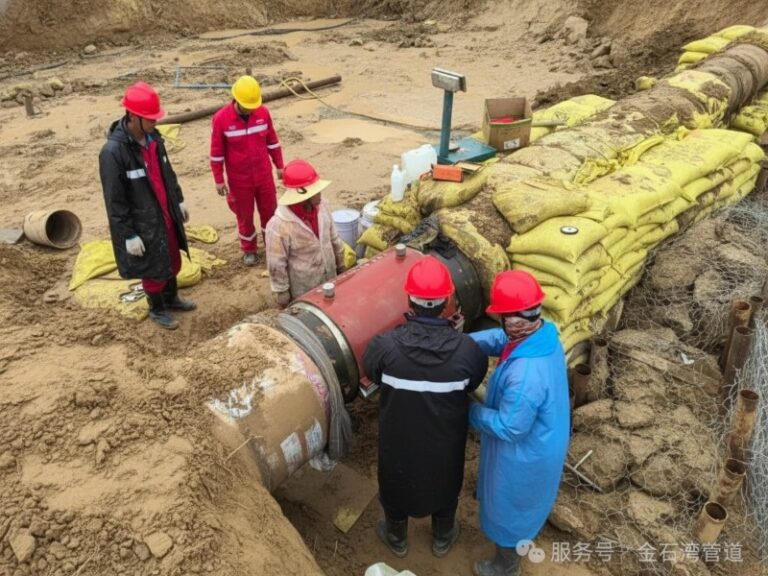
For pipeline operators seeking to expand, connect to, or modify a pressurized system without a costly shutdown, a cost-benefit analysis of international brands versus local hot tapping services is the critical first step. The optimal choice depends on weighing project-specific factors like scale, compliance risk, and operational timelines against long-term strategic goals such as reliability and total cost of ownership. This article provides a direct comparison of the two models, covering their technical capabilities, financial implications, and the situations where each excels, empowering you to make a data-driven decision for your next pipeline modification or maintenance project.
1. What is Hot Tapping and Why is a Cost-Benefit Analysis Crucial?
Hot tapping, or pressure tapping, is a specialized, engineered procedure that allows for a new connection to be made into an existing, pressurized pipeline without interrupting service or product flow. This is achieved by using a hot tapping machine that drills into the pipe while a specialized sealing system, often a pipeline plug, contains the pressure. The core value is business continuity; it prevents costly shutdowns that, in industries like oil, gas, or chemical processing, can result in millions in lost production per day. Given the high stakes, the decision between an international service provider and a local contractor is not trivial. A thorough cost-benefit analysis must move beyond the initial price quote to evaluate long-term reliability, safety compliance, and project success rates, which directly impact your operation’s bottom line and risk profile.
2. Core Comparison: International Brands vs. Local Services
Choosing the right partner is a strategic decision. The table below outlines the fundamental differences between the two models across key decision-making criteria.
| Comparison Criteria | International Brand Service | Local Hot Tapping Service |
|---|---|---|
| Primary Strength | Technical sophistication, global standardization, high-risk project expertise. | Speed of response, local market familiarity, cost-competitiveness for standard jobs. |
| Typical Project Scope | Large-scale, complex projects (e.g., high-pressure gas lines, subsea tie-ins, refinery turnarounds). | Regional maintenance, municipal water and sewer tie-ins, planned plant modifications. |
| Expertise & Certification | Teams certified to global standards (ASME, ISO). Extensive R&D for novel solutions. | Deep knowledge of local codes, permitting processes, and common regional infrastructure issues. |
| Equipment & Technology | Proprietary, advanced hot tapping equipment and pipeline stopples for extreme conditions. | Reliable, versatile standard equipment; may rely on third-party equipment manufacturers. |
| Cost Structure | Higher initial mobilization and day-rate costs; premium for expertise and insurance. | Lower baseline cost; more competitive pricing for routine work; potential for hidden costs in complex scenarios. |
| Ideal Use Case | Mission-critical, high-consequence projects where failure is not an option. | Time-sensitive, lower-risk maintenance or where budget is the primary constraint. |
3. The Hidden Costs and Long-Term Benefits Beyond the Quote
The true cost-benefit analysis requires looking at both tangible and intangible factors over the project’s lifecycle. International brands often justify their premium through risk mitigation and long-term asset integrity. For instance, a failed tap on a high-pressure natural gas line can lead to catastrophic safety incidents, environmental damage, and regulatory fines far exceeding the service cost. Global providers carry robust liability insurance and offer warranties backed by their corporate stability, which can be a critical factor for financial and risk managers.
Conversely, the primary benefit of a trusted local contractor is agility and relationship-based service. They can often mobilize within hours for an emergency repair, minimizing downtime. A case study from the trenchless pipe rehabilitation sector illustrates this well: a plumbing contractor avoided $60,000-$70,000 in annual subcontractor costs by bringing a lining service in-house, highlighting how local partnerships can evolve into cost-saving, long-term operational models-2. However, for highly specialized needs outside their core competency, local firms may need to subcontract or rent equipment, potentially introducing coordination risks and unanticipated costs.
4. How to Choose: A Step-by-Step Decision Framework
Follow this actionable framework to structure your cost-benefit analysis and select the right service provider.
Step 1: Define Your Project’s Non-Negotiables.
Before seeking quotes, list your absolute requirements. These typically include:
- Safety & Compliance: Required certifications (e.g., ASME PCC-2, ISO 9001), and adherence to specific safety standards.
- Technical Parameters: Pipeline material, diameter, pressure, temperature, and the medium (e.g., crude oil, sour gas, potable water).
- Timeline: Required completion window, including engineering, permitting, and execution phases.
Step 2: Gather and Normalize Proposals.
Request detailed proposals from 2-3 pre-qualified vendors, both international and local. Ensure each includes:
- A fixed-price or not-to-exceed estimate for the complete scope.
- A detailed breakdown of labor, equipment, and material costs.
- A project timeline with key milestones.
- Documentation of team certifications and insurance limits.
- References for 2-3 similar projects completed in the last 18 months.
Step 3: Conduct a Risk-Weighted Evaluation.
Score each proposal not just on cost, but on risk. Assign a higher weighting to criteria critical to your project’s success. Ask:
- What is the provider’s track record with this specific type of work?
- How would a project delay or failure impact your operation financially?
- Does the provider have in-house engineering support for procedure validation?
- Can they handle an unforeseen complication, or would it lead to costly change orders?
5. The Industry Outlook: Why This Decision Matters More Now
The global market for hot tapping and plugging services is projected to grow steadily, with a compound annual growth rate (CAGR) of 5.8%, reaching an estimated value of $14.3 billion (¥101.8 billion) by 2031-1. This growth is driven by aging infrastructure, the need for pipeline maintenance and restoration in expanding cities, and the economic imperative to keep critical systems online. This expanding market means more options, but also necessitates sharper discernment. Major international players like T.D. Williamson and Statys Group compete on technological edge for complex oil and gas projects-1, while regional specialists compete on service and cost for municipal and industrial maintenance. Your choice today positions your assets within this evolving solution landscape.
Author: Alex Chen, Senior Pipeline Integrity Engineer | Last Updated: February 7, 2026
Elevate Your Pipeline Project with JSW Engineering
At JSW Engineering, we bridge the gap between global expertise and local execution. We are not just an equipment manufacturer or a distant Material Supplier; we are your integrated engineering partner. Our unique value lies in providing factory-certified, advanced hot tapping and pipeline stopple equipment combined with direct, on-the-ground technical support and training for your team or local partners.
We understand that every construction and maintenance challenge is unique. That’s why our solutions are designed for both the extreme pressures of offshore platforms and the precise demands of urban water network upgrades. By partnering with JSW, you gain access to international-grade technology and procedural expertise, deployed with the responsiveness and cost-efficiency of a local resource.
Ready to optimize your next pipeline modification? Contact our engineering team today for a detailed project assessment and a transparent cost-benefit analysis tailored to your specific operational and financial goals.





































 English
  Arabic
  Russian
  Spanish
  French
  Vietnamese
  Polish
  Thai
Thai  Indonesian
  Turkish
  Portuguese