
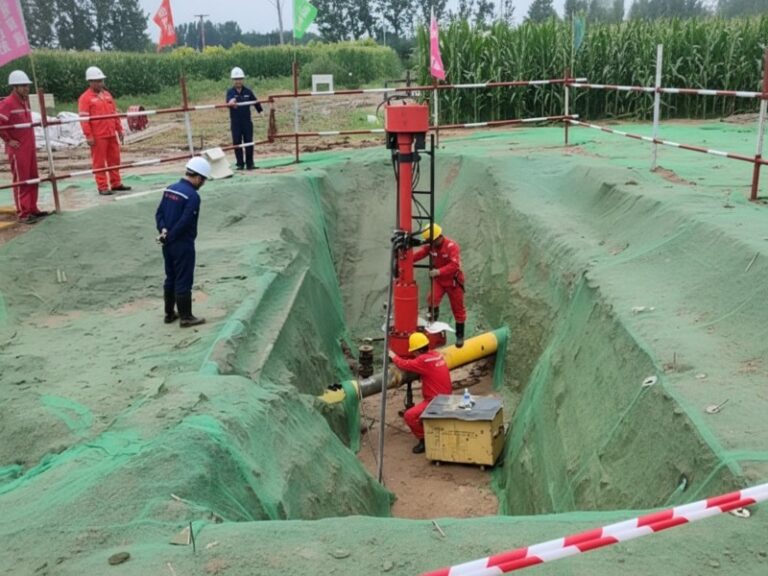
Hot tapping service providers enable pipeline modifications on live, pressurized systems without shutdowns, offering superior operational continuity and cost savings compared to traditional modification companies that require full system depressurization and excavation. This definitive guide analyzes the pros and cons of both approaches, covering their technical principles, economic impacts, safety protocols, and ideal applications for industries like oil and gas, water, and chemical processing to help you make an informed decision for your next pipeline project.
1. What Is the Core Difference Between These Service Providers?
The fundamental distinction lies in whether the pipeline system must be taken offline. Hot tapping service providers specialize in pressure tapping—a method of adding connections or making repairs to pipelines or vessels while they remain in service and under pressure[citation:4][citation:8]. In contrast, traditional pipeline modification companies typically follow a process that requires a complete system shutdown, depressurization, and often full excavation of the pipe segment.Figure 1: Visualizing the Two Modification Approaches
Hot Tapping Process: A branch fitting is welded or mechanically attached to the pipe. A specialized hot tapping machine with a cutter is then mounted onto this fitting to drill into the live pipe in a controlled, sealed environment.
Traditional Modification Process: This involves isolating a pipeline section, shutting down flow, depressurizing, and purging the line of its medium (e.g., water, gas, oil). Only then can workers cut into the pipe, often requiring extensive open trench excavation.
2. Pros and Cons: A Direct Comparative Analysis
Choosing the right contractor depends on weighing the advantages against the limitations of each method. The table below provides a clear, side-by-side comparison of the key decision factors.
| Decision Factor | Hot Tapping Service Providers | Traditional Modification Companies |
|---|---|---|
| Operational Continuity | Pro: No system shutdown required. Production or supply continues uninterrupted, which is critical for utilities and continuous process industries. | Con: Requires complete shutdown and depressurization, leading to costly downtime and service interruptions for end-users. |
| Project Speed & Efficiency | Pro: Procedures are significantly faster. A standard hot tap can often be completed in 3-8 hours, avoiding lengthy shutdown and restart cycles. | Con: Process is time-consuming. It involves shutdown, purging, modification, testing, and repressurization, often taking days. |
| Economic Cost Profile | Pro: Lower indirect costs. Eliminates revenue loss from downtime and avoids expensive media purging. Direct costs can be higher for specialized equipment. | Pro/Con: Lower direct equipment costs. Con: Very high indirect costs from lost production, material waste during purging, and potential penalty clauses for service disruption. |
| Safety & Environmental Risk | Pro: Safer for hazardous media. Work is done in a sealed chamber, minimizing leak risks of explosive or toxic substances. | Con: Higher exposure risk. Purging and opening lines can release gases or fluids, increasing fire and environmental contamination risks. |
| Site Impact & Excavation | Pro: Minimal surface disruption. Often requires only a small excavation for fitting installation, aligning with trenchless technology benefits. | Con: Major excavation usually needed. Requires open trenches for pipe access, disrupting traffic, landscapes, and other underground utilities. |
| Technical Limitations | Con: Not universally applicable. Requires specific pipe condition, material, and pressure ratings. Unsuitable for severely corroded pipes. | Pro: Broad applicability. Can be performed on almost any pipe, regardless of condition or material, once safely isolated and purged. |
2.1 Q&A: Is Hot Tapping Safe for All Types of Pipelines?
No, hot tapping has specific technical limitations that service providers must rigorously assess. The structural integrity and material of the parent pipeline are paramount. Providers conduct thorough inspections for corrosion and wall thickness. Certain brittle materials or pipes with internal linings may not be suitable. Furthermore, the pressure and temperature of the flowing product must be within the design limits of the hot tap equipment and the sealing technology. For instance, welding onto a live pipe requires precise control to avoid risks like “burn-through,” where the pipe wall is compromised during the weld.
3. How to Choose: Matching the Solution to Your Project Scenario
The optimal choice between a hot tapping specialist and a traditional contractor is not one-size-fits-all. It requires a detailed project assessment. Use the following flow to guide your decision:
- Choose Hot Tapping Services When:
- System Shutdown is Prohibitively Costly or Impossible: Examples include gas transmission lines, refinery process piping, or critical hospital water supplies.
- Minimizing Social & Environmental Disruption is Key: For projects under busy streets, in environmentally sensitive areas, or densely populated urban centers.
- Working with Hazardous Media: Where purging the line (e.g., of natural gas, chemicals) creates significant safety or environmental hazards.
- Choose Traditional Pipeline Modification When:
- The Pipeline is in Poor Condition: If inspection reveals extensive, unpredictable corrosion, traditional cut-out and replacement is safer and more reliable.
- Major Structural Changes are Required: Such as replacing a long segment, changing pipe diameter, or working on pipes not suited for pressure tapping.
- Shutdown Costs are Negligible: For seasonal systems, scheduled plant-wide turnarounds, or where bypass options are simple and affordable.
4. The Financial Perspective: A Closer Look at Total Cost
While hot tapping services may have a higher upfront equipment and mobilization cost, the total project economics often favor them. A key study of a pipeline renewal project in China found that while direct costs for traditional open-cut methods in shallow digs could be lower, the total economic burden shifts dramatically when accounting for indirect expenses.
For a major municipal sewage pipeline renewal, the non-trenchless (open-cut) method had a per-meter cost approximately 23% higher than the trenchless rehabilitation method when factors like traffic management, surface restoration, and social costs were accounted for[citation:6]. This principle applies directly to hot tapping vs. traditional modification. The true cost of traditional work includes:
- Lost Production Revenue: For a factory, this can be tens of thousands per hour.
- Material Waste: Purging and disposing of the medium (e.g., crude oil, chemicals) from the line.
- Restoration Costs: Re-paving roads, repairing landscapes, and compensating businesses for access disruption.
5. Industry Applications and Future Trends
Hot tapping is indispensable across several industries. In oil and gas, it’s used for adding laterals, installing inspection points, and emergency repairs without stopping the flow of product, which was demonstrated effectively in the Tuha Oil Field. Water utilities use it to add new service connections or repair mains without causing service interruptions to thousands of customers[citation:2]. In chemical and HVAC plants, it allows for system expansions while processes remain online.
The future of pipeline modification is trending toward greater efficiency and intelligence. Hot tapping equipment is becoming more compact and modular, like the man-portable Minitap system designed for tight spaces. We are also seeing the integration of IoT sensors for real-time monitoring during the tap and the development of advanced robotics for fully remote operations in hazardous environments. These innovations, pioneered by leading equipment manufacturers and service contractors, continue to expand the viable applications for no-shutdown techniques.
Your Next Step: Making an Informed Decision
Selecting between hot tapping service providers and traditional pipeline modification companies hinges on a clear analysis of operational, economic, and risk factors. For projects where continuity, safety, and minimal disruption are paramount, the specialized expertise of a hot tapping provider offers a compelling solution. When pipeline condition is poor or a full system shutdown is feasible, the traditional approach remains a valid choice.
Tác giả: Alex Chen, Senior Pipeline Integrity Engineer. With over 15 years of field experience in pipeline design, modification, and trenchless rehabilitation projects across the energy and utilities sectors.
Article Updated: February 2026.
About JSW Pipeline Solutions
At JSW Pipeline Solutions, we are more than just equipment manufacturers; we are your engineering partners in ensuring pipeline integrity and operational efficiency. Our expertise bridges the gap between advanced technology and practical field application.
Our core advantage lies in our integrated service model. We provide not only state-of-the-art, reliable hot tapping and pipeline plugging equipment but also comprehensive support, including:
- On-Site Technical Consulting: Our engineers help assess project feasibility, plan safe procedures, and select the right equipment, ensuring your success from the first step.
- Operator Training & Certification: We ensure your team is proficient and confident in using the technology, maximizing safety and job efficiency.
- Customized Solutions: We understand that every pipeline is unique. We work with you to tailor equipment configurations for specific challenges, whether dealing with high-pressure gas, corrosive chemicals, or confined urban workspaces.
For project owners, engineers, and contractors looking to minimize risk and downtime, a conversation with JSW can be the first step toward a more efficient and cost-effective outcome. Contact our technical team today for a free, no-obligation project assessment.
Answers to Your Questions
Q: Can hot tapping be used on plastic pipes like HDPE?
A: Yes, specialized hot tapping equipment and fittings exist for various plastic pipes, including HDPE and PVC. The critical factors are the pressure rating, the integrity of the pipe, and using a sealing mechanism (often mechanical rather than welded) suitable for the material.
Q: How do I verify the qualifications of a hot tapping service provider?
A: Look for providers with a strong safety record, certified welders (especially for in-service welding), and operators trained on specific equipment. They should follow recognized industry standards (e.g., ASME PCC-2, API RP 2201) and be able to provide detailed, site-specific procedure manuals for your review before work begins.
Q: Is hot tapping considered a “trenchless technology”?
A: While distinct from rehabilitation methods like CIPP lining, hot tapping is a core trenchless technology for pipeline modification. It shares the fundamental principle of causing minimal surface disruption by working through small access points rather than open trenches.





































 English
  Arabic
  Russian
  Spanish
  French
  Vietnamese
  Polish
  Thai
Thai  Indonesian
  Turkish
  Portuguese