
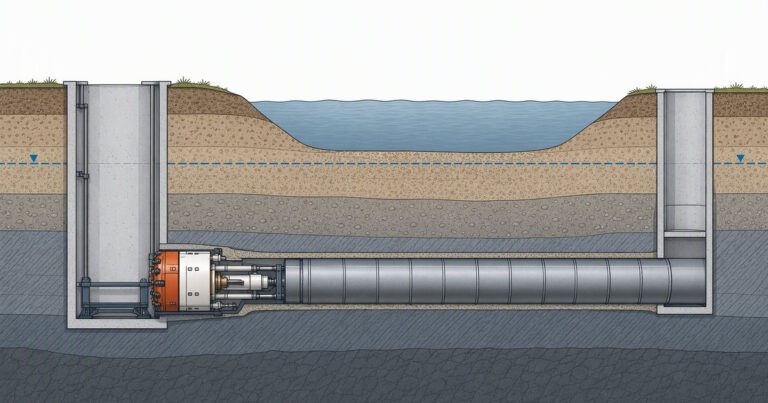
Microtunneling projects in North America are tracked through an annual trade-press job log of notable drives in the United States and Canada. Read together, the 1980s Florida first crossing, the 3,947 ft Painesville lake intake, Calgary’s 3.4 m storm pipe and Winnipeg’s 5,600 ft boulder drive map a market growing in diameter, length and difficulty.
People search for a job log of notable microtunneling projects when they need comparable drives, not a definition. The log is an annual trade-press compilation of notable United States and Canadian drives, and the microtunneling projects below are drawn from published industry reporting rather than our own files. Every project fact is attributed to the party that reported it, and every record claim is labeled as a claim. We cover how the log works, how the method reached the continent, which projects define the market, and how to read a log without being misled by a headline number.
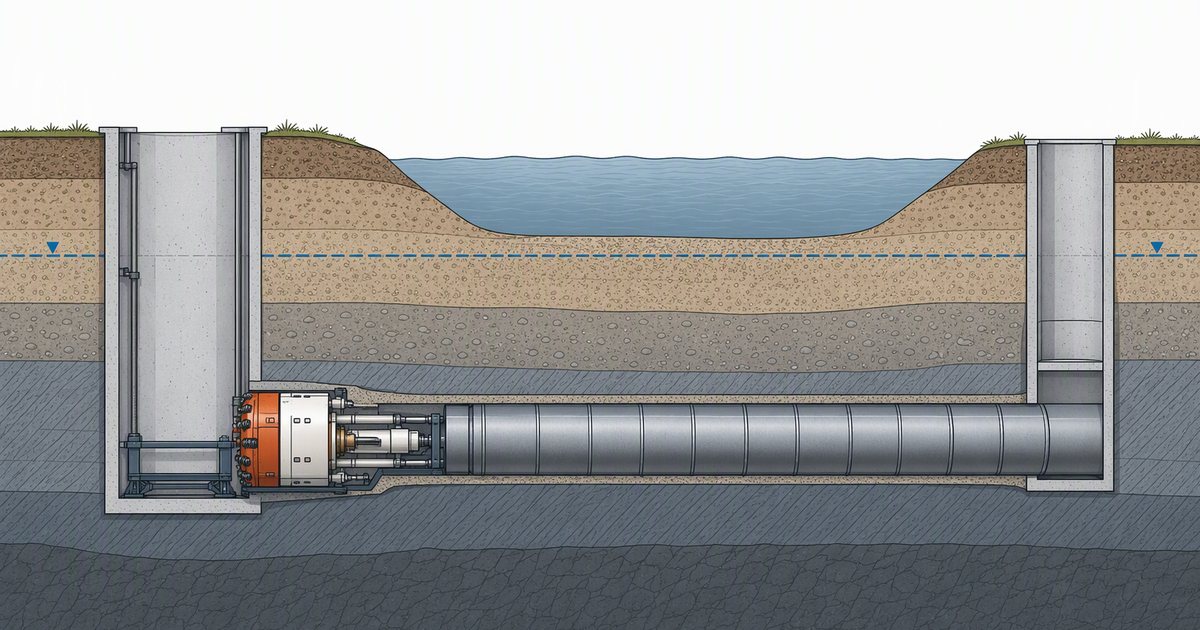
What Is the North American Microtunneling Job Log?
It is an annual compilation published by the trade magazine Trenchless Technology and compiled by editorial consultant Jim Rush. The North American Microtunneling Job Log lists notable drives under way or recently completed across the United States and Canada, with editions for 2022, 2025 and 2026.
Entries give the owner, the engineer, the contractor, the microtunnel boring machine model, the pipe type and the reported drive lengths. That is enough to shortlist comparable work, not to design from. In our bid reviews, we treat each entry as an editorial snapshot of what was reported, not a certified register of records.
Scope: every entry here is a reported snapshot with a named reporter. For design or pricing, use the project’s own documents.
How Did Microtunneling Reach North America?
The origin date is disputed. One transportation research source dates the first United States microtunneling project to 1983. That source records 14 such projects by 1989; several other sources date the first crossing to 1984, a 600 ft drive of 72-inch pipe under I-95 and the FEC Railroad in south Florida.
The method arrived with equipment suppliers, so early North American trenchless construction leaned on imported machines with local crews. The pipe jacking method moved with them.
Iseki Poly-Tech, established in Tokyo in 1971, re-entered North America around 2015. Herrenknecht entered the microtunneling market in 1985 and sold its first machine, an AVN 600, in West Berlin. Akkerman announced 30 years of microtunneling in September 2025.
Which Microtunneling Projects Define the North American Market?
The shortlist below is not a ranking. These microtunneling projects show how the market changed in scale, diameter and difficulty, and each row names the party that reported it. Each machine is a microtunnel boring machine matched to the ground.
| Project | Year | Key parties | Scale reported | Reported by |
|---|---|---|---|---|
| South Florida first crossing | 1983 or 1984 | Transportation research source; others say 1984 | 600 ft of 72-inch pipe under I-95 and the FEC Railroad; 14 United States projects by 1989 | Transportation research source; other sources |
| Painesville, Ohio, intake | 2019 | City of Painesville; Ric-Man; Herrenknecht AVN1500 | 3,947 ft of 60-in. RCP under Lake Erie, 67-ft shaft | Tunneling Business Magazine; a United States longest claim |
| Northwest Inner City, Calgary | 2022 | City of Calgary; Ward & Burke; Delve Underground | 3.4 m inside diameter, 760 m single drive | Delve Underground; largest diameter in North America |
| South Surrey Interceptor, Vancouver | n.d. | Metro Vancouver; Stantec; Ward & Burke | 3 m inside diameter RCP, more than 2,600 ft | American Concrete Pipe Association; Canada’s largest |
| Ferry Road storm sewer, Winnipeg | 2026 | City of Winnipeg; Erritt Construction; Herrenknecht AVN2500D | 5,600 ft single drive of 2,400 mm pipe | Contractor and trade press; not certified |
| Western Bays, New York | 2023 | AECOM, WSP, Hazen & Sawyer; John P. Picone | 439 million USD; 12 drives about 18,020 ft; nine of twelve drives over 1,300 ft | Reporter not named in the sources |
| WHCRWA C1 and C2, Houston | 2022 | West Harris County Regional Water Authority; Bradshaw Construction | 99.5-in. OD steel casing; shafts about 55 ft | The 2022 job log |
| Downtown Tampa Interchange | 2026 | Florida DOT; Huxted Trenchless; Iseki Unclemole TCC1350 | About 2,773 lf of 62.5-in. casing, six drives; jacking load 24.5 to over 124 tons | The 2026 job log |
Record-holders change hands often: Painesville took a United States claim in 2019 from a 2008 Portland, Oregon drive, and Winnipeg added a newer single-drive claim in 2026.
Where Is the Work Concentrated Across North America?
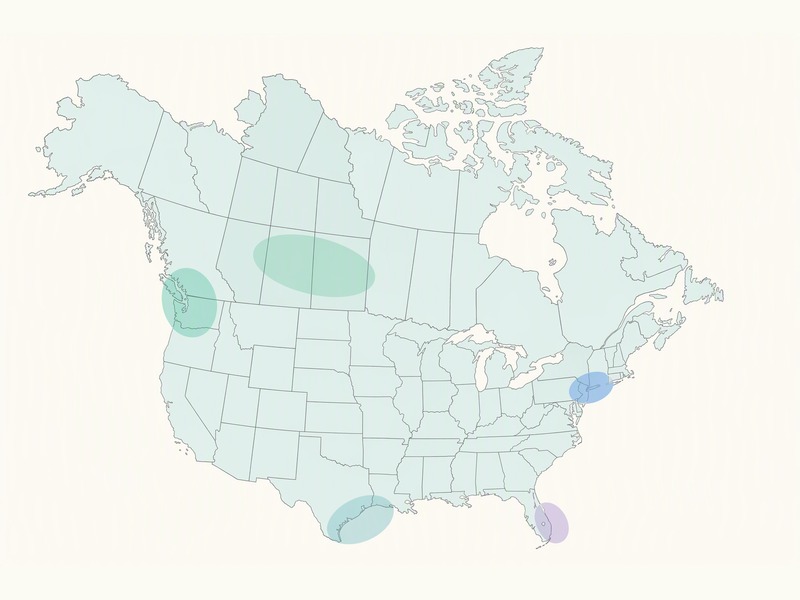
Reported trenchless construction clusters in a few regions. South Florida appears first because of the 1980s crossing, and Florida still generates urban work such as the Downtown Tampa Interchange, while Texas and the Gulf Coast contribute water transmission crossings.
The Northeast is defined by dense corridors: the Western Bays work involved 12 drives and 14 shafts, with shafts 20 to 60 ft deep built using secant piles, soil mixing and jet grouting. Canada adds Calgary, Winnipeg and Vancouver, where reported scale now sets continental benchmarks.
What Do These Projects Have in Common?
Across regions, the job log entries repeat a few themes. For trenchless construction, the direction of travel is longer, larger and more curved drives in harder ground. Friction published by the Pipe Jacking Association runs about 0.5 to 2.5 tonnes per square meter of external circumferential area. Project values in the log span about 17 to 439 million United States dollars, because scope differs more than unit cost.
Difficulty, not size alone, is the recurring theme. The Winnipeg Ferry Road drive reported roughly 2,000 ft of boulder-rich ground and, in the worst places, 10 to 15 boulders at the excavation face. The contractor estimates that more than 2,000 boulders were crushed, an estimate rather than a verified figure.
How Should a Contractor Read a Job Log?
| Log field | What the log gives | What it usually omits | Substitute source for bidding |
|---|---|---|---|
| Drive length | A single-drive length or a cumulative total | Which of the two the number is | Alignment drawings and shaft location tables |
| Diameter | Inside, outside or machine cutting diameter | Which of the three is quoted | Pipe specifications and machine data sheets |
| Machine | The machine model, such as AVN1500 or TCC1350 | Thrust and torque envelope, cutter configuration | Manufacturer technical documentation |
| Ground | A qualitative description of the dominant strata | Strength, abrasiveness, RQD, water pressure zones | Geotechnical investigation and baseline reports |
Contractors should read a job log entry for comparability, not for a headline figure. Confirm whether a figure is one drive or a cumulative total, and whether the quoted diameter is inside, outside or a machine cutting diameter.
Match the ground. Choose a microtunnel boring machine for the hardest ground on the alignment; a machine that performs in soft clay and sand differs from one that holds up in full-face shale or a mixed face.
On any trenchless construction drive, check what the log omits: cover depth, water table, curve radii, shaft dimensions and jacking force. Published pipe jacking guidance from the Pipe Jacking Association gives indicative jacking lengths by diameter and notes that longer drives need project-specific risk analysis. ASCE/CI 36-15, the Standard Design and Construction Guidelines for Microtunneling, and EN 12889 belong beside the log.
On drives we have supported, we verify rather than trust. Use the log to shortlist comparable microtunneling projects, then confirm the details against the project’s own documents.
If you are the owner comparing bids, read the reporter and the basis first. If you are pricing the drive, read the ground, the cover and the shaft dimensions first.
What Does the 2026 Log Signal About the Microtunneling Market?
The 2026 entries point to a busy urban and industrial market rather than a uniform boom. Newer work includes the Los Angeles Roscoe Trunk Line Replacement Unit 2, where Frontier Kemper Constructors was reported as installing 4,142 lf of 82-in. steel casing in four drives, and the Downtown Tampa Interchange, where an Iseki Unclemole TCC1350 was used across six drives. Both name a microtunnel boring machine matched to the ground.
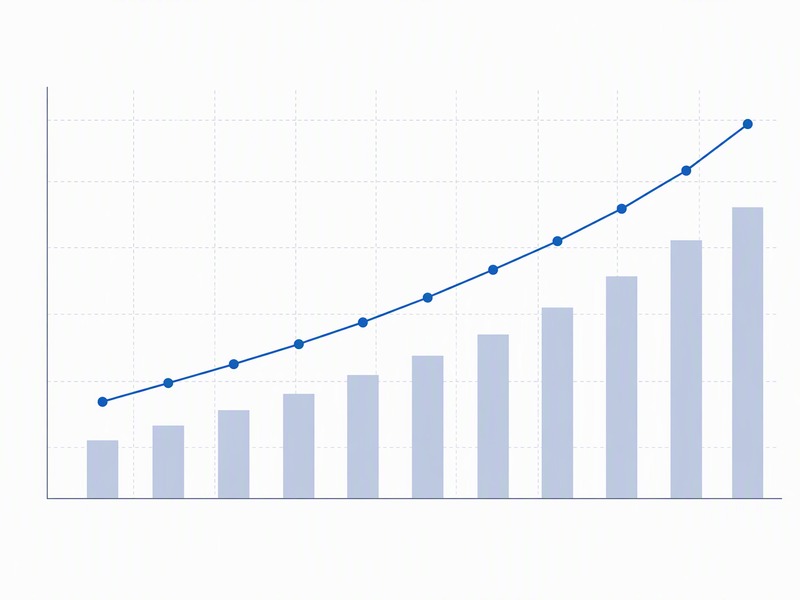
On size, estimates differ by scope. Valuations for the 2025 microtunneling market range from about 0.7 billion to about 3.8 billion United States dollars. Forecasts to 2034 and 2035 run from roughly 1.5 billion to 6.7 billion, with growth rates quoted between about 6.5 and 9.8 percent. No single number should be called the market size.
We have seen records change hands repeatedly as owners enter harder ground; recent microtunneling projects are longer, larger and more curved.
Comparing your drive against the ones in this log? Send the alignment and geotechnical report; we will name the closest comparable drive and where the analogy breaks down.
Key Takeaways
- The job log is an annual Trenchless Technology compilation of notable United States and Canadian drives, with editions for 2022, 2025 and 2026.
- The first United States microtunneling project is dated 1983 by one source and 1984 by others; the 1984 crossing was 600 ft of 72-inch pipe in south Florida.
- Reported record claims include the 3,947 ft Painesville intake, the 3.4 m Calgary storm pipe and the 5,600 ft Winnipeg Ferry Road drive; none is certified.
- Microtunneling projects in the log are growing in diameter, single-drive length and complexity, often as a contractor-proposed alternative to open cut.
- Published 2025 market estimates span about 0.7 to 3.8 billion United States dollars and should be quoted as a range.
- Most records are claims, so read each with its reporter and basis in mind.
Frequently Asked Questions
What is the North American Microtunneling Job Log?
It is an annual compilation published by Trenchless Technology and compiled by editorial consultant Jim Rush. It lists notable drives under way or recently completed across the United States and Canada, with editions for 2022, 2025 and 2026. Entries are editorial snapshots, not a certified register.
When was the first microtunneling project built in the United States?
The date is disputed between 1983 and 1984. One transportation research source dates the first United States microtunneling project to 1983 and records that 14 such projects had been completed as of 1989. Several other sources date the first crossing to 1984, describing a 600 ft drive of 72-inch pipe under I-95 and the FEC Railroad in south Florida.
Which North American drives are the longest or the largest, and which of those claims has been independently certified?
Reported claims include Painesville, Calgary, Vancouver and Winnipeg. The 3,947 ft Painesville intake under Lake Erie, the 3.4 m Calgary storm pipe reported by Delve Underground and the 3 m South Surrey Interceptor reported by the American Concrete Pipe Association all appear in the record. Another benchmark is the 5,600 ft Winnipeg Ferry Road drive reported by the contractor and the trade press. No independent body has certified the Winnipeg claim.
How large is the North American microtunneling market?
Published estimates for 2025 range from about 0.7 billion to about 3.8 billion United States dollars. Forecasts to 2034 and 2035 run from roughly 1.5 to 6.7 billion, with compound annual growth rates commonly quoted between about 6.5 and 9.8 percent. Estimates vary by how the market is defined.
Why do job log entries disagree about records?
Because most records are claims rather than certified measurements. A longest-drive or largest-diameter statement usually comes from a contractor, a manufacturer or trade press, and it is defined by a specific combination of single drive length, inside diameter and ground conditions.
If I am bidding a municipal microtunneling project in 2027, what should I check in the job log before I price the drive?
Use the log to shortlist comparable drives, then verify the details. Check the ground, the water table, the cover, the shaft depths and the machine class against project-specific data. Confirm whether published figures were single drives or cumulative, and request the geotechnical baseline report and alignment drawings before pricing.
How JSW Supports Projects Like These
JSW is a pipeline engineering and construction company that executes trenchless crossings with its own crews and equipment. Our scope covers microtunneling construction, trenchless technologies, horizontal directional drilling services, dịch vụ lắp đặt đường ống and pipeline inspection service, delivered as one integrated design-and-construct package.
We install pipelines from DN300 to DN1500 (12 to 60 inches) by microtunneling, with single drives up to 600 m. Laser guidance holds about plus or minus 25 mm over depths of about 2 to 25 m, in ground from soft clay and sand to hard rock up to about 80 MPa UCS. Interjack stations are deployed roughly every 100 to 150 m on extended drives. Our trenchless construction work is covered by ISO 9001:2015, ISO 14001:2015 and ISO 45001:2018 certification.
- Integrated delivery: design, microtunneling, pipe jacking and tie-in handled by one accountable team.
- Auditable process data: alignment, jacking force and face pressure recorded through the drive.
- Risk-explicit pricing: ground, water and cover risks stated openly rather than buried in a lump sum.
- Safety and compliance: work planned against OSHA requirements and our certified management systems.
When we review microtunneling projects for clients, we start from the same public log data and then test it against the site. That is the difference between a comparable case and a design.
Have a crossing that looks like one of these microtunneling projects? Send your alignment data, geotechnical report and shaft locations for a free technical review. Our engineers respond with a scoped recommendation and budget range.
Where Do These Project Facts Come From?
This page uses only published industry reporting, and every project fact is attributed in the prose rather than cited with a marker or a numbered reference. The project entries come from the annual North American Microtunneling Job Log published by Trenchless Technology and compiled by Jim Rush, and from related trade reporting. Specific attributions name Tunneling Business Magazine for the Painesville intake, Delve Underground for the Calgary diameter claim, the American Concrete Pipe Association for the South Surrey Interceptor, and contractor announcements and trade press for the Winnipeg Ferry Road drive. The Houston, Atoka, Oregon City, Roscoe and Tampa entries come from the 2022, 2025 and 2026 job log editions. Market-size figures are public industry and search-tool estimates that vary by scope and should be quoted as a range. Record statements are reported claims that no independent body has certified, and the boulder count at Winnipeg is the contractor’s own estimate. The log publishes configuration: diameter, drive length, machine class, shaft type, ground description and project parties. Jacking force, settlement, dewatering volume, drive duration and unit cost come from project-specific documents, not from the log. Nothing here is presented as a JSW project, and no JSW figure is attached to a named third-party drive.





































 English
  Arabic
  Russian
  Spanish
  French
  Vietnamese
  Polish
  Thai
Thai  Indonesian
  Turkish
  Portuguese