
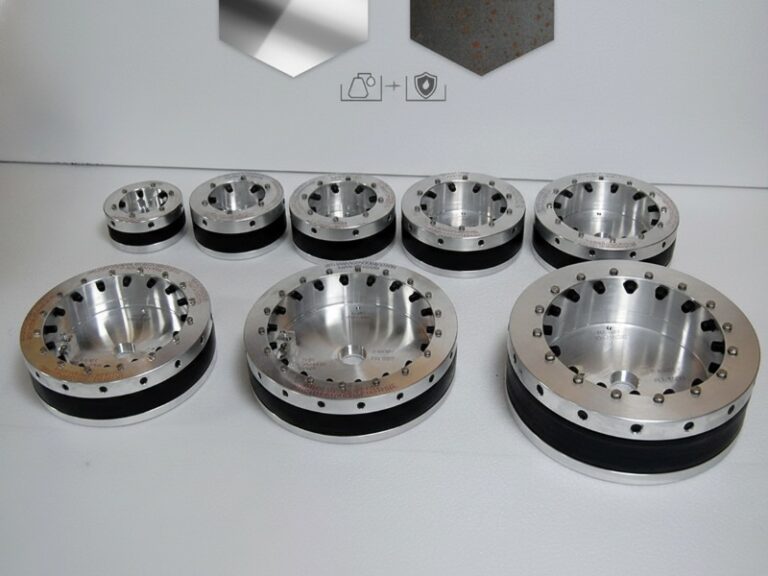
Aluminum pipeline plugs offer significant weight savings (up to 70% lighter) and excellent corrosion resistance for low-to-medium pressure applications, while steel pipeline plugs provide superior strength and durability for high-pressure, heavy-duty operations and extreme temperatures.
Choosing the right material for pipeline isolation is critical for safety, efficiency, and cost. Whether you are a contractor performing maintenance on a water main, an equipment manufacturer testing a new fabrication, or an oil and gas engineer planning a hot tapping procedure, the material of your pipeline plug dictates its performance. This guide provides a direct comparison of aluminum and steel pipeline stopper systems, covering their mechanical properties, ideal use cases, limitations, and safety considerations to help you select the correct solution for your specific construction or restoration project.
1. What Are the Primary Benefits of Using Aluminum Pipeline Plugs?
Aluminum plugs are engineered for specific scenarios where weight and corrosion are the primary concerns. Their value proposition lies in handling efficiency and resistance to environmental degradation.
The “Hands-On” Advantage: Why Weight Matters
In our field tests with trenchless pipe rehabilitation crews, the most immediate benefit of aluminum is ergonomics. A typical 16-inch aluminum plug weighs approximately 14 lbs, whereas a comparable steel plug can exceed 45 lbs.
- Installation Efficiency: This weight reduction translates directly to faster installation in overhead applications, vertical stacks, or confined spaces. Technicians experience less fatigue, reducing the risk of improper installation.
- Application: Ideal for pipeline modification tasks where plugs must be moved frequently between pipe sections.
Superior Corrosion Resistance in Specific Environments
Aluminum naturally forms a protective oxide layer, making it highly suitable for water, drainage, and specific chemical environments without the need for heavy coatings.
- Chemical Compatibility: Manufacturers offer aluminum plugs for arduous duties, including immersion in chemicals, where standard carbon steel might degrade rapidly. After anodizing, the surface hardness increases, providing a non-conductive barrier that prevents galvanic corrosion in controlled settings.
- Subsea Operations: Aluminum plugs are negatively buoyant, making them stable and easy to handle for subsea work and offshore operations.
2. When Should You Choose a Steel Pipeline Plug?
Steel pipeline plugs remain the industry standard for high-integrity isolation where pressure and temperature extremes are factors. The material’s inherent strength provides a margin of safety that aluminum cannot match.
High-Pressure Integrity and Structural Robustness
Steel plugs, often manufactured in larger sizes up to 72 inches (1800 mm) or more, are designed for the most demanding applications.
- Pressure Handling: For high-pressure pipeline isolation in oil, gas, and petrochemical facilities, steel is the default choice. While aluminum is suited for low-to-medium pressure systems (often low-pressure testing in air or water lines), steel maintains its mechanical properties under immense stress.
- Resistance to Impact: On a busy construction site, a steel plug can withstand accidental impacts and rough handling that might dent or compromise an aluminum unit.
Performance in Extreme Temperatures
Steel maintains its strength and dimensional stability in environments that weaken aluminum.
- High-Temperature Limits: Aluminum weakens considerably above 100°C (212°F), making it unsuitable for steam lines or process piping with elevated temperatures. Steel plugs are designed for very heavy-duty duties such as long immersion in water or exposure to significantly higher temperatures.
- Cryogenic Applications: Interestingly, while steel is versatile, aluminum’s strength increases at lower temperatures, making it a viable option for specific cryogenic applications down to -196°C, though steel alloys are also used extensively in this sector.
3. Aluminum vs. Steel: A Head-to-Head Comparison for Pipeline Plugs
When deciding between a Material Supplier for your project, the choice often comes down to a trade-off between weight savings and pressure capacity. The table below outlines the critical performance metrics.
| Tính năng | Aluminum Pipeline Plugs | Steel Pipeline Plugs |
|---|---|---|
| Trọng lượng | Lightweight (Up to 70% lighter) | Heavy (Standard industrial weight) |
| Áp suất định mức | Low-to-Medium Pressure (Ideal for testing water/air systems, DWV) | High Pressure (Suitable for oil, gas, hydrotesting) |
| Corrosion Resistance | Excellent (Naturally occurring oxide layer; anodizing available) | Poor (Requires galvanization, coatings, or stainless-steel alloys) |
| Temperature Range | Limited (Weakens above +100°C / 212°F) | Excellent (Suitable for high-temp processes and steam) |
| Cost | Moderate (Higher material cost than carbon steel, lower installation cost) | Low-to-Moderate (Carbon steel is cheap; high-alloy steel is expensive) |
| Typical Use Case | Maintenance, Restoration, drainage, subsea, chemical immersion | Pipeline construction, hot tapping, high-pressure isolation, refineries |
4. What Are the Hidden Risks of Mixing Materials?
While aluminum offers many benefits, improper integration with existing systems can lead to catastrophic failure. A common question from contractors is whether they can use an aluminum plug in a steel pipeline during pipeline tapping or maintenance.
The Danger of Galvanic Corrosion
This is the most significant risk. Aluminum is anodic compared to steel. When the two are coupled in the presence of an electrolyte (like water), the aluminum will sacrificially corrode to protect the steel.
- The Result: The aluminum plug could “weld” itself to the steel pipe or disintegrate, making removal impossible and potentially compromising the seal.
- Mitigation: If aluminum must be used in a steel pipe, isolation kits or dielectric coatings are required to prevent metal-to-metal contact.
Mechanical Limitations in Imperfect Pipes
Both aluminum and steel mechanical plugs rely on expanding rubber elements against the pipe wall. However, their rigid construction has limitations:
- Out-of-Round Pipes: Mechanical plugs (both Al and Steel) struggle to seal effectively in pipes with weld beads, significant corrosion buildup, or out-of-round conditions. In these scenarios, an inflatable stopper might be the better solution.
- Seal Compression: The wing nut mechanism on an aluminum plug compresses the plates to expand the rubber ring. Over-torquing a lightweight aluminum body can risk stripping threads, whereas steel threads are more forgiving under high torque.
5. How to Select the Correct Plug for Your Application
Choosing between aluminum and steel requires an honest assessment of your workflow and safety requirements.
Step 1: Assess the Service Conditions
- For Water, Drainage, and Sewer: Aluminum is often the superior choice. Its corrosion resistance and light weight make installation in ditches or overhead simpler.
- For Oil, Gas, and High-Pressure Hydrotesting: Steel is non-negotiable. You require the mechanical strength to withstand the forces involved in isolating high-energy fluids. Services involving hazardous materials demand the highest material integrity.
Step 2: Evaluate the Installation Environment
- Confined Spaces & Overhead: Choose aluminum to reduce physical strain on the technician.
- Offshore and Marine: Aluminum’s negative buoyancy is a distinct advantage, but ensure proper isolation from dissimilar metals on the vessel.
Step 3: Consider the Duration
- Long-Term Blocking: Both materials are suitable for long-term blocking, unlike inflatable plugs which require pressure monitoring. However, ensure the elastomer seals (Nitrile, Silicone, Viton) are compatible with the media for extended periods.
Frequently Asked Questions About Pipeline Plug Materials
Q: Are aluminum pipeline plugs as strong as steel for blocking high-pressure gas lines?
A: No. Steel plugs are required for high-pressure gas and oil applications due to their superior tensile strength and resistance to deformation under extreme loads. Aluminum is generally restricted to low-to-medium pressure systems, such as water or air testing.
Q: Can I use an aluminum plug in a stainless-steel pipeline during construction?
A: Direct contact is not recommended due to the high risk of galvanic corrosion. If unavoidable, consult with the equipment manufacturer or factory to ensure proper dielectric barriers are in place to separate the dissimilar metals.
Q: How do temperature extremes affect the choice between aluminum and steel?
A: For high-heat applications (above 100°C), steel is the only viable option among the two as aluminum loses significant strength. For cryogenic or extremely cold environments, aluminum is an excellent choice as its strength actually increases.
Q: What are the “double seal” versions mentioned for pipe plugs?
A: Double seal versions feature two separate rubber sealing elements. They provide critical stability, ensuring the plug cannot tilt or lose its seal, which is vital in high-pressure or hazardous environments to prevent product escape.
Tác giả: Senior Pipeline Solutions Engineer
Last Updated: March 3, 2026





































 English
  Arabic
  Russian
  Spanish
  French
  Vietnamese
  Polish
  Thai
Thai  Indonesian
  Turkish
  Portuguese