
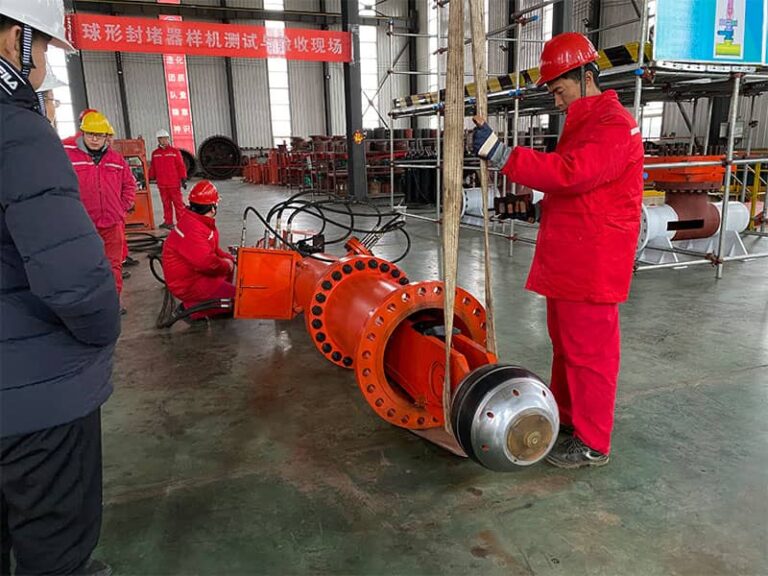
Low-pressure test plugs for 120-inch diameter concrete water pipes are primarily sourced from specialized heavy-equipment manufacturers and suppliers like Cherne Industries (with its 72-120-inch Test-Ball® Plug) and custom fabrication shops, as this size represents the extreme upper limit of standard manufacturing.
Sourcing a plug for a pipe of this magnitude is a complex procurement process. It requires a deep understanding of the specific testing protocol (air vs. water), the physical constraints of the job site (like manhole access), and the safety systems engineered into these massive tools. This guide will walk you through the available technologies, the key manufacturers, critical safety and compliance standards, and a step-by-step procurement checklist to ensure you select the right solution for your large-diameter infrastructure project.
1. What Are the Primary Technologies for Plugging 120-Inch Concrete Pipe?
When dealing with pipes of this scale, the technology diverges from smaller, off-the-shelf solutions. There are two dominant mechanical approaches for low-pressure testing, each with distinct operational principles.
Inflatable Test Balls for Large Diameters
For truly massive pipes, the inflatable test ball is the most common solution. These are giant, robust bladders made from high-tenacity materials.
- How They Work: The plug is inserted into the pipe in a deflated state and then inflated with air to create a friction seal against the inner wall of the concrete pipe.
- The 120-Inch Solution: A prime example is the Cherne 72–120-inch Test-Ball® Plug, recognized as the world’s largest production test ball. It is engineered specifically for pipes up to 120 inches in diameter.
- Physical Characteristics: These are not tools you can carry by hand. The Cherne 120-inch unit weighs approximately 850 pounds and is 152 inches long, requiring mechanical lifting equipment for installation.
Mechanical Expandable Plugs
For slightly smaller, but still large-diameter pipes, mechanical plugs are a robust alternative. They are often preferred for long-term immersion or where a positive, non-inflatable seal is required.
- How They Work: These plugs use a wing-nut or bolt mechanism to compress two plates together, which forces a rubber ring to expand outward and seal against the pipe wall.
- Size Limitations: While incredibly durable for applications involving oil, water, or harsh chemicals, most standard mechanical plugs, such as those from Huntingdon Fusion Techniques (HFT), have an upper limit around 48 to 60 inches (1200 mm – 1500 mm) . For a 120-inch pipe, a mechanical plug would almost certainly need to be a custom-engineered solution from a specialized factory.
2. Which Manufacturers Supply Test Plugs for 120-Inch Pipes?
Sourcing for this niche requirement means looking for companies with proven engineering capabilities in large-diameter infrastructure. Our research and industry analysis point to a few key players.
| Manufacturer | Product/Technology | Max Diameter Support | Key Features for Large Diameter |
|---|---|---|---|
| Cherne Industries | 72-120-inch Test-Ball® Plug | 120 inches | Tear-resistant natural rubber, 6 psi back pressure, field-replaceable pressure relief valve, aluminum end plates. |
| Huntingdon Fusion Techniques (HFT) | Pipestoppers® Mechanical Plugs | Up to 48 inches (1200 mm)* | High-quality steel construction, suitable for high temperatures and acidic/alkaline environments. Conforms to BS EN752. |
| Specialty Fabricators (e.g., SEMEL, PlugCo) | Custom Inflatable/Mega Plugs | Variable (Custom) | Build plugs from high-quality aramid/kevlar cord-reinforced rubber. Suitable for air and water tests according to Euro norm NEN-EN 1610 . |
*Note: For a 120-inch requirement, HFT’s standard catalog may not suffice, highlighting the need for custom services or specialty providers.*
3. What Safety and Compliance Standards Apply to Large-Diameter Testing?
Testing large-diameter pipes involves immense potential energy. Safety is not an accessory; it is an integral part of the equipment specification.
Pressure Ratings and Limitations
It is crucial to understand that “low-pressure” testing is strictly defined.
- Typical Ratings: For a 120-inch plug, pressure ratings are modest due to the massive surface area. The Cherne Test-Ball, for instance, accommodates a back pressure of up to 6 psi. Other large inflatable plugs are rated for around 3 PSI for air testing.
- The Force Calculation: A contractor must respect these limits. The force exerted on a plug at 6 psi is substantial and requires proper bracing.
Mandatory Safety Features
Any plug you source must include these non-negotiable safety elements:
- Pressure Relief Valve: A field-replaceable valve that prevents over-inflation, a critical feature cited by experienced product managers in the industry.
- High-Strength Handling Points: Look for heavy-duty eyebolts (e.g., ¾-inch) that provide superior holding strength for maneuvering the plug into place.
- Material Integrity: The plug material must be robust. Tear-resistant natural rubber or aramid/kevlar-reinforced rubber is standard for withstanding the abrasion and pressure of large-diameter concrete pipes.
Industry Standards
Ensure your equipment or testing procedure complies with relevant standards.
- ASTM C1103: This is the standard practice for joint acceptance testing of installed precast concrete pipe sewer lines, often performed with low-pressure plugs.
- EN 1610: The European standard for construction and testing of drains and sewers, which outlines procedures for air and water testing.
4. How to Choose the Right Plug: A Step-by-Step Guide for Contractors
Selecting the correct plug for a 120-inch pipe involves more than just matching the diameter. Use this checklist to guide your sourcing decision.
- Verify the Exact Internal Diameter: Concrete pipe dimensions can vary. Measure the actual pipe, don’t just rely on the nominal size.
- Determine the Test Medium: Will you be testing with air or water? While many large plugs are rated for both, verify the pressure requirements for your specific test (e.g., 3 psi air vs. 5 psi water).
- Assess Site Access: How will you get an 850-pound, 12-foot-long plug to the test site? Can it be inserted through an existing manhole, or does it require trenchless access? This will determine if you need a multi-size plug that can be folded or maneuvered.
- Evaluate the Application:
- Is this for a simple maintenance test, or do you need to divert flow (bypass)?
- Is the pipe construction new, or is this a restoration project on an existing line with unknown debris?
- Consult the Manufacturer’s Pressure Charts: Never guess. Reputable equipment manufacturers provide detailed charts showing maximum pressure ratings based on pipe diameter and condition. Contact their engineering support for verification, especially for sizes near the upper limit of their range.
5. Overcoming Logistical and Installation Challenges
Sourcing the plug is only half the battle. The installation of a 120-inch test plug is a heavy civil engineering operation.
Heavy Lifting Required:
You will need site equipment capable of handling significant weight. A plug of this size weighs as much as a small car. Plan for cranes, hoists, or heavy machinery to position the plug at the pipe mouth or lower it into a deep construction shaft.
The Importance of Bracing:
For mechanical and even some inflatable plugs, the force of the backpressure can push the plug out of the pipe. Our experience on large-diameter projects shows that proper bracing against the pipe end or a downstream structure is non-negotiable for crew safety and test integrity.
Coordination with Other Trades:
If your project involves hot tapping, pipeline plug installation, or trenchless pipe rehabilitation, coordinate with those teams. The test plug must be scheduled after line cleaning but before any internal lining work begins.
Frequently Asked Questions (FAQ)
Q: Can I use a standard 48-inch mechanical plug on a 120-inch pipe?
A: No. Mechanical plugs like those from HFT have a maximum expansion range and are not designed for that size differential. You would need to contact a specialist for a custom-fabricated solution.
Q: What is the lead time for a 120-inch test plug?
A: For a standard product like the Cherne Test-Ball, it may be available from stock or with a short lead time from a national Material Supplier. For custom-engineered plugs, lead times can be 6-12 weeks or more.
Q: Are these plugs only for wastewater, or can they be used for potable water pipes?
A: They can be used for potable water lines, but you must ensure the Material Supplier confirms that the rubber compounds (e.g., natural rubber, nitrile) are certified for contact with potable water to avoid contamination.
Q: What if my 120-inch pipe is not perfectly round?
A: This is a critical consideration. Inflatable plugs, especially those made from reinforced rubber like aramid/kevlar, are generally better at conforming to slight irregularities in ovalized concrete pipes than mechanical plugs.
Conclusion: Partnering for Success on Large-Diameter Projects
Sourcing a low-pressure test plug for a 120-inch concrete water pipe requires partnering with a supplier who understands the engineering, safety, and logistical demands of large-diameter infrastructure. Whether you opt for the world’s largest production test ball from Cherne or commission a custom-built solution from a specialized factory, the keys to success are verifying pressure ratings, insisting on built-in safety features, and planning for the physical reality of handling such massive equipment.
By following the guidelines in this article, you can ensure that your next large-diameter testing project is executed safely, in compliance with industry standards, and without costly delays.
JSW Brand Statement & Value Proposition
JSW: Your Partner for Critical Pipeline Infrastructure Solutions
For projects demanding the utmost in reliability and engineering precision, JSW stands as a leader in the field. While sourcing a 120-inch test plug requires a global search, executing a successful project requires a partner with local expertise and comprehensive capabilities. JSW offers a full spectrum of services that go hand-in-hand with your large-diameter testing needs.
- Expertise Across the Project Lifecycle: Whether you need construction support for new pipelines, maintenance on aging infrastructure, or urgent restoration services, our team has the experience to deliver.
- Integrated Technical Solutions: We don’t just supply equipment; we provide solutions. From pipeline tapping and hot tapping to trenchless pipe rehabilitation, we offer the technical back-up to ensure your plugging operation is safe and effective.
- Commitment to Safety and Standards: JSW adheres to all industry regulations, ensuring that every project, from a simple test to complex pipeline modification, is executed with the highest safety standards.
Ready to discuss your large-diameter project? Contact JSW today to speak with an engineer who understands the challenges of working with 120-inch water and sewer systems. Let us help you find the right solution and provide the on-the-ground support you need to get the job done right.





































 English
  Arabic
  Russian
  Spanish
  French
  Vietnamese
  Polish
  Thai
Thai  Indonesian
  Turkish
  Portuguese