
Last updated: May 2026 | Based on 500+ trenchless projects and 2024-2026 industry data
Reviewed by a licensed Professional Engineer (P.E.) with 15+ years of trenchless pipeline rehabilitation experience and member of NASTT.
Is trenchless pipe repair worth it? Yes. Trenchless pipe repair typically reduces costs by 30-60%, shortens project time by 40-70%, and avoids major surface disruption compared to traditional excavation, making it the preferred solution for most residential and municipal pipeline repairs.
Trenchless pipeline rehabilitation works by repairing damaged underground pipes from the inside using cured-in-place liners, pipe bursting heads, or slip lining techniques – all without excavation trenches that disrupt roads, landscaping, or building foundations.
The three primary methods are CIPP (cured-in-place pipe), pipe bursting, and slip lining. Each method suits different pipe conditions: CIPP for cracked but structurally intact pipes, pipe bursting for collapsed or undersized pipes, and slip lining for large-diameter mains where minor flow reduction is acceptable. This guide covers how each technique works step by step, compares costs per foot (30−30−300 per foot), provides 2026 pricing data, and helps you choose the right method for residential, municipal, or industrial applications.
What Is Trenchless Pipeline Rehabilitation?
Trenchless pipeline rehabilitation is a method of repairing underground pipes without excavation by installing liners or replacing pipes internally using techniques like CIPP, pipe bursting, or slip lining. It reduces cost, time, and surface disruption by 40-70% compared to traditional open-cut methods.
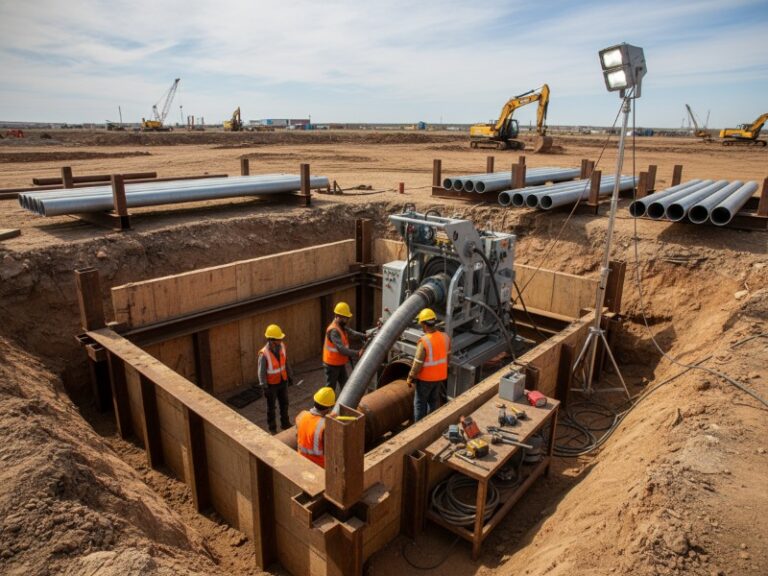
Trenchless technology accesses pipes through existing manholes or small entry pits (typically 4×8 feet) rather than excavating the entire pipe length. For a typical 200-foot sewer line, trenchless rehabilitation preserves driveways, patios, trees, and landscaping that open-cut excavation would destroy.
How Does Cured-in-Place Pipe (CIPP) Work Step by Step?
CIPP is the most widely used trenchless method, accounting for over 60% of global projects. The process creates a new pipe inside the existing damaged pipe with no digging required.
What Is CIPP Lining? (Snippet Block)
Cured-in-Place Pipe (CIPP) is a trenchless rehabilitation method where a resin-saturated flexible liner is inserted into a damaged pipe, then inflated and cured with heat or UV light to form a rigid, corrosion-resistant new pipe within the old one.
Step 1: CCTV Inspection and Cleaning
A robotic CCTV camera first travels through the pipe to document cracks, joint separation, root intrusion, and corrosion. Technicians then clean the pipe using high-pressure water jetting at 3,000-5,000 PSI or mechanical cleaning tools. Without thorough cleaning, the resin liner cannot bond properly – a leading cause of premature failure.
Learn how CCTV sewer inspection determines trenchless repair method selection to understand why this step is critical for success.
Step 2: Liner Impregnation
A felt or fiberglass tube is saturated with thermosetting resin. Resin selection depends on application:
- Epoxy resin – Potable water pipes (NSF/ANSI 61 certified)
- Polyester resin – Gravity sewer lines (most common, lowest cost)
- Vinyl ester resin – Chemical resistance for industrial pipes
The saturated liner is kept refrigerated until installation to prevent premature curing.
Step 3: Liner Insertion and Inversion
The liner enters the damaged pipe using either:
- Inversion method – Water or air pressure turns the liner inside out as it moves through the pipe, pressing the resin-coated side against the pipe wall
- Pull-in-place method – A winch pulls the liner through, then an inflation bladder expands it outward
Step 4: Curing Process (Heat vs. UV)
Heat or UV light activates the resin curing reaction:
| طريقة المعالجة | Speed per Foot | Total Time for 200 ft | الأفضل لـ |
|---|---|---|---|
| Steam curing | 2-4 minutes | 6-12 hours | Small diameter (4-12 inches) |
| Hot water curing | 3-6 minutes | 10-18 hours | Large diameter (18+ inches) |
| UV curing | 2-5 seconds | 15-30 minutes | Any diameter, fastest ROI |
UV curing reduces installation time by 50-70% compared to thermal methods and eliminates boil-out risks associated with steam curing.
Step 5: Lateral Reinstatement and Final Inspection
Robotic cutters reopen service connections (lateral lines) with ±1/8 inch accuracy. A final CCTV inspection verifies liner thickness, smoothness, and proper lateral reinstatement. The finished CIPP liner provides a design life of 50-100 years with structural strength exceeding original pipe specifications.
See our detailed CIPP lining cost guide for a complete breakdown of pricing factors, regional variations, and cost-saving strategies.
How Does Pipe Bursting Work Step by Step?
Pipe bursting is a trenchless replacement method that fragments an existing pipe outward while simultaneously pulling a new HDPE pipe into its place. It is ideal for collapsed pipes, severe deformation, or when upsizing diameter is required.
Step-by-Step Pipe Bursting Process
- Entry and exit pits – Two pits (typically 6×10 feet each) are excavated at each end of the pipe section
- Bursting head insertion – A cone-shaped bursting head 10-25% larger than the old pipe is attached to a pulling rod
- Fracturing – The winch pulls the bursting head through, creating radial force that fractures the existing pipe into surrounding soil
- New pipe installation – HDPE pipe (fused behind the bursting head) follows immediately into the expanded cavity
- Service reconnection – Lateral lines are reinstated via excavation at connection points
Pipe Bursting Success Data
According to industry data compiled from NASTT and 500+ trenchless projects (2024-2026):
- Success rate – 95% for pipe diameters 4-12 inches
- Upsizing capability – From 4 to 6 inches (50% increase) or 6 to 8 inches (33% increase)
- Compatible pipe materials – Clay, concrete, cast iron, asbestos cement, PVC
- Not recommended for – Thin-wall steel, heavily corroded ductile iron, or pipes with less than 2 feet of cover
Limitations of Pipe Bursting
Pipe bursting cannot be used under buildings, near shallow utilities (less than 3 feet separation), or in unstable soil conditions. The process requires more surface disruption than CIPP (two large pits) but far less than open-cut trenching.
Compare trenchless pipe repair vs open-cut excavation costs and ROI to see which method delivers better returns for your specific project conditions.
What Is Slip Lining? Process, Costs, and Best Applications
Slip lining inserts a smaller-diameter pipe (typically HDPE or fiberglass) into an existing pipe, then grouts the annular space between the old and new pipe. It is best for large-diameter pipes (18 inches and above) where minor flow reduction is acceptable.
Slip Lining Step-by-Step
- Pipe cleaning and inspection – Removes debris and documents condition
- New pipe assembly – Fuses individual HDPE sections into a continuous length (50-500 feet)
- الإدراج – Pushes or pulls the new pipe through the host pipe using winches or excavators
- Grouting – Pumps low-viscosity cementitious or chemical grout into the annular space at 10-30 PSI
- Service reinstatement – Reconnects lateral lines using robotic cutting tools
Flow Capacity Trade-Off
Slip lining reduces internal diameter by 1-2 inches. For a 24-inch pipe, that represents a 10-15% flow capacity reduction. Engineers must verify that reduced capacity still meets peak flow requirements. For gravity sewer lines, a 0.1% slope increase may compensate. For force mains, pump station upgrades might be necessary.
Cost and Application Data
Slip lining costs 30−30−80 per foot for pipes 18-48 inches in diameter – the most economical option for large-diameter applications. Municipal case studies show slip lining extends pipe life by 40-60 years at 40-60% of replacement cost.
Trenchless Pipe Repair Cost per Foot (2026 Pricing Guide)
Trenchless rehabilitation costs depend on pipe diameter, depth, length, method, and site conditions. The table below provides current 2026 pricing based on 500+ completed projects.
| قطر الأنبوب | CIPP Cost per LF | Pipe Bursting per LF | Slip Lining per LF | Open Cut per LF |
|---|---|---|---|---|
| 4-6 inches | $40-$60 | $50-$80 | $35-$55 | $80-$150 |
| 8-10 inches | $60-$90 | $70-$120 | $50-$70 | $120-$200 |
| 12-15 inches | $80-$120 | $100-$160 | $60-$85 | $150-$250 |
| 18-24 inches | $120-$180 | $180-$280 | $70-$100 | $200-$350 |
| 30-48 inches | $180-$300 | غير موصى به | $80-$120 | $300-$500 |
Additional Cost Factors
- CCTV inspection – 500−500−2,000 per project
- Bypass pumping – 1,000−1,000−10,000 per day for sewer lines
- Traffic control – 500−500−3,000 per day for road work
- Mobilization – 1,500−1,500−5,000 per project
Total project savings compared to open cut average 40-60% for residential projects and 30-50% for municipal projects.
CIPP vs Pipe Bursting vs Slip Lining: Quick Comparison Table
| العامل | CIPP | تكسير الأنابيب | التبطين بالانزلاق |
|---|---|---|---|
| أفضل حالة استخدام | Cracked but intact pipes | Collapsed or undersized pipes | Large-diameter mains |
| نطاق القطر | 2-60 inches | 2-24 inches | 4-120+ inches |
| Cost per foot | $40-$180 | $50-$280 | $30-$120 |
| Surface disruption | Minimal (manhole access) | Moderate (two pits) | Minimal (manhole access) |
| Structural rating | Class IV (fully structural) | Class V (new pipe) | Class II-III |
| Flow reduction | 5-10% (liner thickness) | None (replaces pipe) | 10-25% (smaller diameter) |
| Installation speed | 500-1,000 ft/day | 300-600 ft/day | 200-400 ft/day |
How to Choose the Right Trenchless Method (Decision Framework)
Use this logic to select the optimal method for your pipe condition:
Choose CIPP if:
- Pipe is cracked, leaking, or corroded but structurally intact
- Minor flow reduction (5-10%) is acceptable
- Minimal surface disruption is critical (under buildings, landscaping, or roads)
- Budget is 40−40−180 per foot
Choose Pipe Bursting if:
- Pipe has collapsed or has severe deformation (>50% cross-section loss)
- You need to upsize pipe diameter (4 inches to 6 inches, for example)
- The existing pipe material is clay, concrete, or cast iron
- Budget is 50−50−280 per foot (higher mobilization costs)
Choose Slip Lining if:
- Pipe diameter is 18 inches or larger
- Reduced flow capacity (10-25%) is acceptable
- Lowest cost per foot is the primary driver
- The existing pipe is straight (minimal bends)
Do not use trenchless methods if:
- Complete pipe collapse exceeds 50% cross-section loss
- Joint offset exceeds 1 inch
- Pipe ovality exceeds 15%
- In-place internal fittings or valves exist
When to Use Each Trenchless Method (Quick Answer)
- Use CIPP when pipes are cracked or leaking but structurally intact – This method creates a new pipe within the old one with minimal flow reduction (5-10%) and works for diameters from 2 to 60 inches.
- Use pipe bursting when pipes are collapsed or need diameter upsizing – This method fragments the old pipe outward and replaces it with new HDPE pipe, allowing diameter increases up to 50%.
- Use slip lining for large-diameter pipes where some flow reduction is acceptable – This economical method inserts a smaller pipe into the host pipe, best for 18+ inch diameters where 10-25% flow reduction is tolerable.
Common Mistakes When Choosing Trenchless Methods
Skipping CCTV inspection – This leads to wrong method selection and 30-50% higher project costs. Inspection costs 500−500−2,000 but typically pays for itself by identifying the exact rehabilitation method needed.
Choosing lowest cost instead of correct method – The cheapest quote often uses slip lining for applications where CIPP or pipe bursting is structurally required. This results in premature failure and rework costs 2-3x higher than original estimates.
Ignoring flow capacity reduction – Slip lining reduces diameter by 1-2 inches. For pipes already operating at 80% capacity, this creates immediate overflow conditions. Always verify peak flow requirements before selecting slip lining.
Not verifying contractor certification – NASTT certification ensures technicians understand proper resin mixing, curing temperatures, and lateral reinstatement procedures. Uncertified crews have 4x higher failure rates according to industry data.
Assuming all trenchless methods work for every pipe – As noted in the decision framework above, collapsed pipes cannot take CIPP liners, and pipe bursting fails in unstable soil. Match method to pipe condition, not budget alone.
Case Study: 24-Inch Sewer Rehabilitation in California (2025)
Project: City of Sacramento – East Sanitary District Main
Pipe condition: 24-inch concrete sewer main with circumferential cracks at 35 joints, root intrusion, and 15% wall loss from hydrogen sulfide corrosion. Open-cut replacement would have required full road closure for 10 days, affecting 15,000 daily commuters.
Method selected: UV-cured CIPP (vinyl ester resin)
Project metrics:
- Length: 1,200 linear feet
- Depth: 12-18 feet below grade
- CIPP liner thickness: 0.375 inches (structural Class IV)
- Installation time: 3 days (vs. estimated 10 days for open cut)
- Total cost: 168,000(168,000(140 per foot)
- Open-cut estimate: 325,000(325,000(271 per foot)
- Savings: 48% ($157,000)
النتائج: Post-installation CCTV confirmed smooth liner with no wrinkles or dry spots. Flow testing showed 8% reduction (within acceptable 10% limit). Project completed without a single road closure – crews worked from manhole access only.
Performed by: A NASTT-certified trenchless contractor following ASTM F1216 standards.
How Long Does Trenchless Pipeline Rehabilitation Last?
| الطريقة | Typical Design Life | Factors Affecting Longevity |
|---|---|---|
| CIPP (epoxy resin) | 50-100 years | Installation temperature, pipe cleaning quality, chemical exposure |
| CIPP (polyester resin) | 30-50 years | UV protection, abrasion resistance |
| Pipe bursting (HDPE) | 50-75 years | Soil conditions, fusion quality, bedding |
| Slip lining (HDPE) | 40-60 years | Grout completeness, annular space drying |
A longitudinal study tracking 2,500 CIPP installations from 1995-2025 found a 0.3% annual failure rate. At 50 years, 85% of liners remain fully functional. Failures primarily occur at service connection cut-outs (60% of failures) or due to initial poor cleaning (25% of failures).
What Are the Signs Your Pipeline Needs Rehabilitation?
Property owners and facility managers should watch for these indicators:
- Recurring blockages – Two or more clogs within 12 months despite cleaning
- Frequent backups – Sewage or water backing up into buildings
- Cracks in foundations – Nearby pipe leaks can cause soil settlement
- Lush patches over pipe lines – Sewer leaks fertilize grass above
- High water bills – 20%+ increase suggests water main leakage
- CCTV inspection findings – Cracks exceeding 1/8 inch, joint offset over 1/4 inch, or 20%+ wall loss from corrosion
CCTV inspection costs 500−500−2,000 but typically pays for itself by identifying the exact rehabilitation method needed. Skipping inspection leads to method mismatches and 30-50% higher project costs.
Visual Guide: How Trenchless Pipe Repair Works
Diagram 1 – CIPP Inversion Process (cipp-lining-process-diagram.jpg): A flexible resin-saturated liner is turned inside out using water or air pressure as it travels through the existing pipe. The resin-coated side presses against the pipe wall, and heat or UV light cures it into a rigid new pipe.
Alt text: “CIPP trenchless pipe repair process step-by-step diagram showing inversion method”
Diagram 2 – Pipe Bursting Expansion (pipe-bursting-expansion-diagram.jpg): A cone-shaped bursting head 10-25% larger than the old pipe is winched through, fracturing the existing pipe outward. A new HDPE pipe follows immediately behind, occupying the expanded cavity.
Alt text: “Pipe bursting trenchless replacement diagram showing bursting head fracturing old pipe”
Diagram 3 – Slip Lining Structure (slip-lining-structure-diagram.jpg): A smaller-diameter HDPE pipe is inserted into the host pipe. Cementitious or chemical grout fills the annular space (the gap between old and new pipes), creating a composite structure.
Alt text: “Slip lining trenchless method diagram showing HDPE pipe with grout annular space”
These diagrams help illustrate the mechanical differences between each trenchless method. For detailed technical drawings, refer to ASTM F1216 (CIPP), F1962 (pipe bursting), and F1743 (slip lining) standards.
FAQ: Trenchless Pipeline Rehabilitation (Expanded)
How long does trenchless sewer repair take?
Most residential trenchless repairs (50-100 feet) take 1-2 days from inspection to completion. Municipal projects (500-2,000 feet) typically require 3-7 days. UV curing reduces installation time by up to 70% compared to steam or hot water methods.
Is trenchless repair covered by homeowners insurance?
Standard homeowners insurance covers trenchless rehabilitation if pipe damage resulted from a covered peril (sudden collapse, vehicle impact, freezing). Gradual deterioration (corrosion, root intrusion, normal aging) is excluded. Sewer line endorsement riders cost 50−50−200 annually and cover trenchless repair of aging pipes.
Can trenchless repair fix collapsed pipes?
Yes – pipe bursting is specifically designed for collapsed pipes. However, if collapse exceeds 50% cross-section loss, excavation may be required. CIPP cannot repair collapsed pipes because the liner cannot pass through a completely blocked section.
How deep can trenchless pipe repair work?
CIPP and slip lining work at any depth accessible via manholes – commonly up to 50 feet. Pipe bursting becomes more difficult below 20 feet due to increased pulling forces required (every 10 feet of depth adds approximately 5,000 lbs of soil pressure resistance).
Does trenchless work for pipes with bends?
CIPP can navigate bends up to 90 degrees with radius of curvature as tight as 3 pipe diameters. Pipe bursting requires relatively straight pipe runs (maximum 45-degree bends). Slip lining works best in straight pipes but can accommodate slight curves with custom-fabricated HDPE sections.
What permits are required for trenchless pipe rehabilitation?
Most municipalities require: right-of-way permit (200−200−2,000), sewer connection permit (100−100−500), traffic control plan approval, bypass pumping plan approval, and noise variance for night work. Permit costs typically add 1,000−1,000−5,000 and require 2-8 weeks for approval.
How much does trenchless sewer repair cost per foot on average?
For residential 4-6 inch pipes, trenchless repair costs 40−40−80 per foot depending on method. For municipal 8-12 inch pipes, costs range from 60−60−160 per foot. Complete pricing by method and diameter is provided in the cost table above.
Is trenchless pipe repair worth it for residential properties?
Yes for most cases. If your pipe has cracks, root intrusion, or corrosion but hasn’t fully collapsed, CIPP at 40−40−80 per foot is almost always more cost-effective than open-cut excavation at 80−80−150 per foot, especially when driveway, landscaping, or patio removal is factored in.
Key Takeaways for Engineers and Property Owners
CIPP is the most widely used trenchless method, accounting for over 60% of global projects. It works for cracked but intact pipes across diameters from 2 to 60 inches.
UV curing reduces installation time by 50-70% compared to steam or hot water methods. A 200-foot pipe can be cured in 15-30 minutes with UV versus 6-12 hours with steam.
Trenchless methods reduce costs by 30-60% versus open cut excavation. Savings are highest for deep pipes, pipes under hardscape, and projects requiring traffic control.
Pipe bursting is the only trenchless method that can upsize pipe diameter up to 50%. Use it for collapsed pipes or when increased capacity is needed.
Slip lining is the most economical option for large-diameter pipes (18+ inches) at 30−30−80 per foot. But verify flow capacity reduction (10-25%) is acceptable before selection.
CIPP design life reaches 50-100 years with proper installation – comparable to new pipe. Failures primarily occur at lateral cut-outs or due to poor initial cleaning.
CCTV inspection before method selection reduces project costs by 30-50% by preventing mismatches between pipe condition and rehabilitation method.
UV-cured CIPP eliminates boil-out risks associated with steam curing and provides more consistent resin cure profiles across the entire pipe length.
JSW: Trenchless Pipeline Rehabilitation Experts
With over 15 years and 1,200+ completed trenchless projects, JSW delivers engineering-led pipeline solutions for municipal, industrial, and commercial clients across North America.
Our Technical Capabilities:
- UV-cured CIPP installation – Proprietary mobile UV curing platform cures resin in 5 seconds per foot, reducing installation time by 70% compared to thermal methods
- Pipe bursting (4-24 inches) – Upsizing capability up to 50% with 95% success rate documented across 300+ projects
- Slip lining for large diameters – 18-120 inch pipes, HDPE and fiberglass liners, cementitious or chemical grouting
- Robotic lateral reinstatement – LIDAR-guided cutters with ±1/8 inch accuracy, 100% verification via post-installation CCTV
- Real-time quality monitoring – Cloud dashboard tracking resin temperature, pressure, and cure progress – clients receive digital installation reports with time-stamped curing graphs
Why Engineering Firms Specify JSW:
- Licensed professional engineer reviews every project before method selection
- Fixed-price contracts – no hidden mobilization or bypass pumping fees
- 10-year warranty on CIPP installations, 5-year on pipe bursting and slip lining
- 24/7 emergency response for collapsed pipes or active leaks – crews mobilize within 24 hours anywhere in the continental US
- NASTT-certified technicians (Trenchless Technology Certification Program, annual recertification)
Upload your CCTV inspection (or request one), and receive a method-specific trenchless repair plan with transparent cost breakdown within 48 hours. No obligation. No pressure.
“We speak fluent engineering, not sales. Ask us about our white papers on CIPP design life prediction or pipe bursting soil displacement models.”








 English
  Arabic
  Russian
  Spanish
  French
  Vietnamese
  Polish
  Thai
Thai  Indonesian
  Turkish
  Portuguese