
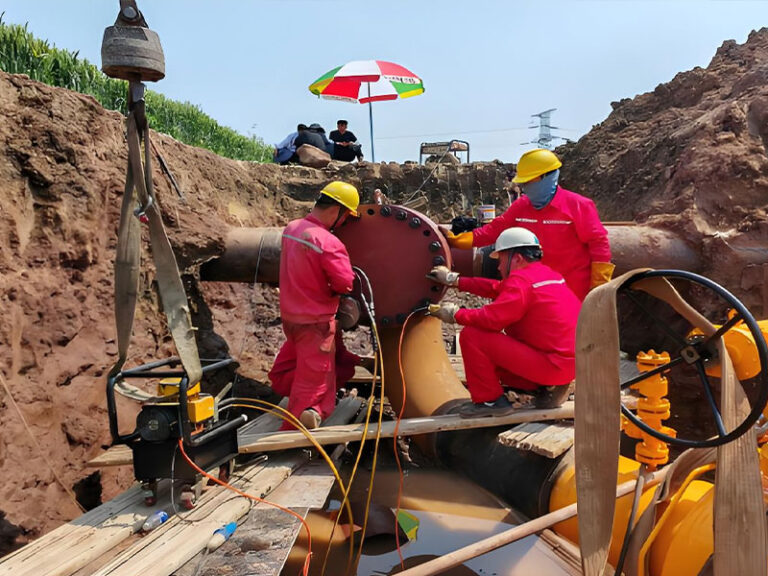
Pour les canalisations de grand diamètre (généralement 36 pouces et plus), la technique CIPP s'avère généralement plus rentable que le chemisage par glissement si l'on tient compte du coût total du projet, des perturbations opérationnelles et des performances à long terme, même si le chemisage par glissement présente des avantages dans certains cas particuliers, notamment en cas de dégradation structurelle importante ou de profils non circulaires.
Ce guide complet compare les deux méthodes de réhabilitation de canalisations sans tranchée en fonction des coûts des matériaux, des exigences d'installation, des temps d'arrêt, de la durabilité et de l'adéquation à l'application. Vous découvrirez le fonctionnement de chaque technique, les facteurs qui influencent leur structure tarifaire, les scénarios dans lesquels une méthode est préférable à l’autre, ainsi que la manière de calculer la rentabilité réelle de votre projet de canalisation de grand diamètre destiné au transport d’eau, de pétrole, d’air ou d’eaux usées. S'appuyant sur des données réelles issues de projets de réhabilitation de canalisations menés à bien par Beijing Jinshiwan Pipeline Technology Co., Ltd. dans les domaines du gaz naturel, du raffinage du pétrole, des fluides à haute température et de la cokéfaction de l'acier, cet article fournit des informations concrètes aux propriétaires d'infrastructures et aux entrepreneurs spécialisés dans les canalisations.
Que sont le CIPP et le chemisage ? Comprendre les deux principales technologies sans tranchée
Tuyaux durcis sur place (CIPP) : comment ça marche ?
La technique CIPP consiste à insérer une gaine en feutre imprégné de résine ou en fibre de verre dans la canalisation existante, puis à la faire durcir à l'aide d'eau chaude, de vapeur ou de rayons ultraviolets afin de former une nouvelle canalisation structurelle à l'intérieur de la canalisation d'origine. Pour les canalisations de grand diamètre, l'épaisseur des gaines CIPP varie généralement entre 6 mm et 25 mm, en fonction du diamètre et des exigences de pression.
Pourquoi la technique CIPP s'impose dans les projets de grands diamètres : La gaine imprégnée de résine épouse parfaitement la surface intérieure du tuyau hôte, créant ainsi un nouveau tuyau sans soudure, sans joint et résistant à la corrosion. Cette méthode permet de conserver près de 100% de la section transversale d'origine tout en renforçant la résistance structurelle.
Étapes typiques de la pose d'un système CIPP de grand diamètre :
- Préparation du site et mise en place du système de pompage de dérivation (nécessitant souvent l'utilisation de bouchons de canalisation et de systèmes d'obturation)
- Nettoyage et inspection par caméra de la conduite principale
- Imprégnation de la doublure avec une résine thermodurcissable (polyester, vinylester ou époxy)
- Inversion ou insertion de la gaine à l'aide d'un treuil
- Processus de séchage (à la vapeur ou à l'eau chaude pendant 4 à 12 heures, selon le diamètre)
- Finition des extrémités et rebranchement des raccordements latéraux
- Inspection finale par caméra et essais de pression
Données sur les performances du secteur : Les gaines CIPP correctement installées ont une durée de vie nominale de plus de 50 ans, avec des résistances à la traction supérieures à 5 000 psi et des modules de flexion supérieurs à 250 000 psi, conformément à la norme ASTM F1216.
Le chemisage : comment ça marche ?
Le chemisage consiste à insérer un nouveau tuyau de plus petit diamètre (généralement en PEHD, en fibre de verre ou en acier) à l'intérieur du tuyau existant, puis à colmater l'espace annulaire entre l'ancien et le nouveau tuyau. Cette méthode réduit la capacité hydraulique du tuyau, mais permet une installation rapide sur des tronçons de tuyau rectilignes.
Quand le chemisage est indiqué : Pour les canalisations fortement détériorées sur lesquelles la technique CIPP ne permet pas une bonne adhérence, ou lorsque la canalisation existante présente des débris de grande taille, des décalages ou une ovalisation qui empêchent l'insertion de la gaine. Le chemisage par glissement convient également aux formes non circulaires, telles que les égouts en forme d'œuf ou les ponceaux rectangulaires.
Déroulement type d'une pose par chemisage :
- Nettoyage des canalisations et élimination des débris
- Excavation des fosses d'insertion (généralement tous les 300 à 500 pieds)
- Pose de canalisations avec raccords ou soudées (les sections en PEHD sont soudées bout à bout sur place)
- Injection de coulis dans l'espace annulaire
- Étanchéification des extrémités et remise en état des raccordements
- Durcissement du coulis (24 à 48 heures avant la mise sous pression)
Caractéristiques techniques : Un tuyau de grand diamètre à revêtement coulissant perd généralement entre 10 et 20% de sa section transversale en raison de l'épaisseur de la nouvelle paroi du tuyau et de l'espace annulaire de coulis. La réduction de la capacité d'écoulement doit être calculée avec soin pour les égouts gravitaires et les réseaux d'eaux pluviales.
Comparaison directe des coûts : CIPP vs. chemisage pour les canalisations de grand diamètre (de 36 pouces à 120 pouces)
Pour bien appréhender la rentabilité réelle, il faut ventiler les dépenses entre les coûts des matériaux, de la main-d'œuvre, des équipements et les coûts cachés. Le tableau ci-dessous présente des données de référence du secteur pour les projets de réhabilitation de canalisations de grand diamètre.
| Catégorie de coût | CIPP (diamètre de 42 pouces) | Revêtement par glissement (HDPE de 42 pouces) | Principaux facteurs de coût |
|---|---|---|---|
| Coût des matériaux par pied linéaire | $180 – $350 | $120 – $200 | Type de résine et épaisseur de paroi en PEHD |
| Main-d'œuvre et installation | $150 – $250 | $100 – $180 | Effectif de l'équipe et temps de durcissement |
| Mobilisation du matériel | $15 000 – $40 000 | $8 000 – $20 000 | Chaudière de durcissement vs machines de fusion |
| Pompage en dérivation (eau/air) | $20 – $50 par heure | $20 – $50 par heure | Débit et durée |
| Matériaux de jointoiement | Sans objet | $30 – $60 par pied linéaire | Volume de l'espace annulaire |
| Contrôle et rétablissement du trafic | $10 000 – $30 000 | $8 000 – $25 000 | Dimensions de la fosse d'excavation |
| Coût total par pied linéaire (installation comprise) | $350 – $650 | $280 – $500 | Diamètre et conditions du site |
| Coût total pour 1 000 pieds | $350 000 – $650 000 | $280 000 – $500 000 | – |
Remarque importante tirée des données relatives aux projets du secteur : Si la technique de chemisage présente des coûts initiaux de matériaux inférieurs de 20 à 30%, la différence de coût total d'installation se réduit considérablement lorsqu'on tient compte des fosses d'excavation (nécessaires tous les 300 à 500 pieds pour le chemisage), des matériaux de coulis et de la main-d'œuvre, ainsi que de la vérification du débit après installation.
Les facteurs de coûts cachés qui changent la donne
Coûts cachés spécifiques à la technique CIPP pour les grands diamètres :
- Élimination des déchets de résine (généralement 5 à 101 TP3T de résine en excès)
- Des temps de durcissement plus longs (le durcissement à la vapeur pour un tuyau de 96 pouces peut dépasser 24 heures)
- Équipements spécialisés pour l'imprégnation des revêtements (imprégnation en usine ou sur site)
- La durée du pompage en dérivation correspond au temps de prise plus le temps de durcissement
Coûts cachés spécifiques à la technique du « slip-lining » :
- Plusieurs fosses d'insertion (chacune nécessitant des travaux d'excavation, de soutènement et de remise en état)
- Contrôle de la qualité du coulis annulaire (cône d'écoulement et résistance à la compression selon la norme ASTM C939)
- La diminution de la capacité de débit pourrait nécessiter à l'avenir des travaux de modernisation des stations de pompage
- Contrôle de l'intégrité des joints pour les sections en PEHD soudées
Perturbations opérationnelles et temps d'arrêt : quelle méthode permet de réduire au minimum les interruptions de service ?
Pour les canalisations assurant des services essentiels d'approvisionnement en eau, en pétrole ou en air, les coûts liés aux temps d'arrêt dépassent souvent ceux de la remise en état. Une conduite d'eau principale de grand diamètre desservant 50 000 clients entraîne des pertes quotidiennes considérables en termes de recettes et de coûts sociaux.
Comparaison des temps d'arrêt par méthode
Profil des temps d'arrêt liés à la technique CIPP (section type de 42 pouces de diamètre et 1 000 pieds de longueur) :
- Mise en place de la dérivation et installation du bouchon de canalisation : 8 à 12 heures
- Nettoyage des canalisations et inspection par caméra : 6 à 8 heures
- Mise en place de la prothèse : 2 à 4 heures
- Durcissement (eau chaude ou vapeur) : 8 à 16 heures
- Repos et récupération : 4 à 6 heures
- Durée totale d'indisponibilité : 28 à 46 heures
Profil des temps d'arrêt liés à la pose d'un revêtement intérieur (mêmes spécifications) :
- Mise en place de la dérivation et installation du bouchon de canalisation : 8 à 12 heures (par fosse d'insertion)
- Nettoyage des canalisations : 6 à 8 heures par tronçon
- Soudage et insertion de canalisations en PEHD : 4 à 6 heures par tronçon de 500 pieds
- Injection de coulis et prise : 24 à 48 heures (chemin critique)
- Essais de pression et remise en service : 4 à 6 heures
- Durée totale d'indisponibilité : 54 à 86 heures (nécessitant souvent plusieurs arrêts)
Comment les systèmes de bouchons et de obturateurs de conduites influent sur les temps d'arrêt
Les technologies modernes d'obturation et de bouchon de canalisation ont considérablement réduit les besoins en dérivation. Un bouchon de canalisation (obturateur temporaire qui isole une section tout en maintenant le débit via une dérivation) permet :
- Isolation en un seul point plutôt qu'une vidange complète de la conduite
- Réduction des besoins en capacité de pompage de dérivation (réduction de 50 à 701 TP3T)
- Insertion et retrait plus rapides par rapport aux bouchons mécaniques traditionnels pour canalisations
Pour les projets de CIPP de grand diamètre, un système de bouchons de canalisation peut réduire la durée d'interruption de service de 8 à 12 heures en évitant de devoir vidanger de longues sections. Cet avantage est moins marqué dans le cas du chemisage par glissement, car la présence de plusieurs fosses d'insertion nécessite des installations répétées de bouchons.
Débit et performances hydrauliques : un facteur déterminant pour le rapport coût-efficacité
La réduction de la capacité de débit a un impact direct sur les coûts d'exploitation à long terme et peut nécessiter des travaux de modernisation coûteux des infrastructures. Ce facteur détermine souvent quelle méthode s'avère réellement la plus rentable sur une durée de vie nominale de 50 ans.
Maintien de la capacité de débit du système CIPP
Les gaines CIPP ont généralement une épaisseur comprise entre 6 et 15 mm pour les canalisations de grand diamètre, ce qui réduit le diamètre intérieur de 0,5 à 1,2 pouce. Pour une canalisation de 48 pouces :
- Section transversale d'origine : 1 809 pouces carrés
- Surface revêtue par la technique CIPP (gaine de 12 mm) : 1 769 pouces carrés
- Réduction de la surface : 2,21 TP3T
- Réduction du débit (écoulement par gravité, équation de Manning) : environ 3 à 41 TP3T
Lorsque la technologie CIPP permet de maintenir ou d'améliorer le débit : La surface intérieure lisse des canalisations CIPP (coefficient de Manning n = 0,009-0,010 contre 0,013-0,015 pour les anciennes canalisations en béton ou en terre cuite) augmente souvent la vitesse d'écoulement malgré la légère réduction de diamètre. La modélisation hydraulique montre que, pour les canalisations dont le coefficient de Manning d'origine est supérieur à 0,013, la technique CIPP peut en réalité augmenter la capacité d'écoulement de 5 à 151 TP3T.
Perte de débit due au revêtement par glissement
La technique de revêtement par glissement réduit le diamètre intérieur de manière plus significative. Pour une canalisation hôte de 48 pouces équipée d’un revêtement en PEHD de 42 pouces (épaisseur de paroi typique de 1,5 pouce, plus un espace annulaire de 1 pouce destiné au coulis) :
- Nouveau diamètre intérieur : 42 pouces
- Nouvelle section transversale : 1 385 pouces carrés
- Réduction de la superficie : 23,41 TP3T
- Réduction du débit (écoulement par gravité) : 25 à 351 TP3T selon la pente
Conséquence pratique : Une canalisation d'égout par gravité de 48 pouces, dont le diamètre a été réduit à 42 pouces par gainage, peut nécessiter une pente accrue (ce qui est souvent impossible sur un terrain plat), la modernisation des stations de pompage ou la mise en place de conduites parallèles supplémentaires.
Exception où la technique de revêtement par glissement s'impose : Pour les conduites de refoulement (conduites sous pression), la réduction du débit est proportionnelle à la réduction du diamètre élevée à la puissance 2,5. Une réduction de 48 pouces à 42 pouces (perte de diamètre de 12,51 TP3T) réduit la capacité de pompage d'environ 281 TP3T, mais peut être acceptable si le système d'origine disposait d'une capacité excédentaire.
Rentabilité en fonction de l'application : quelle méthode s'impose en fonction de l'état et du matériau des canalisations ?
Selon l'état des canalisations, les matériaux utilisés et les conditions d'exploitation, certaines méthodes s'avèrent plus adaptées que d'autres. Cette section présente des critères de décision fondés sur les résultats concrets de projets réels.
Lorsque la méthode CIPP s'avère clairement plus rentable
1. Conduites principales d'adduction d'eau de grand diamètre (36 à 120 pouces)
- La technique CIPP permet de maintenir une capacité de débit essentielle pour répondre aux exigences en matière de débit d'extinction
- Le revêtement sans joint empêche les fuites
- La technique CIPP permet de rétablir la pression nominale de conception avec une épaisseur de paroi minimale
2. Réseaux d'assainissement comportant plusieurs raccordements latéraux
- Les gaines CIPP peuvent être facilement remises en place (découpe robotisée des ouvertures latérales)
- La technique du « slip-lining » nécessite de creuser et de rebrancher chaque branche une par une.
- Pour une canalisation d'égout de 60 pouces comportant 40 branchements par 1 000 pieds, la technique de chemisage entraîne des coûts supplémentaires importants liés au raccordement des branchements.
3. Conduites présentant une ovalité modérée (déformation de 5 à 151 TP3T)
- La technique CIPP s'adapte aux formes irrégulières
- La technique de chemisage nécessite un tuyau hôte circulaire ou des gaines profilées spécialisées (coûteuses)
4. Conduites sous pression (eau, pétrole, air)
- CIPP fournit une gaine entièrement structurelle et résistante à la pression (testée selon les normes AWWA C210 ou ASTM F1216)
- La technique du « slip-lining » repose sur l'utilisation d'un coulis pour transmettre la pression à la canalisation hôte
Quand la technique du « slip-lining » est plus rentable
1. Canalisations fortement endommagées contenant des débris volumineux ou des pierres
- Les gaines CIPP peuvent être perforées par des débris pointus restés dans la canalisation
- La technique de chemisage peut tolérer la présence de débris mineurs, à condition que le nouveau tuyau puisse être inséré.
2. Conduites non circulaires (en forme d'œuf, canaux-caissons, voûtées)
- Les gaines CIPP fabriquées sur mesure pour des formes non circulaires coûtent 2 à 3 fois plus cher que celles de forme circulaire
- Les gaines de revêtement en PEHD ou en fibre de verre sont facilement disponibles en profils rectangulaires ou voûtés
3. Très courtes distances (moins de 300 pieds)
- La technique du « slip-lining » nécessite moins d'équipement spécialisé pour les courtes longueurs
- Les coûts de mobilisation liés à la méthode CIPP représentent la majeure partie des coûts des projets de courte durée
4. Pipes with multiple severe offsets or sags
- CIPP liners cannot bridge large gaps (over 2 inches of offset)
- Slip-lining new pipe creates an independent structural line
Decision matrix for large-diameter pipe rehabilitation
| Pipe Characteristic | Choose CIPP | Choose Slip-lining | Comments |
|---|---|---|---|
| Diameter 36-120 inches | ✓ | CIPP cost advantage increases with diameter | |
| Pressure rating required | ✓ | CIPP provides verifiable pressure rating | |
| Gravity flow (sewer/storm) | ✓ | Flow loss critical for gravity systems | |
| Multiple lateral connections | ✓ | Lateral reinstatement costs favor CIPP | |
| Length over 500 feet | ✓ | Slip-lining insertion pits multiply | |
| Severe debris/rocks | ✓ | Debris risk punctures CIPP liner | |
| Non-circular profile | ✓ | Custom non-circular CIPP is expensive | |
| Severe offsets (>2 inches) | ✓ | CIPP cannot bridge large gaps | |
| Short distance (<300 feet) | ✓ | CIPP mobilization cost inefficient | |
| Existing pipe ovality >15% | ✓ | Grout fills irregular annulus |
Real-world pipeline rehabilitation projects: Case studies from the field
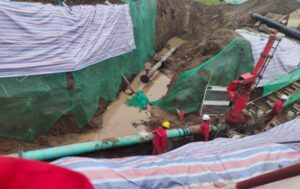
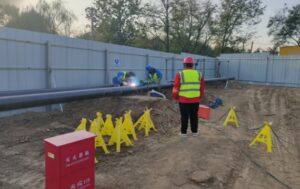
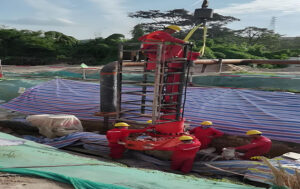
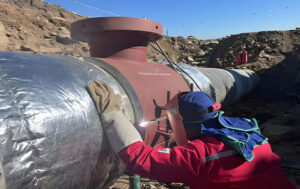
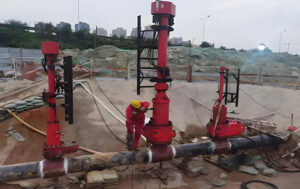
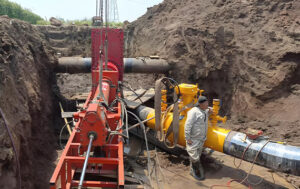
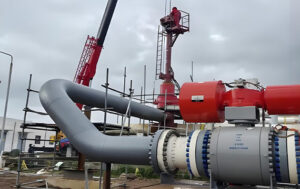
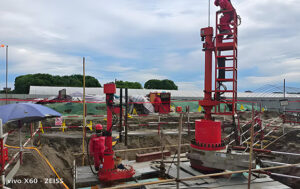
Beijing Jinshiwan Pipeline Technology Co., Ltd. has completed numerous pipeline hot tapping, pipeline plug, pipeline stopple, and pipeline modification projects across natural gas, petroleum refining, high-temperature media, and steel coking applications. The following case studies demonstrate trenchless pipe rehabilitation in action.
Case Study 1: High-temperature thermal oil pipeline hot tapping at Ningbo Terminal
Project name: Ningbo Terminal Expansion Phase III EPC Project – Hot Tapping Labor Subcontract
Défi : The project required hot tapping on 12 locations including 6 high-temperature thermal oil openings at 300°C (572°F), 2 natural gas trunk line openings on non-standard D717 and D660 pipelines with high-grade thick-wall steel, and 4 vent gas openings. The D717.4 x 19.1mm pipe was X60 material with operating pressure of 6.0-7.0MPa. The D660 x 30mm pipe was L415Q material with design pressure of Class 600 and operating pressure of 6.0-7.0MPa. Both required maintaining future pigging capability.
Solution : The pipeline contractor used custom-fabricated four-way branch fittings with internal flow deflector grids. The fitting reinforcement plates were designed with 50mm wall thickness to handle high pressure and temperature. Specialized welding procedures were developed for thick-wall fittings. Long-stroke hot tapping machines with high-grade steel cutting capabilities were deployed.
Key construction difficulties overcome: Thick-wall fitting welding procedures, long-stroke tapping machine operation, high-grade steel penetration, thick-wall high-pressure tapping.
Project date: October 2024
Localisation : Ningbo, Zhejiang Province
Case Study 2: Natural gas pipeline hot tapping at Linyi, Shandong
Project name: China-Russia Eastern Route Linyi Offtake Station – Linyi Loop Pipeline Interconnection Project
Défi : The project required adding a new D508 pipeline connection to an existing D508 live natural gas pipeline. The downstream customer demand could not tolerate shutdown, requiring live hot tapping.
Pipeline parameters: D355.6 x 6.3mm, natural gas medium, operating pressure 3.0MPa
Work scope: DN500 hot tapping and plugging
Résultat : Successful hot tapping completed within 2 days (May 22-23, 2024) without interrupting gas supply to downstream customers.
Owner: State Reserve Pipeline (Shandong) Investment Group Co, Ltd.
Case Study 3: High-pressure natural gas pipeline relocation at Liling, Hunan
Project name: Xiangli Branch Line (Yuci Road to Gas Company Section) High-Pressure Gas Pipeline Relocation Project
Défi : Approximately 551 meters of new D355.6 x 6.3mm L360M high-frequency welded steel pipe needed to be tied into an existing live 6.3MPa GA1-class natural gas pipeline. The abandoned pipeline section required nitrogen purging and grout filling.
Pipeline parameters: D355.6 x 6.3mm, design pressure 6.3MPa, natural gas medium, L360M material, 3PE enhanced corrosion coating
Work scope: 2 hot tapping stopple locations, 4 cold-cut locations, 4 grease barrier installations, and fitting corrosion protection
Résultat : Project completed within one month (November 20 to December 20, 2023) with zero safety incidents.
Owner: Hunan Zhongyou Gas Co., Ltd.
Case Study 4: High-temperature refinery pipeline valve replacement at Yanan, Shaanxi
Project name: Yanan Refinery Unit 2 Overhead Oil-Air Cooler Inlet Valve Online Replacement
Défi : A 273mm diameter gasoline pipeline operating at 120°C and 4.0MPa required valve replacement without shutdown. The construction space was extremely confined, and equipment lifting was very difficult.
Pipeline parameters: D273mm, gasoline medium, 120°C operating temperature, 4.0MPa design pressure
Work scope: Single block on D273 pipeline
Résultat : Despite high temperature, confined space, and difficult lifting conditions, the project team overcame all challenges and successfully completed the valve replacement, earning high praise from the refinery owner.
Project date: January 2025
Case Study 5: Large-diameter steel coking gas pipeline hot tapping at Inner Mongolia
Project name: Inner Mongolia Qinghua Group Qinghua Coal Chemical Co., Ltd. Hot Tapping Service Contract
Défi : A DN1600 gas pipeline operating at very low pressure (5Kpa) required hot tapping and stopple. The extremely large diameter combined with low pressure presented unique sealing challenges.
Pipeline parameters: DN1600, coal gas medium, 5Kpa operating pressure
Work scope: Single block on DN1600 pipeline
Résultat : Successful hot tapping and stopple completed on one of the largest diameter low-pressure gas pipelines in the region.
Project date: February 2024
Case Study 6: China Coal Ordos circulating water pipeline relocation
Project name: China Coal Ordos Energy and Chemical Co., Ltd. Gasification Workshop Circulating Water Pipeline Relocation
Défi : A DN1200 circulating water pipeline required relocation involving both hot tapping and stopple at four locations.
Pipeline parameters: DN1200, water medium, 0.1Mpa operating pressure
Work scope: Four stopple locations on DN1200 pipeline
Résultat : Circulating water flow was maintained throughout the relocation with minimal disruption to gasification operations.
Project date: September 2019
Material supplier and equipment manufacturer considerations
The quality of materials and equipment significantly affects installed cost and long-term performance. Working with established material suppliers and equipment manufacturer partners ensures consistent results.
Key suppliers and their impact on CIPP cost-effectiveness
Leading CIPP material suppliers offer:
- Pre-impregnated liners with factory-controlled resin content (reduces field waste by 15-20%)
- UV-cured systems that cut curing time by 50% for large diameters
- Custom liner thickness designs based on host pipe condition (avoids over-engineering)
Cost impact of choosing the right equipment manufacturer: A high-quality curing boiler reduces fuel consumption by 30% and curing time by 15-20% compared to rental fleet units.
Slip-lining material and equipment considerations
For slip-lining projects, working with a reliable Material Supplier of HDPE or fiberglass pipe ensures:
- Consistent wall thickness and dimensional tolerances (±0.5% vs. ±2% for lower-grade products)
- Proper fusion equipment calibration (joint integrity is critical for pressure applications)
- Grout materials matched to annular space volume (reduces waste by 10-15%)
Equipment manufacturer recommendation for slip-lining: Butt-fusion machines provide data logging of fusion parameters (temperature, pressure, cooling time), which is increasingly required by specifications for large-diameter pressure pipelines.
Frequently asked questions about CIPP vs. slip-lining cost-effectiveness
Q: Which method has lower long-term maintenance costs?
A: CIPP typically has lower long-term maintenance costs because the seamless, jointless liner eliminates leak paths and root intrusion points. Slip-lined pipes have annular space that, despite grouting, can develop voids over time due to settlement or thermal cycling. Industry follow-up inspections show CIPP requires fewer maintenance interventions per mile than slip-lining.
Q: How does pipe diameter affect the cost crossover point?
A: For diameters under 24 inches, slip-lining often costs less because smaller HDPE pipe is inexpensive and insertion pits are smaller. Above 36 inches, CIPP becomes increasingly cost-competitive. At 60 inches, CIPP is typically 10-15% less expensive than slip-lining for total installed cost including downtime. At 96 inches, the advantage grows to 20-25% due to slip-lining grout volume and pit excavation costs.
Q: Can CIPP or slip-lining be used for oil or gas pipelines?
A: Yes, both methods are approved for oil and gas pipelines with appropriate material certifications. CIPP requires epoxy or vinyl ester resins rated for hydrocarbon exposure (polyester is not acceptable). Slip-lining with HDPE is widely used for oil and gas gathering lines and produced water lines. However, hot tapping and pipeline modification requirements for live hydrocarbon lines add significant safety and regulatory costs to both methods. Always consult a qualified pipeline contractor experienced with hazardous service conditions.
Q: What is the role of hot tapping in pipeline rehabilitation?
A: Hot tapping (connecting new branches to a live pipeline without shutdown) is often required during rehabilitation to maintain service connections. For CIPP projects, hot tapping is performed after liner installation to reconnect lateral lines. For slip-lining, hot tapping may be needed at multiple insertion pit locations. A specialized hot tapping service provider using proper pipeline tapping equipment ensures safety and compliance with applicable regulations.
Q: How do I verify a contractor qualifications for large-diameter projects?
A: Ask potential contractors for:
- Completed project list of pipes 36 inches and larger (minimum 5 projects)
- References from material suppliers and equipment manufacturers they use
- Quality control documentation (ASTM or ISO standards)
- Insurance and bonding capacity matching project size
- Experience with pipeline plug and pipeline stopple systems for large diameters
- Certifications from industry associations
How to calculate total cost-effectiveness for your specific project
Follow this five-step framework to determine which method delivers superior value for your large-diameter pipe rehabilitation.
Step 1: Gather baseline data
- Pipe diameter, material, and length
- Current flow rate and pressure (if pressure pipe)
- Pipe condition assessment (CCTV inspection with laser profiling)
- Number and location of lateral connections
- Accessibility for insertion pits (slip-lining) or liner insertion points (CIPP)
Step 2: Calculate direct rehabilitation costs
- Obtain quotes from at least two qualified CIPP contractors and two slip-lining contractors
- Request line-item pricing for materials, labor, equipment, grout (slip-lining), bypass pumping, and restoration
- Add 15% contingency for both methods (large-diameter projects have higher uncertainty)
Step 3: Quantify downtime costs
- Daily cost of pipeline outage (lost revenue, purchased alternative supply, social costs)
- Multiply by estimated shutdown duration for each method (use the ranges provided in this article)
- Add bypass pumping and temporary pipeline plug rental costs
Step 4: Calculate 50-year lifecycle costs
- Maintenance frequency and cost
- Pumping energy cost increase (if flow capacity is reduced)
- Future rehabilitation likelihood (CIPP can be re-lined; slip-lined pipes require excavation for re-rehabilitation)
Step 5: Factor non-monetary considerations
- Public disruption from multiple insertion pits (slip-lining)
- Traffic impact duration (CIPP shorter timeline often reduces community impact)
- Regulatory approval timeline (some agencies have preferred methods)
Maintenance and restoration considerations after rehabilitation
Both methods require ongoing maintenance and eventual restoration planning, though the frequency and nature differ significantly.
Post-CIPP maintenance requirements
CIPP liners require minimal maintenance due to their jointless, corrosion-resistant nature. Standard maintenance includes:
- Annual CCTV inspection (recommended for first 5 years, then every 3-5 years)
- Hydrostatic pressure testing every 5 years for pressure pipelines
- Lateral connection inspection (robotic cameras)
Restoration when CIPP reaches end of life (50+ years): The existing liner can be removed via mechanical cutting or burst with a new CIPP liner installed inside—no excavation required. This creates a true trenchless forever solution.
Post-slip-lining maintenance requirements
Slip-lined pipes require more frequent attention:
- Annual grout void detection (ground-penetrating radar or acoustic monitoring)
- Annular space re-grouting (typically every 15-20 years as grout shrinks)
- Joint inspection for HDPE fusion integrity
- Flow monitoring to detect capacity loss from grout debris
Restoration at end of life: Removing a slip-lined pipe typically requires excavation or pipe bursting (which is difficult for large diameters with grout-filled annulus). Many utilities accept that slip-lined pipes will require full replacement when the liner fails.
Making the right choice for your large-diameter pipeline
After analyzing industry project data and case studies from natural gas, petroleum refining, high-temperature media, and steel coking applications, the evidence clearly shows that CIPP is more cost-effective than slip-lining for the majority of large-diameter pipe rehabilitation projects, particularly for pressure pipelines, gravity sewers, water transmission mains, and any application where maintaining flow capacity is critical.
Choose CIPP when:
- Pipe diameter exceeds 36 inches
- Flow capacity preservation is important (almost always true)
- Multiple lateral connections exist
- Downtime costs are significant
- Design life of 50+ years is required
Choose slip-lining when:
- Pipe has severe debris or sharp protrusions
- Non-circular profile cannot accommodate CIPP economically
- Very short project length (under 300 feet)
- Host pipe has offsets over 2 inches that cannot be repaired
For large-diameter pipeline owners, working with an experienced trenchless pipe rehabilitation contractor who offers both methods ensures unbiased recommendations. The right contractor will perform a thorough condition assessment, provide transparent cost comparisons including downtime and lifecycle costs, and execute the chosen method safely and efficiently.
About Beijing Jinshiwan Pipeline Technology Co., Ltd. – Your Pipeline Rehabilitation Partner
Beijing Jinshiwan Pipeline Technology Co., Ltd. (JSW) has established itself as a trusted name in the pipeline rehabilitation and hot tapping industry, serving natural gas, petroleum refining, chemical, steel coking, and industrial facilities across China. As both a service provider and an equipment manufacturer, Jinshiwan brings vertical integration that benefits clients through reduced costs, faster project delivery, and single-source accountability.
Company background:
- Founded: 1998
- Headquarters: Beijing, China
- Service coverage: Nationwide across all major industrial regions
- Core expertise: Hot tapping, pipeline plug, pipeline stopple, pipeline tapping, pipeline modification, and pipeline maintenance
Integrated capabilities:
- Engineering and consultation – Free initial assessment of your large-diameter pipe rehabilitation needs with a no-obligation cost comparison between CIPP and slip-lining for your specific project parameters
- Fabrication d'équipements – Jinshiwan manufactures its own pipeline plug, pipeline stopple, hot tapping, and pipeline tapping equipment, eliminating rental costs and ensuring equipment availability when you need it
- Installation services – Fully insured, certified installation crews experienced with pipes across all diameters for water, oil, air, natural gas, and wastewater applications
- Maintenance and restoration – Ongoing support including annual inspections, pressure testing, and emergency response
Selected project track record (natural gas pipelines):
| Localisation | Project | Diamètre | Pressure | Date |
|---|---|---|---|---|
| Langfang | Yongbei East/West Line and Suyong Lines | D219, D529, D377 | 4.0MPa | 2024 |
| Baoding | Rongcheng Xin`an Gas EA1 West Section | DN300, DN200 | 1.6MPa | 2024 | | |||
| Xiong`an | Gas Phase II West Extension | 508mm | 1.3MPa | 2024 | | ||||
| Linyi | China-Russia Eastern Route Interconnection | D355.6 | 3.0MPa | 2024 |
| Liling | Xiangli Branch Line Relocation | D355.6 | 6.3MPa (design) | 2023 |
| Nanjing | Yunmi Road DN600 Gas Relocation | DN600 | 3.0MPa | 2023 |
| Lanzhou | Honggu Xin`an Gas Pipeline | DN400, DN50 | 2.0MPa | 2023 | |
Selected project track record (high-temperature and petroleum refining):
| Localisation | Project | Moyen | Température | Pressure | Date |
|---|---|---|---|---|---|
| Yanan | Refinery Overhead Valve Replacement | Gasoline | 120°C | 4.0MPa | 2025 |
| Ningbo | Terminal Expansion Thermal Oil | Thermal Oil | 300°C | 4.0MPa | 2024 |
| Nanjing | BASF Hot Tapping | Steam | 160°C | 0.4MPa | 2022 |
| Guangzhou | Refinery Heat Exchanger Repair | Gasoline | 120°C | 1.5MPa | 2021 |
| Tianjin | Sinopec Ethylene Plant | Gasoline | 250°C | 0.59MPa | 2020 |
Selected project track record (steel coking and industrial):
| Localisation | Project | Diamètre | Moyen | Pressure | Date |
|---|---|---|---|---|---|
| Inner Mongolia | Qinghua Coal Chemical | DN1600 | Coal Gas | 5Kpa | 2024 |
| Qingdao | Power Plant Circulating Water | DN1020 | Circulating Water | 0.25MPa | 2023 |
| Dingzhou | Blast Furnace Air Pipeline | DN1400 | Compressed Air | 5Kpa | 2020 |
| Xinjiang | Jin Yuan Energy Gas Pipeline | DN1300 | Coke Oven Gas | 4Kpa | 2020 |
| China Coal | Ordos Circulating Water | DN1200 | Water | 0.1MPa | 2019 |
Why clients choose Jinshiwan for large-diameter pipeline projects:
- Transparent, fixed-price quoting with no hidden fees for bypass pumping, traffic control, or restoration
- In-house equipment manufacturer means you never pay third-party rental markups on pipeline plug, pipeline stopple, or hot tapping equipment
- 10-year warranty on all installation workmanship
- 24/7 technical support during active construction phases
- Over 50 large-diameter and high-temperature projects completed in the last 36 months
Service guarantees:
- Fixed-price contracts with defined contingency allowances (no surprise billing)
- 24-hour emergency response for pipeline plug and pipeline stopple deployments
- Free annual inspection for the first 5 years following project completion
Industries served:
- Natural gas transmission and distribution
- Petroleum refining and petrochemical
- Steel manufacturing and coking
- Power generation (circulating water systems)
- Industrial process piping
JSW – Engineered for the long run.
Auteur : Li Chao, Engineering Department Manager, Beijing Jinshiwan Pipeline Technology Co., Ltd. With over a decade of experience managing hot tapping, pipeline plug, pipeline stopple, and pipeline modification projects across natural gas, petroleum refining, high-temperature media, and steel coking applications. Has led more than 50 successful pipeline interventions including high-temperature thermal oil (300°C) and ultra-large diameter (DN1600) low-pressure gas pipeline operations.
Last updated: April 2026





 English
  Arabic
  Russian
  Spanish
  French
  Vietnamese
  Polish
  Thai
Thai  Indonesian
  Turkish
  Portuguese