
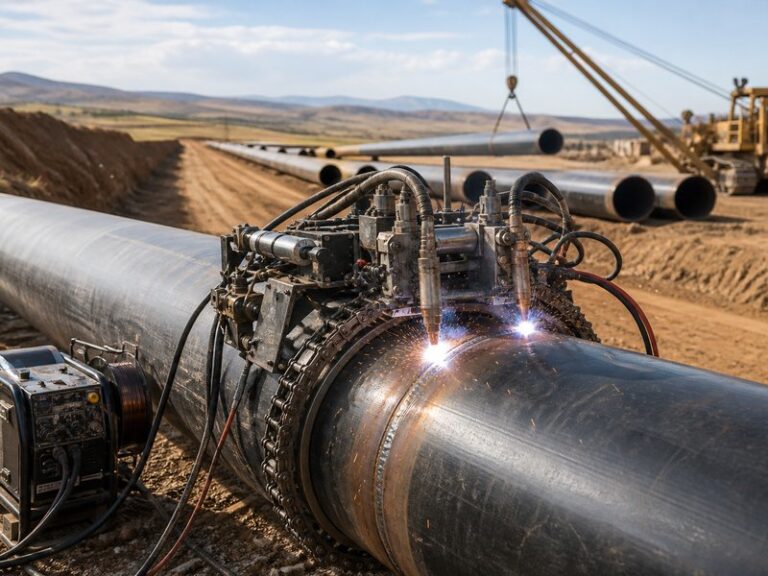
Automatic pipeline welding, meaning mechanized dual-torch gas metal arc welding on an external band, offers the best balance of productivity and quality for long mainline construction. A mechanized spread typically completes 60 to 120 girth welds per day while holding first-pass acceptance rates above 95 percent, performance that manual stick welding cannot match at scale. This guide compares the main welding processes on deposition rate, joints per day, defect rates, and cost, then explains when automatic welding pays for itself and the cases where manual SMAW or GTAW remains the right call. For the fundamentals, see our guide to what pipeline welding is.
Points clés à retenir
- The answer: Mechanized welding wins the productivity and quality balance on long mainlines, with 60 to 120 girth welds per day and first-pass acceptance above 95 percent.
- The runner-up: Manual SMAW with cellulosic roots remains the standard for repair, tie-ins, and short or remote spreads where mechanized setup does not pay.
- The trade-off: Mechanized systems cost USD 150,000 to 500,000 per spread, but lower labor per joint and less rework recover the difference after roughly 15 to 30 kilometers.
- The quality driver: Machine-controlled arc length and travel speed cut defect rates, yet fit-up, beveling, and preheat still decide the outcome.
- The rule: The governing standard, API 1104 for cross-country lines, and the project specification define which process is acceptable, not preference.
| Métrique | Mechanized GMAW | Manual SMAW |
|---|---|---|
| Joints per day | 60-120 | 25-40 |
| First-pass acceptance | 95-99% | 80-90% |
| Reject rate | Below 2% | 2-8% |
| Deposition rate | 5-12 lb/hr | 1-5 lb/hr |
| Cost breakeven | Roughly 15-30 km of mainline | Sans objet |
What Does the Productivity and Quality Balance Mean in Pipeline Welding?
The balance is measured with four numbers: deposition rate in kilograms per hour, girth welds completed per day, first-pass acceptance rate, and repair cost per rejected weld. Deposition and joints per day capture speed. First-pass acceptance and rework capture quality, because a rejected weld consumes inspection, grinding, repair welding, and schedule time far beyond its own cost.
Manual stovepipe crews on large-diameter pipe typically complete 25 to 40 joints per day, and experienced crews hold acceptance rates of roughly 80 to 90 percent on the first pass. A mechanized spread reaches 60 to 120 joints per day with first-pass acceptance of 95 to 99 percent in comparable conditions. In our pipeline construction work, that gap is consistent across grades from X60 to X80.
One more number matters: the cost of a rejected weld. On a 36-inch line, a single repair can stop the spread for a full shift. A process that lowers the reject rate by a few percentage points pays for itself in schedule time alone, which is why the balance favors processes that are both fast and repeatable.
What Are the Main Pipeline Welding Processes?
Five arc processes cover nearly all field girth welding: SMAW, GTAW, FCAW, SAW, and mechanized GMAW. Each occupies a defined role in field welding, and the choice is governed by pipe size, wall thickness, route conditions, schedule, and the governing standard.
| Process | Deposition rate | Typical joints per day (24-36 in pipe) | Quality characteristics | Primary use |
|---|---|---|---|---|
| SMAW (stick welding) | 1-5 lb/hr (0.5-2.3 kg/h) | 25-40 | Operator dependent; slag between passes; proven and flexible | Manual mainline, tie-ins, repair, in-service work |
| GTAW (TIG welding) | 1-2 lb/hr (0.5-1 kg/h) | 5-15 | Highest root quality, no slag, low heat input | Root passes, stainless and duplex lines, small diameters |
| FCAW (flux-cored) | 3-8 lb/hr (1.4-3.6 kg/h) | 20-40 | High deposition; slag removal required; wind-tolerant when self-shielded | Fill and cap passes on larger lines |
| SAW (submerged arc) | 10-20+ lb/hr (4.5-9+ kg/h) | 150-200+ in double-jointing plants | Very consistent in fixed position; not position-capable in the field | Double-jointing yards, long straight runs |
| Mechanized GMAW (dual torch) | 5-12 lb/hr per torch (2.3-5.4 kg/h) | 60-120+ | Machine-controlled and repeatable; low defect rate; fit-up sensitive | Long mainline spreads, large diameters, high-strength grades |
The table shows the structural advantage of mechanization. SMAW and FCAW are limited by the welder’s hands and by electrode changes every few minutes. Mechanized GMAW removes both limits, which is why it dominates long mainline construction wherever the route and the schedule allow it.
Why Automatic Pipeline Welding Leads on Productivity
Why Mechanized Welding Removes the Bottlenecks
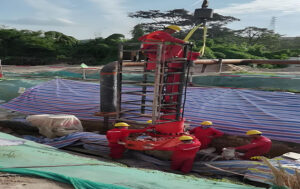
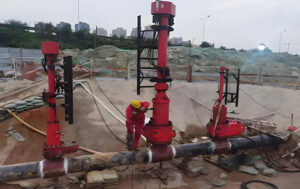
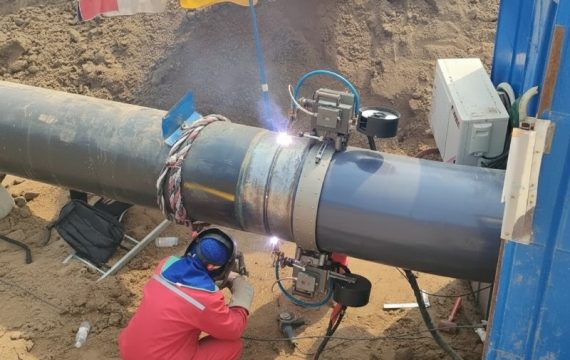
Mechanized welding removes the three bottlenecks that cap pipeline welding productivity: electrode changes, single-torch deposition, and welder fatigue. A mechanized bug carries a continuous wire spool, runs two torches that deposit two beads per travel, and never slows down at the end of a shift.
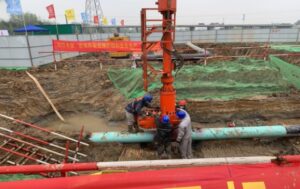
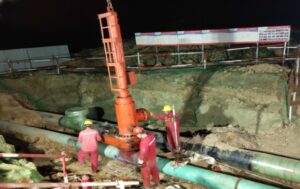
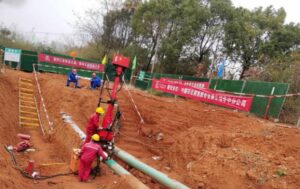
The numbers confirm it. GMAW deposition runs 5 to 12 pounds per hour per torch against 1 to 5 pounds per hour for SMAW, and fill passes are deposited two to three times faster. A published 2024 Miller Welds case study of a major North American transmission operator reported productivity gains above 50 percent after moving large-bore work from TIG and stick welding to wire processes. On a recent 32-inch X70 project, our mechanized crew averaged 55 girth welds per day with two welding bugs, while our manual crew on the same spread averaged 30.
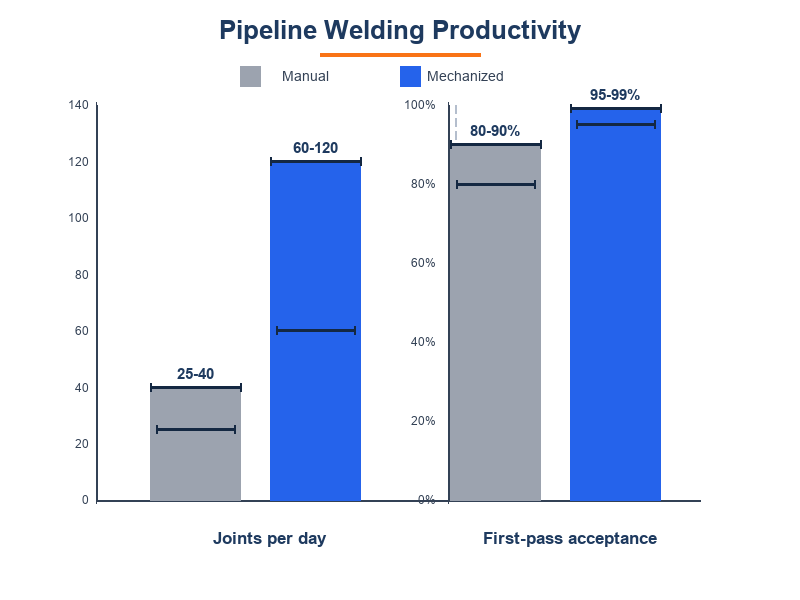
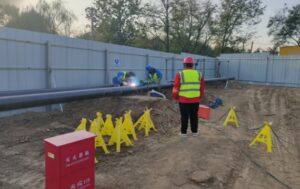
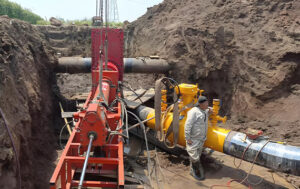
Figure 2. Typical field comparison: manual welding completes 25-40 joints per day at 80-90 percent first-pass acceptance, while mechanized pipeline welding reaches 60-120 joints per day at 95-99 percent.
Mechanized welding also changes crew economics. A single mechanized spread with two bugs and a small crew matches the output of two or three manual crews, which matters on schedules measured in kilometers per week. Contractors who standardize on mechanized pipeline welding remove the per-spread variability that manual crews lose to electrode changes and fatigue, which is why the daily output gap holds even when both crews are experienced.
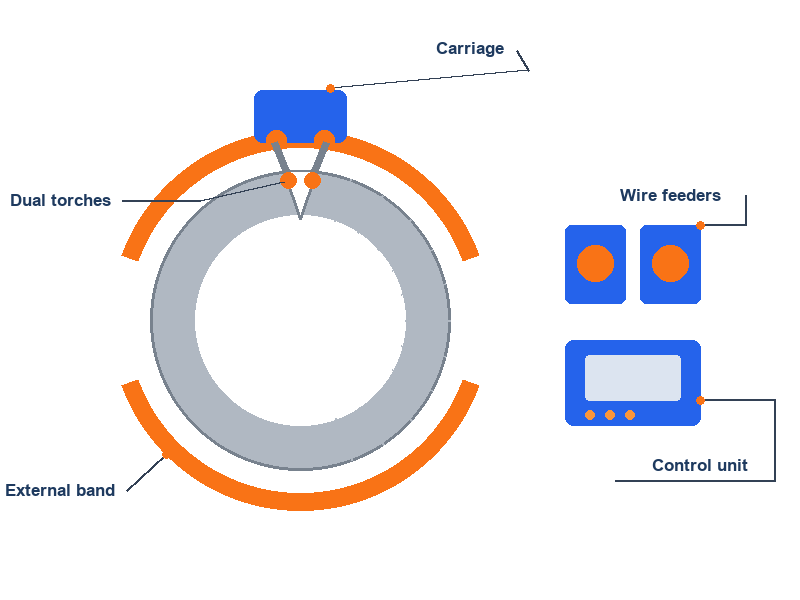
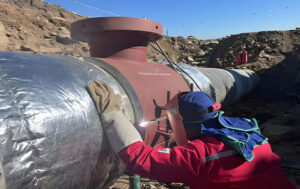
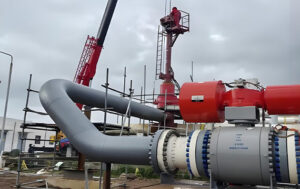
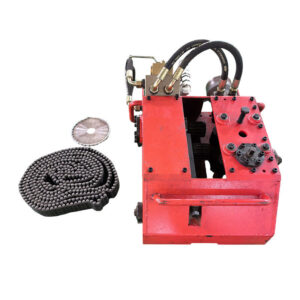
Figure 3. Main components of a mechanized system: the band rides on the pipe, the carriage carries two torches, and wire feeders plus a control unit manage the weld parameters.
Does Automatic Welding Actually Improve Weld Quality?
Yes, but the honest phrasing is that automatic welding is more consistent, not automatically perfect. Arc length, travel speed, oscillation, and heat input are machine-controlled, so the pipeline welding defects that come from human variation, such as undercut, burn-through, and incomplete fusion, appear far less often.
In our field experience, reject rates on mechanized spreads run below 2 percent of welds after radiography or automated ultrasonic testing, while manual spreads on the same pipe typically run 2 to 8 percent depending on terrain and crew experience. That is why pipeline weld quality programs on large projects are built around mechanized roots and fills wherever fit-up allows it.
The limits matter and we state them plainly. Mechanized welding demands precise beveling and alignment, because the machine welds what the fit-up gives it, and a misaligned joint fails regardless of the process. Wind affects gas shielding, so windbreaks are required. NDT is still mandatory per API 1104, and operator skill still matters for setup, banding, and root-pass supervision. Pipeline welding defects are prevented by procedure discipline, not by the machine alone.
When Manual SMAW and GTAW Are Still the Right Choice
Manual welding is not obsolete, and claiming otherwise would be wrong. SMAW with cellulosic electrodes remains the standard for repair welding, tie-ins, in-service work such as hot tapping, and short or remote spreads where moving mechanized equipment in does not pay. It tolerates wind, needs only simple power sources, and draws on the largest pool of qualified welders.
GTAW keeps its place on small-diameter lines, stainless and duplex pipe, and critical roots where the highest possible root quality outweighs speed. Many projects combine processes: mechanized GMAW on the mainline, SMAW for tie-ins and repairs, and GTAW for special materials.
| Project factor | Mechanized welding wins when | Manual welding wins when |
|---|---|---|
| Route length | More than roughly 15-30 km of continuous mainline | Short spreads, laterals, and tie-ins under a few kilometers |
| Diameter and wall | 24 in and above, walls 10 mm and thicker, X60-X80 grades | Small diameters and thin walls, or unusual materials |
| Terrain | Open, accessible right-of-way with crane or sideboom access | Dense jungle, steep slopes, urban areas, congested sites |
| Schedule | Kilometers-per-week targets and double-shift programs | Flexible schedules where setup time cannot be amortized |
| Fit-up control | Precision beveling and line-up clamps available | Variable fit-up from used pipe or field bends |
| Work type | New construction girth welds | Repair, in-service welding, hot tapping, and maintenance work |
In-service and repair work deserves a special note. Welding on operating lines follows ASME PCC-2 and the in-service provisions of API 1104, with controlled heat input to prevent burn-through. Our crews use manual SMAW and GTAW for most of these joints and pair them with services de raccordement et de bouchage à chaud et matériel de perçage à chaud for access under pressure. When the line must stay live and isolation is required, line stopping and plugging equipment takes over. For corroded or damaged sections, pipeline repair services and trenchless pipeline repair methods remove the need to dig out long sections.
Automatic Welding vs Manual Welding: What Does Each Really Cost?
Capital Cost vs Labor Cost
Automatic welding costs more up front and less per joint, which is the whole automatic welding vs manual welding trade-off. A complete mechanized spread, including welding bugs, power sources, and banding, typically costs USD 150,000 to 500,000 or more, against USD 5,000 to 30,000 for a manual welding station. The comparison flips when you count labor, because one mechanized spread replaces two or three manual crews and total pipeline welding cost per joint falls by roughly half.
| Cost item | Automatic pipeline welding | Manual SMAW |
|---|---|---|
| Equipment capital | USD 150,000-500,000+ per spread | USD 5,000-30,000 per station |
| Crew per spread | 6-10 people (operators, fitters, NDT support) | 15-25 people (welder-heavy crews) |
| Joints per day | 60-120 | 25-40 |
| First-pass acceptance | 95-99% | 80-90% |
| Labor per joint | Roughly half of manual | Valeur de référence |
| Rework and NDT cost | Low reject rate cuts repair days | 2-8% reject rate adds repair days |
The 15-30 km Breakeven Point
The crossover point in our project data sits around 15 to 30 kilometers of continuous mainline, depending on diameter, wall thickness, and terrain. Below that, manual work often wins on total cost. Above it, mechanized welding wins on both cost and schedule.
Buy, Rent, or Amortize
That is why international contractors amortize the equipment over multiple projects. The pipeline welding equipment itself also holds resale value, and many contractors rent mechanized spreads instead of buying them. Whether you buy or rent, the pipe welding machine must match your diameter range, wall thickness, and governing standard.
Before you commit equipment, download the Pipeline Welding Process Selection Checklist and score your project against the seven questions in the next section.
How to Choose the Right Welding Process for Your Project
Process selection follows a short checklist, not a preference. Work through these seven questions in order and the answer usually becomes obvious.
- What does the governing standard allow? API 1104 for cross-country lines and ASME B31.4 or B31.8 for the design define acceptable processes and qualification requirements. The welding procedure specification (WPS) must match the process you choose.
- How long is the run? Continuous mainline of 15-30 km or more favors mechanized pipeline welding. Short runs, laterals, and tie-ins favor manual methods.
- What are the diameter and wall thickness? Large diameters and thick walls give mechanization its biggest advantage. Small diameters under 8 inches are usually manual work.
- What does the terrain allow? Open right-of-way with crane access suits mechanized spreads. Congested or steep sites do not.
- Can fit-up be controlled? Precision beveling with pipeline cutting machines and pipeline cold bending for direction changes are prerequisites for mechanized roots.
- What welders are available? Mechanized welding needs trained operators; manual welding needs certified SMAW welders. Shortage in either pool can decide the process. The pipe welding machine and its banding must also match your diameter range and wall thickness, because mechanized bugs are sized to the pipe, not universal.
- What is the schedule? Kilometers-per-week targets demand mechanization. Flexible schedules leave the choice open.
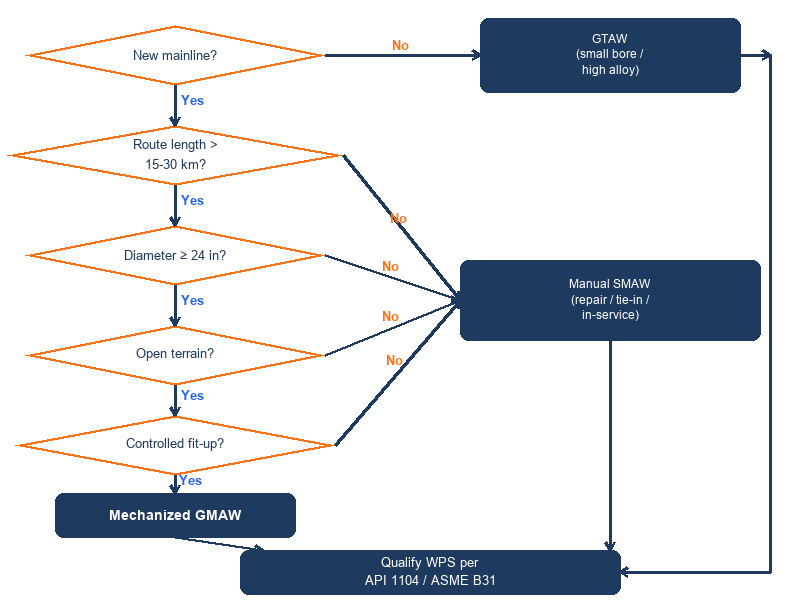
Figure 4. Process selection flowchart: route length, diameter, terrain, fit-up control, and work type determine whether automatic or manual welding wins.
Most large projects end with a hybrid answer: mechanized GMAW on the mainline, SMAW for tie-ins and repairs, and GTAW where materials demand it. That combination is what our crews run on pipeline construction services, and it is the same logic a good contractor applies to every job.
Questions fréquemment posées
Which pipeline welding process offers the best productivity and quality balance?
Automatic pipeline welding with a mechanized dual-torch GMAW system wins the balance on long mainlines: 60 to 120 girth welds per day at 95 to 99 percent first-pass acceptance. Manual SMAW remains the best balance for short, remote, or repair work.
Is automatic welding faster than manual welding?
Yes. Continuous wire feed and dual torches roughly double or triple daily output, the single largest driver of pipeline welding productivity on mainline projects. A published 2024 Miller Welds case study measured gains above 50 percent after moving from TIG and stick welding to wire processes.
How many welds can mechanized welding complete in a day?
A single mechanized spread completes 60 to 120 girth welds per day on 24 to 36 inch pipe, pipeline welding productivity no manual crew can match. Double-jointing plants using submerged arc welding reach 150 to 200 or more joints per day in a fixed position.
Is automatic pipeline welding quality better than manual welding?
More consistent, not automatically perfect: first-pass acceptance typically runs 95 to 99 percent versus 80 to 90 percent for manual work. Joint preparation and fit-up still decide pipeline weld quality.
Why is stick welding (SMAW) still used on pipelines?
SMAW remains the workhorse for repair welding, tie-ins, in-service work, and short spreads. It tolerates wind, needs only simple equipment, has the widest pool of qualified welders, and remains the standard process for pipeline maintenance services and emergency repairs.
What is dual-torch pipeline welding?
A welding bug carries two gas metal arc welding torches that deposit two beads per travel around the joint. It is the standard architecture of modern mechanized pipeline welding systems and the main reason mechanized output outpaces manual output.
How much does automatic pipeline welding cost?
USD 150,000 to 500,000 or more for a complete mechanized spread of pipeline welding equipment, against USD 5,000 to 30,000 for a manual station. Pipeline welding cost is capital-heavy for mechanization and labor-heavy for manual work, and lower labor per joint plus less rework recover the difference after roughly 15 to 30 kilometers of mainline.
What pipe welding machine do I need for automatic pipeline welding?
A mechanized spread needs a pipe welding machine sized to your diameter range and wall thickness, because welding bugs and their banding are built for specific pipe sizes, not universal. The system typically includes the welding bug, an external band, wire feeders, and a control unit, and it must run a welding procedure qualified to API 1104 or the governing standard. For short or small-bore work, a manual station remains the practical choice.
Not sure which process fits your route length and diameter? Send us your pipe size, wall thickness, and route length, and we will recommend the process and provide a quotation. Get a Process Recommendation
Data Sources
The figures in this guide come from the following published standards, manufacturer case studies, and JSW project records.
- Miller Welds, 2024 case study (North American transmission operator, productivity gain above 50 percent)
- API Std 1104 (22nd ed., 2021)
- ASME B31.4 (2022) / ASME B31.8 (2025)
- ASME PCC-2 (2022, in-service welding)
- JSW internal project data (32-inch X70 spread)
- JSW internal reject-rate data
Conclusion
Automatic pipeline welding is the productivity and quality champion for long mainline construction, and manual SMAW keeps the title for repair, tie-ins, and short spreads. The automatic welding vs manual welding decision is rarely settled by one process, because the governing standard, route length, diameter, terrain, and fit-up control decide the balance on every project.
Contact JSW for pipeline construction, automatic pipeline welding, horizontal directional drilling, and microtunneling services.
Get a Free Welding Process Recommendation
If you are planning a new line, a tie-in, or a repair, send us your pipe size, wall thickness, fluid, operating pressure, and governing code. Our welding engineers will confirm which welding process fits your project, supply the procedure, equipment, and API 1104 / ASME B31.4 / B31.8 qualified crews, and give you a firm quotation within 48 hours.
The 32-inch X70 numbers in this guide come from our own spreads. Ask us for project references in your region. We qualify the WPS, supply the equipment, and execute the weld under one contract.
Get a Free Welding Process Recommendation
Prefer email? Send your project spec to our engineers through the contact page, and we will reply with a process recommendation and a quotation.








 English
  Arabic
  Russian
  Spanish
  French
  Vietnamese
  Polish
  Thai
Thai  Indonesian
  Turkish
  Portuguese