Technique sans tranchée

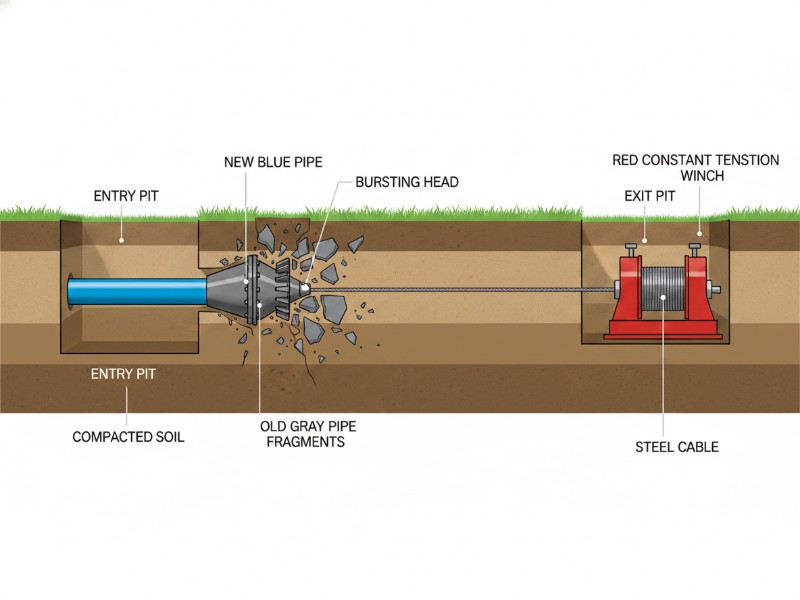
A cross-section illustration showing the trenchless pipe bursting process, featuring a bursting head breaking an old gray pipe while pulling a new blue pipe into place using a winch and steel cable between entry and exit pits.

How much does pipe bursting cost per foot?

The typical planning range for pipe bursting cost per foot is $60–$200 per foot, but actual quotes vary based on pipe diameter, depth, soil conditions, access constraints, and restoration scope. This article explains how pipe bursting pricing is structured, how it compares to excavation and other trenchless pipe rehabilitation methods, and how contractors, companies, and

How much does pipe bursting cost per foot? Lire plus »
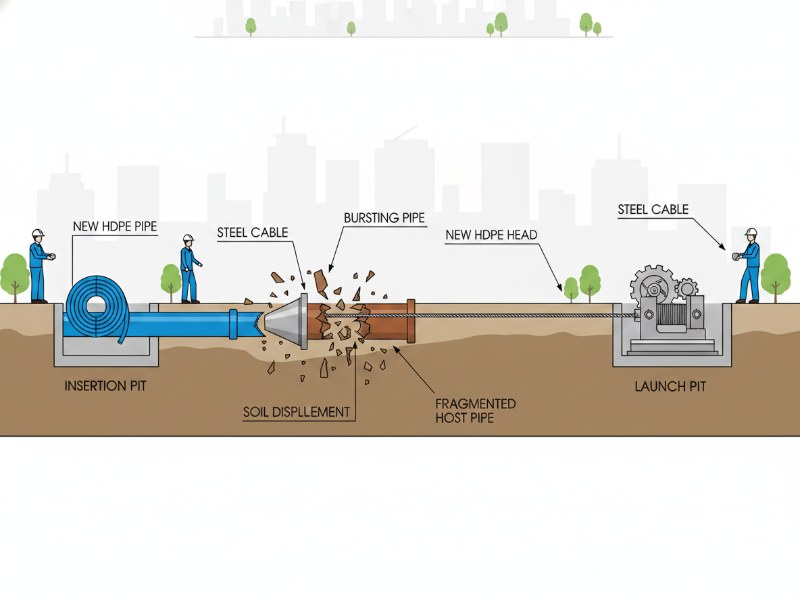
A detailed cross-section illustration of the trenchless pipe bursting method, showing a new HDPE pipe being pulled through an existing damaged pipe by a steel cable, with workers at the insertion and launch pits.

Combien coûte la pose d'une canalisation sans tranchée ?

The trenchless pipeline installation cost typically ranges from $80 to $250 per foot overall, but the actual price varies significantly by method—such as HDD ($100–$250/ft), pipe bursting ($60–$200/ft), CIPP ($80–$180/ft), and microtunneling ($150–$300+/ft)—as well as by project type, site conditions, and construction complexity. Most buyers are not just asking “how much,” but which method fits

Combien coûte la pose d'une canalisation sans tranchée ? Lire plus »

Comparison of trenchless methods for rocky soil vs sandy soil with carbide reamer and HDD slurry system

Quelles sont les meilleures méthodes sans tranchée pour les sols rocheux par rapport aux sols sableux ?

For rocky soil conditions, pipe reaming and bursting with carbide cutting teeth work best; for sandy soil, directional drilling with bentonite slurry stabilization and pipe jacking are the most reliable trenchless methods. Rocky ground demands aggressive cutting and impact tools, while sandy soil requires fluid management to prevent hole collapse. This guide compares these environments step by step, covers

Quelles sont les meilleures méthodes sans tranchée pour les sols rocheux par rapport aux sols sableux ? Lire plus »

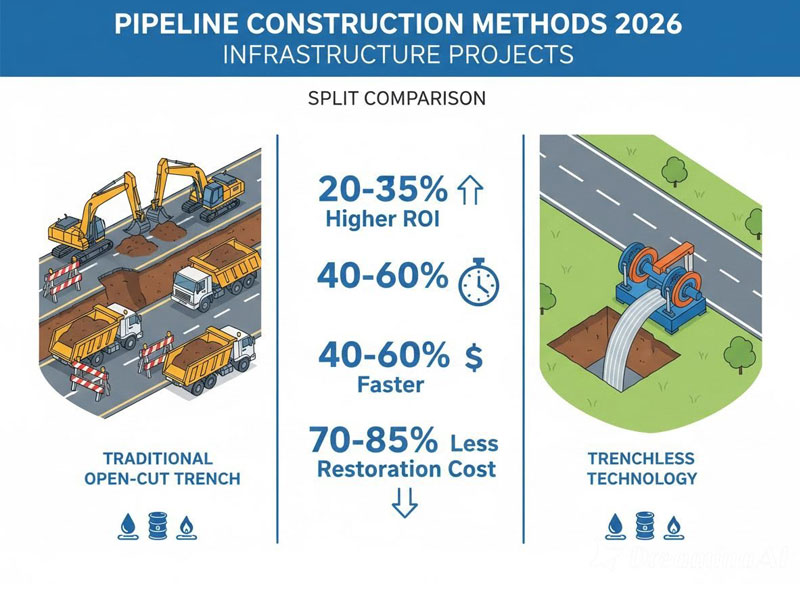
Comparison infographic showing trenchless vs traditional pipeline construction methods with ROI data for 2026 infrastructure projects

Trenchless vs. Traditional: A ROI analysis for 2026 infrastructure projects

For 2026 infrastructure projects, trenchless technologies deliver a 20-35% higher ROI than traditional open-cut methods when factoring in total costs, social impact, and project duration. This analysis covers cost breakdowns, timeline comparisons, environmental impact, and application scenarios for both trenchless and traditional construction methods, helping contractors, municipal planners, and asset owners make data-driven decisions for

Trenchless vs. Traditional: A ROI analysis for 2026 infrastructure projects Lire plus »

Comment évaluer le bilan en matière de sécurité et l'expertise technique d'un entrepreneur spécialisé dans les techniques sans tranchée ?

To evaluate a trenchless contractor’s safety record and technical expertise, request their OSHA incident rate, verify active industry certifications (NASTT or IUOE), and audit their project portfolio for complex installations like hot tapping or pipeline modification. This guide provides a data-driven framework covering safety metrics, technical credentials, equipment standards, and real-world verification steps you can

Comment évaluer le bilan en matière de sécurité et l'expertise technique d'un entrepreneur spécialisé dans les techniques sans tranchée ? Lire plus »

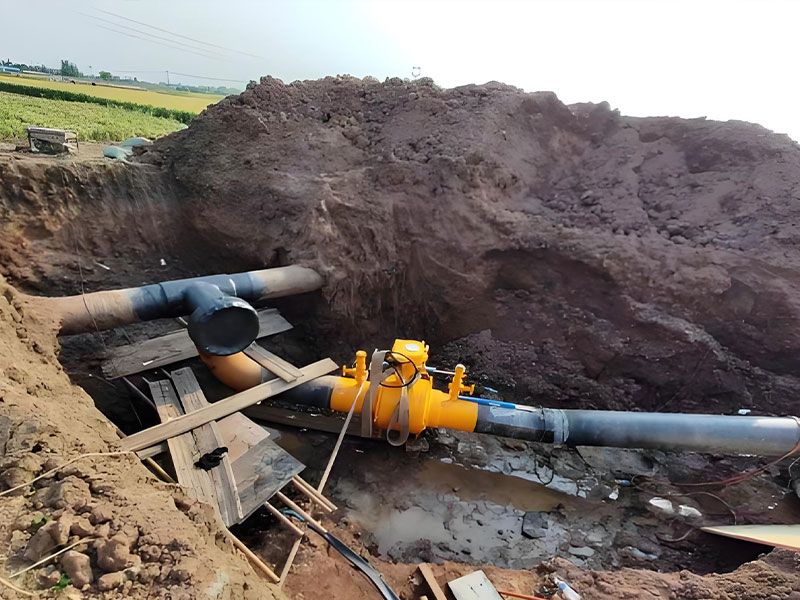
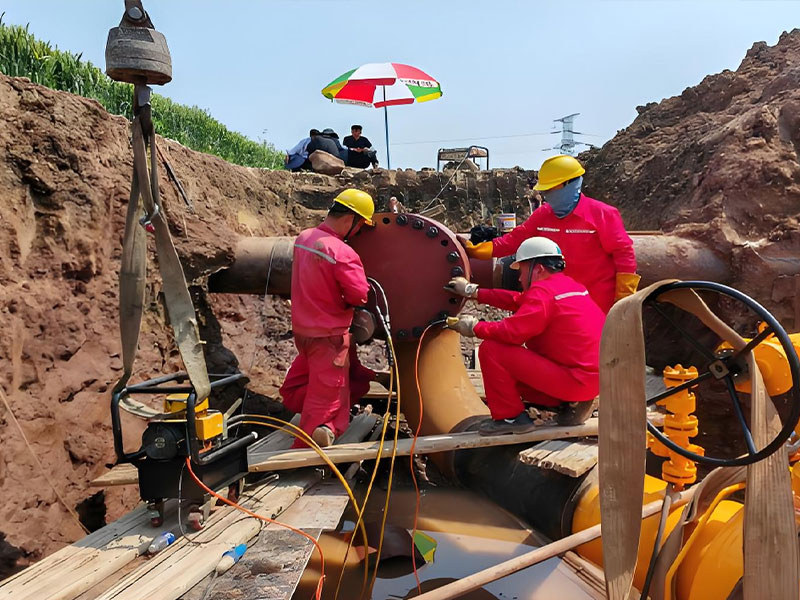
Ouvriers installant des raccords pour une canalisation de gaz naturel, piquant à chaud sur une canalisation en service, dans une fosse d'excavation avec des engins de chantier

CIPP ou chemisage : quelle est la solution la plus rentable pour les canalisations de grand diamètre ?

For large-diameter pipes (typically 36 inches and above), CIPP is generally more cost-effective than slip-lining when considering total project costs, operational disruption, and long-term performance, though slip-lining offers advantages in specific scenarios involving severe structural degradation or non-circular profiles. This comprehensive guide compares both trenchless pipe rehabilitation methods across material costs, installation requirements, downtime, durability,

CIPP ou chemisage : quelle est la solution la plus rentable pour les canalisations de grand diamètre ? Lire plus »