
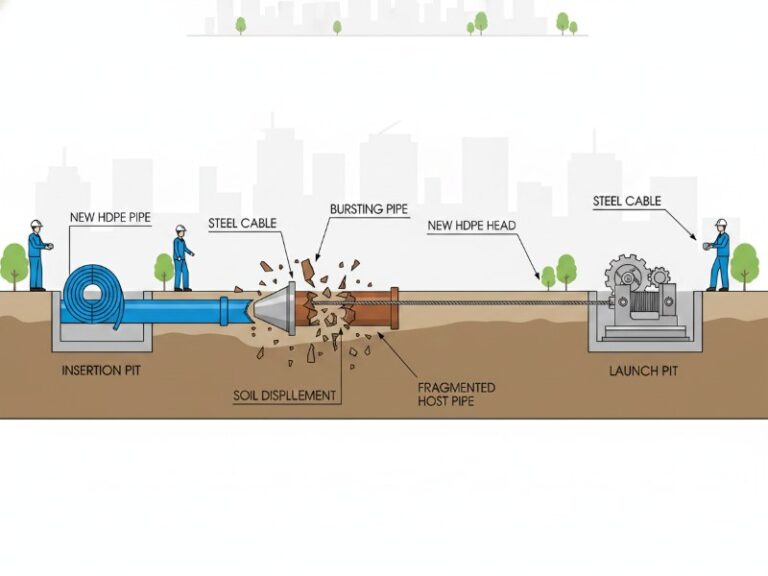
Le coût global de la pose d'une canalisation sans tranchée varie généralement entre $80 et $250 par pied, mais le prix réel varie considérablement selon la méthode utilisée — telle que le forage horizontal dirigé (HDD) ($100–$250/pied), l'éclatement de canalisation ($60–$200/pied), le CIPP ($80–$180/pied) et le microtunnelage ($150–$300+/pied) — ainsi qu’en fonction du type de projet, des conditions du site et de la complexité des travaux.
La plupart des acheteurs ne se contentent pas de demander “ combien ça coûte ”, mais souhaitent savoir quelle méthode convient le mieux à leur projet, quels sont les facteurs qui déterminent le coût et dans quels cas la technique sans tranchée s'avère plus rentable que la construction à tranchée ouverte. Ce guide propose une analyse axée sur la prise de décision, couvrant les différentes méthodes, les facteurs de coût, des cas concrets de projets et des stratégies d'optimisation pour les réseaux de canalisations de pétrole, d'eau et d'air.
Quels sont les facteurs qui influent sur le coût de la pose de canalisations sans tranchée ?
Résumé : Le coût de la pose de canalisations sans tranchée varie, car chaque projet est soumis à des contraintes techniques, environnementales et opérationnelles différentes.
Explication :
Contrairement aux travaux d'excavation traditionnels, les techniques de construction sans tranchée reposent sur un forage contrôlé, un alignement précis et des équipements spécialisés, ce qui rend leur coût très sensible aux conditions du chantier.
Principaux facteurs de coût :
- Diamètre et matériau des canalisations : les canalisations de plus grand diamètre ou à haute pression nécessitent des équipements et des matériaux plus résistants
- Durée du projet : les séries plus longues réduisent le coût unitaire mais augmentent l'investissement total
- Sol et géologie : la présence de roches, d'eaux souterraines ou d'un sol instable accroît les risques et les besoins en matériel
- Profondeur et alignement : les installations en profondeur ou courbes nécessitent un contrôle avancé du perçage
- Conflits liés aux réseaux : les infrastructures souterraines existantes compliquent l'aménagement du territoire
- Gestion et rétablissement de la circulation : les travaux urbains entraînent des coûts liés à la gestion de la voirie
- Autorisations et conformité : les autorisations environnementales et municipales varient selon les régions
- Inspection et essais : essais de pression, inspection par caméra et certification
- Mobilisation et démobilisation : coûts liés au transport du matériel et à la mise en place du chantier
Conseil pratique :
Dans la plupart des projets concrets, ce sont les équipements, la main-d'œuvre, les autorisations et la remise en état qui, ensemble, constituent la principale structure de coûts, plutôt qu'un seul facteur prédominant.
Coût par méthode : combien coûte chaque technique sans tranchée ?
Résumé : Les différentes méthodes sans tranchée répondent à des objectifs variés, ce qui explique la grande disparité des coûts d'installation de canalisations sans tranchée.
| Méthode | Coût au pied | Cas d'utilisation typique | Meilleur pour | Limites |
|---|---|---|---|---|
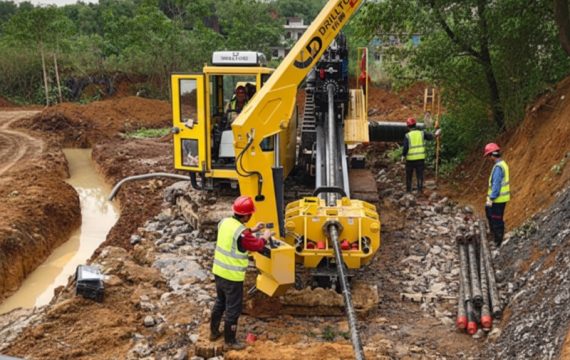
| Forage directionnel horizontal (HDD) | $100–$250 | Traversées de longue distance (routes, cours d'eau) | Nouvelle installation | Moins adapté aux très grands diamètres dans la roche dure |
| Éclatement des tuyaux | $60–$200 | Remplacement des canalisations existantes | Remplacement | Nécessite le tracé existant de la canalisation |
| Tuyau durci sur place (CIPP) | $80–$180 | Revêtement intérieur des canalisations | Réhabilitation de canalisations sans tranchée | N'augmente pas le diamètre du tuyau |
| Microtunneling | $150–$300+ | Installations urbaines de précision | Nouvelle installation | Coûts élevés liés à la mise en place et à l'équipement |
Nouvelle installation ou rénovation : pourquoi la structure des coûts est différente
Résumé : Le coût de la pose de canalisations sans tranchée dépend fortement du type de projet : s'agit-il de la construction de nouvelles canalisations ou de la remise en état de canalisations existantes ?.
Nouvelles méthodes d'installation
- HDD : idéal pour le franchissement de conduites d'huile, d'eau et d'air
- Micro-tunnelage : la construction urbaine de haute précision
Méthodes de réhabilitation / de remplacement
- CIPP : réhabilitation de canalisations sans tranchée
- Éclatement de canalisations : remplacement des canalisations vieillissantes avec un impact minimal sur la surface
Différence principale :
Les nouvelles installations nécessitent une conception complète du tracé et des travaux de forage, tandis que la réhabilitation se concentre sur la remise en état et l'amélioration structurelle, ce qui permet souvent de réduire les coûts d'excavation.
Why Does Trenchless Pipeline Installation Cost Vary So Much?
Résumé : Even within the same method, costs can vary by 2–3× depending on project conditions.
Explanation with examples:
- A short HDD crossing under a road may cost $120/ft, while a long river crossing can exceed $250/ft
- Pipe bursting in residential areas is cheaper than in dense urban zones with utility conflicts
- CIPP costs increase when additional cleaning, inspection, or structural reinforcement is required
Point à retenir :
The trenchless pipeline installation cost is project-specific, not just method-specific.
When Is Trenchless Cheaper Than Open Trench Construction?
Résumé : Trenchless methods are often more cost-effective when surface disruption is expensive.
Best scenarios for cost savings:
- Urban areas with heavy traffic
- Road, railway, or river crossings
- Industrial zones requiring continuous operation
- Projects with high restoration costs (asphalt, concrete, landscaping)
Comparison insight:
- Open trench: lower upfront cost but high restoration and social impact
- Trenchless solution: higher unit cost but lower total lifecycle cost
Practical conclusion:
In many municipal and oil pipeline projects, trenchless methods reduce total project cost and downtime, especially when combined with pipeline maintenance and restoration strategies.
Which Trenchless Method Is Best for My Project?
Résumé : Choosing the right method is the most effective way to control trenchless pipeline installation cost.
Decision framework:
- HDD: Best for long-distance crossings under roads, rivers, or obstacles
- Pipe bursting: Best for replacing aging pipelines without excavation
- CIPP: Best for trenchless pipe rehabilitation and maintenance
- Microtunneling: Best for high-precision urban construction
Aperçu de la situation sur le terrain :
Projects that match the correct method to the application typically achieve better cost efficiency and shorter construction timelines.
Additional Costs: Tapping, Plugging, and Pipeline Modification
Résumé : Specialized operations can significantly affect total project cost.
Typical services involved:
- Hot tapping for live pipeline connections
- Pipeline plug and pipeline stopper operations
- Pipeline stopple for temporary isolation
- Pipeline tapping and modification
Typical cost range:
- Pipeline tapping: $5,000–$50,000 per operation
- Pipeline plugging: $10,000–$100,000 depending on pressure and diameter
These services are essential in oil, water, and air systems where shutdown is not feasible.
How to Reduce Trenchless Pipeline Installation Cost
Résumé : Cost optimization comes from planning, design, and partner selection.
Actionable strategies:
- Select the correct trenchless solution for your project type
- Work with experienced contractor teams and equipment manufacturers
- Optimize pipeline routing to reduce depth and complexity
- Bundle services such as trenchless pipe rehabilitation and maintenance
- Coordinate with a single company or integrated service provider
Conseil pratique :
Integrated services combining contractor execution, factory equipment, and material supplier support often improve cost control and reduce delays.
FAQ: Decision-Focused Questions About Trenchless Pipeline Costs
Q1: Is trenchless worth it for short pipeline runs?
It depends. For very short distances, mobilization costs may outweigh benefits, but in urban environments, trenchless can still be cost-effective.
Q2: Is trenchless better for congested urban areas?
Yes. It minimizes traffic disruption, surface damage, and restoration costs.
Q3: Which method is best for crossing under roads?
HDD is typically the preferred solution for road and river crossings.
Q4: What factors increase trenchless pipeline installation cost the most?
Soil conditions, utility conflicts, depth, and permit complexity are the most significant drivers.
Q5: How do I estimate trenchless project cost before bidding?
Start with pipeline length, diameter, and method selection. Then include site investigation, permits, traffic control, and equipment mobilization. Most contractors prepare a preliminary cost range using similar past projects and adjust after geotechnical data is confirmed.
Q6: What is the minimum project size for trenchless to make sense?
There is no fixed threshold, but in many cases, projects under 50–100 feet may not justify mobilization costs unless surface disruption or access constraints are significant.
Q7: Does trenchless reduce downtime?
Yes. Trenchless methods—especially when combined with hot tapping, pipeline plug, or pipeline stopple—allow pipeline modification and maintenance without full shutdown, which is critical for industrial and municipal systems.
Q8: Which method is cheapest for replacing an existing line?
Pipe bursting is usually the most cost-effective option for replacing existing pipelines, particularly when the original alignment can be reused and surface restoration costs are high.
Final Conclusion: Understanding Trenchless Pipeline Installation Cost
The trenchless pipeline installation cost is not a fixed number but a range influenced by method, project type, and site conditions. While the general range is $80–$250 per foot, real project costs depend on whether the work involves new installation, replacement, or trenchless pipe rehabilitation.
For most modern pipeline construction and maintenance projects, trenchless solutions provide a balanced approach—reducing environmental impact, minimizing downtime, and optimizing long-term cost efficiency.
Author & EEAT Signal
Auteur : Daniel Carter, Senior Pipeline Engineering Consultant
Experience: 15+ years in trenchless construction, pipeline rehabilitation, and pipeline modification across municipal, industrial, and oil pipeline projects in North America and the Middle East
Project Types: HDD crossings, pipeline stopple operations, trenchless pipe rehabilitation, and live pipeline tapping
Dernière mise à jour : April 2026









 English
  Arabic
  Russian
  Spanish
  French
  Vietnamese
  Polish
  Thai
Thai  Indonesian
  Turkish
  Portuguese