
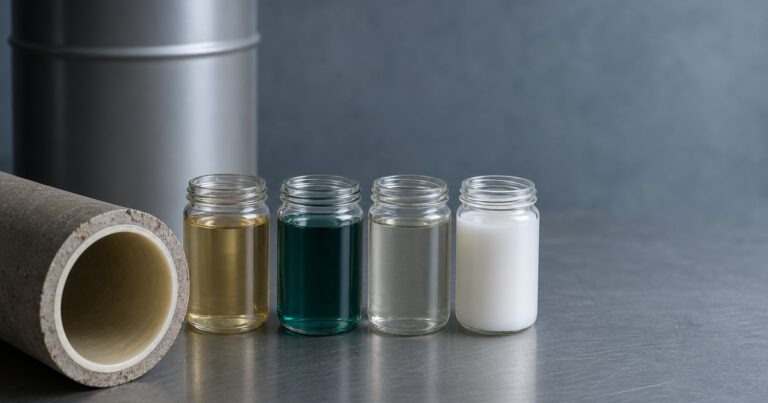
CIPP resin systems are the saturating resins that carry the structural load in a cured-in-place pipe (CIPP) liner, and the trenchless industry names four families for the job: polyester, vinyl ester, epoxy and silicate. The short answer: the resin is chosen from the effluent chemistry first and from the cure route the contractor can run second, not from brand or habit. Polyester covers most domestic gravity sewers, vinyl ester takes aggressive industrial effluent, epoxy takes mechanical demand and potable-water contact with certification, and silicate takes small-diameter and point-repair work where surface styrene control decides.
This guide to CIPP resin systems explains what each family is, what it is chosen for, where it struggles, and how a designer matches resin to service condition. Everything below is tied to a named standard or a published industry range. Where published sources disagree, the range is shown and the disagreement is stated. No figure here is a quotation, and none should be read as a recommendation for a specific project.
What Are the Four CIPP Resin Systems?
The industry framing comes from LAMSTT, the Latin American Society for Trenchless Technology, whose trenchless technologies guideline names four saturating resin systems for CIPP: polyester, vinyl ester, epoxy and silicate. Three of them—polyester, vinyl ester and epoxy—are styrene-based thermosets. The fourth, silicate, is a chemically different route, a point that matters whenever a specification treats the four as freely interchangeable. All four are saturating systems carried in a felt or glass-fiber tube. That four-family list is the anchor for the rest of this guide.
- Polyester resin is the volume workhorse and the default for municipal gravity sewers.
- Vinyl ester resin trades cost for a wider band of solvent and acid resistance.
- Epoxy resin is chosen for higher mechanical performance and for potable-water contact.
- Silicate resin (a non-styrene saturating system) is a lower-odor option with a short work window.
Whatever the family, the liner around it is designed to ASTM F1216, the standard practice for rehabilitation of existing pipelines and conduits by the inversion and curing of a resin-impregnated tube. Its current revision, F1216-24a, is written for pipelines and conduits from 2 in. to 108 in. in diameter, about 50 mm to 2,750 mm. Wall thickness is designed for either the partially deteriorated or the fully deteriorated host condition, as the owner specifies, and wet-out and cure logs are kept per liner.
Polyester Resin: The Default for Gravity Sewers
Polyester is the default saturating resin for gravity sewers, and the practical reason is the balance of cost, strength and workability it offers for that duty. It is supplied mainly in two grades: orthophthalic and isophthalic. Orthophthalic is the general-purpose grade; isophthalic offers improved resistance to water and to some chemicals and is common where the effluent is more variable.
Styrene is the reactive diluent in polyester resin. It thins the resin to a workable viscosity, cross-links during cure, and is also the root of the odor and emission discussion that surrounds CIPP installation. Because styrene is volatile, the site plan for a polyester liner has to manage vapor, not just resin.
Where it is chosen. Municipal collection systems, gravity sewers and storm lines where the effluent is domestic or lightly industrial.
Where it struggles. Strong solvents, high concentrations of hydrocarbons and aggressive industrial effluent can attack a polyester matrix. Where those loads govern the design, vinyl ester is selected.
How it pairs. It is used with hot-water, steam and ambient cure; UV and LED curing use a resin formulated to cure under UV light rather than a steam-cure formulation.
Vinyl Ester Resin: Higher Chemical Resistance for Aggressive Effluent
Vinyl ester resin is chosen when chemical resistance is the governing load rather than the secondary one. It is a styrene-based thermoset, like polyester, but its molecular structure resists hydrolysis and a wider range of solvents and acids. In industrial and aggressive-effluent lines, that wider band is often what decides the specification.
Where it is chosen. Industrial outfalls, chemical-laden effluent, lines carrying hydrocarbons or solvents, and sewers receiving trade waste where the chemistry varies through the week.
Where it struggles. Cost and cure control. Vinyl ester costs more than polyester, and it can be less forgiving of a wet-out or cure window stretched past the manufacturer’s instruction.
How it pairs. Vinyl ester cures on the same hot-water, steam and ambient routes as polyester and is also supplied in matched UV and LED systems, so a switch within the styrene-based families rarely forces a change of cure route.
Epoxy Resin: Mechanical Performance and Potable-Water Contact
Epoxy resin is chosen where the liner must carry higher mechanical demand or where the pipe touches drinking water. Its tighter cross-linked structure gives high tensile and flexural performance, and it is the family that can meet potable-water contact requirements when the appropriate certification is held. NSF is the body whose listings are normally cited for potable-water contact, and the specific product certification has to be confirmed for the project rather than assumed.
Where it is chosen. Pressure mains, potable-water lines, and liners where mechanical demand is high or the host condition is more demanding.
Where it struggles. Cure time. Epoxy typically needs a longer cure cycle than polyester, and that slower cure lengthens both the installation schedule and the bypass window for that line. That is a planning cost, not a defect.
How it pairs. Epoxy is commonly cured by hot water or ambient methods; it is the family that demands the most care at wet-out, which is why the wet-out log carries as much weight as the cure log on an epoxy liner.
Silicate Resin: The Lower-Odor, Non-Styrene Route
Silicate resin is a lower-odor, non-styrene route to a CIPP liner. It avoids the volatile diluent that drives the styrene discussion, but it comes with a short pot life and short cure windows, which limits how much liner can be wetted and installed in one shift. In practice it is chosen for small-diameter lines and point-repair work, where both the liner length and the work window are manageable.
Where it is chosen. Small-diameter lines, point repairs, and sites where styrene control at the surface is the deciding constraint.
Where it struggles. Short working time. A silicate liner suits runs that can be wetted out and installed inside one work window, so long-distance work calls for a different family.
How it pairs. Silicate systems come as matched short-window systems, so the pairing works in reverse here: the liner length is set by the pot life rather than the resin being chosen to suit a fixed length.
An honest caveat. Silicate resin is a chemically different route from the three styrene-based thermosets. It is not interchangeable with polyester, vinyl ester or epoxy on structural lining work. Where a design assumes a thermoset matrix, a silicate system is not a drop-in substitute, and a specification that treats them as equivalent is making an error.
How Resin Chemistry Pairs With the Cure Method
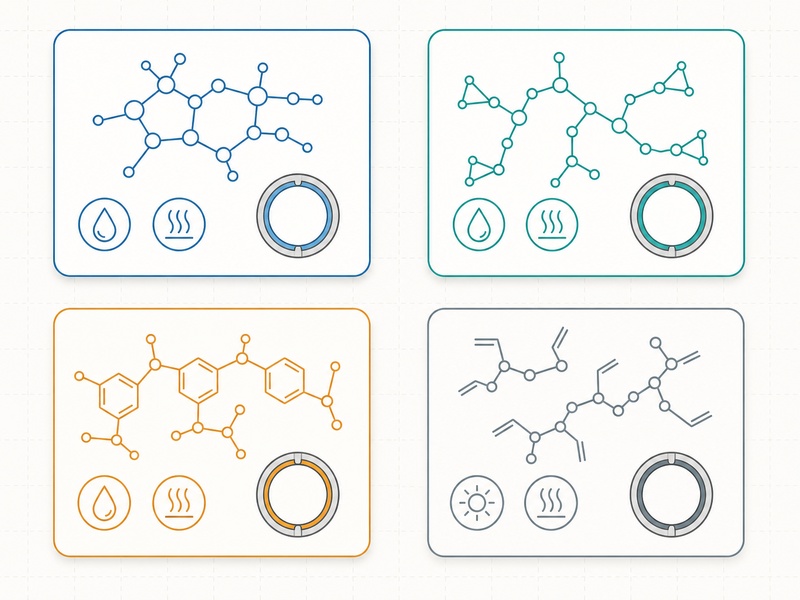
CIPP resin systems and cure methods form a matched system, not two independent choices. UV and LED curing use resins formulated to cure under UV light, and they use a different initiator package from steam and water curing, which is why the tube and resin are supplied together as a matched UV system. Steam, hot water and ambient cure use their own formulations. Published descriptions put UV light as the fastest route—one equipment maker describes a UV light train curing at about one minute per meter of liner—while steam and hot water typically take about one to four hours, and ambient cure takes longest. These are typical published figures, not limits.
Two site consequences sit alongside the chemistry. Hot-water curing releases styrene into the cure water, so cure-water handling is part of the plan whenever a styrene-based resin is used. NASSCO’s styrene guidance recommends a 15-foot perimeter around emissions points and exhaust stacks a minimum of 6 feet above ground during installation, and published commentary notes that moving to UV curing reduces odor emission.
Table 1 sets the pairing out directly: for each family, the cure routes it works with, where it is normally used, and the two or three things that go wrong when it is misapplied.
| Resin family | Cure pairing | Typical use | Watch-outs |
|---|---|---|---|
| Polyester | Hot water, steam, ambient; matched UV/LED systems | Gravity sewers and storm lines, domestic effluent | Styrene odor and emission; limited resistance to strong solvents |
| Vinyl ester | Hot water, steam, ambient; matched UV/LED systems | Industrial and aggressive-effluent lines | Higher cost; tighter cure control |
| Epoxy | Hot water or ambient | Pressure mains and potable-water contact with appropriate certification | Longer cure cycle; demanding wet-out |
| Silicate | Matched short-window systems | Small-diameter and point-repair work | Short pot life and cure window; not a structural thermoset substitute |
On the CCTV surveys we review before design, the effluent history and the number of active branch connections often tell us more about the correct resin than the host pipe material does. A line that has carried trade waste for years behaves nothing like a line of the same material and diameter that has only carried domestic flow.
The Selection Inputs a Designer Actually Uses
For CIPP resin systems, the service condition drives the selection first and the resin catalogue second. A designer works through a short list of inputs, and the answer usually falls out of two or three of them.
- Effluent chemistry and pH. The strongest single input. Where a line carries strong acids, caustics or trade waste that varies through the week, the shortlist moves to vinyl ester before any other input is considered.
- Temperature. Service temperature narrows the practical resin band and can force a longer cure cycle.
- Hydrocarbons and solvents. Where these are present, they decide the family before mechanics do.
- Host-pipe condition. Partially or fully deteriorated condition is a design input to ASTM F1216, and it sets the wall thickness the resin has to carry.
- Cure method available. The resin must match the cure route the contractor can actually run on the site.
- Pot life against liner length. A resin with a short pot life limits how much liner can be wetted and installed in one window.
- Site styrene control. Where the surface environment demands it, a non-styrene route or emission controls change the shortlist.
Table 2 turns those inputs into a decision: read down the service condition, and the family and its watch-out follow.
| Service condition | Resin family to consider | Pourquoi ? | Watch-out |
|---|---|---|---|
| Domestic gravity sewer, stable effluent | Polyester | Economical balance of strength and workability | Styrene odor management at the surface |
| Lightly industrial sewer | Isophthalic polyester | Improved water and dilute-acid resistance over the general-purpose grade | Confirm the actual effluent chemistry |
| Aggressive industrial effluent and solvents | Vinyl ester | Wider solvent and acid resistance band | Cost and cure control |
| Potable-water contact or pressure main | Epoxy with appropriate certification | Mechanical performance plus potable-water listings | Longer cure cycle |
| Small-diameter or point repair, odor-sensitive site | Silicate | Lower-odor, non-styrene route | Short pot life and cure window |
What Lab Evidence Should Back the Resin Choice?
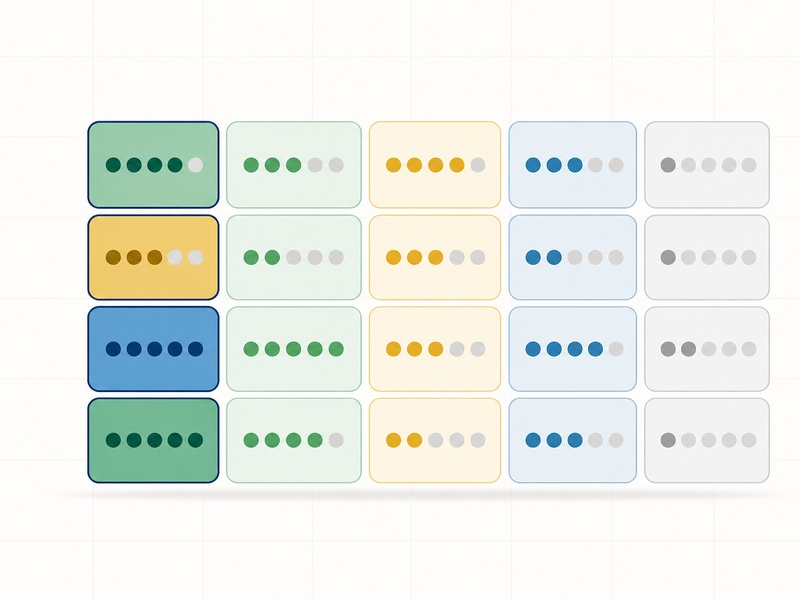
The resin choice should be underpinned by test evidence, not assertion. Thickness design and material recommendations are reviewed against ASTM F1216, and where the owner requires it the design is stamped by a professional engineer. For the material itself, the minimum testing scope described by the IKT institute centers on a three-point bending test to determine modulus of elasticity and bending stress.
Chemical resistance is handled separately, because it is a property of the resin and the effluent together, not of the resin alone. ASTM F1216 addresses this in Appendix X2, and the designer matches the resin family to the chemistry the line will actually carry. Where a line carries a chemistry the standard does not cover directly, that resistance has to be established for the service rather than assumed from the family name.
Preliminary 2024 measurements of volatile organic compound emissions during CIPP renewal reported that non-styrene polyester systems did not exceed OSHA or EPA exposure limits in the cases measured. That is preliminary research, not a general clearance, and it does not remove the need for site controls on a styrene-based system.
Limitations: What Resin Choice Cannot Fix
Resin choice sets the liner’s resistance and durability; it does not change the pipe’s gradient, bore or shape. Stating that boundary plainly is part of specifying a liner honestly.
- Gradient is preserved, not restored. The cured liner reproduces whatever line and level the host pipe already has, so a dipped or back-graded run stays dipped after cure.
- Bore. The liner reduces the internal diameter of the host pipe by roughly the liner wall thickness, plus any annular gap the design assumes. Flow capacity must be checked, not assumed.
- Scope. Lining applies where the host pipe still has its basic shape and structural continuity. A collapsed, severely deformed or missing host section falls outside that scope and calls for a different method.
- Code. Reported plumbing-code commentary restricts lining where the host piping is already compromised, so the governing local code should be checked on any building-side scope.
- Emission control. Odor and styrene emission during installation are managed with defined controls: emission-point perimeters, exhaust stack height and the choice of cure route.
In our lining crews’ logs, the problems traced back to resin are usually a mismatch between the effluent chemistry that was specified and the chemistry actually in the line, not a defect in the resin itself. In our bid reviews, CIPP resin systems are the line item most often copied across from a previous specification without the effluent chemistry being rechecked, and that is where an avoidable failure mode starts. Our field teams record the cure method and the resin batch on every wet-out log, so the two can be reconciled after the fact.
Questions fréquemment posées
Which CIPP resin system is the default for gravity sewers?
Polyester resin is the default for gravity sewers. It offers the most economical balance of strength, workability and cost for municipal collection systems, in orthophthalic and isophthalic grades.
Is vinyl ester always the better choice over polyester?
No. Vinyl ester is chosen where chemical exposure is the governing load, not as a blanket upgrade. It resists a wider band of aggressive effluent and solvents, but it costs more and can demand tighter cure control, so it is usually reserved for industrial lines.
Does epoxy require a longer cure cycle?
Usually yes. Epoxy usually cures on a longer cycle than polyester. Its higher mechanical performance and its suitability for potable-water contact come with a slower cure, so the cure window and the schedule have to be designed around it.
Is silicate a substitute for the styrene-based thermosets?
No. Silicate is a chemically different route from the three styrene-based thermosets. It is a lower-odor, non-styrene system used for small-diameter and point-repair work, and it is not interchangeable with polyester, vinyl ester or epoxy on structural lining.
How is chemical resistance verified for a CIPP liner?
It is verified against the resistance requirements of ASTM F1216. Appendix X2 of that standard sets the requirements, and the designer matches the resin family to the effluent chemistry the line will actually carry.
Can one resin be used with UV, steam and hot-water curing?
Not always. The cure method and the resin form a matched system. UV and LED curing use resins formulated to cure under UV light with a different initiator package, while steam, hot water and ambient cure use their own formulations.
Points clés à retenir
- CIPP resin systems fall into four families: polyester, vinyl ester, epoxy and silicate, as framed by the LAMSTT trenchless technologies guideline.
- Polyester is the default for gravity sewers; styrene is its reactive diluent and the root of the odor and emission discussion.
- Vinyl ester is chosen for solvent and acid resistance in industrial and aggressive-effluent lines; epoxy for mechanical performance and potable-water contact; silicate for a lower-odor, non-styrene route on small-diameter and point-repair work.
- Effluent chemistry is the strongest single selection input: it decides the resin family before mechanical demand does.
- The cure method and the resin form a matched system, and UV and LED curing use their own initiator package.
- Resin choice is bounded by geometry: gradient loss, a reduced bore after lining, and a host pipe that has lost its basic shape are outside what it can change.
How JSW Supports Resin Selection and CIPP Renewal
JSW is a pipeline engineering and construction company that executes trenchless rehabilitation with its own crews and equipment. Our scope covers solutions de rénovation des canalisations, inserted hose lining, pipeline repair services, technologies sans tranchée et CCTV inspection.
Our engineers review CIPP resin systems, wall thickness and cure method together, so the resin is matched to the effluent and the cure route is matched to the resin. The process is auditable: CCTV before and after, wet-out and cure logs per liner, and samples and test records retained for the owner. Thickness designs and material recommendations are reviewed by professional engineers before bid, and pricing states the site risks explicitly rather than hiding them in a lump sum.
If the effluent chemistry is still uncertain, that is the normal starting point for a review, not a blocker.
- Prestation intégrée : engineering, crews and equipment under one contract, so resin, tube and cure method are specified as one system.
- Données de processus pouvant faire l'objet d'un audit : CCTV before and after, wet-out and cure logs, and retained samples and test records.
- Tarification tenant compte explicitement du risque : site conditions, bypass needs and access constraints are priced, not assumed away.
- Safety and compliance: styrene controls, confined-space procedure and documented experience for the key crew roles named in the NASSCO guideline.
Not sure which resin your line needs? Send your pipe size, material and the latest CCTV survey for a free technical review. Our engineers respond with a scoped recommendation and budget range.





































 English
  Arabic
  Russian
  Spanish
  French
  Vietnamese
  Polish
  Thai
Thai  Indonesian
  Turkish
  Portuguese