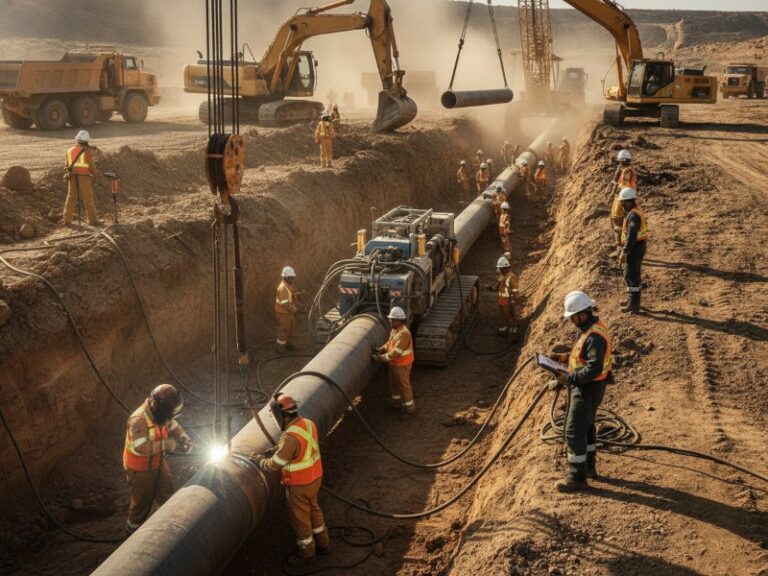
Pipeline repair and rehabilitation are most widely used in municipal water and wastewater systems, followed by oil and gas, industrial processing, and utility infrastructure. These industries rely on trenchless technologies such as CIPP, pipe bursting, and epoxy lining to extend pipeline lifespan, reduce excavation costs, and minimize operational disruption in urban and high-risk environments.
What Is Pipeline Repair and Rehabilitation?
Pipeline repair and rehabilitation refer to a range of engineering techniques used to restore the structural integrity, flow capacity, and safety of existing pipelines without full replacement. These methods are widely applied across municipal, industrial, and energy sectors using trenchless technologies. The goal is to extend asset life, improve operational efficiency, and reduce the environmental and social costs associated with traditional open-cut excavation.
Municipal Water and Wastewater Systems (Largest Market)
Municipalities worldwide face a critical challenge with aging underground infrastructure. Many water and sewer systems installed in the mid-20th century now exceed their 50-100 year design lives, resulting in frequent leaks, bursts, and contamination risks. Trenchless rehabilitation offers public utilities a way to restore pipeline integrity with minimal disruption to densely populated urban areas.
Typical Pipelines
- Sanitary sewers
- Stormwater drains
- Potable water mains
Key Problems
- Internal corrosion and tuberculation
- Root intrusion and joint separation
- Structural cracks and collapses
- Groundwater infiltration (I&I)
Preferred Technologies
- Cured-in-place pipe (CIPP): Dominates the municipal sector, accounting for over 60% of global trenchless deployments. A resin-saturated liner is inserted and cured to form a seamless new pipe within the old one, effectively sealing leaks and preventing root intrusion.
- Éclatement de canalisation : Used for water mains to replace degraded cast-iron pipes while simultaneously upscaling capacity, achieving flow increases of 20-50%.
- Spray-in-place pipe (SIPP): Applied to large-diameter storm drains and manholes to provide a corrosion-resistant barrier.
Why Trenchless Is Used
Regulatory pressure is a primary driver. In the U.S., the EPA enforces the Clean Water Act, compelling municipalities to eliminate sanitary sewer overflows. Similar mandates in the EU, such as the Water Framework Directive, require contractors to use low-emission resin systems. The Infrastructure Investment and Jobs Act has allocated over USD 55 billion specifically for water infrastructure, further accelerating trenchless adoption.
Q: Which industry uses trenchless technology the most?
A: The municipal water and wastewater sector is the largest user, accounting for the majority of global trenchless rehabilitation spending. This is driven by aging urban infrastructure, strict environmental regulations to prevent sewer overflows, and the critical need to perform repairs without disrupting city streets and businesses.
Municipal Applications by Pipeline Type
Sanitary Sewer:
- Method: CIPP, SIPP
- Benefit: Prevents exfiltration, root intrusion, and groundwater infiltration
- Diameter: Under 18 inches to over 36 inches
- Lifespan Extension: 50+ years
Water Main:
- Method: Pipe bursting, Slip-lining
- Benefit: Upsizes capacity, restores hydraulic integrity, reduces leakage
- Diameter: 18-36 inches
- Key Driver: Reducing water loss (up to 20% of treated water lost globally)
Stormwater Drainage:
- Method: CIPP, Spray-on coatings
- Benefit: Restores structural integrity, addresses corrosion and abrasion
- Diameter: Large diameter (e.g., 72 inches)
- Key Driver: Flood prevention and regulatory compliance
Oil and Gas Pipelines (High-Pressure & Safety-Critical)
The oil and gas industry relies on vast pipeline networks to transport crude oil, natural gas, and refined products across challenging terrains and sensitive ecosystems. Corrosion, stress cracking, and mechanical damage from ground movement are constant threats to pipeline integrity. A single pipeline failure can result in catastrophic environmental damage, substantial fines, and costly operational shutdowns.
Typical Pipelines
- Transmission lines (crude oil, natural gas)
- Gathering lines
- Refined product distribution pipelines
Key Problems
- Internal and external corrosion
- Stress corrosion cracking
- Third-party mechanical damage
- Ground movement and settlement
Preferred Technologies
- Composite wraps: Provide structural reinforcement for high-pressure transmission lines, designed to withstand pressures up to 300 psi and temperatures exceeding 200°F.
- Éclatement de canalisation : Effective for replacing degraded pipelines in urban corridors where permitting complexity is a significant concern.
- Slip-lining: Used to rehabilitate pipelines carrying refined products.
Why Trenchless Is Used
The industry increasingly adopts advanced inspection and monitoring tools. GIS- and laser-guided inspection drones map damaged sections with high precision, guiding targeted point repairs. This approach, combined with predictive modeling, enables companies to prioritize interventions based on failure risk, transforming reactive maintenance into proactive pipeline integrity management.
Q: Is CIPP suitable for oil and gas pipelines?
A: Yes, but with specialized materials. For high-pressure transmission lines, composite wraps and reinforced structural liners are used. These are designed to meet the pressure and temperature requirements of oil and gas applications, complying with API standards.
Industrial Processing and Power Plants (Downtime-Sensitive & Chemically Aggressive)
Industrial facilities, including chemical processing plants, power generation stations, and manufacturing sites, operate complex internal pipeline networks for moving raw materials, coolants, process water, and waste streams. Unplanned downtime for pipeline repairs is extremely costly, often far exceeding the direct repair cost due to lost production.
Typical Pipelines
- Chemical process lines
- Cooling water systems
- Wastewater and effluent lines
Key Problems
- Chemical corrosion
- Erosion from abrasive materials
- High-temperature degradation
- Biofilm growth in water systems
Preferred Technologies
- Spray-on epoxy linings: Creates a corrosion-resistant barrier and can be applied to pipes in situ without long-term production halts.
- Cured-in-place pipe (CIPP): Utilizes advanced resin formulations, including epoxies and polyurethanes, tailored for specific chemical exposures.
- Slip-lining: Used for large-diameter process lines where chemical resistance is critical.
- Antimicrobial coatings: Applied to mitigate biofilm growth in reclaimed water systems.
Why Trenchless Is Used
The ability to rehabilitate pipelines while maintaining continuous operations is the primary advantage. By avoiding extensive excavation and prolonged shutdowns, industrial operators can significantly reduce the total cost of ownership for their piping systems. Trenchless methods also minimize safety risks associated with confined space entry and hot work in hazardous environments.
Telecommunications and Utility Infrastructure (Protecting Fiber & Conduits)
The rise of smart cities is driving rapid growth in trenchless applications for telecommunications and utility infrastructure. As urban areas expand broadband networks and fiber optic installations, trenchless rehabilitation offers a minimally invasive way to protect and upsize critical conduits.
Typical Pipelines
- Fiber optic cable conduits
- Electrical conduits
- Utility tunnels
Key Problems
- Conduit damage during installation or from ground movement
- Water ingress into conduits
- Capacity constraints for new cable installations
Preferred Technologies
- Slip-lining: Used to line existing conduits with a new, smooth pipe to protect sensitive cables.
- Éclatement de canalisation : Can upsize conduits to accommodate additional cables or larger bundles.
Why Trenchless Is Used
These technologies are essential for creating smart infrastructure that enables real-time monitoring and maintenance of city networks. Trenchless methods allow for utility modernization without the cost and disruption of open-cut trenching, which is often impossible in dense urban environments.
Pipeline Rehabilitation by Industry
This section provides a quick reference for how different sectors utilize pipeline repair and rehabilitation.
Municipal:
- Largest market by volume
- CIPP is the dominant technology (60%+ market share)
- Driven by regulatory mandates and aging infrastructure
- Focus: Urban, non-disruptive repairs
- Key Standards: ASTM F1216, AWWA
Oil and Gas:
- High-pressure, safety-critical applications
- Composite wraps and pipe bursting are common
- Driven by safety regulations and preventing catastrophic failures
- Focus: Integrity management and leak prevention
- Key Standards: API, ASME
Industrial and Power:
- Chemically aggressive and downtime-sensitive environments
- Spray-on linings and specialized CIPP are favored
- Driven by minimizing production loss
- Focus: Chemical resistance and rapid installation
- Key Standards: ASME, plant-specific specifications
Telecom and Power:
- Protecting and upsizing conduits
- Slip-lining is a primary method
- Driven by smart city expansion and broadband demand
- Focus: Cable protection and capacity enhancement
- Key Standards: Industry-specific utility specifications
Most Common Pipeline Rehabilitation Methods by Industry
This mapping connects specific trenchless technology use cases to industry applications.
Cured-in-place pipe (CIPP):
- Municipal sewer and stormwater systems
- Some industrial process lines (with specialized resins)
- Potable water mains (with NSF-approved liners)
Éclatement de canalisation :
- Water mains (upsizing and replacement)
- Oil and gas pipelines (urban areas)
- Conduit upsizing for telecom
Slip-lining:
- Large-diameter industrial pipes
- Telecom conduits
- Potable water mains
Spray lining (epoxy/polyurethane):
- Industrial process lines
- Potable water storage tanks and pipes
- Manhole rehabilitation
Composite wraps:
- High-pressure oil and gas transmission lines
- Structural reinforcement for compromised pipelines
How to Choose the Right Pipeline Rehabilitation Method
Selecting the correct rehabilitation method is critical for project success. The choice impacts cost, downtime, and long-term performance. Consider these factors:
Pipe Diameter:
- Smaller diameters (<18 inches): Best suited for CIPP
- Larger diameters: Candidates for slip-lining or spray-on coatings
Pressure Requirements:
- High-pressure systems (oil and gas): Require composite wraps or fully structural liners
- Low-pressure gravity lines (sewers): Can use thinner, less structural liners
Fluid Type:
- Oil, gas, wastewater, chemicals: Dictates chemical compatibility of the liner material
- Potable water: Requires NSF-approved materials
Access Conditions:
- Limited access: Favors CIPP and spray lining (installable from small pits)
- Good access: Pipe bursting or slip-lining may be more cost-effective
Budget vs. Lifespan:
- CIPP: Can extend life by 50+ years (higher upfront cost)
- Spray coatings: May be less expensive but offer shorter extension
- Lifecycle cost analysis is essential for informed decision-making
Risk Consideration:
Wrong liner selection can lead to premature failure in high-pressure or chemical environments. Consulting experienced pipeline engineers is critical for long-term performance and safety.
Emerging Sectors and Fast-Growing Adopters
Several new sectors are adopting trenchless pipeline rehabilitation at a rapid pace.
Smart Cities and Digital Infrastructure:
The integration of sensors and smart meters within urban pipe networks is a powerful driver. Trenchless methods are used to install and upgrade the conduits housing these smart technologies, enabling real-time pipeline asset management.
Hospital and Healthcare Campuses:
Maintaining critical services like water, gas, and electricity is essential for hospitals. Rapid-cure techniques like UV-CIPP are favored to minimize disruption to sensitive operations and maintain patient care continuity.
Remote and Environmentally Sensitive Areas:
In ecologically fragile zones like protected forests or wetlands, avoiding excavation is not just cost-saving but a legal and ethical necessity. Trenchless methods allow for pipeline rehabilitation with minimal environmental impact.
Airport and Military Installations:
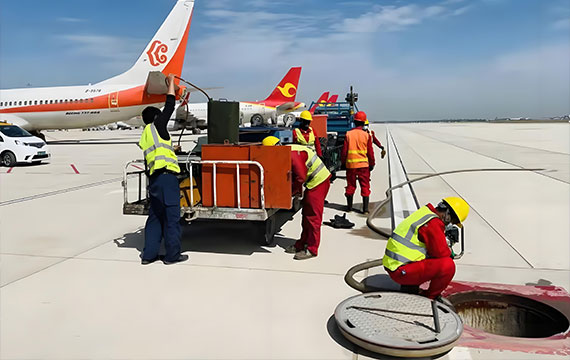
Large campuses with extensive utility networks benefit from trenchless rehabilitation to maintain operations without significant disruption to runways, roadways, or secure areas.
Pipeline Rehabilitation Market Trends and Growth Drivers
The global trenchless pipeline rehabilitation market is on a strong growth trajectory, valued at approximately USD 5.02 billion in 2025 and projected to reach USD 6.97 billion by 2030, growing at a CAGR of 7.1%.
Key Growth Drivers:
Aging Infrastructure:
An estimated 240,000 water main breaks occur annually in the U.S. alone, and 36% of U.S. bridges require major repairs. This widespread deterioration necessitates cost-effective, long-lasting pipeline rehabilitation solutions.
Rapid Urbanization:
As urban populations grow, demand for efficient, non-disruptive infrastructure maintenance increases. Trenchless technologies are essential for modernizing city networks without bringing daily life to a standstill.
Regulatory and Sustainability Mandates:
Governments are imposing stricter regulations to reduce leaks, prevent contamination, and lower the carbon footprint of construction, making traditional open-cut methods less viable.
Cost Efficiency:
While initial capital investment in trenchless equipment can be high, lifecycle cost modeling strongly favors these methods. When factoring in social costs, traffic disruption, and surface restoration, trenchless solutions can be 2-3 times cheaper than traditional dig-and-replace methods.
Key Challenges:
- High initial capital investment for specialized equipment
- Shortage of skilled technicians to operate advanced equipment
- Limited awareness of long-term cost benefits in some regions
Questions fréquemment posées
Which industry uses trenchless technology the most?
The municipal water and wastewater industry is the largest user of trenchless technology, accounting for the majority of global pipeline rehabilitation spending due to vast aging infrastructure and the need for non-disruptive urban repairs.
What is the most common pipeline rehabilitation method?
Cured-in-place pipe (CIPP) is the most common method globally, particularly in the municipal sewer market, where it accounts for over 60% of all trenchless deployments.
How long does pipeline rehabilitation last?
According to ASTM F1216, a properly installed CIPP liner can extend the service life of a pipeline by over 50 years, depending on the method and condition of the host pipe.
Is trenchless repair cheaper than replacement?
While capital investment in equipment and materials can be high, trenchless methods are often more cost-effective than traditional open-cut replacement when factoring total cost of ownership, including excavation, traffic disruption, surface restoration, and social costs. Trenchless can be 2-3 times cheaper in many urban contexts.
Can pipelines be rehabilitated under high pressure?
Yes. For high-pressure transmission lines, specialized composite wraps and structurally reinforced liners are designed to meet the pressure and temperature requirements of oil and gas applications.
How to select a pipeline rehabilitation contractor?
Choose a contractor with proven experience in your industry, relevant certifications (ASTM, API, AWWA), a track record of successful projects, and the ability to provide engineering support and customized solutions for your specific pipeline conditions.
What is the cost of trenchless pipe repair?
Costs vary widely based on pipe diameter, length, method used, and site conditions. A professional engineering assessment is required for accurate project budgeting. Trenchless methods typically range from 20-80% of the cost of full open-cut replacement, depending on the application.
Need Expert Pipeline Rehabilitation Solutions?
JSW provides customized pipeline integrity solutions for municipal, oil and gas, industrial, and utility infrastructure applications.
Our Capabilities Include:
- High-pressure pipeline repair systems
- Epoxy pipeline lining and corrosion protection
- CIPP and trenchless rehabilitation services
- Pipeline hot tapping and plugging equipment
- On-site engineering support and training
Why Choose JSW:
With decades of experience in critical infrastructure projects, JSW delivers comprehensive engineering support from initial assessment to project completion. Our team of expert engineers ensures every rehabilitation project meets the highest standards of safety, quality, and efficiency.
Contact our engineering team today for a consultation on your pipeline integrity needs.





 English
  Arabic
  Russian
  Spanish
  French
  Vietnamese
  Polish
  Thai
Thai  Indonesian
  Turkish
  Portuguese