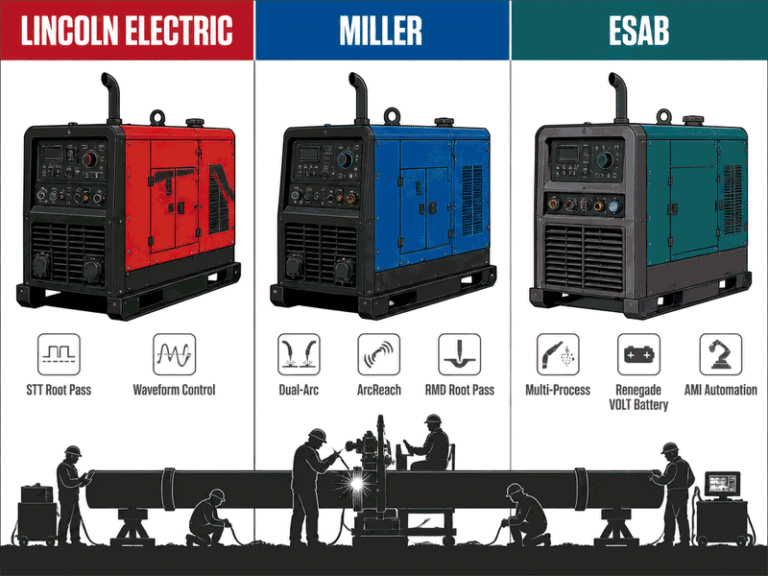
The three leading pipeline welding equipment suppliers are Lincoln Electric, Miller, and ESAB, and the right choice depends on your welding process, fleet size, and service network rather than brand reputation alone. Lincoln Electric vs Miller is the comparison most contractors ask first, because both build the 500-amp class diesel engine-driven welders that dominate mainline spreads; ESAB competes with a broader global portfolio that includes multi-process power sources, battery-powered field units, and mechanized welding systems. This guide compares the three suppliers across pipeline welding machines, root-pass processes, duty cycles, generator output, warranty, price, and total cost of ownership, then gives you a step-by-step method for choosing the right supplier for your project. You will also learn which brand leads automatic pipeline welding, what the machines actually cost, and how warranty and parts support differ in practice.
Points clés à retenir
- Lincoln Electric leads on process and automation: the largest welding equipment supplier by revenue, with the STT root-pass process, Waveform Control Technology, and a full automation business behind its pipeline machines.
- Miller leads on high-amp engine drives and service: the Big Blue line delivers up to 600-800 A with dual-arc models, ArcReach remote control, and the True Blue warranty with 800-plus service distributors.
- ESAB leads on portfolio breadth and mechanization: 40-plus brands, the Warrior multi-process line, battery-powered Renegade field units, and the AMI automation brand.
- No brand is universally “best”: match the machine to the duty cycle, root-pass process, and support network your project needs; API 1104 qualifies procedures and welders, not equipment brands.
- Budget on total cost, not list price: Miller’s published Big Blue list prices run from about $26,000 to $71,000; fuel, parts, downtime, and warranty logistics often outweigh the purchase price.
Why the Supplier Choice Matters for Pipeline Welding
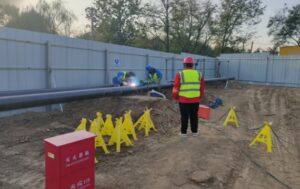
Pipeline welding is one of the most demanding applications for welding equipment. Girth welds on cross-country lines are made outdoors, in all weather, at line-up speeds that can reach hundreds of joints per day on a big-inch spread, and every weld must satisfy the acceptance criteria of API 1104 or the governing code.
The equipment choice drives three things directly: arc-on time, weld quality consistency, and repair cost. A machine that loses duty cycle or arc stability on a hot afternoon stops the spread; a root-pass process that does not match the qualified procedure produces repairs. Industry market research sized the global welding equipment market at roughly $21 billion in 2024 and projects it toward $42 billion by 2033, an 8 percent compound annual growth rate, driven by energy infrastructure, pipeline rehabilitation, and automation.
The three suppliers covered here supply the majority of the machines on pipeline spreads in North America and much of the world. Understanding where each one leads is the first step to a defensible purchasing decision.
Lincoln Electric at a Glance
Lincoln Electric is the world’s largest arc welding equipment manufacturer by revenue. The company was founded in 1895, is headquartered in Cleveland, Ohio, and is listed on Nasdaq under the ticker LECO. In its 2024 annual results, Lincoln Electric reported net sales of $4.0 billion across 71 manufacturing and automation locations in 20 countries, serving customers in more than 160 countries.
For pipeline contractors, Lincoln’s relevant lines are the Vantage and Ranger diesel engine-driven welders, the Flextec multi-process power sources, and the STT (Surface Tension Transfer) process, a controlled short-circuit transfer used widely for root passes on girth welds. Lincoln markets the Vantage family specifically for construction, pipeline, and rental fleets, and its Waveform Control Technology lets welders tune the arc shape on advanced process machines.
Lincoln is also the most automation-heavy of the three. Its annual report describes an automation and integrated systems business that builds complete welding cells and mechanized systems, which makes it a common power-source partner for pipeline automation integrators.
Miller Electric at a Glance
Miller Electric Manufacturing Company was founded in 1929 in Appleton, Wisconsin, and became a brand of Illinois Tool Works (ITW) in 1993. ITW’s scale gives Miller deep distribution and service infrastructure, which matters more on a remote right-of-way than it does in a shop.
Miller’s pipeline platform is the Big Blue family of diesel engine-driven welders. The range runs from the Big Blue 400 PipePro, a low-speed diesel machine built for transmission pipeline contractors, through the 500 Pro and 600 Pro, to the 800 Duo Pro and 800 Duo Air Pak, which deliver two independent pipe-quality arcs from one engine. Miller’s published US list prices for the line run from about $26,000 for the Big Blue 400 Pro to about $71,000 for the 800 Duo Air Pak.
Two Miller technologies stand out on pipeline work. ArcReach moves amperage and voltage control to the operator’s hand by communicating over the weld cables, and the PipePro feeder family supports RMD (Regulated Metal Deposition), a controlled short-circuit root-pass process that competes directly with Lincoln’s STT. Miller’s True Blue warranty program and its network of more than 800 authorized service distributors support the machines in the field.
ESAB at a Glance
ESAB traces its origin to 1904, when Oscar Kjellberg invented the world’s first coated welding electrode in Sweden. Today, ESAB Corporation is an independent public company listed on the New York Stock Exchange under the ticker ESAB, headquartered in North Bethesda, Maryland, with about 11,300 employees serving customers in roughly 150 countries. ESAB reported core net sales of $2.7 billion in 2025 and record second-quarter sales of $808 million in 2026.
ESAB operates through more than 40 brands, including Tweco, Victor, Thermal Dynamics, Stoody, and Arcair, which makes it the broadest single supplier of welding and cutting products in this comparison. Its 2026 acquisition of Eddyfi, an NDT and inspection technology company, extends its workflow from the weld to the inspection report.
On the equipment side, the Warrior family of multi-process power sources is the workhorse, the Warrior Edge 500 CX adds arc-reactive digital control, and the Renegade VOLT battery-powered Stick/TIG unit covers jobs where a diesel engine drive is impractical. ESAB’s automation brand AMI serves the mechanized and robotic welding market, giving ESAB a credible automatic welding story alongside its hand equipment.
Lincoln Electric vs Miller vs ESAB: Head-to-Head Comparison
The fastest way to absorb the Lincoln Electric vs Miller vs ESAB comparison is a side-by-side table. The three companies compete on the same jobs, but they are structured differently and lead in different product categories. For buyers weighing ESAB vs Lincoln Electric specifically, the table shows where the portfolios diverge: process depth and automation on the Lincoln side, portfolio breadth and mechanization on the ESAB side.
| Aspect | Lincoln Electric | Miller Electric | ESAB |
|---|---|---|---|
| Founded | 1895, Cleveland, Ohio, USA | 1929, Appleton, Wisconsin, USA | 1904, Sweden (brand); Corporation based in North Bethesda, Maryland, USA |
| Corporate structure | Independent public company, Nasdaq: LECO | Brand of Illinois Tool Works (ITW) since 1993 | Independent public company, NYSE: ESAB |
| Revenue scale | Net sales $4.0 billion (2024) | Part of ITW’s welding segment (not separately reported) | Core net sales $2.7 billion (2025); record Q2 2026 sales $808 million |
| Pipeline engine-driven line | Vantage 410/500, Ranger family | Big Blue 400 PipePro, 500 Pro, 600 Pro, 800 Duo | No dedicated North America engine-drive line; Renegade VOLT battery units for field work |
| Root-pass process | STT (Surface Tension Transfer) | RMD (Regulated Metal Deposition) via PipePro feeders | Pulse and controlled-transfer options across Warrior and Aristo-class machines |
| Signature technology | Waveform Control Technology, automation systems | ArcReach remote control, dual-arc engine drives | Warrior Edge arc-reactive control, battery welding, AMI automation |
| Warranty and support | 3-year limited warranty standard; 3+2 program to 5 years on advanced products | True Blue 3-year parts and labor; 800-plus distributors; 24-hour parts shipping | Product-specific coverage; 100-day satisfaction guarantee |
None of the three is a weak choice, which is exactly why this decision gets made on process, duty cycle, fleet standardization, and local support rather than on the brand name.
How Do Their Pipeline Welding Machines Compare?
Pipeline welding machines divide into three jobs: engine-driven welders that run the spread in the field, root-pass processes that control the critical first bead, and shop or station power sources for fabrication and repair. Each supplier has a different strength in each job.
Engine-Driven Welders for Mainline Spreads
The engine-driven welder is the backbone of a manual or semiautomatic spread. It must hold a stable arc at high amperage for hours, provide auxiliary generator power for tools and preheat, and survive dust, rain, and rough handling. The Lincoln Electric vs Miller competition for this market is the most visible rivalry in pipeline welding equipment; ESAB addresses the same field duty with battery technology rather than diesel.
Miller’s Big Blue 600 Air Pak is a useful benchmark for the class. Its published rating is 500 A at 40 V at 100 percent duty cycle, 575 A at 43 V at 100 percent duty cycle, and 600 A at 44 V at 60 percent duty cycle, driven by a liquid-cooled Deutz T4F diesel engine, with 20 kW of continuous three-phase generator power and a 2,040-pound weight. Lincoln’s Vantage 500 delivers the same 500 A class from a low-speed diesel engine, configured for construction, pipeline, and rental fleets, and processes stick, TIG, MIG, flux-cored, and gouging.
| Spécifications | Lincoln Vantage 500 (diesel engine drive) | Miller Big Blue 600 Air Pak (diesel engine drive) | ESAB Warrior 500i CC/CV (utility power) |
|---|---|---|---|
| Max weld output | 500 A DC | 600 A DC (max) | 500 A; up to 550 A in ACAG gouging per ESAB literature |
| Duty cycle rating | 500 A continuous-duty class, low-speed diesel | 500 A at 100%; 600 A at 60% | 500 A at 60% |
| Power source | Diesel engine with generator output | Deutz T4F diesel, 20 kW continuous three-phase | Three-phase utility power, no engine |
| Processes | Stick, TIG, MIG, flux-cored, gouging | Stick, TIG, MIG, flux-cored, gouging, air compressor option | Stick, TIG DC, MIG/MAG, flux-cored, ACAG |
| Typical published price band | Premium diesel-engine-drive band | $26,000-$71,000 across the Big Blue line (US list, 2026) | Lower than engine drives (no engine or generator) |
Our experience across spreads in multiple countries is that duty cycle claims matter more than peak amps. On a 30-inch gas line job we ran Miller Big Blue machines continuously through 12-hour shifts in 38-degree heat without a thermal shutdown, while a lighter rental unit on the same right-of-way had to be cycled off every few joints. If you are buying for sustained production, ask for the 100 percent duty cycle number, not the marketing peak.
Root-Pass Processes: STT vs RMD vs Pulse
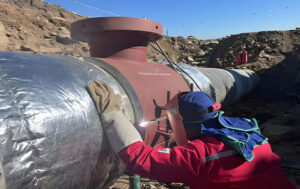
The root pass is where pipeline weld quality is won or lost, and this is the most important technology difference between the suppliers. A controlled short-circuit transfer process keeps the puddle cool enough to avoid burn-through while maintaining full penetration on the open root.
Lincoln’s STT (Surface Tension Transfer) was the first widely adopted controlled short-circuit root-pass process and remains a default on many API 1104 procedures. Miller’s RMD (Regulated Metal Deposition) delivers the same class of behavior through the PipePro feeder ecosystem, and Miller pairs it with the Big Blue engine drives. ESAB supports root passes through its pulse and controlled-transfer modes on Warrior-class machines, with the choice usually driven by the filler metal specification in the qualified WPS.
From a practical standpoint, the process is what your procedure locks in. In our welding department, the WPS names the process, the filler metal class, and the machine settings; the brand of the machine is rarely written into the procedure. That means switching brands does not require requalification if the essential variables stay identical, but it does require revalidating machine settings and welder familiarity.
Shop and Station Power Sources
For station fabrication, tie-ins, and repair, utility-powered multi-process machines are the standard. Lincoln’s Flextec family, Miller’s XMT and Invision lines, and ESAB’s Warrior family all cover this duty, with 450-500 A output and CC/CV capability for MIG, flux-cored, stick, and TIG.
ESAB’s Warrior 500i CC/CV is the cleanest comparison point: 500 A at 60 percent duty cycle, a robust enclosure rated for rough environments, and a feeder ecosystem (Robust Feed) that won a Red Dot design award in 2021. On price, utility-powered machines cost substantially less than engine drives because they carry no engine, generator, or fuel system, which makes them the value option for a fixed shop location.
Which Supplier Is Stronger for Automatic Pipeline Welding?
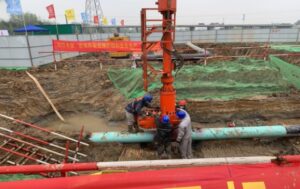
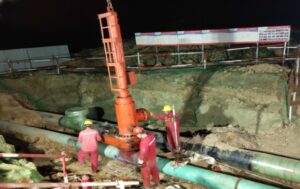
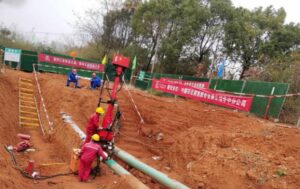
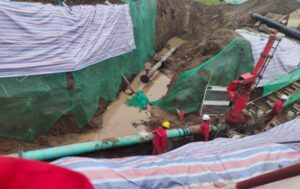
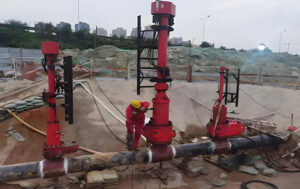
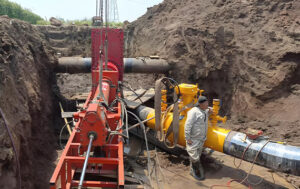
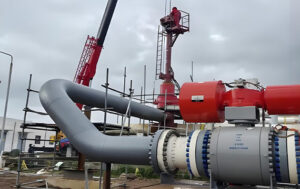
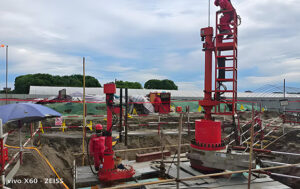
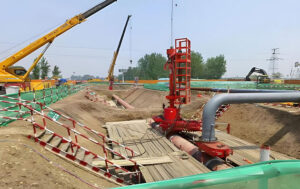
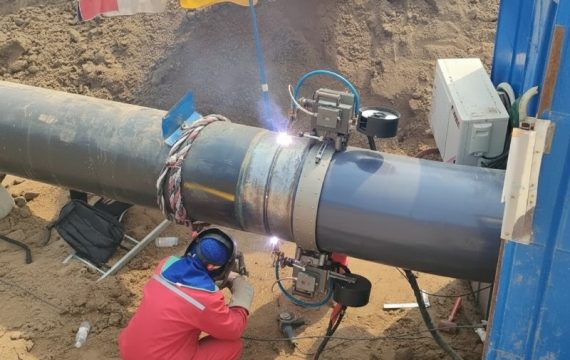
Automatic pipeline welding on large-diameter cross-country lines is a specialist market, and the three brands participate differently. The girth-weld automation equipment itself, including bug-and-band tractors and dual-torch external clamps, is dominated by dedicated suppliers such as CRC-Evans, which is now part of the Pipeline Technique group. Lincoln Electric, Miller, and ESAB supply the power sources, feeders, and process software that run inside those systems.
Lincoln Electric has the deepest automation story of the three. Its automation and integrated systems business builds complete mechanized and robotic cells, and its advanced-process power sources are a common choice for pipeline automation packages because the same Waveform Control Technology works in manual and mechanized modes. ESAB counters with its AMI automation brand and a mechanized welding portfolio that spans tractors, column-and-boom systems, and welding manipulators. Miller concentrates its pipeline effort on the manual and semiautomatic market, where the PipePro feeder family and dual-arc Big Blue machines deliver the throughput.
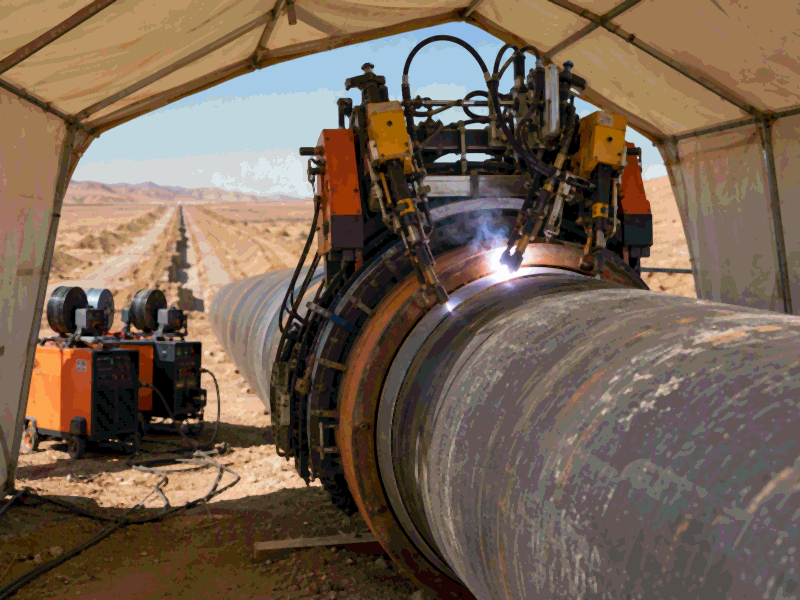
Figure 2. Dedicated mechanized systems dominate automatic girth welding; Lincoln, Miller, and ESAB supply the power sources inside them.
If your project plan includes mechanized welding, the practical question is not which brand is “best” but which supplier’s power sources and software your automation integrator supports. On a mechanized program, the ESAB vs Lincoln Electric decision usually comes down to that integrator relationship and the process packages each supplier can qualify. In our own automatic pipeline welding work, we qualify the complete system, power source included, against API 1104 before the first production weld, and we standardize the fleet on one supplier to keep spare parts and training simple.
Support, Warranty, and Total Cost of Ownership
Pipeline equipment lives in remote locations, so support and warranty logistics are purchase criteria, not afterthoughts. The three suppliers publish different policies, and the differences are worth pricing.
Lincoln Electric backs most power sources, wire feeders, and cooling systems with a three-year limited warranty, and its 3+2 program extends selected advanced equipment to five years. Miller’s True Blue program covers most equipment for three years parts and labor, with engines warranted separately by their manufacturers, and its Signature Service commits to shipping warranty parts to the distributor within 24 hours. ESAB offers product-specific warranty periods and a 100-day satisfaction guarantee on purchases.
| Facteur | Lincoln Electric | Miller Electric | ESAB |
|---|---|---|---|
| Standard warranty | 3-year limited on most equipment; 3+2 to 5 years on advanced products | True Blue 3-year parts and labor; engine warranties separate | Product-specific coverage; 100-day satisfaction guarantee |
| Service network | Distributors in 160-plus countries | 800-plus authorized service distributors | Global distributor network across ~150 countries |
| Parts logistics | Distributor stock; standard parts availability | Signature Service ships warranty parts within 24 hours | Regional distribution centers |
| Fuel and engine costs | Low-speed diesel designs for pipeline duty | T4F diesel with fuel-saving idle control | No engine on Warrior line; zero fuel cost on Renegade VOLT battery units |
| Fleet standardization value | One ecosystem: machines, feeders, controls, software | One ecosystem: ArcReach remotes, PipePro feeders | One ecosystem: Robust Feed feeders, Warrior controls |
Total cost of ownership goes beyond the invoice. Fuel burn on a 500 A diesel engine drive can exceed $50 per 12-hour shift at current diesel prices, so a machine that idles efficiently pays for itself. Parts lead time is the second cost driver: a week of downtime waiting for a control board can cost more than the board itself. We advise clients to check the local distributor’s stock before buying a fleet, and to keep pipe cutting machines and consumables on the same maintenance schedule as the welders.
How to Choose Between Lincoln, Miller, and ESAB
To answer the Lincoln Electric vs Miller vs ESAB question for your own operation, work through these five steps. They take about 30 minutes and will stop you from buying on brand loyalty.
- Step 1: Define the process mix. List the processes your WPS documents require: stick root, STT or RMD root, semiautomatic fill, mechanized fill. The process list narrows the field immediately.
- Step 2: Size the duty cycle. Estimate arc-on hours per machine per shift. Sustained production means 100 percent duty cycle at your welding amperage; intermittent repair work can tolerate 60 percent.
- Step 3: Decide engine drive vs utility power. Mainline spreads need diesel engine drives; stations and shops can run utility-powered machines at lower cost. ESAB’s battery Renegade covers short field tasks without diesel.
- Step 4: Check local support. Call the distributor in your operating region and ask about parts stock, service techs, and loaner policy. This step filters brands faster than any spec sheet.
- Step 5: Standardize the fleet. Pick one ecosystem per crew so feeders, remotes, and software stay compatible, then qualify the machines in your WPS and train the welders on the actual controls.
| Project scenario | Recommended supplier profile | Pourquoi ? |
|---|---|---|
| Big-inch mainline spread, manual stick with STT root | Lincoln Electric Vantage/Ranger fleet | STT is a Lincoln process; Waveform Control Technology supports the same settings from manual to mechanized |
| High-amp dual-operator spread, RMD root | Miller Big Blue 400 PipePro to 800 Duo | Dual-arc engine drives double throughput per engine; PipePro feeders run RMD root passes |
| Station fabrication, tie-ins, shop work | ESAB Warrior 500i or Lincoln Flextec | Utility-powered multi-process machines cover the full process range at lower capital cost |
| Mechanized or automatic girth welding project | Lincoln or ESAB power sources inside a dedicated automation system | Both supply the power-source layer; CRC-Evans-class systems provide the tractor and clamp hardware |
| Remote short-duration repair work | ESAB Renegade VOLT battery units | No diesel, no fumes, no fuel logistics for intermittent field repairs |
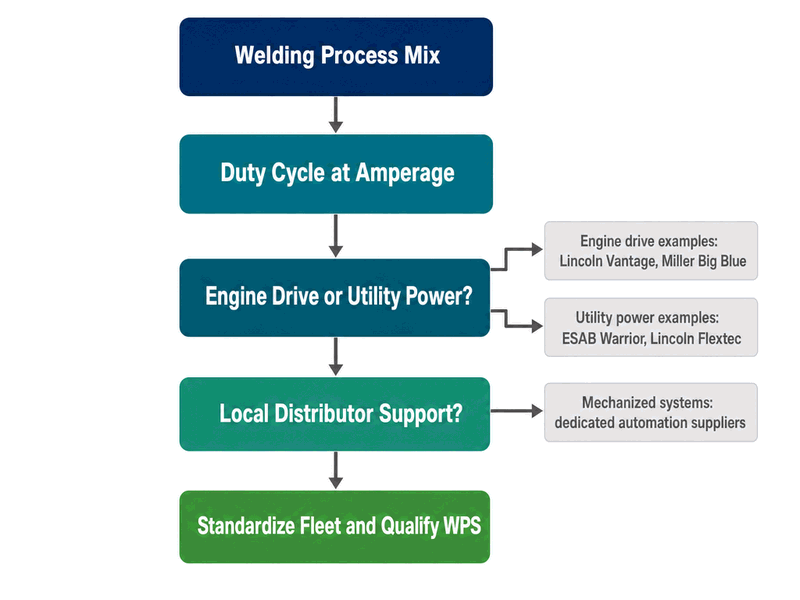
Figure 3. A five-step decision path that selects the right welding equipment supplier for a given project profile.
Questions fréquemment posées
Is Lincoln Electric better than Miller?
Neither brand is universally better; they lead in different areas. Lincoln Electric leads in automation and advanced process technology, and Miller leads in dual-arc engine-driven welders and service coverage. For pipeline work, the deciding factors are the duty cycle you need, the root-pass process your procedure specifies, the size of your fleet, and the distributor network in your operating region.
Which supplier is the best fit for pipeline welding equipment?
Miller’s Big Blue line is the reference for high-amp diesel engine-driven welders with dual-arc capability, Lincoln Electric’s Vantage and Ranger families dominate manual mainline spreads and its automation business leads in advanced process control, and ESAB offers the broadest multi-process and mechanized portfolio plus battery-powered field units. Match the supplier to the process, output class, and support network your project requires.
Is ESAB owned by Lincoln or Miller?
No. ESAB Corporation is an independent public company listed on the New York Stock Exchange under the ticker ESAB, headquartered in North Bethesda, Maryland. Lincoln Electric Holdings is independently listed on Nasdaq under LECO, and Miller Electric Manufacturing is a brand of Illinois Tool Works (ITW), which acquired Miller in 1993. The ESAB vs Lincoln Electric comparison is common precisely because the two names are often confused, but the companies have never been related.
Are Lincoln and Miller welders interchangeable?
At the process level, yes; any machine that reproduces the essential variables of a qualified welding procedure specification can run the weld. At the system level, no: Lincoln uses its own controls, Waveform Control Technology, and feeder ecosystem, while Miller uses ArcReach, its own remotes, and PipePro feeders. A fleet standardized on one brand keeps spare parts, training, and repair logistics simpler.
Does pipeline welding equipment need API 1104 qualification?
No. API 1104 qualifies welding procedures and welders, not machines. The equipment must simply reproduce the parameters in the qualified WPS, such as current, voltage, travel speed, and shielding. Any brand that holds the required settings can be used, which is why most contractors qualify procedures on the machines they actually run in the field.
How much do pipeline welding machines cost?
As a published benchmark, Miller’s US list prices for the Big Blue engine-driven line run from about $26,000 for the 400 Pro to about $71,000 for the 800 Duo Air Pak. Lincoln’s Vantage and Ranger diesel engine drives sit in a comparable premium band, while utility-powered multi-process machines such as ESAB’s Warrior 500i cost far less because they do not carry an engine and generator.
What warranty do Lincoln, Miller, and ESAB offer?
Lincoln Electric backs most power sources and wire feeders with a three-year limited warranty, and its 3+2 program extends selected advanced products to five years. Miller’s True Blue program covers most equipment for three years parts and labor, with engines warranted separately by their manufacturers, and its Signature Service ships warranty parts within 24 hours. ESAB offers product-specific coverage with a 100-day satisfaction guarantee.
Which brand leads automatic pipeline welding?
Dedicated automatic girth welding on large-diameter cross-country lines is dominated by specialist systems such as CRC-Evans, now part of the Pipeline Technique group, which supply bug-and-band and dual-torch external clamps. Lincoln Electric, Miller, and ESAB contribute the power sources, wire feeders, and advanced processes that run inside those systems, and ESAB’s automation brand AMI serves the mechanized welding market.
The choice among these three welding equipment suppliers is a matching exercise, not a contest with one winner. Lincoln Electric wins when your procedure leans on STT, Waveform Control Technology, and automation integration. Miller wins when you need high-amp dual-arc engine drives, RMD root passes, and the deepest field service network. ESAB wins when you want the broadest portfolio, mechanized options, and battery-powered field units at a lower capital cost.
What matters more than the brand is the discipline around it: qualify the machines in your API 1104 procedures, standardize the fleet per crew, and verify local parts and service before the purchase order.
If you are planning pipeline construction, a station tie-in, or a repair campaign, send our engineering team your pipe size, fluid, pressure, governing code, and your planned welding process. We will confirm the equipment profile that fits your pipeline construction services plan, advise on pipeline maintenance fleet strategy, and support the work with our pipeline repair services and hot tapping equipment. Contact us at sales@jsw.com or request a quote.
For projects that mix welding with trenchless methods, our trenchless pipeline repair and pipeline cold bending capabilities round out the same construction package.






 English
  Arabic
  Russian
  Spanish
  French
  Vietnamese
  Polish
  Thai
Thai  Indonesian
  Turkish
  Portuguese