jasonsong889@gmail.com

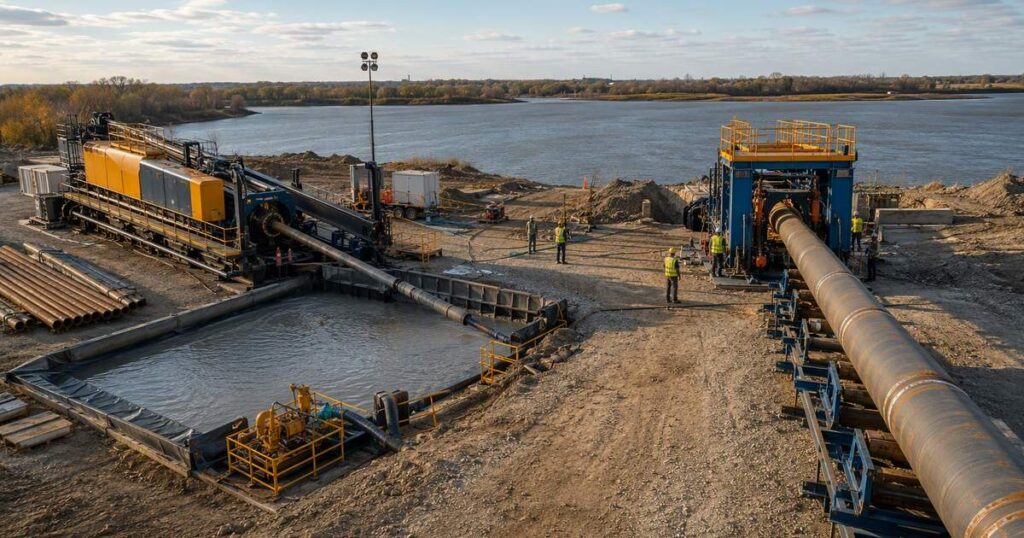
HDD drill rig and Direct Pipe thrusting spread on a pipeline crossing site, illustrating the equipment capabilities contractors offer pipeline owners

HDD and Direct Pipe Capabilities: What Top Contractors Offer Pipeline Owners

Top HDD and Direct Pipe contractors offer pipeline owners six integrated capability layers: engineering and design, equipment and tooling, drilling fluid and spoil management, pipe string fabrication and integrity, field execution and quality control, and compliance, permitting and risk management; a capable contractor proves every layer with documents, logs and references, not with marketing claims.

HDD and Direct Pipe Capabilities: What Top Contractors Offer Pipeline Owners Читать далее »
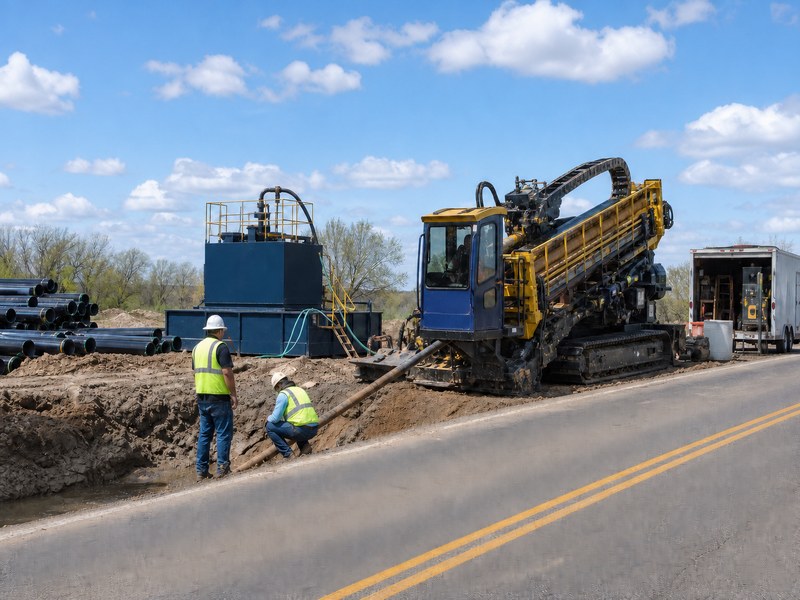
Horizontal directional drilling rig installing a buried utility line beside a road in 2026, crew in high-visibility vests coordinating the bore

How Much Does HDD Cost Per Foot? A 2026 Benchmark Guide

Horizontal directional drilling (HDD) in 2026 typically costs USD 10 to 30 per foot for standard utility bores in soil. Fiber and telecom routes with road crossings typically cost USD 15 to 50 per foot. Rock, congested urban and large-diameter installations typically cost USD 50 to 150 or more per foot. This guide explains what

How Much Does HDD Cost Per Foot? A 2026 Benchmark Guide Читать далее »

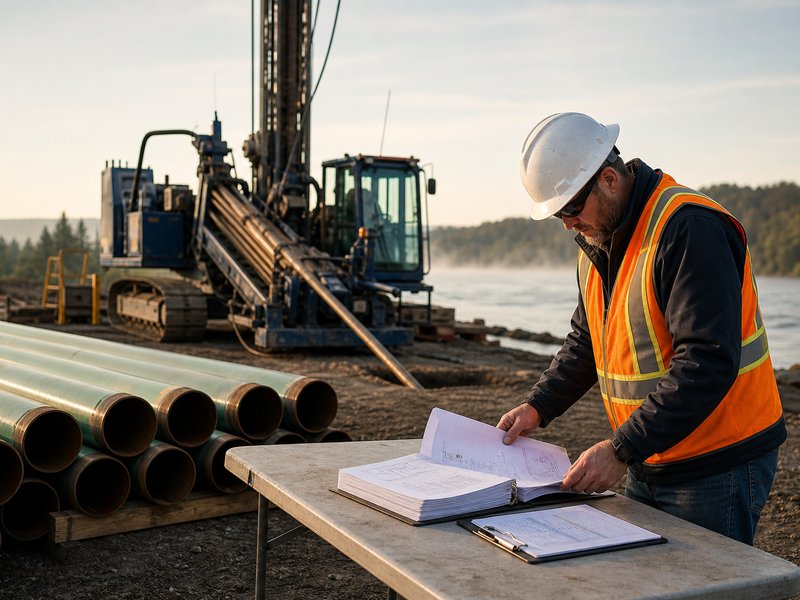
Engineer vetting an HDD contractor's bid documents beside a horizontal directional drilling rig on a pipeline right-of-way

How to Find and Vet an HDD Contractor for Your Pipeline Project

To find and vet an HDD contractor for your pipeline project, build a shortlist from owner referrals and industry directories, then verify each candidate’s licenses, insurance, safety record, equipment, crew and references in writing before you compare bids. This guide walks through the full sourcing and vetting process in eight steps, explains the pipeline-specific checks

How to Find and Vet an HDD Contractor for Your Pipeline Project Читать далее »

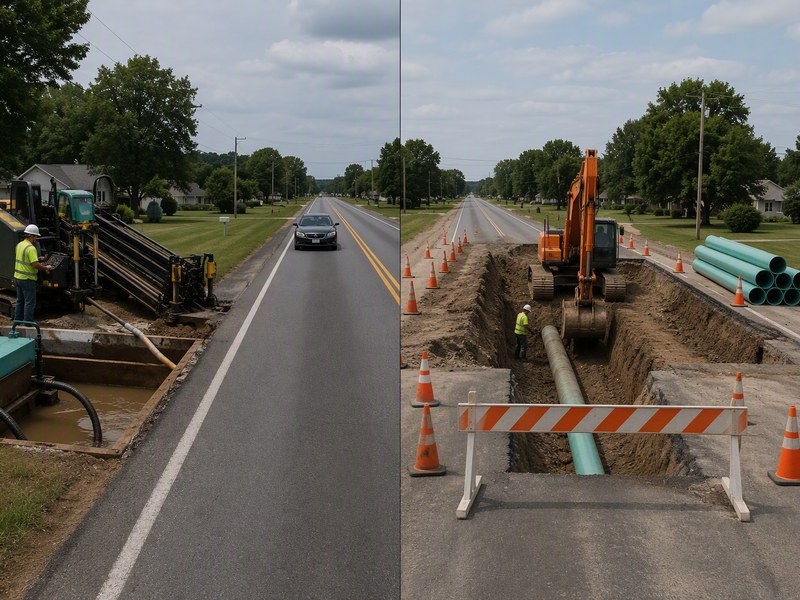
HDD rig boring under a paved road vs open-cut trenching across the same road, surface disruption comparison

Directional Drilling vs Trenching: When Boring Saves Money

Directional drilling vs trenching is a total-cost decision, not a unit-price decision: horizontal directional drilling (HDD) usually wins wherever the route crosses pavement, landscaping, waterways, rail or live utilities, and open-cut trenching wins in open ground where restoration is cheap. The per-foot rate only describes the machine working; the finished price is decided by what

Directional Drilling vs Trenching: When Boring Saves Money Читать далее »

Directional drilling rig installing a utility line beneath a suburban street, with entry and exit pits marked and spoil contained at the entry side

Directional Drilling Rates by Project Type: What Owners Should Budget in 2026

Directional drilling rates in 2026 range from about $15 to $60 per linear foot for small-diameter utility bores in standard soil, and they climb to $60-$100 per foot in rock and to $200-$500 per foot on large river crossings. The rate a contractor quotes depends more on project type, ground conditions and surface restoration than

Directional Drilling Rates by Project Type: What Owners Should Budget in 2026 Читать далее »

Horizontal directional drilling rig and drill pipe at a utility crossing entry pit, pipeline cost breakdown topic, construction site view

Horizontal Directional Drilling Cost: Where Your Money Goes

A typical horizontal directional drilling cost for a North American utility crossing falls between $20 and $50 per linear foot, and a complete 100-foot bore usually lands between $1,000 and $3,000 once mobilization, crew, drilling fluid, product pipe and restoration are included. Two pricing views matter: the unit rate per foot and the total installed

Horizontal Directional Drilling Cost: Where Your Money Goes Читать далее »

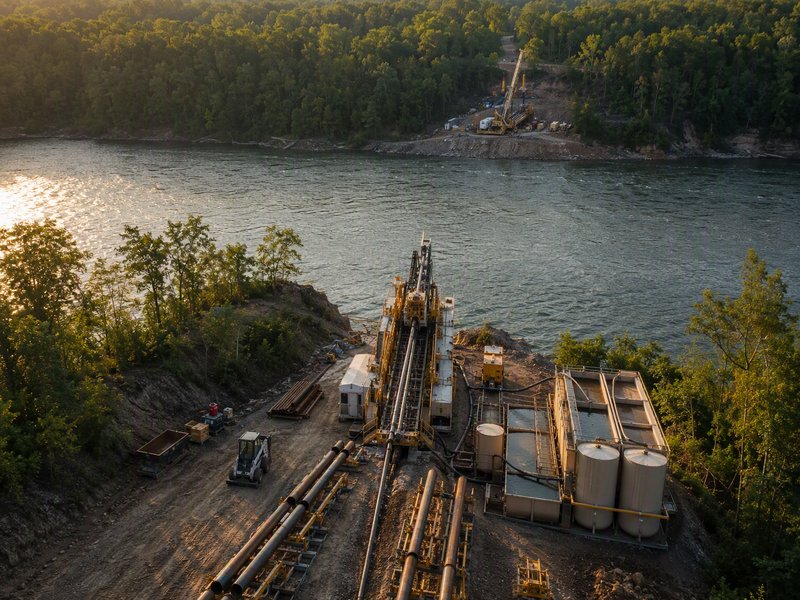
Two large HDD rigs working from steep, wooded riverbanks while a 42-inch steel pipeline crosses beneath the Coosa River, aerial construction view

Case Study: 42-Inch HDD Crossing Beneath the Coosa River

In 2024, two maxi rigs used horizontal directional drilling to install a 42-inch natural gas pipeline across a 3,407 ft crossing beneath the Coosa River in Alabama, and completed the pullback on July 6, 2024. The rigs drilled toward each other from opposite banks, met mid-river via the intersect method, and opened the bore in

Case Study: 42-Inch HDD Crossing Beneath the Coosa River Читать далее »

Horizontal directional drilling rig working on a river crossing with drill pipe entering the ground at a shallow angle

What Is Horizontal Directional Drilling (HDD) and How Does It Work?

Horizontal directional drilling (HDD) is a steerable, trenchless method that installs pipelines, conduits and cables underground along a controlled arc without open-cut excavation. The process works in three stages: a small pilot hole is drilled along the design path, the bore is enlarged by reaming, and the product pipe is pulled back through the finished

What Is Horizontal Directional Drilling (HDD) and How Does It Work? Читать далее »

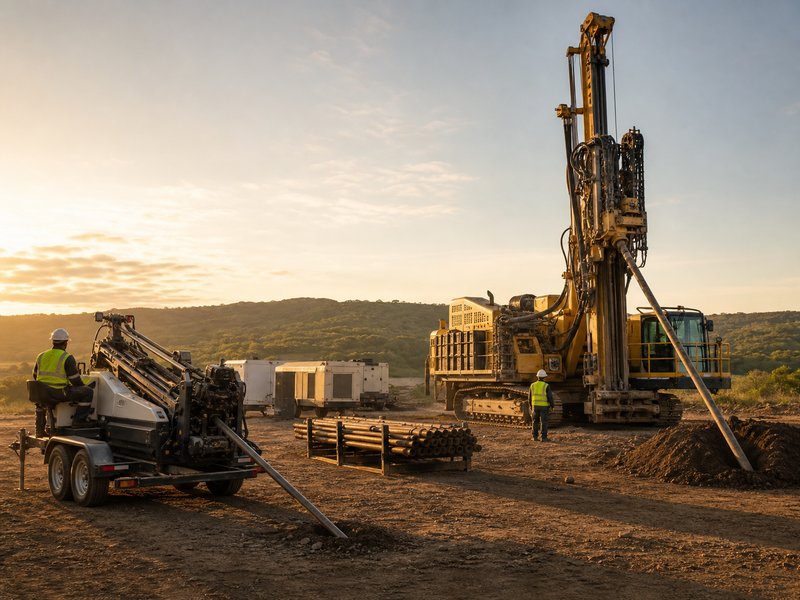
Mini and maxi HDD rigs side by side showing the scale difference in horizontal directional drilling equipment

What Is the Difference Between Maxi-HDD and Mini-HDD?

The difference between maxi-HDD and mini-HDD comes down to pullback capacity, product pipe diameter, bore length and site footprint. A mini HDD rig typically delivers up to 20,000 lb (89 kN) of pullback for 2-10 in (50-250 mm) pipe over bores of roughly 600 ft (183 m). A maxi HDD rig delivers 100,000 lb (445

What Is the Difference Between Maxi-HDD and Mini-HDD? Читать далее »

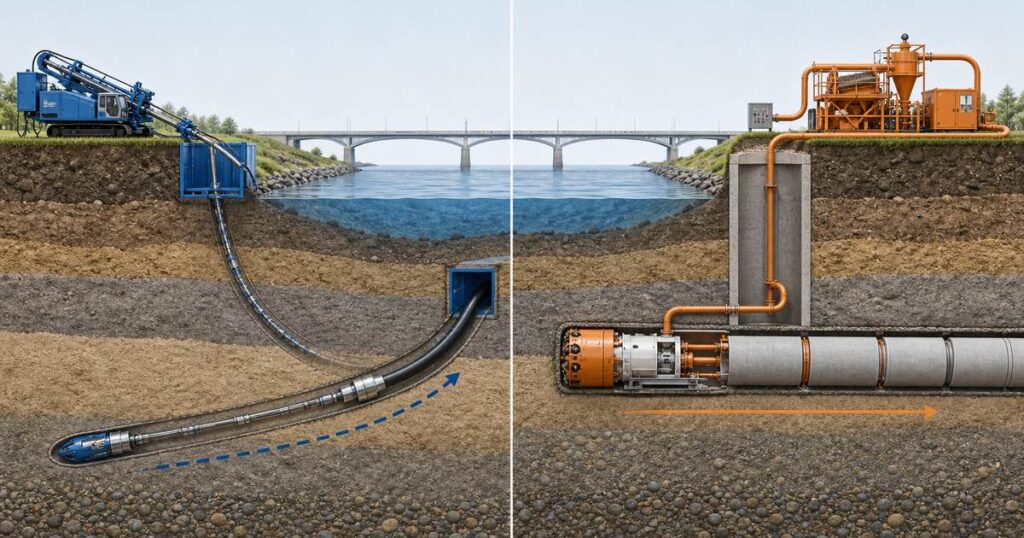
HDD vs microtunneling comparison diagram showing a curved horizontal directional drilling bore and a straight microtunneling drive

HDD vs Microtunneling: Which Is Better for Your Project?

Short answer: in the HDD vs microtunneling comparison, HDD wins for long, curved, cost-efficient pressure crossings, while microtunneling wins when laser-guided line-and-grade accuracy is required for gravity sewers, large diameters, or unstable ground. This guide explains how each trenchless method works, compares accuracy, cost, soil compatibility, diameter and length limits, and ends with a 7-factor

HDD vs Microtunneling: Which Is Better for Your Project? Читать далее »