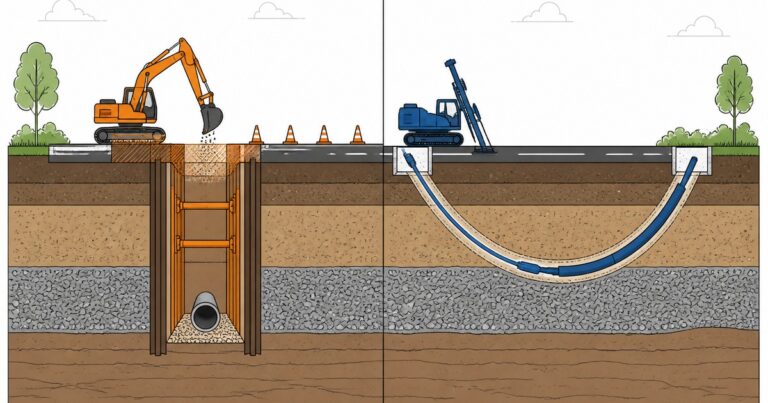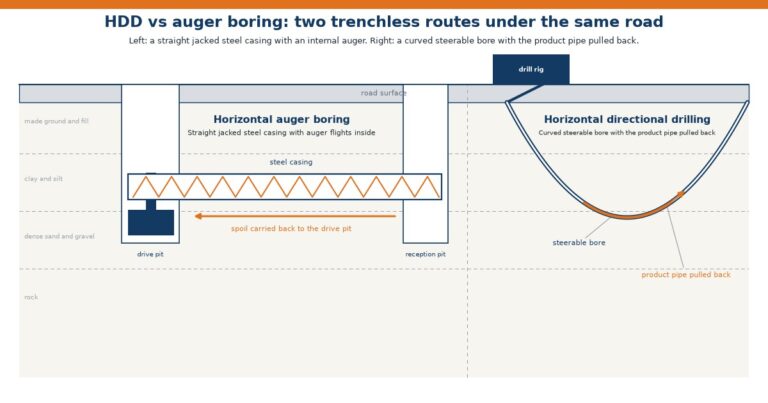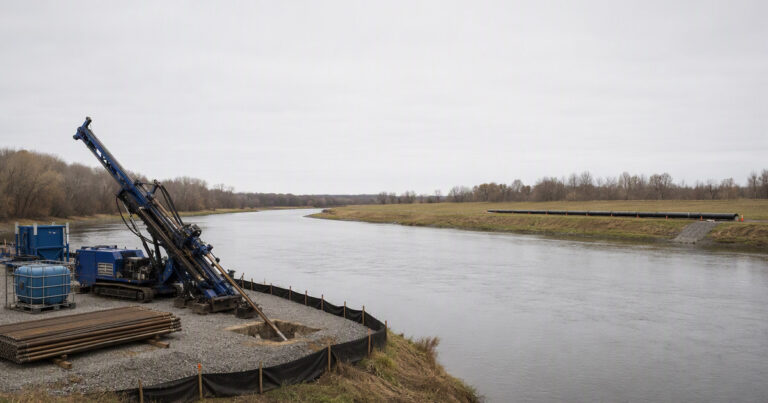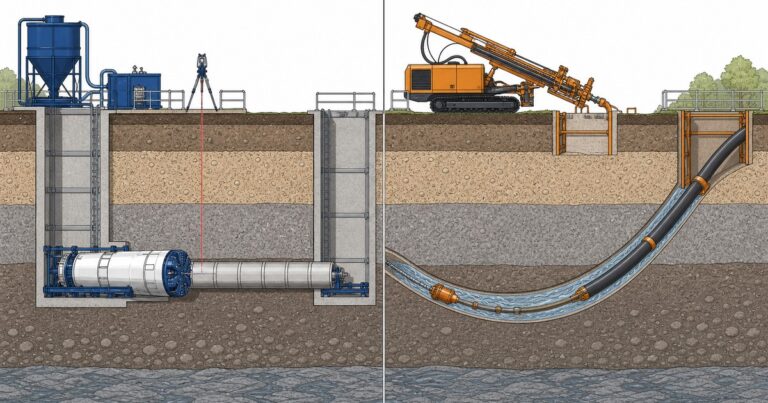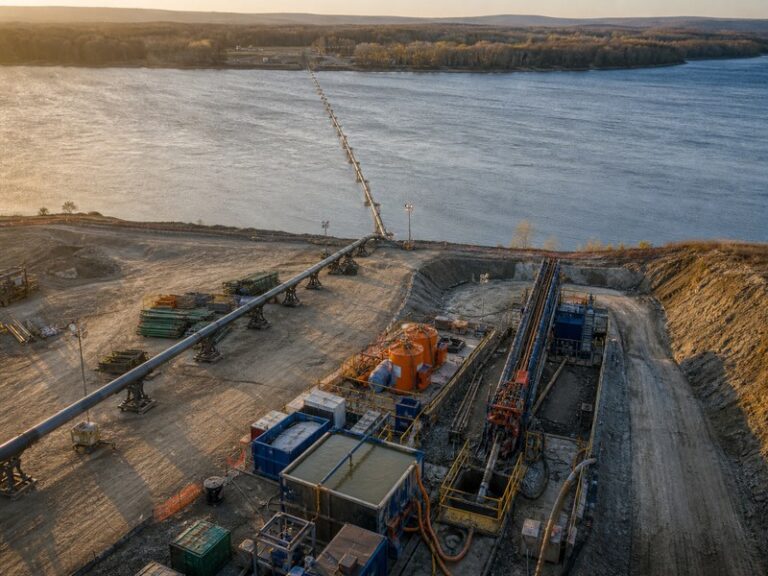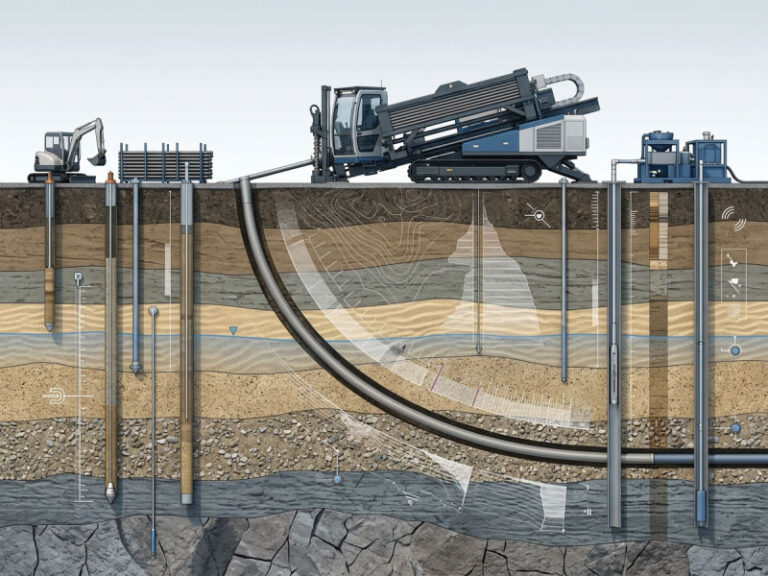
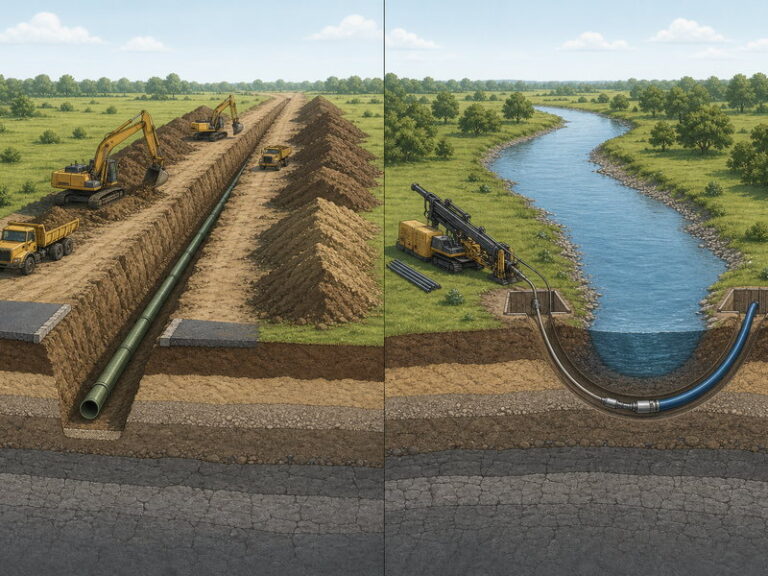
A 3D illustration showing a complex underground pipe installation system beneath a highway and river, featuring drilling equipment and large pipes.

Какой бестраншейный метод лучше всего подходит для прокладки трубопроводов под дорогами или реками?

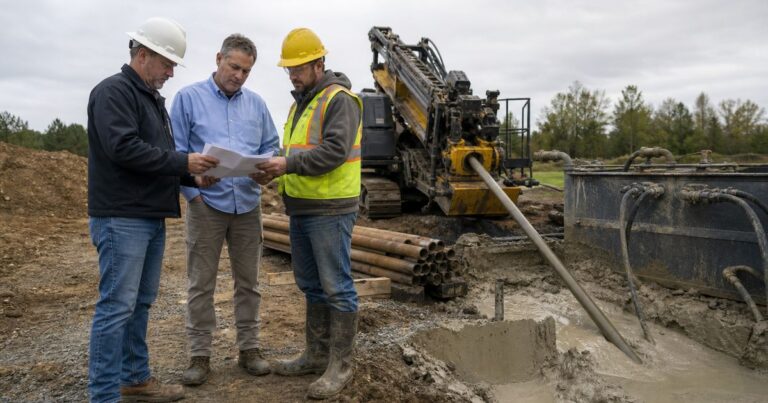
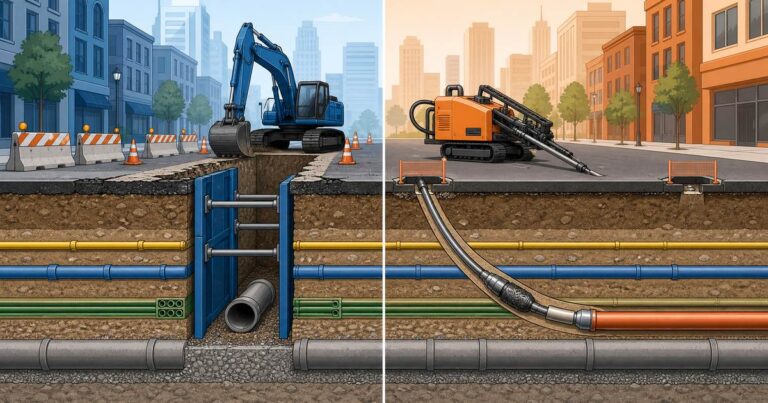
Horizontal directional drilling (HDD) is usually best for most pipelines under roads or rivers when ground conditions are uniform and environmental risk is manageable. Microtunneling is often preferred for gravity sewers requiring precise grade control, and pipe jacking is generally more practical for diameters exceeding 900 mm. This selection guide

Читать далее »
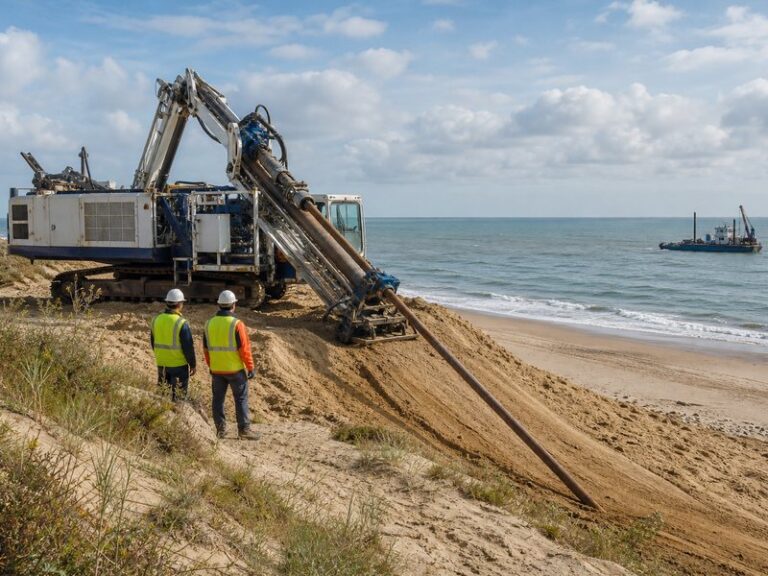
Промышленное строительство нефте- и газопровода на открытом воздухе, сельский или полупустынный пейзаж, большой стальной трубопровод укладывается на землю с помощью сварочного и подъемного оборудования, двое строителей в защитных жилетах и касках, работающие рядом с участком трубопровода, HDRI высокого качества, реалистичный 8K, профессиональная промышленная строительная фотография, глубина резкости, длинный кадр, объектив 35 мм. На заднем плане небольшой внедорожник или пикап, припаркованный на грунтовой дороге рядом со строительной зоной, мягкий дневной свет, чистое небо, атмосфера промышленного строительства, нет зданий, нет линии горизонта, нет плотной городской среды. Цвета: оранжево-желтый трубопровод, серый металл, голубое небо, зеленое/коричневое поле, контраст с белым/серебристым внедорожником, чистый и профессиональный образ строительной службы, подходит для обложки технического блога.

На что следует обратить внимание при выборе поставщика бестраншейных технологий?

How to Select a Trenchless Technology Provider for Water, Sewer, and Utility HDD and CIPP Projects (8 Key Criteria) Meta summary: This guide helps civil engineers, utility managers, and facility owners evaluate trenchless technology providers for horizontal directional drilling (HDD), cured-in-place pipe (CIPP), and other no-dig pipeline projects using eight data-driven

Читать далее »
A professional gas line installation project featuring SDR11 PE100 pipe being laid with trenchless drilling machinery at an industrial refinery, highlighting NASTT and NASSCO certifications.

Как выбрать подрядчика по бестраншейной прокладке?

Trenchless contractor selection requires verifying 5 critical factors: NASTT/NASSCO certifications, project-specific experience (CIPP vs pipe bursting), documented quality control, 50-year warranty terms, and OSHA safety records (EMR below 1.0). This checklist prevents 30-50% cost overruns from poor contractor performance and ensures your pipe rehabilitation project stays on schedule. Selecting the

Читать далее »
Техническая инфографика, иллюстрирующая взаимосвязь между классами промышленных лайнеров и ключевыми факторами проекта, такими как геотехнологии, экономика, окружающая среда, соответствие нормативным требованиям и требования подрядчика.

Какие факторы влияют на выбор бестраншейного проекта?

Trenchless project selection depends on six critical factors: subsurface geotechnical conditions (soil stability and groundwater control), economic feasibility with life cycle savings of 30-50%, technology fit including ISO 11295 liner classes, regulatory requirements, quantified environmental and social costs, and demonstrated contractor capability with pipe stress analysis expertise. This guide provides selection

Читать далее »
An illustrative guide to trenchless pipeline plugs showing advanced bypass and isolation solutions with engineers operating robotic equipment and monitoring water flow inside large industrial pipes.

Where Can I Buy Pipeline Plugs for Trenchless Work?

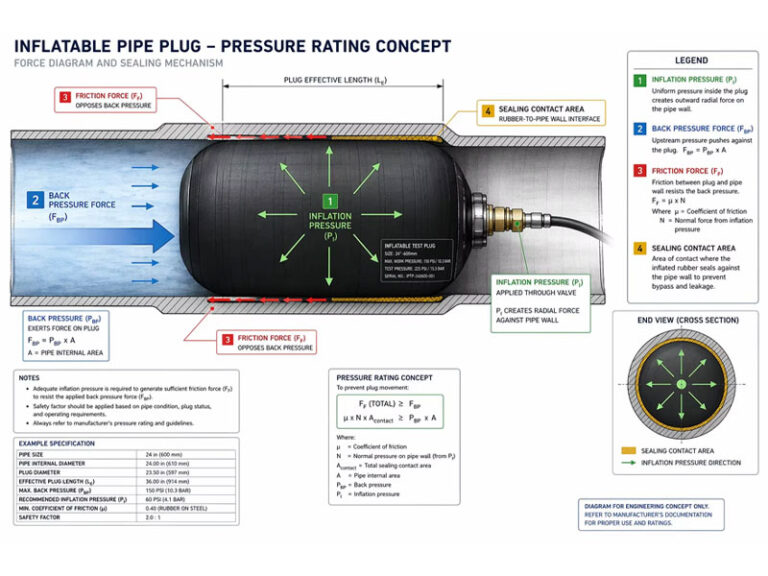
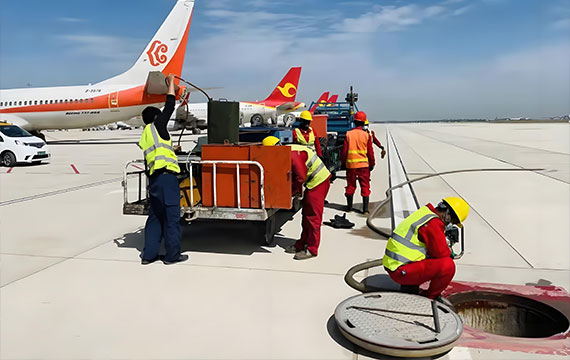
For CIPP project managers, pipe bursting field technicians, bypass pumping procurement leads, and municipal/industrial pipeline contractors. This guide answers: Where can I buy pipeline plugs for trenchless work? – but more importantly, which plug works for your specific trenchless method, pipe condition, and pressure demand. We compare suppliers by use case, provide sizing steps with real-job

Читать далее »
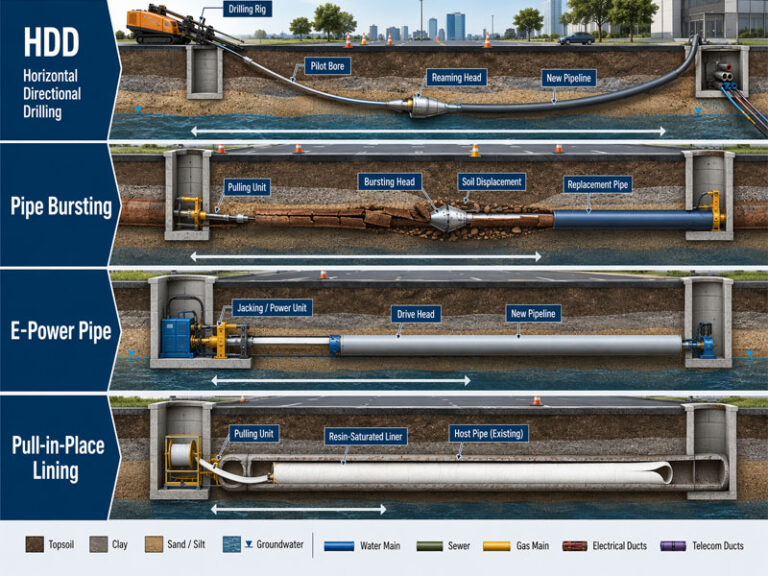
Engineering infographic comparing pulling-distance concepts for HDD, pipe bursting, E-Power Pipe, and pull-in-place lining in underground pipelines

Maximum Distance a Pipe Can Be Pulled Using Trenchless Methods: HDD Pull Length, Pipe Bursting & Lining Limits

The maximum distance a pipe can be pulled using trenchless methods ranges from approximately 50 meters to more than 3,000 meters, depending on the installation technology, pipe characteristics, ground conditions, and equipment limitations. For new pipeline construction, Horizontal Directional Drilling (HDD) typically achieves 200–800 meters per pull. For pipeline rehabilitation, specialized

Читать далее »
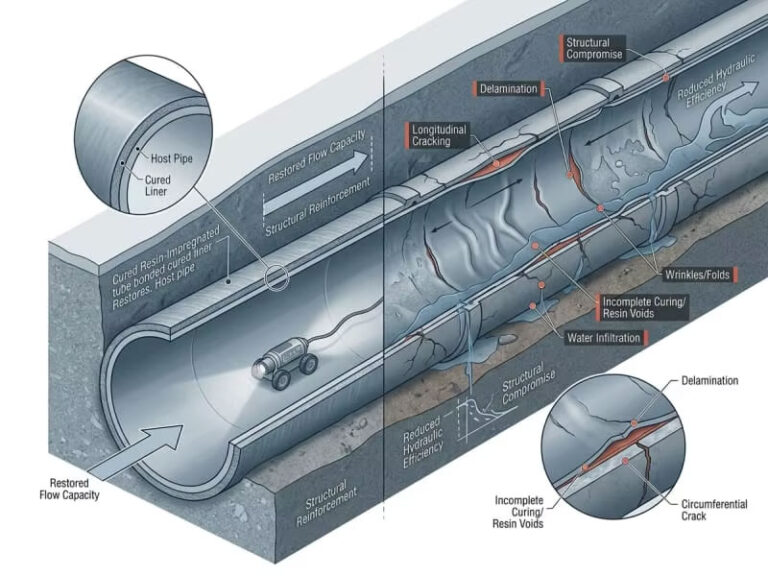
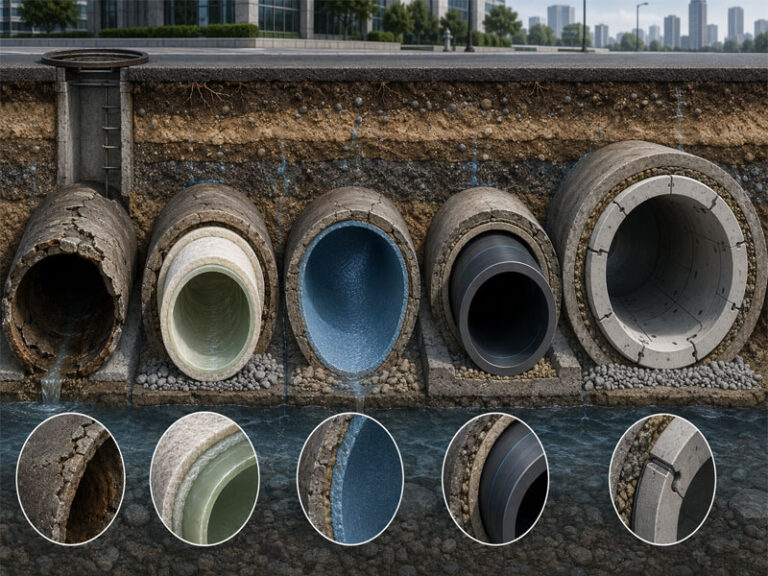
Engineering cutaway illustration comparing CIPP resin liners, spray-applied polyurea, HDPE sliplining, and UHPC structural lining segments in underground sewer pipes.

Best Trenchless Pipe Rehabilitation Materials: CIPP, Polyurea, HDPE Comparison

Best Materials for Trenchless Pipe Rehabilitation The most widely used and effective materials for trenchless pipe rehabilitation are thermosetting resin systems—specifically epoxy, polyester, and vinyl ester—combined with reinforcement fabrics such as fiberglass or polyester felt. For most municipal sewer rehabilitation projects, polyester CIPP offers the best cost-to-performance balance, while epoxy CIPP is preferred for pipes

Читать далее »