
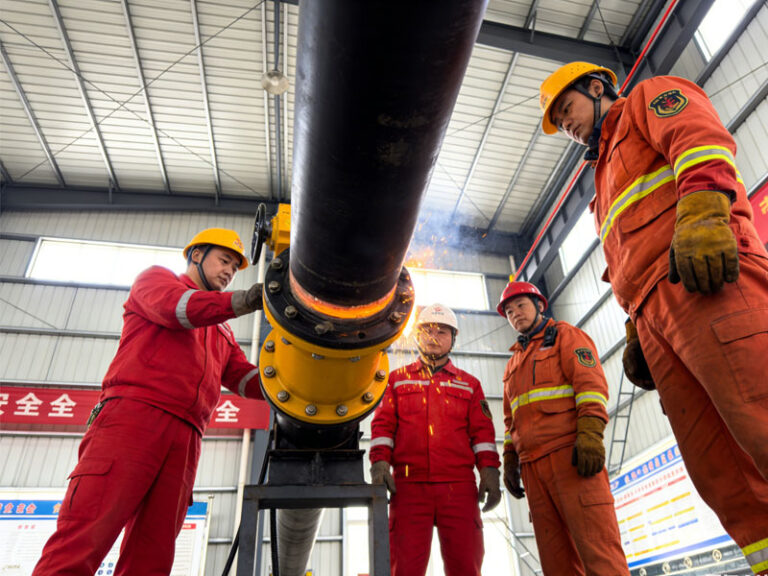
The safe, step-by-step process for a pipeline hot tap operation involves a meticulously planned sequence of preparation, equipment installation, execution, and restoration phases, governed by strict technical standards and safety protocols to add a branch connection to a live, pressurized pipeline without interruption of service.
This guide details the complete operational procedure, from initial feasibility studies to final commissioning. We will cover the core equipment involved, critical safety prerequisites, and how this method provides an economical and environmentally superior solution compared to traditional shutdown methods by eliminating product loss and methane emissions. For pipeline owners and operators, partnering with a qualified contractor who provides a certified, turnkey solution is paramount to mitigating risk.
Phase 1: Comprehensive Planning and Risk Assessment
Before any physical work begins, rigorous planning is the cornerstone of safety. This phase determines if the operation is feasible and identifies all necessary controls.
Why Planning is Non-Negotiable: Hot tapping is an inherently hazardous process that involves a controlled penetration of a live system; a procedural failure can lead to a loss of containment. The American Institute of Chemical Engineers (AIChE) emphasizes that the first mandatory step is evaluating if the work can be done under safer “cold tap” conditions where the line is isolated and purged. A detailed, job-specific written procedure must be developed before starting each job to address all appropriate measures.
The Step-by-Step Pre-Operation Checklist:
- Feasibility and Fit-for-Service Assessment: A qualified engineer must inspect and certify the parent pipeline. Critical disqualifiers include significant wall thinning from corrosion, unsuitable pipe metallurgy, or the presence of highly toxic materials. Key data to collect includes:
- Pipe material, diameter, and wall thickness.
- Maximum operating pressure and temperature during the proposed work.
- The chemical and physical properties of the flowing medium (e.g., flammability).
- Procedure Development: A written Hot Tap Procedure must be created, referencing relevant standards. In the US, this includes API Recommended Practice 2201 and ASME B31 codes. In many regions, operations must comply with standards like GB/T 28055-2023 for steel pipelines. The procedure should specify welding parameters, emergency shutdown plans, and personnel roles.
- Hazard Analysis (HAZID/HAZOP): Conduct a formal hazard identification workshop to analyze risks such as fire during welding, accidental valve failure, or tool malfunction. The team must agree on specific mitigation controls for each identified risk.
- Site Preparation: Ensure adequate working space around the tap location. Establish exclusion zones, assemble all necessary equipment from the equipment manufacturer, and verify that all required Material Supplier certifications for fittings and consumables are present.
Phase 2: Equipment Installation and Welding
This phase involves physically preparing the pipeline to receive the tapping machine. Precision and quality control here are vital for subsequent steps.
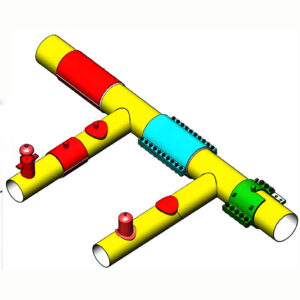
The Role of the Branch Fitting: The fitting (e.g., a split-sleeve tee or welded nipple) becomes the permanent new branch connection. Its design is dictated by pipeline pressure and diameter. A full-encirclement split-sleeve provides extra reinforcement for larger taps. The fitting is attached via welding, bolting, or bonding, depending on pipe material.
Installation Sequence:
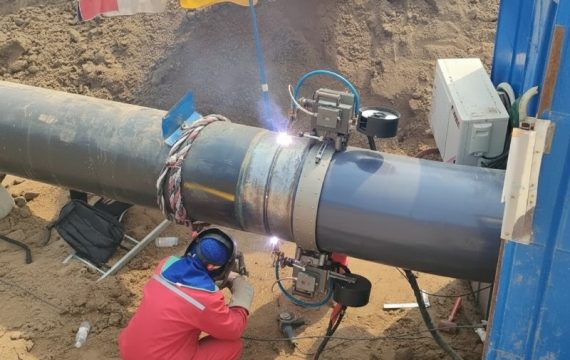
- Fit-Up and Welding: Prepare the pipe surface and fit the branch fitting. For steel pipes, the critical task is welding the fitting onto the live line. The procedure must ensure fluid flow is sufficient to carry away welding heat and prevent burn-through. Welding must adhere to qualified procedures like API 1104.
- Pressure Testing: Once welded, the new assembly (fitting and its valve) is hydrostatically tested to a specified pressure (typically 1.5 times operating pressure) to verify the integrity of the weld and seals before the tap.
- Valve Installation: A permanently rated valve (usually a full-bore ball or gate valve) is installed on top of the fitting. This valve must allow the cut-out section of pipe wall (the “coupon”) to be retrieved after cutting.
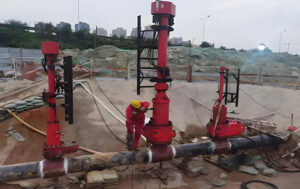
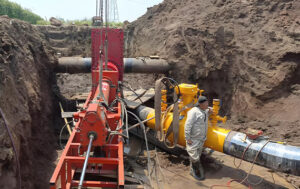
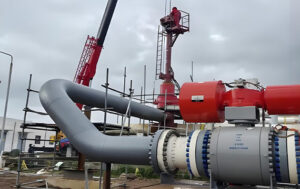
- Tapping Machine Mounting: The hot tap drilling machine is then mounted onto the valve. The entire assembly—from the machine through the valve to the fitting—forms a pressure-containing envelope.
Phase 3: The Tapping Execution
This is the core action of cutting into the live pipeline. The operation takes place inside a sealed environment, preventing any release.
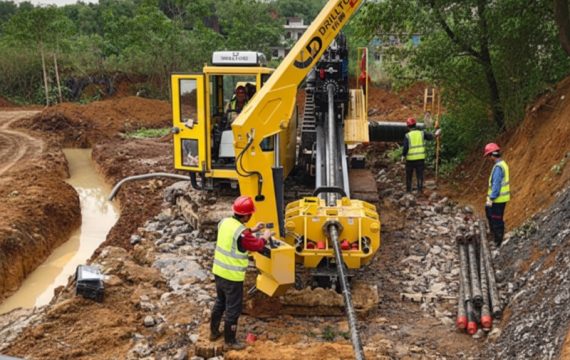
How the Tap is Performed Safely: The drilling machine, equipped with a telescoping boring bar and a specialized cutting tool (often a hole saw with a pilot drill), is advanced through the open valve. The cutting is performed within the closed system formed by the machine and the valve.
Execution Steps:
- Machine Setup and Purge: The tapping machine is secured, and its chamber is often purged with an inert gas like nitrogen, especially for hydrocarbon lines, to eliminate any fire risk.
- Initiating the Cut: The valve is opened, and the cutting tool is advanced until it contacts the pipe wall. The pilot drill centers the operation and includes a mechanism to capture the coupon.
- Cutting and Retrieval: The hole saw cuts through the pipe wall. The pilot drill’s “catch” device securely holds the cut-out coupon. The entire assembly—tool and coupon—is then retracted back into the machine housing.
- Isolation and Completion: The valve is closed, isolating the new branch from the main line. The pressure is safely vented from the tapping machine’s chamber, which is then disassembled and removed. The coupon is inspected as proof of a complete cut.
Phase 4: Post-Operation and Commissioning
The final phase ensures the new connection is safely integrated into the system and the site is restored.
Ensuring Long-Term Integrity: After the tap, the new branch is ready for use. The closed valve allows for a safe connection of the downstream piping at a later time, if not done immediately.
Final Steps:
- Branch Connection: The new pipeline segment is connected to the branch valve. The entire branch assembly is purged of air and pressure-tested according to code requirements.
- System Integration: To place the new line into service, the branch valve is simply opened. There is no need for a system-wide shutdown or blowdown.
- Site Demobilization: All equipment is removed. A final job report, including pressure test records, coupon inspection, and weld logs, is completed for quality assurance and future reference.
Critical Safety Protocols & Industry Standards
Adherence to published standards is not just best practice; it is often a legal requirement. These documents provide the technical framework for a safe operation.
Table 1: Key Industry Standards Governing Hot Tap Operations
| Standard / Code | Region/Issuer | Primary Focus | Key Relevance for Safe Process |
|---|---|---|---|
| API RP 2201-7 | Global (API) | Safe Hot Tapping Practices | The principal guide for risk assessment, procedure development, and safety in petroleum/petrochemical industries. |
| ASME B31.4/B31.8-6-7 | Global (ASME) | Pipeline Design & Operation | Specifies design requirements for piping systems; hot taps must be performed on systems designed to these codes. |
| GB/T 28055-2023-2-4 | China (SAMR) | Technical Specification for Steel Pipelines | The mandatory national standard in China for technical requirements on steel pipeline hot tapping and plugging. |
| GSO 2492:2015-6 | Gulf Region (GSO) | Hot Tapping on Pipelines | Specifies safety and technical requirements for hot taps on hydrocarbon lines in Gulf Cooperation Council states. |
Common Prohibitions and Limitations: Experts universally advise against hot taps under certain high-risk conditions. The AIChE CCPS lists situations where it should be “absolutely forbidden,” including lines containing highly toxic materials, certain high-temperature heat transfer fluids, or steam above 600 psig.
Economic and Environmental Advantages of Hot Tapping
When executed safely by a professional services comapany, hot tapping offers significant benefits over traditional “shutdown and blowdown” methods.
- Zero Product Loss & Reduced Emissions: Avoiding a pipeline shutdown eliminates the need to vent or flare the product within a pipeline segment. The U.S. EPA’s Natural Gas STAR Program highlights hot tapping as a key methane emissions reduction technology, providing a formula to calculate the avoided emissions.
- Uninterrupted Service: Customer supply or downstream factory operations continue without disruption, avoiding costly production losses.
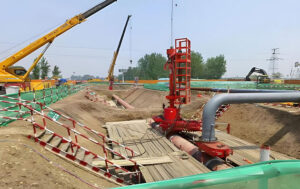
- Operational Efficiency: Projects like the one documented in the Tuha Oilfield demonstrate that a well-planned hot tap can be completed in a matter of hours (e.g., ~3 hours), compared to days for a full shutdown, evacuation, and restart.
Author: David Chen, Senior Pipeline Integrity Engineer
Last Updated: January 10, 2026
About Our Expertise: This guide is based on industry best practices and standards. For your specific project, a detailed, site-specific engineering review is essential. JSW Pipeline Solutions provides end-to-end services, from feasibility studies and certified procedure development to execution by our trained crews. As an integrated equipment manufacturer and contractor, we ensure every phase—from Material Supplier quality to field execution—meets the highest safety and compliance standards. Contact our engineering team today for a confidential consultation on your upcoming pipeline modification project.
Answers to Your Key Questions
Q: Can a hot tap be performed on any pipeline?
A: No. The pipeline must be inspected and certified fit-for-service. Common disqualifiers include excessive wall thinning, unsuitable metallurgy, or the presence of prohibited substances like highly toxic chemicals. A full engineering assessment is always required first.
Q: What is the single most important safety device during a hot tap?
A: The permanently rated valve installed between the branch fitting and the tapping machine. It isolates the main pipeline immediately after the cut is made and allows the safe removal of the tapping equipment.
Q: How does hot tapping reduce environmental impact?
A: By keeping the pipeline in service, it completely avoids the venting or flaring of the pipeline’s contents (e.g., natural gas), which is a direct source of greenhouse gas emissions.
Q: What are the main alternatives to a hot tap?
A: The primary alternative is a “cold tap,” where the pipeline segment is safely isolated, purged of product, and brought to ambient conditions before work begins. This is always the preferred, safer method when operationally feasible.
JSW Brand Introduction & Value Proposition
In the high-stakes field of pipeline modifications, safety and reliability are not just goals—they are imperatives. JSW Pipeline Solutions has established itself as a leader by fundamentally redefining the client-contractor partnership. We are not just a contractor; we are an integrated technology and execution partner.
Our unique value proposition is built on a closed-loop system of quality and accountability:
- In-House Equipment Manufacturing: Unlike firms reliant on third-party suppliers, we design and manufacture our own hot tap machines, plugging heads, and cutting machines. This allows for perfect compatibility, rigorous testing, and rapid customization for unique project challenges.
- Certified Material & Procedure Control: We act as our own qualified Material Supplier for critical components, ensuring full traceability from our factory floor to your pipeline. Every weld procedure and solution is engineered and certified in-house by our team of ASME and API-qualified engineers.
- End-to-End Project Ownership: From the initial feasibility study conducted against GB/T 28055-2023 and API standards to final commissioning, a single JSW project team owns the entire process. This eliminates communication gaps and ensures the safety protocols developed in the planning phase are executed flawlessly in the field.
The result for clients is a de-risked project. When you choose JSW, you gain more than a service—you gain a guarantee of integrity, where the entity that designs the procedure also builds the tools and performs the work under one unified safety culture. For operators of oil, gas, and chemical pipelines who cannot afford compromise, the JSW model is the definitive solution.
Ready to discuss how our integrated approach can deliver a safer, more efficient outcome for your next pipeline connection or modification? Contact our expert engineering team for a detailed project consultation.






 English
  Arabic
  Russian
  Spanish
  French