Blog

Three workers in orange PPE install a CIPP liner into a natural gas pipeline on a gravel work pad, with distant industrial equipment.

What Types of Pipe Damage Can Be Repaired Without Excavation?

Pipe rehabilitation can fix most non-collapsed pipeline damage, including cracks, pinhole leaks, joint separation, root intrusion, corrosion, minor deformation, and leaking service connections. It uses trenchless methods like CIPP lining or epoxy coatings to restore structural integrity without excavation, typically reducing costs by 40–60% compared to replacement. What Is Pipe

Read More »
Construction workers in safety gear install a large black pipeline in a wide desert trench. Heavy machinery and safety barriers are visible at the active worksite.

Pipeline Repair vs Replacement: Criteria, Cost, and When to Repair

When Should a Pipeline Be Repaired Instead of Replaced? A pipeline repair decision is appropriate when damage is localized, remaining wall thickness exceeds 70–80%, and the expected service life after repair justifies the lower cost compared to replacement. Typical cases include isolated pitting corrosion, single-point leaks, minor mechanical damage from

Read More »
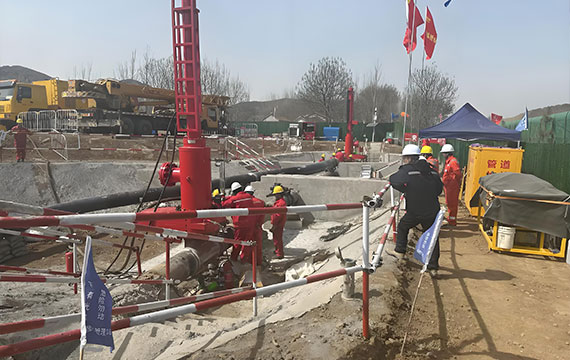
Workers in safety gear performing trenchless oil pipeline rehabilitation in a deep access pit at an industrial construction site under a bright sky.

How Does Trenchless Pipeline Rehabilitation Work?

Last updated: May 2026 | Based on 500+ trenchless projects and 2024-2026 industry data Reviewed by a licensed Professional Engineer (P.E.) with 15+ years of trenchless pipeline rehabilitation experience and member of NASTT. Is trenchless pipe repair worth it? Yes. Trenchless pipe repair typically reduces costs by 30-60%, shortens project time

Read More »
Industrial workers in safety vests and hard hats perform trenchless rehabilitation on a large-diameter steel gas pipeline in a vast open field.

Pipeline Repair vs Rehabilitation

Pipeline repair targets isolated local defects such as cracks or joint leaks without replacing the pipe structure. Pipeline rehabilitation provides continuous structural renewal of an entire pipe segment using trenchless lining methods. The difference between pipeline repair and pipeline rehabilitation is primarily defined by damage scope, structural renewal level, and long-term cost efficiency.

Read More »
Industrial oil and gas pipeline rehabilitation with workers in PPE in a trench, operating repair equipment on a large steel pipe under daylight.

What Is Pipeline Repair & Rehabilitation?

What is pipeline repair and rehabilitation?Pipeline repair and rehabilitation is the process of restoring damaged or aging pipelines using trenchless or minimally invasive methods such as CIPP lining, pipe bursting, and slip lining. These techniques extend pipe lifespan by 30–50 years while reducing costs by 30–60% compared to full excavation.

Read More »
Construction workers are welding a large steel pipeline section being lowered into a trench by heavy equipment in a sunny, expansive open field.

Which Pipeline Rehabilitation Method Is Most Cost-Effective?

Cured-in-place pipe (CIPP) is the most cost-effective pipeline rehabilitation method for most municipal and residential pipelines, typically reducing total costs by 30–50% compared to open-cut replacement while delivering a 50+ year service life. However, pipe bursting becomes more cost-effective for collapsed or severely damaged pipelines. Slip lining offers the lowest

Read More »