Blog

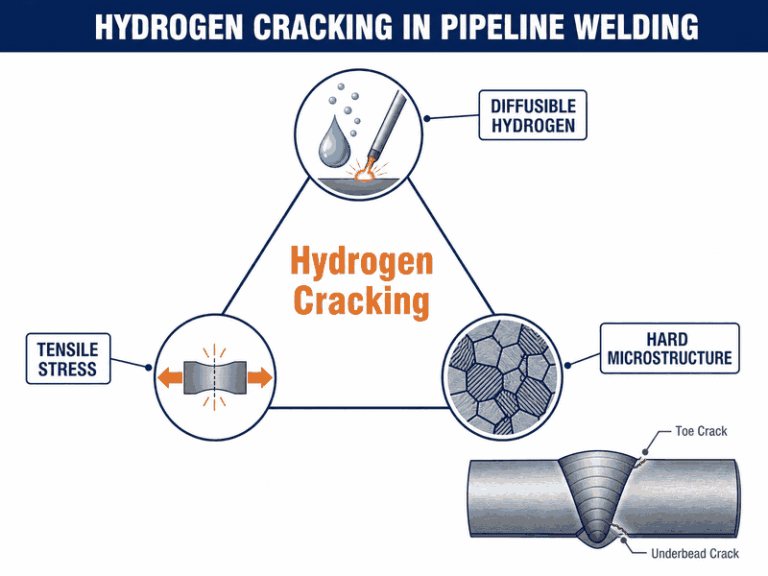
Diagram showing the three conditions that cause hydrogen cracking in pipeline welding: diffusible hydrogen, tensile stress, and a hard susceptible microstructure

How to Prevent Hydrogen Cracking in Pipeline Welding

Hydrogen cracking in pipeline welding is the delayed cold cracking failure that occurs when diffusible hydrogen, a hard susceptible microstructure, and tensile stress act together in a finished weld. You prevent it by using low-hydrogen consumables, correct preheat, interpass control, and delayed inspection so hidden cracks cannot reach service. This guide explains the hydrogen cracking
Read More »
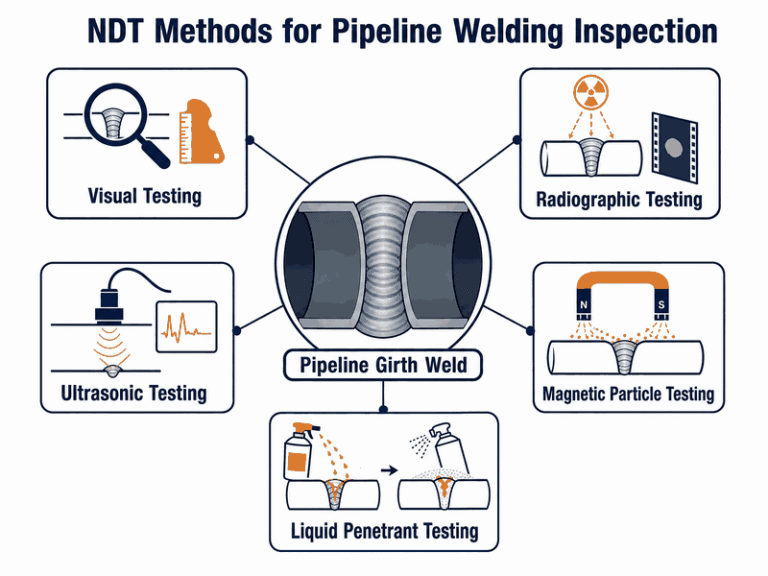
Infographic showing the five core NDT methods used in pipeline welding inspection: visual testing, radiographic testing, ultrasonic testing, magnetic particle testing, and liquid penetrant testing applied to a pipeline girth weld

Pipeline Welding Inspection Checklist: NDT Methods for Quality Assurance

A pipeline welding inspection checklist is a stage-by-stage quality plan that verifies every girth weld against the acceptance criteria of the governing code before final pipeline inspection and commissioning. It pairs visual examination with non-destructive testing (NDT) methods, specifically radiographic testing (RT), ultrasonic testing (UT), magnetic particle testing (MT), and

Read More »
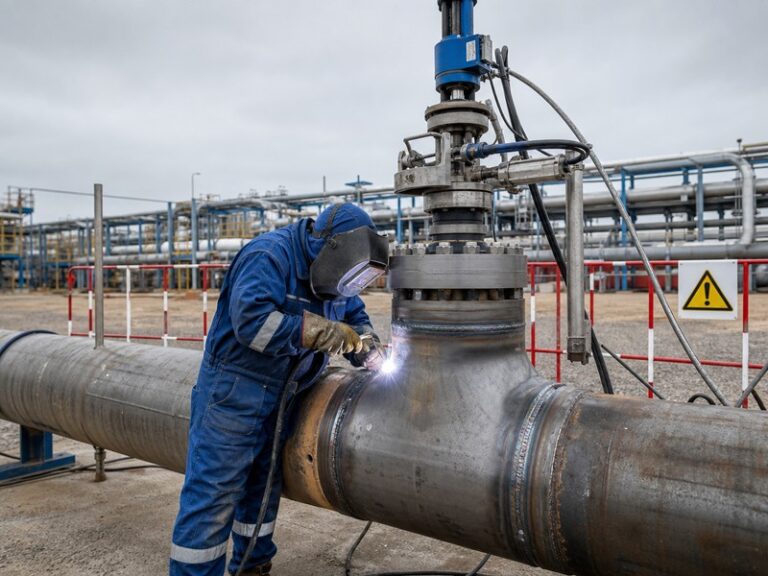
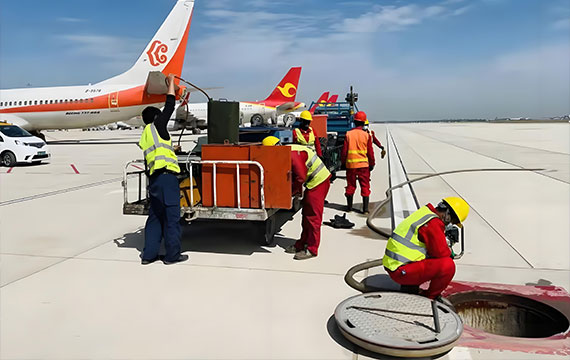
Welding technician performing in-service pipeline welding on a pressurized live pipeline with hot tap fittings and equipment

Complete Guide to In-Service Pipeline Welding

In-service pipeline welding is the controlled practice of welding onto a pressurized pipeline while it remains in operation, typically for hot tapping, line stopping, and repair connections that would otherwise force a shutdown. To weld on a live line safely, you must qualify the procedure for the actual service conditions,

Read More »
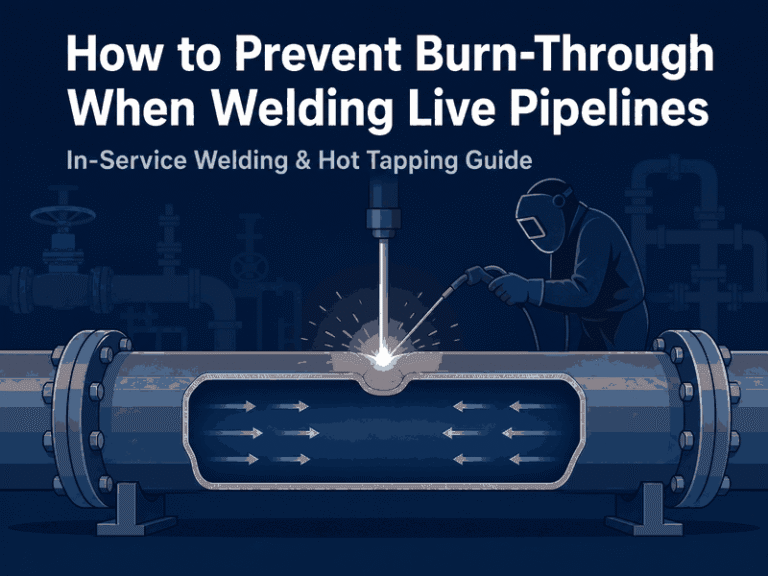
burn through prevention live pipeline welding cover

How to Prevent Burn-Through When Welding Live Pipelines

Burn-through is the failure that occurs when the weld pool melts through the remaining pipe wall of a live pipeline and the internal pressure blows out the weakened area. To prevent burn-through when welding live pipelines, you must verify the remaining wall thickness first, weld to a qualified in-service welding

Read More »
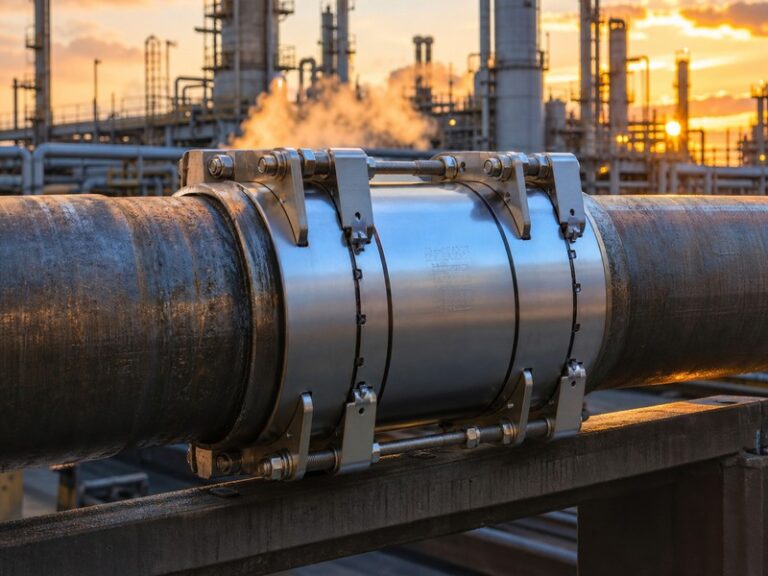
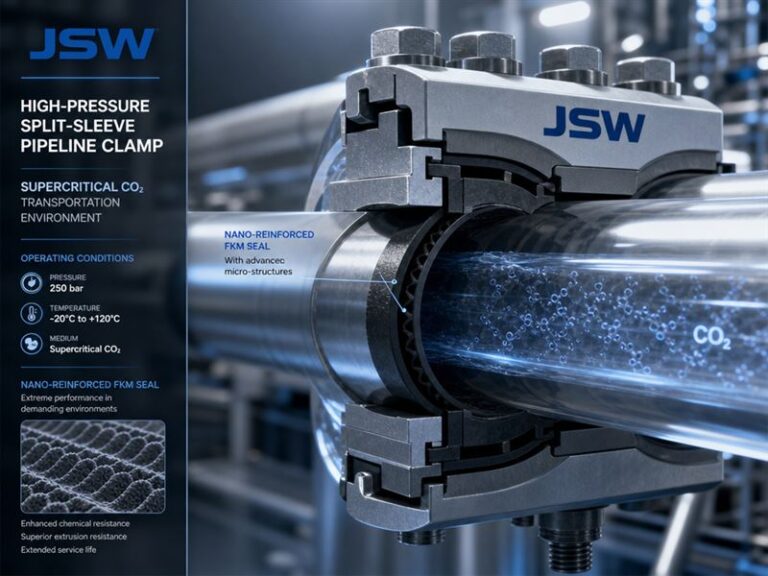
JSW high-pressure clamp with RGD-resistant seals for sCO2 pipeline repair.

sCO2 Pipeline Leak Sealing: RGD Resistance & Clamp Guide

Supercritical CO2 (sCO2) pipeline leak sealing is achieved by installing structural mechanical clamps integrated with NORSOK M-710 certified RGD-resistant seals. For CCUS infrastructure, these seals must withstand phase-change pressures exceeding 74 bar (1,070 psi). The primary sealing mechanism involves controlled radial compression that neutralizes the “explosive decompression” effect of sCO2, ensuring long-term integrity in high-pressure

Read More »
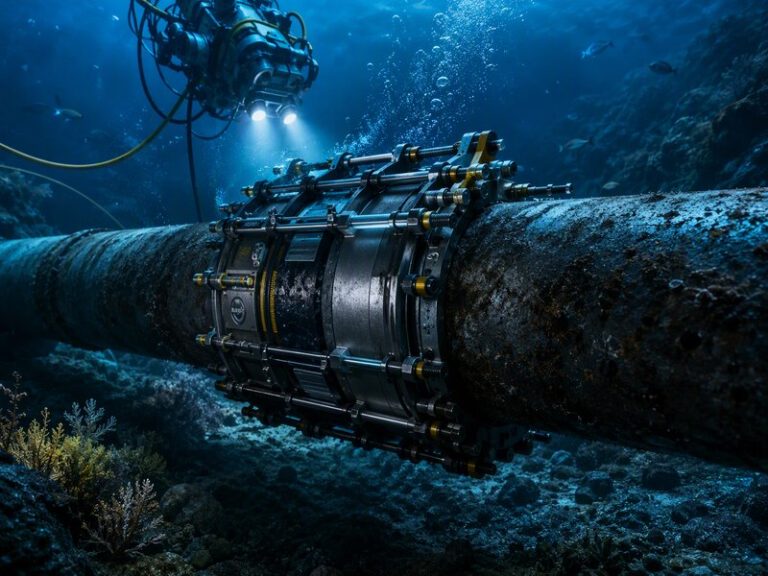
Heavy-duty structural repair clamp for subsea oil pipelines being installed by a professional ROV on the deep ocean floor, featuring high-pressure metallic housing.

Sizing and Designing Heavy-Duty Structural Repair Clamps for Subsea Oil Pipelines Under High External Hydrostatic Pressure

What is the Correct Sizing for a Subsea Pipeline Repair Clamp in High-Pressure Environments? Sizing a subsea pipeline repair clamp for deepwater (>1,000m / 3,280 ft) requires calculating the specific pressure differential between internal fluids and external hydrostatic head. In deepwater environments exceeding 1,000 meters, this sizing process is primarily dictated

Read More »