Selecting a competent pipeline engineering firm requires a structured evaluation of their technical capabilities, proven experience, financial health, and commitment to safety. This process involves scrutinizing formal credentials like industry-specific certifications and project portfolios, assessing technical expertise in critical areas like trenchless rehabilitation and hot tapping, and verifying their operational and safety track records. A thorough selection mitigates project risks, ensures regulatory compliance, and guarantees long-term asset integrity for oil, gas, water, and industrial pipeline networks.
The decision impacts every phase of your asset’s lifecycle, from initial construction and system modification to ongoing maintenance and emergency restoration. This guide provides a detailed, step-by-step framework covering the four pillars of a rigorous selection process: verifying credentials and experience, evaluating technical and project management solutions, ensuring financial and operational stability, and conducting in-depth proposal analysis. We will also integrate key considerations for specialized services such as pipeline plugging and trenchless pipe rehabilitation to help you make an informed choice.
1. Verify Credentials, Licenses, and Track Record
A firm’s formal qualifications and historical performance are the foundational indicators of its capability and reliability. This step separates credible contenders from those lacking the necessary substance to deliver.
Why it Matters: Pipeline engineering is a high-stakes field governed by strict regulations and technical standards-3. Official credentials act as a baseline filter, demonstrating that a company has met the minimum competency and legal requirements set by industry authorities. Beyond paperwork, a proven track record is the most reliable predictor of future performance, showing the firm’s ability to successfully execute projects of similar scope and complexity.
How to Evaluate: A Step-by-Step Checklist
- Check Professional Licenses and Certifications: Confirm the firm holds valid, up-to-date licenses for engineering and construction in your project’s jurisdiction. For specialized work like pressure management or pipeline stopple installations, inquire about technician-level certifications.
- Review Corporate Qualifications: In many regions, contractors are graded by capability. For example, a Grade I firm can typically handle large-diameter, long-distance projects for oil, gas, and water, while a Grade III firm may be restricted to smaller-scale work. Ensure their qualification grade matches your project’s scale.
- Analyze Project Portfolio and References: Request a portfolio of past projects, specifically those similar in size, medium (e.g., natural gas, crude oil, water), and technology (e.g., hot tapping, pipeline modification) to yours. Follow up with provided client references and ask about project adherence to schedule, budget, communication, and problem-solving.
- Investigate Safety and Compliance History: Research the firm’s safety record (e.g., OSHA reportable incidents) and history of regulatory non-compliance or litigation. A strong safety culture is non-negotiable.
FAQ: What if a firm has the license but limited direct experience with my specific pipeline material?
While licensure is mandatory, direct experience is preferable. In such cases, prioritize firms that demonstrate a clear methodology for technology transfer, staff training, and partnership with experienced equipment manufacturers or Material Suppliers to bridge the knowledge gap.
2. Assess Technical Expertise and Project Management Capabilities
The core of a pipeline firm’s value lies in its technical prowess and its ability to manage complex projects from conception to completion. This evaluation moves beyond “what” they have done to “how” they do it.
Why it Matters: Modern pipeline projects involve sophisticated technologies like automated welding, directional drilling, and advanced integrity management systems. A firm’s depth of technical knowledge directly influences project efficiency, innovation, and long-term asset reliability. Similarly, robust project management ensures that technical expertise is effectively translated into on-time, on-budget delivery with minimal disruption.
How to Evaluate Technical and Managerial Competence
Focus your assessment on both hard technical skills and soft management competencies.
Technical Expertise to Probe:
- Design & Engineering: Capability in hydraulic modeling, stress analysis, corrosion protection (e.g., cathode protection), and familiarity with ASME, API, and ISO standards.
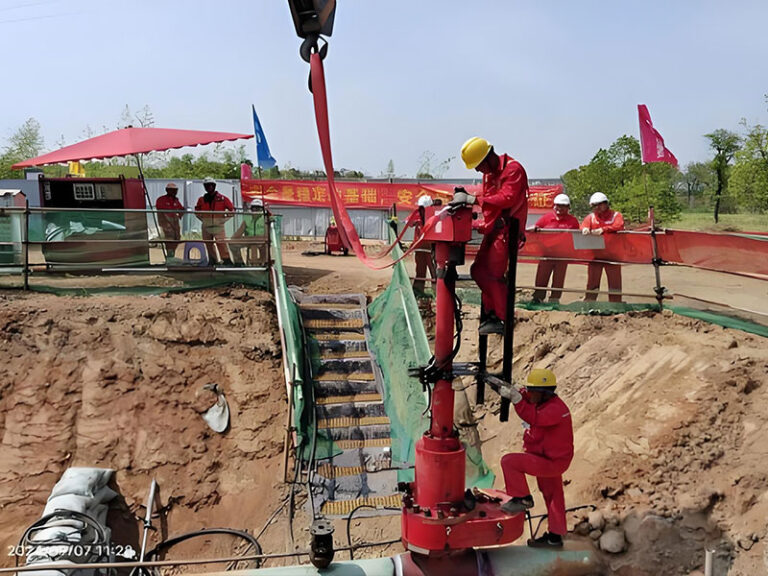
- Specialized Construction & Rehabilitation: Hands-on experience with trenchless pipe rehabilitation methods (CIPP, sliplining), hot tapping and pipeline plugging for live line connections, and handling pipeline modifications.
- Technology & Innovation: Use of digital tools like GIS for routing, BIM for design integration, and drones for inspection. Ask about their R&D involvement or proprietary technologies.
Project Management Framework:
- Methodology: Request their standard project management plan. It should detail phases from feasibility and permitting to commissioning, with clear milestones.
- Team Structure: Identify the proposed project manager and key engineers. Review their resumes and request their commitment for the project’s duration.
- Risk Management: Inquire about their formal process for identifying, assessing, and mitigating technical, environmental, and scheduling risks.
- Communication Protocol: Understand how they plan to communicate progress, issues, and changes to your team (e.g., regular reports, dedicated portals).
To synthesize this assessment, a structured comparison table is invaluable.
Table: Framework for Comparing Shortlisted Pipeline Engineering Firms
| Evaluation Criteria | Firm A | Firm B | Firm C | Your Project Weighting |
|---|---|---|---|---|
| Relevant Project Experience | List key similar projects | List key similar projects | List key similar projects | e.g., 30% |
| Specialized Tech (e.g., Trenchless) | Detail expertise level | Detail expertise level | Detail expertise level | e.g., 20% |
| Proposed Project Team | Lead PM & Engineer bios | Lead PM & Engineer bios | Lead PM & Engineer bios | e.g., 20% |
| Project Management Plan | Robustness rating (High/Med/Low) | Robustness rating (High/Med/Low) | Robustness rating (High/Med/Low) | e.g., 15% |
| Safety Record (TRIR) | Provide their rate | Provide their rate | Provide their rate | e.g., 15% |
| Preliminary Score | Calculated score | Calculated score | Calculated score | 100% |
Figure: Key Phases in a Pipeline Project Lifecycle
A visual flowchart depicting interconnected phases: 1. Planning & Feasibility, 2. Design & Engineering, 3. Regulatory Permitting, 4. Procurement & Fabrication, 5. Construction & Installation, 6. Testing & Commissioning, 7. Ongoing Integrity Management & Maintenance.
Caption: A competent pipeline engineering firm should demonstrate mastery across the entire project lifecycle, with particular attention to the seamless integration of construction, system modification, and long-term maintenance planning.
3. Scrutinize Financial Health, Resources, and Safety Culture
The stability of a firm and its commitment to safe operations are critical factors that ensure project continuity and protect your assets and personnel. This due diligence guards against operational failures.
Why it Matters: A financially unstable contractor may cut corners, lack adequate insurance, or fail mid-project, causing significant delays and cost overruns. Similarly, a weak safety culture poses direct risks to personnel, the public, and the environment, and can lead to catastrophic project failures, especially during high-risk operations like pipeline stopper installation or live hot tapping.
How to Conduct Financial and Operational Due Diligence
- Financial Stability Check: Request audited financial statements from the last 2-3 years to assess liquidity, debt levels, and profitability. Verify they carry sufficient general liability, workers’ compensation, and professional indemnity insurance. For large projects, consider requiring a performance bond.
- Resource Verification: Ensure they own or have guaranteed access to the necessary specialized equipment (e.g., pipeline tapping machines, pipeline plug units, boring rigs). Visit their main office or a factory/yard if possible to assess the condition of their assets. Evaluate the size and skill depth of their in-house engineering and field crews.
- Safety Culture Assessment: Review their written Environmental, Health, and Safety (EHS) manual and ask for metrics like Total Recordable Incident Rate (TRIR). Inquire about their emergency response plan and the training frequency for their crews. For high-hazard tasks, ask for specific Job Safety Analysis (JSA) documents.
FAQ: How important is a firm’s investment in its own equipment versus leasing?
Owining core equipment often indicates greater specialization, control over maintenance, and faster mobilization. However, leasing specialized, seldom-used equipment (e.g., for a unique pipeline modification) can be cost-effective. The key is to confirm they have a reliable, proven procurement and logistics plan for all necessary tools.
4. Analyze Proposals, Compare Value, and Conduct Interviews
The final selection step involves a nuanced comparison of proposals, moving beyond simple cost analysis to a comprehensive value assessment, validated through direct engagement with the proposing teams.
Why it Matters: A proposal is more than a price quote; it’s a reflection of the firm’s understanding of your challenges and their strategic approach-7. The lowest bid often omits critical scope items or relies on inferior methods, leading to higher total cost through change orders and failures. Face-to-face interviews test the team’s chemistry, communication skills, and depth of knowledge.
How to Execute a Rigorous Proposal Review and Interview
Adopt a structured, multi-criteria evaluation process.
Step 1: Develop a Scoring Matrix
Create a weighted scorecard based on your project’s priorities. A common public sector model allocates 70% of the score to technical merit and 30% to cost-7. Your matrix might include:
- Technical Approach & Methodology (30%): Clarity, innovation, and suitability of the proposed solution.
- Experience & Qualifications (25%): Of both the firm and the assigned key staff.
- Project Management Plan (20%): Detail of schedule, risk management, and quality control.
- Safety & Environmental Plan (15%): Comprehensiveness and past performance.
- Cost Proposal (10%): Total evaluated cost, including lifecycle considerations, not just initial bid.
Step 2: Conduct In-Depth Interviews
Invite the top 2-3 scoring firms to a formal interview. Prepare the same set of challenging, scenario-based questions for all:
- *”Walk us through your step-by-step procedure for performing a hot tapping and pipeline stopple operation on our specific 24-inch high-pressure gas line.”*
- “Describe a time a project encountered a major unforeseen geotechnical risk. How did you identify, communicate, and resolve it?”
- “How will your team interface with our internal operations staff during the construction and maintenance phases to minimize downtime?”
Evaluate their confidence, teamwork, and willingness to acknowledge limitations.
Step 3: Make the Final Decision
Consolidate the scores from the written proposal and the interview. The highest-ranking firm typically represents the best value—the optimal blend of technical competence, management strength, and cost-effectiveness. Ensure all contractual terms, including warranties on pipeline restoration work and clear change order procedures, are finalized before signing.
Author & Publication Info
Johnathan Briggs, P.Eng.
As a Senior Pipeline Integrity Consultant with over 20 years of experience in the oil, gas, and water sectors, Johnathan has overseen the evaluation and selection of engineering contractors for major pipeline projects across North America and Asia. His expertise lies in risk-based assessment and lifecycle asset management.
Article last updated: January 2026
JSW Pipeline Solutions
In the pipeline engineering sector, choosing a partner is selecting a long-term guardian for your critical assets. JSW Pipeline Solutions stands as a partner that deeply integrates extensive project experience with cutting-edge technological innovation.
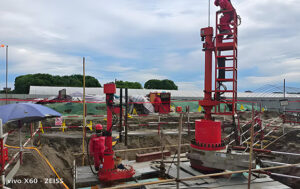
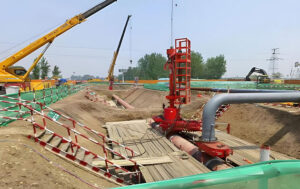
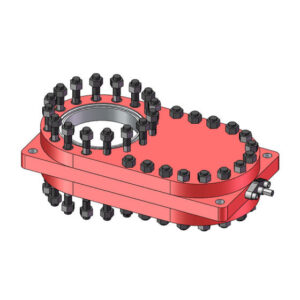
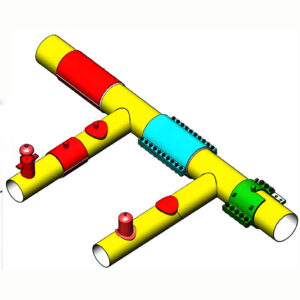
Unlike a standard project contractor, JSW focuses on providing full lifecycle asset integrity solutions. We possess extensive experience in construction and long-term maintenance of high-pressure oil, natural gas, and water pipelines, specializing in high-stakes pipeline modification, hot tapping, and pipeline plugging operations under the most demanding conditions. Our unique advantage is built on proprietary technology. For instance, our third-generation pipeline stopple system features an internal self-locking “leak-proof” fitting design that fundamentally eliminates the leakage risks inherent in traditional locking-pin structures. This delivers a long-term, field-validated “Zero-Leak” sealing promise, a technology proven in numerous critical restoration projects.
From initial digital-twin-based scenario modeling and employing trenchless pipe rehabilitation to minimize environmental and operational disruption, to providing ongoing integrity management support for the entire system, every step JSW takes is dedicated to reducing your total cost of ownership and operational risk. We are not just users of equipment; we are drivers of technological improvement through collaboration with leading equipment manufacturers and Material Suppliers.
What specific challenges does your pipeline system face? Is it a planned upgrade, an urgent repair need, or a desire to optimize long-term maintenance strategy? Contact us today. The technical team at JSW will provide a tailored preliminary technical assessment and solution concept based on your specific operating conditions.





 English
  Arabic
  Russian
  Spanish
  French
  Vietnamese
  Polish
  Thai
Thai  Indonesian
  Turkish
  Portuguese