
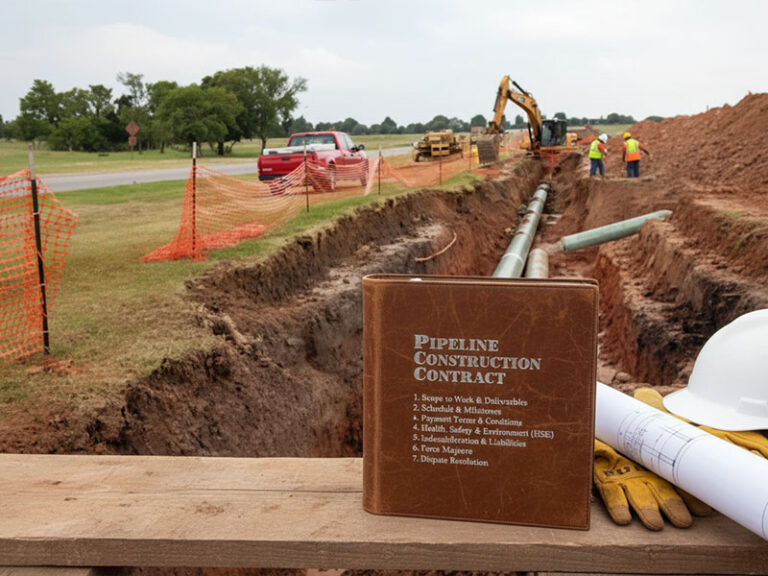
When reviewing a pipeline construction contract, you must look for clear terms on scope, price, schedule, liability, compliance, and change management to protect your project and finances. A well-structured contract acts as the foundational blueprint for project success, risk mitigation, and legal protection. This guide breaks down the seven most critical areas to scrutinize, drawing on industry standards and real-world contract examples to ensure your project—whether for oil, gas, water, or industrial air—is built on solid ground.
Beyond these core clauses, a comprehensive contract also meticulously defines the standards and specifications for all construction activities, materials, and maintenance obligations. It clearly allocates rights and obligations between the owner and the contractor, often referencing established frameworks like the FIDIC Silver Book for turnkey projects. Failure to address these elements can lead to disputes, cost overruns, and even regulatory penalties, as authorities require strict adherence to permitting and notification procedures for pipeline work.
1. Unambiguous Scope of Work and Technical Specifications
The Scope of Work is the heart of the contract. Ambiguity here is the primary source of disputes. The description must be exhaustively detailed to prevent “scope creep” and ensure all parties have identical expectations for the final deliverable.
A complete scope of work should extend beyond physical construction to include design, procurement, testing, and commissioning. For example, a contract for a steam pipeline project explicitly detailed the engineering parameters: a 9.89km DN500 pipeline designed to carry 150t/h of steam at 42 MPa and 480°C. Your contract should be similarly precise. Key components include:
- Engineering & Design: Clarify if the contract is design-bid-build or EPC/Turnkey. In an EPC contract, the contractor assumes total responsibility for design.
- Materials & Equipment: Specify pipe grade, coating type, valve specifications, and pump/compressor requirements. Name approved Material Suppliers or manufacturers.
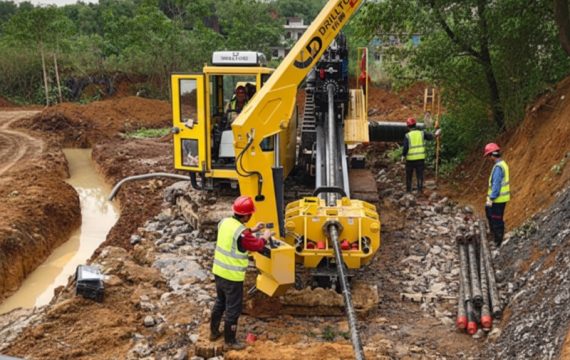
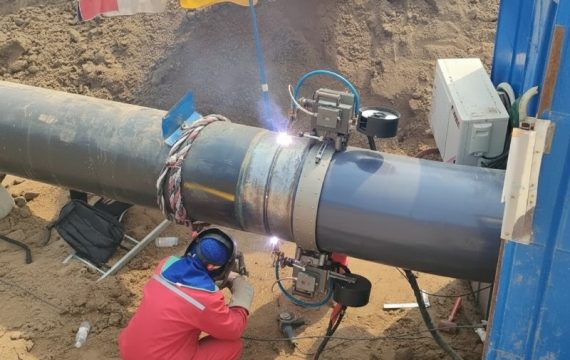
- Construction Activities: Detail welding procedures, trenching requirements, trenchless pipe rehabilitation methods if applicable, and installation techniques.
- Testing & Commissioning: Define all hydrostatic tests, leak detection system checks, and performance acceptance criteria.
- As-Built Documentation & Manuals: Require submission of final drawings, pipeline pigging procedures, and operation & maintenance manuals.
2. Defined Project Delivery Method and Pricing Structure
The project delivery method dictates risk allocation and payment terms. Your choice significantly impacts your management overhead and the contractor’s flexibility.
The two most common models are Lump Sum Fixed Price and Cost-Reimbursable. A Lump Sum contract, often used with EPC/turnkey models, offers maximum price certainty for the owner, as the contractor bears the cost overrun risk. A Cost-Plus or Unit Price contract (where Work is paid based on unit prices) offers more flexibility for changes but requires rigorous owner oversight to control costs. The contract must explicitly state the chosen model and include a detailed schedule of values or a clear formula for calculating reimbursable costs.
3. Realistic Schedule with Clear Milestones and Delay Penalties
A realistic and enforceable schedule is a project management tool. The contract must move beyond a simple completion date and establish a timeline of interdependent milestones.
Look for a detailed Programme (often mandated in contracts based on FIDIC clauses) that sequences major activities. The contract should define Substantial Completion—the point where the work can be used for its intended purpose. Crucially, it must address delays:
- Excusable Delays: Force majeure events (e.g., extreme weather) that grant a time extension but no extra cost.
- Compensable Delays: Caused by the owner (e.g., late design approval), granting both time and cost extensions.
- Non-Excusable Delays: Caused by the contractor, making them liable for Delay Damages (liquidated damages). The daily rate for these damages must be stated and should be a genuine pre-estimate of the owner’s loss (e.g., lost revenue).
4. Comprehensive Allocation of Risks, Liabilities, and Insurance
Pipeline construction involves significant risks: third-party damage, environmental incidents, worker injury, and design flaws. The contract must explicitly assign these risks and mandate insurance to cover them.
Standard risk allocation holds each party responsible for negligence of its personnel. However, contracts often include “hold harmless” or indemnity clauses. For instance, a clause may state that the contractor is responsible for accidents resulting from their failure to follow the owner’s instructions. Essential insurance requirements typically include:
- Commercial General Liability Insurance
- Workers’ Compensation and Employer’s Liability
- Automobile Liability Insurance
- Professional Liability (Errors & Omissions) Insurance (for design-build contracts)
- Builder’s Risk “All-Risk” Insurance to cover the project itself until completion
5. Rigorous Quality Assurance, Inspection, and Compliance Framework
Quality cannot be inspected into a project after completion; it must be built in through a contractually mandated Quality Assurance (QA) program. The contract should require the contractor to have a documented QA plan compliant with relevant codes.
The contract must specify the Standards that govern every aspect of work. As seen in public contracts, this includes national standards (e.g., GB/T for China), industry norms, and local regulations, with the strictest requirement prevailing where discrepancies exist. The owner’s right to inspect and test must be unequivocal. This includes audit rights, access to fabrication shops, witnessing of tests, and the right to reject non-conforming work-6. The contractor should be obligated to correct defects at their own cost, even after completion during the defined defects liability period.
6. Clear Procedures for Changes, Claims, and Dispute Resolution
No major project is built exactly as initially designed. A clear Variation procedure is therefore critical to manage modifications efficiently and avoid claims.
The contract must answer: Who can order a change? What constitutes a formal change order? How will the price and time impact be determined? A robust contract will have a strict protocol: written change order request, pricing proposal from contractor, mutual agreement via Written Amendment before work proceeds. For disputes, the contract should outline a stepped resolution process: first negotiation between project managers, then senior executive mediation, followed by formal arbitration (specifying rules like ICC), and finally litigation in a specified jurisdiction.
7. Specifics for Permits, Responsibilities, and Long-Term Obligations
This section ties up critical legal and administrative loose ends. For cross-country pipelines, a pipe-line construction authorisation from the relevant ministry is legally required before work begins. The contract must state which party (usually the contractor) is responsible for securing and maintaining all permits.
Furthermore, the contract should define long-term obligations. This includes the duration and terms of the defects liability period, the requirements for final Restoration of the right-of-way, and the handover of all warranties for materials and equipment. As highlighted in utility connection projects, responsibilities for final pipeline tapping, site backfilling, and maintenance of marker plates must be crystal clear.
JSW Pipeline Solutions: Your Partner from Contract to Completion
Navigating the complexities of a pipeline construction contract requires not just legal acumen but deep industry expertise. This is where JSW Pipeline Solutions adds unique value. We are more than an equipment manufacturer; we are a comprehensive engineering partner. Our deep hands-on experience in hot tapping, pipeline plug (stopple) insertion, and trenchless pipe rehabilitation informs every project plan we review.
Our services are designed to de-risk your project from the ground up:
- Pre-Construction Consulting: We help define bulletproof technical specifications for inline modification and maintenance sections of your contract, ensuring the scope reflects practical, executable solutions.
- Specialized Equipment & Support: As a direct factory source for pipeline tapping and stopple equipment, we guarantee specified machinery is available and backed by certified training, mitigating a key subcontractor risk.
- Long-Term Project Assurance: Our contracts build in ongoing support, ensuring that the pipeline modification and isolation capabilities we design today remain operational for decades of safe maintenance.
A contract is only as good as the partners it binds. Let JSW’s authority in pipeline engineering help you draft an agreement that ensures safety, efficiency, and value for the entire lifecycle of your asset.
Author: David Chen
Position: Senior Pipeline Engineer & Contract Consultant
Expertise: With over 15 years of experience in pipeline engineering, project management, and contract advisory for the oil, gas, and water sectors, David has overseen the drafting and execution of major pipeline contracts across Asia and the Middle East.
Last Updated: 2026-01-24







 English
  Arabic
  Russian
  Spanish
  French
  Vietnamese
  Polish
  Thai
Thai  Indonesian
  Turkish
  Portuguese