
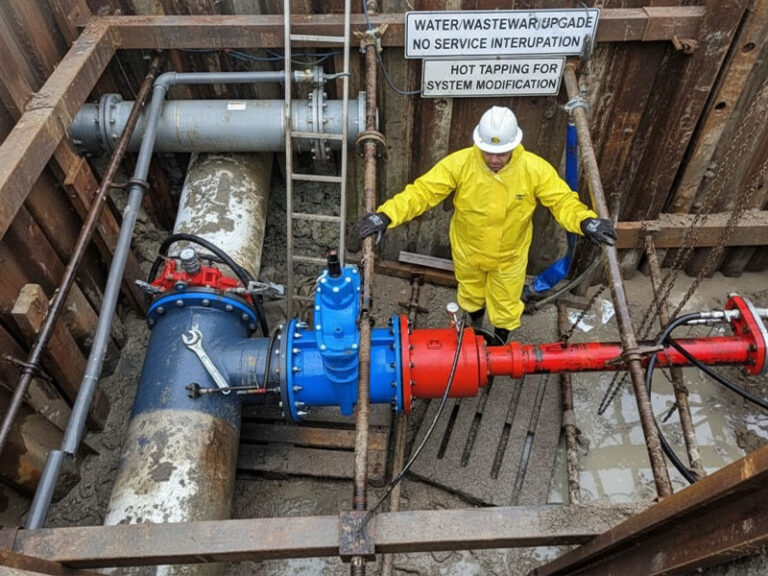
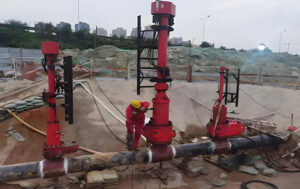
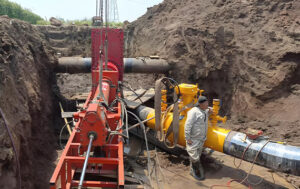
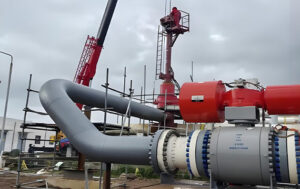
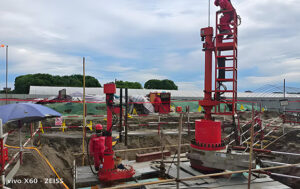
Hot tapping is a critical pipeline intervention technology used in the water and wastewater industry to perform system upgrades, repairs, and modifications while the pipeline remains in full operation, thereby avoiding costly service interruptions. This method involves welding a branch connection onto a live, pressurized pipe and then using a specialized drilling machine to create an opening. For essential upgrades on aging infrastructure—from replacing end-of-service-life concrete mains to adding new branches for system expansion—hot tapping provides a safe, economical, and efficient solution that maintains continuous water supply and wastewater conveyance. This article will explain the fundamental principles, detail the step-by-step process, explore its primary applications in the sector, and outline the critical safety and engineering considerations that ensure its successful and reliable execution.
Core Principle: How Does Hot Tapping Work Without Shutting Off the Flow?
Hot tapping works by creating a sealed, pressurized enclosure around the work area, allowing access to the pipe while its contents continue to flow. The principle is one of controlled isolation and bypass.
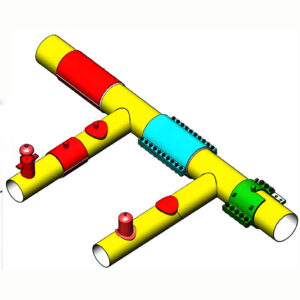
The core objective is to temporarily isolate a specific pipe section for work while keeping the overall system online. This is often achieved through a related procedure called plugging or line stopping. A common configuration is double block and bypass: two hot taps are made upstream and downstream of the section to be worked on. Plugging heads are inserted through these taps to stop the flow in that section, while a temporary bypass line reroutes the water or wastewater around it. This allows for the safe replacement of valves, pumps, or entire pipe segments with zero disruption to downstream users.
The Step-by-Step Hot Tapping Procedure
Executing a hot tap requires meticulous planning, specialized equipment, and strict adherence to procedure. The following table outlines the key stages, from initial planning to system restoration.
Table: Standard Hot Tapping Procedure Sequence
| Stage | Key Activities | Purpose & Considerations |
|---|---|---|
| 1. Planning & Design | Pipeline assessment (material, wall thickness, pressure), fitting design, bypass calculation, risk assessment. | Ensures the pipe is fit for hot work and the procedure is engineered to handle operational forces. |
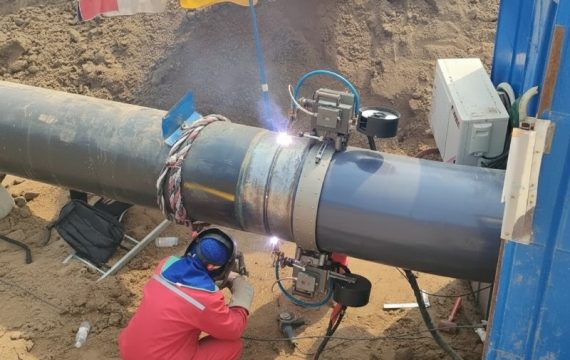
| 2. Preparation | Install tapping saddle or split-tee fitting; weld nozzle to pipeline (for metallic pipes). | Creates a permanent, pressure-rated branch connection. Fluid flow cools the weld zone. |
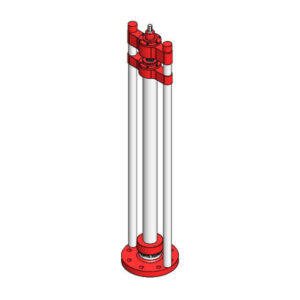
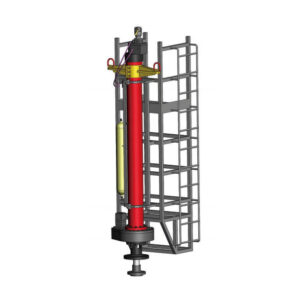
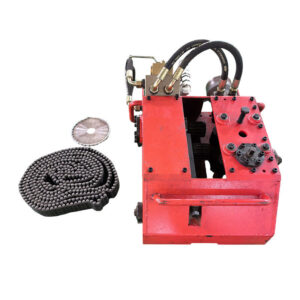
| 3. Machine Installation | Mount the hot tapping machine (with drill and cutter) onto the installed valve and fitting. | Provides a sealed environment for cutting. The machine includes a valve to isolate the cutter after the cut. |
| 4. Tapping Operation | Drill through the pipe wall; retract the cutter and coupon (the cut piece of pipe); close the valve. | The cut is made within the sealed chamber. The coupon is retained to prevent it from entering the flow. |
| 5. Completion | Remove the tapping machine; leave the new valve and branch connection in place for future use. | The new connection is now ready for tie-in, plugging, or instrumentation. |
Figure: Schematic of a Hot Tapping Operation
A diagram showing a pressurized water main with a welded split-tee fitting. A valve is mounted on the fitting, and the hot tapping machine is attached to the valve. The cutter is shown penetrating the pipe wall, with a temporary bypass line illustrating how flow is maintained around a downstream work area.
Primary Applications in Water/Wastewater Systems
This technology is indispensable for maintaining and modernizing critical buried infrastructure. Its key applications include:
- System Expansion and New Connections: Adding new branch lines to service developing areas or connect new facilities without needing to drain large sections of the distribution network.
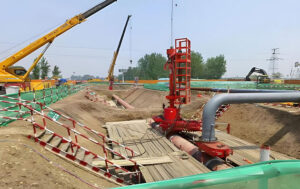
- Pipeline Replacement and Relocation: Enabling the replacement of aging or failing sections of prestressed concrete cylinder pipe (PCCP) or other materials-9. A bypass keeps the system live while the old pipe is excavated and a new one installed.
- Emergency Repairs and Leak Sealing: Isolating a leaking section to perform a repair without the catastrophic need for a system-wide shutdown, which is critical for preventing environmental incidents and service loss.
- Installation of Monitoring Equipment: Providing access points to insert sensors for pressure, quality, or flow monitoring, supporting smart water network initiatives.
- Valve and Hydrant Installation/Replacement: Allowing for the addition or swap of control and access points with minimal impact on service.
Critical Safety, Engineering, and Economic Considerations
While highly effective, hot tapping is an inherently hazardous activity classified as a controlled loss-of-containment event. Its success hinges on rigorous safety and engineering protocols.
- Safety and Risk Management: A formal Safe Work Practice (SWP) is mandatory. This requires proving that a “cold tap” (on a shut-down, empty pipe) is not feasible. A thorough risk assessment must address fluid chemistry, pressure, pipe metallurgy, and wall thickness. Operations on pipes containing highly toxic materials or extreme temperatures may be prohibited.
- Engineering Design and Forces: The procedure generates significant thrust forces during drilling and plugging. These forces must be adequately restrained by engineered thrust blocks or anchoring systems to prevent equipment displacement and maintain seal integrity.
- Economic Justification: The primary economic driver is avoiding the cost of downtime. For large-diameter transmission mains, the cost of a prolonged shutdown—in terms of lost revenue, emergency water hauling, and social disruption—can reach tens of millions of dollars, far outweighing the cost of the hot tap procedure itself. It also reduces the need for extensive excavation and restoration.
FAQ: Common Questions About Hot Tapping
Q: What materials can be hot tapped?
A: The procedure is commonly used on steel, ductile iron, and various plastic pipes (like PE). It is also a key technique for maintaining and replacing large-diameter concrete pressure pipelines. The pipe must be inspected to verify sufficient wall thickness and structural integrity.
Q: Is hot tapping safe for drinking water lines?
A: Yes, when performed by qualified professionals using equipment and procedures designed for potable water systems. The process occurs in a sealed environment, preventing contamination.
Q: What’s the difference between hot tapping and line stopping?
A: Hot tapping refers specifically to creating an opening in a live line. Line stopping (or plugging) uses a hot tap as an access point to insert a plugging head to temporarily stop the flow in a pipe section. They are often used together.
Q: Who typically performs this work?
A: Specialized contractors with certified personnel, proprietary equipment, and extensive experience in live pipeline work. They work alongside utility engineers and project managers to plan and execute the operation.
Partner with JSW for Your Critical Pipeline Upgrades
For over two decades, JSW has been a trusted leader in providing advanced hot tapping and pipeline intervention services for the global water and wastewater industry. Our expertise goes beyond simply performing the task; we deliver engineered solutions that prioritize system integrity, safety, and cost-effectiveness.
Our approach combines deep industry knowledge with cutting-edge technology: Our team of certified engineers and technicians conducts comprehensive pre-job planning and fitness-for-service assessments, leveraging proprietary analysis tools to model thermal effects and thrust forces, ensuring every procedure is designed for success. We maintain a fleet of state-of-the-art hot tapping and plugging equipment capable of handling diameters from 2 inches to over 90 inches, including specialized systems for challenging materials like concrete cylinder pipe.
We understand that the greatest value lies in keeping your water flowing. By choosing JSW as your contractor, you gain a partner committed to executing your system upgrades, maintenance, and emergency repairs with precision and zero service interruption. Contact our engineering team today to discuss your upcoming project and discover how our tailored services can provide the reliable, trenchless solution you need.
Author: David Chen, Senior Pipeline Engineer | Last Updated: January 25, 2026
Authoritative Background: David is a licensed Professional Engineer (P.E.) with 15 years of experience in pipeline integrity, rehabilitation, and trenchless technologies. He has authored several technical papers on live pipeline intervention and oversees the engineering design for all major projects at JSW.










 English
  Arabic
  Russian
  Spanish
  French
  Vietnamese
  Polish
  Thai
Thai  Indonesian
  Turkish
  Portuguese