Certainly. A highly instructive case study comes from Petrobras’s (Petróleo Brasileiro S.A.) operations in the Marlim field of the Campos Basin. The company successfully implemented hot tapping and plugging bypass procedures to install fiscal meters on live crude oil pipelines, entirely avoiding production shutdowns that would have lasted 15 days per platform.
Hot tapping is a critical pipeline maintenance technique that allows for the creation of a new connection to a pipeline without interrupting service or depressurizing the line. When used to bypass a failed valve, the core process involves establishing a temporary bypass line through two taps, isolating the faulty section with plugging heads, and redirecting flow to enable safe repair. This article will detail the technical principles, walk through specific case applications, analyze operational benefits, and outline the stringent safety protocols that make this a preferred solution for ensuring operational continuity in the oil and gas industry.
How Hot Tapping Bypass Works: Principles and Key Equipment
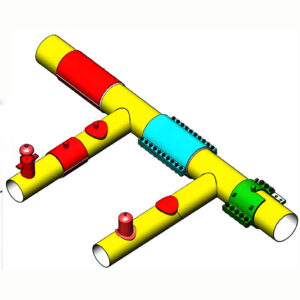
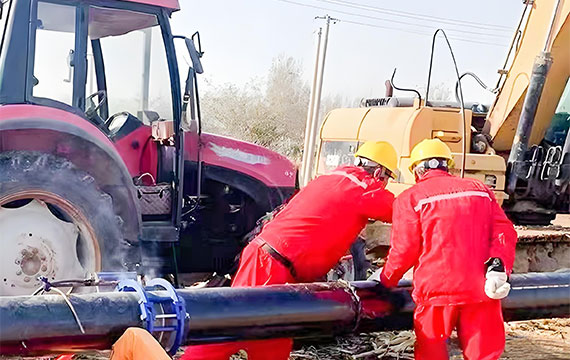
The hot tapping bypass procedure is a non-intrusive, live-maintenance method. It involves attaching a tapping fitting and valve onto an operational pipeline and using specialized equipment to drill into the pipe wall, thereby creating a new flow path. Its primary advantage is the ability to perform major modifications or repairs with zero production interruption.
Executing this technique requires a coordinated set of specialized equipment:
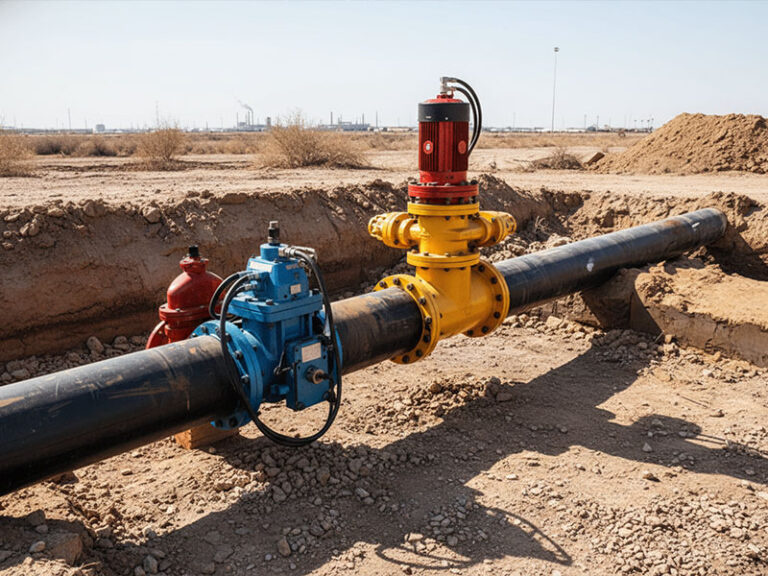
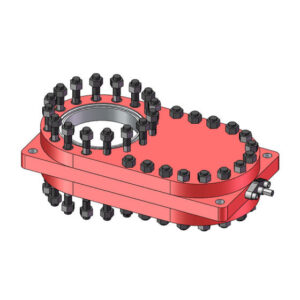
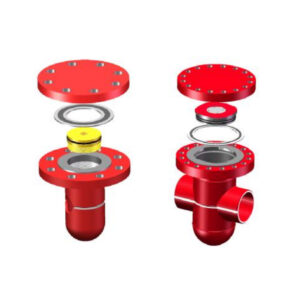
- Tapping Fitting and Valve: A pressure-containing assembly is first welded or mechanically attached to the pipeline at the designated locations, forming the secure foundation for all subsequent work.
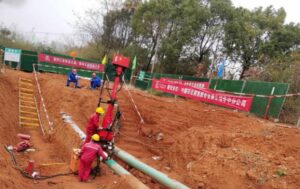
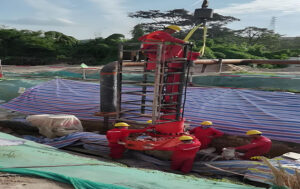
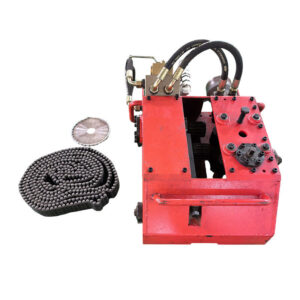
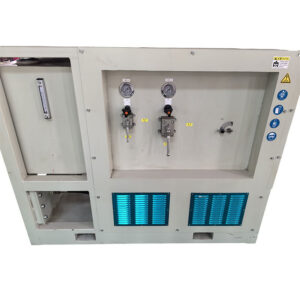
- Hot Tapping Machine: A specialized drilling machine designed to safely cut into a pressurized pipe through the installed valve.
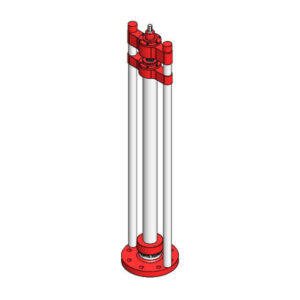
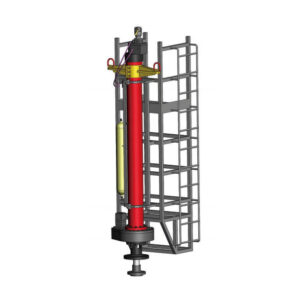
- Pipeline Plugging Head (Stopple): A temporary isolation device inserted through the tap, which can be expanded inside the pipe to form a seal and block flow.
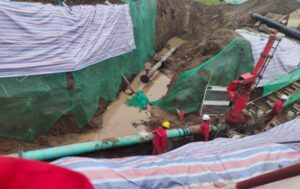
- Bypass Spool Piece: A pre-fabricated section of temporary piping, rated for the operating pressure, used to connect the upstream and downstream taps, forming the diversion path.
Case Study Deep Dive: No-Shutdown Retrofit at the Marlim Field
The challenge faced by Petrobras in the Marlim field was a classic scenario. To comply with new regulatory metering requirements, the company needed to install 27 fiscal meters on crude oil and flare gas lines across six offshore platforms. The conventional method would have required a full production shutdown of each platform for approximately 15 days, leading to massive production loss and revenue impact.
The project team selected hot tapping and plugging as the enabling solution. The project, from planning to completion, spanned one year and followed these key stages:
- Pre-Planning and Inspection: Detailed engineering design and preliminary inspections of the target pipeline sections.
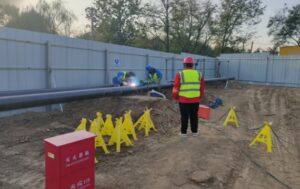
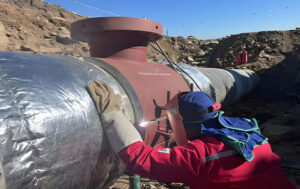
- Fitting Installation: Welding of full-encirclement split tees (the tapping fittings) onto the pipeline at the planned locations.
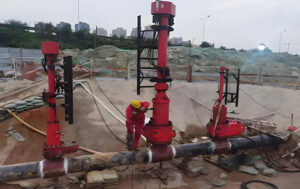
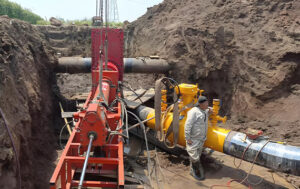
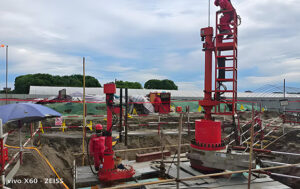
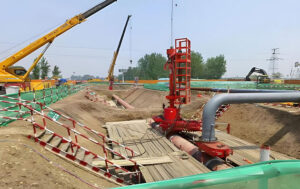
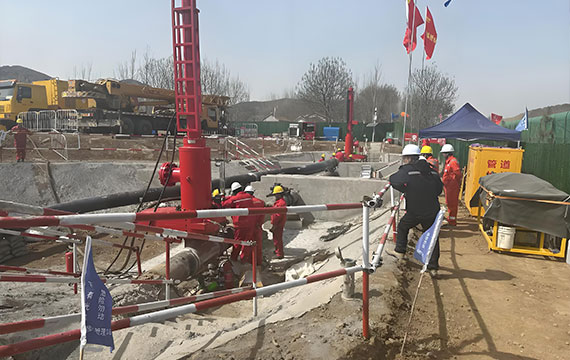
- Hot Tap and Plugging Execution: Using a hot tap machine to drill into the pipe. A temporary plugging head was then inserted through the tap, positioned, and set to create a seal. This process was performed at two points: upstream and downstream of the section requiring work (e.g., the failed valve or meter installation point).
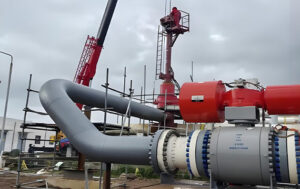
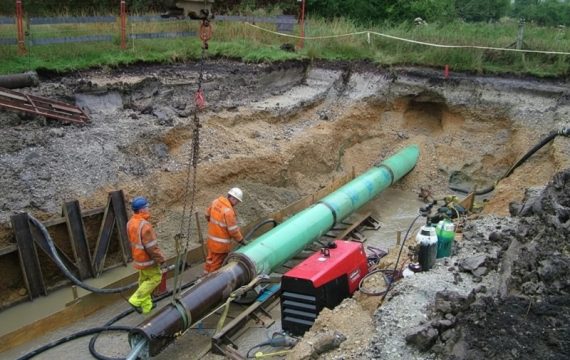
- Bypass Line Installation: The pre-fabricated bypass spool was connected between the two tapping points. Once secured and tested, valves were opened to seamlessly divert the crude oil flow through the new temporary path.
- Primary Work Execution: With the isolated section safely depressurized, the main work—whether valve replacement or meter installation—was performed.
- Reinstatement and Removal: Following the completion of work, the original line was restored. Plugging heads were retrieved, and the tap openings were permanently sealed with completion plugs.
The outcome was definitive: All 27 meters were installed without a single production shutdown. This approach translated to an estimated savings of hundreds of millions of dollars in deferred production, starkly highlighting the economic imperative of the technique.
Comparative Analysis: Hot Tapping Bypass vs. Traditional Shutdown
Why choose a complex hot tapping procedure over a traditional shutdown? The decision is fundamentally driven by risk mitigation and cost.
Hot Tapping Bypass vs. Traditional Shutdown for Valve Repair
| Factor | Hot Tapping Bypass Procedure | Traditional Shutdown & Replacement |
|---|---|---|
| Production Impact | Zero. Flow continues uninterrupted via the bypass. | Complete shutdown for the duration of the repair and recommissioning. |
| Operational Safety | Work is performed on an isolated, depressurized section. Primary risk is managed during the tapping/plugging phase under controlled procedures. | Entire line must be depressurized, purged, and made safe for hot work, introducing different sets of safety hazards. |
| Economic Cost | High initial mobilization and equipment cost, but no loss of product or revenue. | Low direct construction cost, but extremely high indirect cost due to lost production. |
| Schedule Duration | Longer planning and preparation phase, but execution is typically faster for the actual repair work within the isolated section. | Planning may be simpler, but overall timeline is dominated by the lengthy shutdown, cooling, purging, and restart sequences. |
| Best Application | Critical pipelines where shutdown is prohibitively expensive or operationally impossible. | Non-critical lines with readily available backup systems or scheduled plant-wide turnarounds. |
Critical Safety Protocols and Industry Standards
The success of any hot tapping operation hinges on relentless adherence to safety. It is not a routine maintenance task but a highly engineered service.
- Rigorous Pre-Job Engineering: Every procedure requires a detailed work plan, including stress analysis on the pipe wall during tapping, verification of pipe material and wall thickness, and full hazard analysis (HAZOP/JSA).
- Qualified Personnel and Equipment: The operation must be performed by certified contractors with specialized training. All equipment, from the tapping valve to the plugging head, must be rated for the specific pipeline pressure and product (e.g., crude oil, gas, water).
- Contingency Planning: A comprehensive emergency response plan is mandatory. This includes procedures for dealing with a stuck cutter, a plugging head that cannot be retrieved, or a leak at a fitting.
Beyond Valve Repair: Other Key Applications of Hot Tapping
The ability to work on live lines makes hot tapping invaluable for numerous pipeline modification and integrity tasks:
- Pipeline Section Replacement: Isolating and replacing corroded or damaged segments.
- New Branch Line Installation: Adding new connections for tie-ins without shutting down the main line.
- Emergency Isolation: Quickly sealing off a leaking or damaged section to minimize environmental impact.
- In-Service Inspection: Installing inspection tool launchers/receivers or probe points.
Conclusion and Key Takeaways
The Petrobras case study powerfully demonstrates that hot tapping to create a bypass around a failed valve is not just theoretically possible but is a standard, high-reliability solution in modern pipeline engineering. It transforms a potential multi-million dollar production crisis into a managed, planned operation.
The decision to use this technique balances higher upfront technical costs against the enormous value of sustained production. Its execution is governed by stringent engineering standards and safety protocols, demanding expertise from specialized service contractors. For operators of critical oil, air, and water transmission assets, mastering and utilizing hot tapping and plugging technologies is essential for responsible asset management, profitability, and operational resilience.
Author: David Chen, Senior Pipeline Integrity Engineer
Update Date: October 26, 2023
David has over 15 years of experience in the planning and execution of live pipeline interventions, including hundreds of hot tapping and plugging projects across downstream and midstream assets.







 English
  Arabic
  Russian
  Spanish
  French
  Vietnamese
  Polish
  Thai
Thai  Indonesian
  Turkish
  Portuguese