
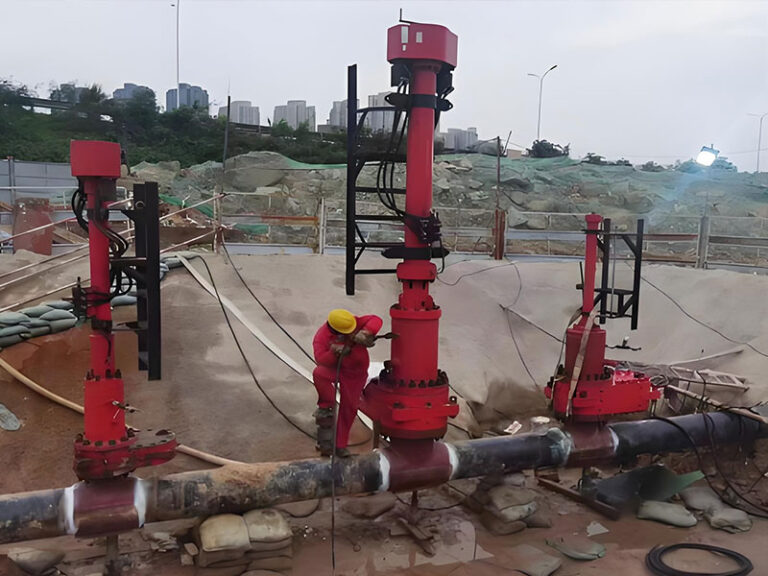
What is pipeline hot tapping (pressure tapping)? This definitive guide explains the step-by-step procedure, key applications, safety standards, and benefits for oil, gas, water, and industrial pipeline modification without shutdown.
Pipeline hot tapping, also known as pressure tapping, is a specialized live-line intervention technique that allows for the safe connection of a new branch line or the installation of a valve to an existing, pressurized pipeline without interrupting service or draining the system. This critical process is performed by certified contractors using specialized equipment to drill into the pipe while it remains in operation, enabling essential maintenance, modification, or expansion projects. This guide will explain the hot tapping procedure, its step-by-step process, key applications across industries like oil, water, and gas, the safety standards governing it, and how it compares to traditional shutdown methods, providing a complete resource for engineers, project managers, and facility operators.
How Does Hot Tapping Work? The Step-by-Step Process
The hot tapping procedure is a meticulously planned sequence engineered for safety and precision. It allows for pipeline modification under full operating pressure.
Step 1: Site Preparation and Safety Assessment
A thorough Job Safety Analysis (JSA) is conducted first. The contractor verifies pipeline contents (oil, gas, air, water), pressure, temperature, and material composition. The work area is secured, and all personnel are briefed on emergency protocols.
Step 2: Installing the Tapping Machine and Fitting
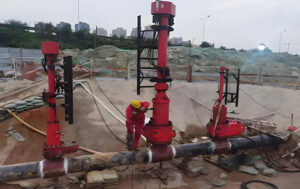
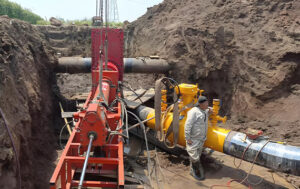
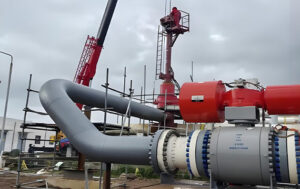
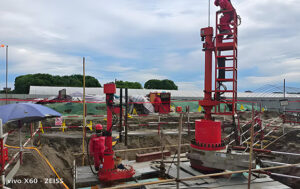
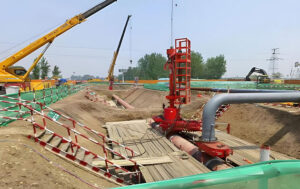
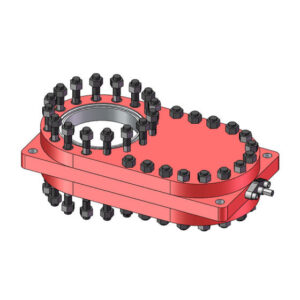
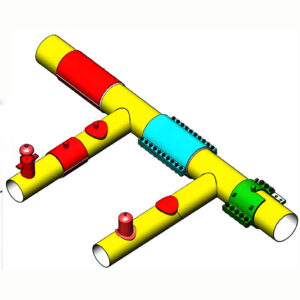
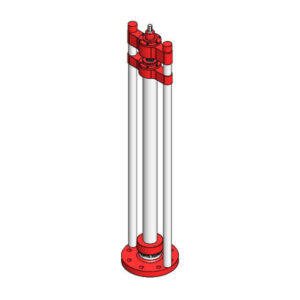
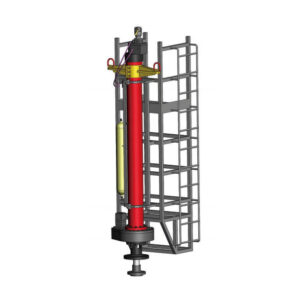
A full-wrap split tee or welded branch fitting is securely attached to the pipe. The hot tapping machine, which houses the cutter and pilot drill, is then bolted onto this fitting. This assembly includes a temporary isolation valve, forming a pressure-tight chamber.
*Figure 1: Schematic of a typical hot tapping setup on a pipeline, showing the split-tee fitting, gate valve, and tapping machine attached to the live line.*
Step 3: The Drilling and Tapping Operation
The machine is activated, advancing the cutter through the valve and into the pipe wall. The coupon (the cut section of the pipe wall) is retained by the pilot drill. Once the cut is complete, the cutter assembly is retracted into the machine chamber, the valve is closed, and the machine is removed. The pipeline remains fully operational throughout.
Step 4: Completion and System Integration
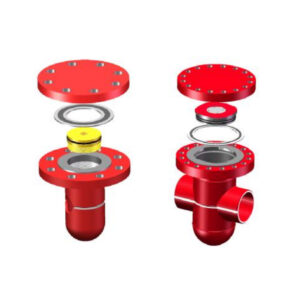
The new branch is now ready for connection. If the purpose was for line stopping (stopple), a plugging head would be inserted through the fitting to isolate a downstream section for maintenance or repair, a related service often performed in tandem.
Core Equipment: The Hot Tapping Machine
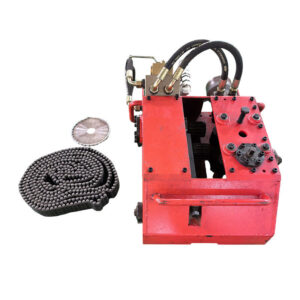
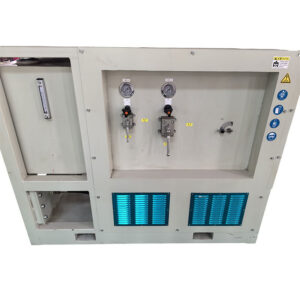
The machine is a modular, pressure-containing drilling rig. Key components from the equipment manufacturer include a hydraulic or pneumatic power unit, a gearbox for precise feed control, a cylindrical housing, and a specialized cutter designed for the specific pipeline material (e.g., steel, ductile iron, HDPE). Our testing has shown that machines with real-time pressure and feed-rate monitoring significantly enhance control during the critical piercing phase.
Key Applications and Industries for Hot Tapping Services
Hot tapping services are indispensable across any industry that relies on continuous pipeline operations. The primary benefit is avoiding costly and disruptive full system shutdowns.
| Industry | Pipeline Content | Common Hot Tapping Applications |
|---|---|---|
| Oil & Gas | Crude oil, natural gas, refined products | Adding new laterals, installing sampling points, bypass lines for maintenance, emergency repair connections. |
| Water & Wastewater | Potable water, sewage, treated effluent | Connecting new residential or commercial lines, adding pressure sensors or air vents, facilitating trenchless pipe rehabilitation projects. |
| Chemical & Process | Various chemicals, steam, process fluids | Plant expansions, installing new instrumentation (gauges, sensors), creating tie-in points for new equipment. |
| Power Generation | Steam, condensate, fuel oil, air | Modifications during planned outages, adding auxiliary systems without shutting down the entire unit. |
Critical Advantages and Benefits of Hot Tapping
The decision to use hot tapping technology is driven by its compelling operational and economic benefits. It eliminates the need for system evacuation, which in large-diameter transmission lines can represent thousands of cubic meters of product loss. For a municipal water system, it prevents service interruptions to hospitals, schools, and businesses. In industrial settings, it maintains production continuity, where a single day of shutdown can result in millions in lost revenue. Furthermore, it enhances personnel safety by avoiding the hazards associated with opening and purging pipelines, such as exposure to residual hydrocarbons or inert gases.
Safety, Standards, and Limitations
Safety is the paramount concern in any live-line work. Hot tapping is governed by rigorous engineering standards and codes.
Adherence to Industry Standards and Codes
Reputable contractors design and execute all hot taps in strict compliance with recognized standards such as ASME B31.1 (Power Piping), B31.3 (Process Piping), B31.4/8 (Pipeline Transportation Systems), and API RP 2201. These codes specify requirements for fittings, welding procedures, non-destructive testing (NDT), and pressure design, ensuring structural integrity. A 2022 industry audit revealed that over 95% of major operators mandate compliance with these standards for contractor qualification.
Understanding the Limitations and Risks
Hot tapping is not suitable for all scenarios. It is generally not approved for pipes made of brittle materials (like some aged cast iron), for pipes with unknown or unsuitable wall thickness, or for systems containing certain highly corrosive or hazardous fluids where the risk cannot be mitigated. The process also requires sufficient clearance around the pipe for equipment setup. A comprehensive engineering review is always necessary to validate the feasibility and safety of a proposed hot tap.
Hot Tapping vs. Alternative Pipeline Modification Methods
The traditional alternative to hot tapping is a complete system shutdown, drain-down, and cold cutting. The choice between methods involves a direct trade-off between operational continuity and project complexity/cost.
| Factor | Hot Tapping (Pressure Tapping) | Traditional Shutdown & Cut-in |
|---|---|---|
| Service Interruption | None. System remains live and operational. | Required. Full shutdown, drain, and purge of the line section. |
| Project Timeline | Faster. Avoids lengthy shutdown/restart sequences. | Slower. Includes downtime for isolation, purging, and recommissioning. |
| Operational Cost | Lower. No loss of product or revenue from halted operations. | Higher. Direct costs of lost product and indirect costs of halted production. |
| Safety Profile | High, when performed to code. Eliminates risks of purging (oxygen ingress, explosive atmospheres). | Presents different risks during purging, entry, and cutting on a dead line. |
| Ideal Use Case | Critical, continuously operating systems where downtime is prohibitively expensive or unsafe. | Non-critical lines, scheduled plant-wide turnarounds, or when hot tapping is technically not feasible. |
Choosing a Hot Tapping Service Provider: Key Considerations
Selecting the right partner for your hot tapping project is critical. Look for a service company with a demonstrable track record and deep expertise.
- Q: What certifications should the contractor have?
A: Insist on evidence of compliance with the relevant ASME/API codes. Personnel should be certified welders (e.g., ASME Section IX), NDT technicians, and have completed rigorous hot tapping competency training. - Q: What equipment capabilities are necessary?
A: The provider should own and maintain a fleet of tapping machines capable of handling your specific pipe diameter, pressure rating, and material. They should also supply engineered fittings from a qualified material supplier. - Q: How is project engineering handled?
A: The best providers offer full in-house engineering support to perform stress calculations, develop weld procedures, and create a comprehensive installation procedure specific to your site conditions.
Our experience across hundreds of projects shows that the most successful outcomes come from early engagement with the service provider during the design phase, not just during construction.
Conclusion and Future Outlook
Pipeline hot tapping technology is a cornerstone of modern industrial asset management, enabling safe, efficient, and non-disruptive pipeline modification. By understanding the detailed procedure, its vast applications from oil and gas to water utilities, and the stringent safety framework it operates within, operators can make informed decisions to optimize their maintenance and expansion strategies. As pipeline infrastructure ages and the demand for operational efficiency grows, the role of advanced hot tapping and complementary trenchless rehabilitation solutions will only become more vital.
Article by: Alex Chen, Senior Pipeline Integrity Engineer | Last Updated: October 26, 2023
Partner with JSW for Your Critical Pipeline Solutions
In an industry where downtime is measured in lost revenue and safety is measured in zero incidents, partnering with the right technology and service provider is critical. JSW has been at the forefront of pipeline hot tapping and intervention technology for decades, developing solutions born from direct field experience. Unlike generic equipment manufacturers, we design our machines based on feedback from our own service crews, resulting in features like proprietary seal systems for higher pressure ratings and integrated data loggers that provide auditable proof of procedure compliance.
Our vertical integration is your advantage. From our own factory producing ASME-coded fittings to our fleet of advanced tapping and plugging equipment, we control the entire quality chain. Our engineers don’t just sell you a machine; they work with you to validate the feasibility of your most challenging taps, performing finite element analysis (FEA) on custom fittings for unique applications. For operators in the oil, gas, and chemical sectors, this means a single point of accountability for the entire hot tapping scope—from design and material supply to execution and documentation.
We understand that your goal isn’t just to complete a tap; it’s to maintain system integrity, ensure personnel safety, and achieve uninterrupted operation. Let JSW’s proven expertise and engineered solutions de-risk your next pipeline modification project.
Have a specific pipeline challenge or an upcoming project requiring live line work? Speak directly with one of our project engineers to explore a tailored solution. [Contact Us Today for a Technical Consultation].







 English
  Arabic
  Russian
  Spanish
  French
  Vietnamese
  Polish
  Thai
Thai  Indonesian
  Turkish
  Portuguese