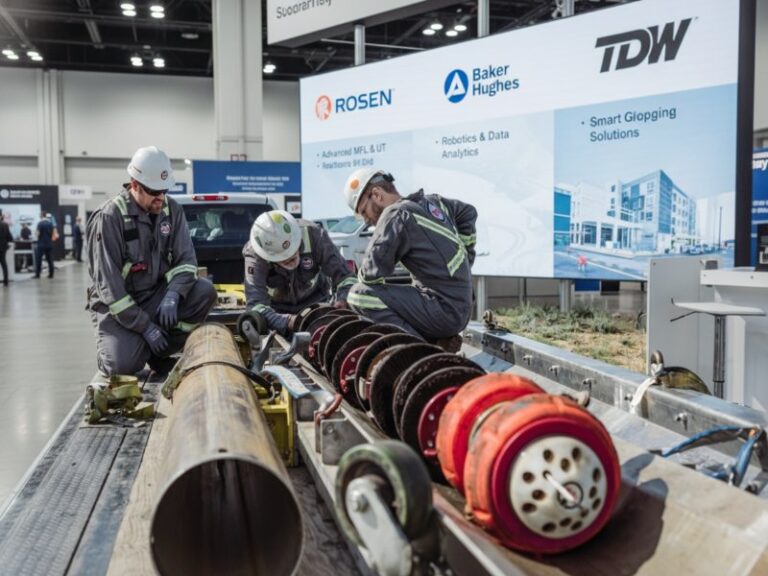
ROSEN, Baker Hughes, and TDW are the three leading global companies in the pipeline inspection and integrity services market, each distinguished by its unique technological focus, service history, and market positioning. Choosing the right partner for your pipeline integrity needs requires understanding their core competencies, from ROSEN’s data-driven analytics and comprehensive asset management to Baker Hughes’ advanced sensor technologies and TDW’s specialized in-line inspection (ILI) platforms. This comparison provides a clear, factual analysis of their services, technological innovations, and industry applications to inform your decision-making process.
Market Overview and Company Profiles
The global intelligent pipeline pigging market is a critical and growing sector within the energy and infrastructure industries. Valued at approximately $1.06 billion in 2024, the market is projected to grow at a compound annual growth rate (CAGR) of around 6.5%, reaching an estimated $1.87 billion by 2033. This growth is driven by aging infrastructure, stringent safety regulations, and the increasing need to transport new energy carriers like hydrogen. The market features a mix of global leaders and specialized players, with the top four companies—including TDW, ROSEN, and Baker Hughes’ PII division—collectively holding over 50% of the global market share, indicating a high degree of consolidation and expertise.
Introduction to the Key Players
- ROSEN Group: A technology-driven leader with over 40 years of experience, focusing on holistic asset integrity management and data analytics. The company has inspected over 1 million miles of pipelines globally.
- Baker Hughes (PII): A major energy technology company whose Pipeline Inspection (PII) division is renowned for its advanced non-destructive testing (NDT) and sensor technologies, developed through partnerships with major operators.
- T.D. Williamson (TDW): A century-old specialist in pipeline solutions, known for its innovative in-line inspection (ILI) tools and comprehensive hot tapping and plugging services for maintenance and modifications.
Detailed Company Comparison and Service Analysis
To effectively compare these industry leaders, it’s essential to examine their technological specialties, core service offerings, and typical project applications. The following table provides a structured overview of their key differentiators.
Table: Comparative Analysis of ROSEN, Baker Hughes, and TDW
| Aspect | ROSEN Group | Baker Hughes (PII) | T.D. Williamson (TDW) |
|---|---|---|---|
| Primary Focus | Holistic asset integrity management & data analytics | Advanced sensor technology & NDT equipment | Specialized ILI platforms & pipeline maintenance services |
| Core Inspection Technologies | Ultrawave (UT), EMAT, Laser, Geometry, MFL | Ultrasonic Phased Array, MFL, Digital Radiography (DXR Flex) | MDS™ Pro (Multi-Data System), Spiral MFL, EMAT, Geometry |
| Key Service Strength | End-to-end integrity consulting, threat assessment, life extension | High-resolution crack detection, field inspection efficiency, composite technology | Interacting defect analysis (e.g., dents on welds), integrated maintenance & inspection |
| Industry Application | Oil & Gas, Future Fuels (H2, CO2), Mining, Offshore | Oil & Gas, Power Generation, Chemicals, Aerospace | Pipeline Transmission & Distribution, Onshore & Offshore Maintenance |
ROSEN: The Holistic Integrity Manager
ROSEN adopts a comprehensive “plan, do, check, act” philosophy for asset management. Their strength lies not just in data collection but in transforming inspection data into actionable intelligence for asset life extension. They apply a wide range of technologies, including ultrasound and electromagnetic methods, tailored to specific asset threats. A key differentiator is their strong focus on the energy transition, offering dedicated roadmaps and inspection solutions for future fuels like hydrogen and carbon dioxide pipelines.
Baker Hughes: The Sensor Technology Pioneer
Baker Hughes excels through its Waygate Technologies brand, which focuses on cutting-edge non-destructive testing (NDT) equipment. A notable innovation is the DXR Flex, a bendable digital X-ray detector that can encircle pipes as small as 150mm in diameter. This technology can reduce the number of exposures needed for an inspection by up to 65%, dramatically speeding up field operations. Their work with partners like Enbridge on ultrasonic phased array sensors aims to enhance the accuracy of identifying and characterizing crack features, pushing the boundaries of inspection resolution.
TDW: The ILI and Integrated Solutions Expert
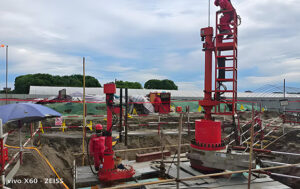
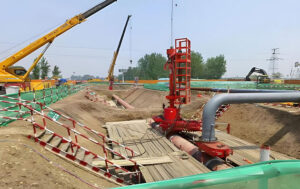
With over 500 registered patents, TDW’s innovation is deeply focused on in-line inspection tools and hands-on maintenance. Their flagship MDS™ Pro platform integrates six complementary technologies (including multiple MFL types and high-resolution geometry) into a single tool. This is particularly effective for identifying and assessing complex, interacting defects—such as corrosion coincident with a dent or seam weld anomaly—which present a higher integrity risk. TDW uniquely combines this inspection capability with live pipeline intervention services like stopple plugging and hot tapping, offering a “one-stop” solution for integrity assessment and subsequent maintenance.
Choosing the Right Inspection Partner
How do you select the best company for your pipeline project?
The optimal choice depends heavily on your project’s specific goals, threat profile, and operational constraints. Consider these factors:
- Project Objective: Is the primary need a regulatory compliance run, investigation of a specific threat (like cracking), or a full integrity management program for life extension?
- Threat Type: Different technologies target different threats. For example, ultrasound excels at crack measurement, while MFL is robust for general metal loss.
- Pipeline Accessibility and Product: Can the pipeline be taken out of service, or is inspection required during operation? Does it carry oil, natural gas, or future fuels like hydrogen?
- Data Needs: Do you require raw inspection data, or are you looking for a partner to provide analyzed results, risk ranking, and direct maintenance recommendations?
What are the limitations of current inspection technologies?
No single technology is universally perfect. Magnetic Flux Leakage (MFL) may struggle with certain crack orientations, while ultrasonic testing requires a liquid couplant and can be challenged by thick coatings or debris. All inspection data requires expert analysis, and the final integrity assessment always involves engineering judgment. Companies like TDW are leveraging machine learning to enhance feature classification, but these tools aid rather than replace skilled analysts.
Figure: Common Pipeline Inspection Threat Matrix
A conceptual chart mapping primary inspection technologies (MFL, Ultrasound, EMAT, Geometry) against their effectiveness in detecting common pipeline threats such as general corrosion, pitting, axial cracks, circumferential cracks, dents, and weld anomalies.
Industry Outlook and Future Trends
The pipeline inspection industry is evolving rapidly. A significant trend is the move toward multi-technology inspection tools, like TDW’s MDS Pro, which provide a more complete picture of pipeline health in a single run. Furthermore, the rise of digitalization and AI is transforming data analysis, moving from simple anomaly detection to predictive analytics that forecast maintenance needs and remaining asset life. Finally, the entire sector is adapting to support the energy transition, developing new inspection methodologies and integrity frameworks for pipelines carrying hydrogen, CO2, and other sustainable energy carriers.
Author: David Chen, Senior Pipeline Integrity Consultant
Update Date: February 2026
Partner with JSW for Your Pipeline Integrity Solutions
While global leaders like ROSEN, Baker Hughes, and TDW set the standard for large-scale transmission line inspections, regional and specialized pipeline networks often require a more agile and cost-effective approach. This is where JSW Pipeline Solutions creates distinct value.
JSW specializes in delivering high-accuracy inspection and maintenance services tailored for complex regional distribution networks, aging infrastructure, and challenging field conditions. Our expertise bridges the gap between advanced technology and practical, on-the-ground execution.
Our Core Advantages:
- Rapid Response & Flexibility: We operate a dedicated fleet of inspection tools and maintenance equipment, enabling us to mobilize quickly for unplanned integrity assessments or emergency interventions, minimizing your downtime.
- Specialization in Complex Scenarios: Our engineers excel in projects involving low-flow pipelines, multiple diameter changes, and difficult-to-access sections, providing solutions where standard tool runs are not feasible.
- Integrated Service Model: From initial inspection and trenchless pipe rehabilitation planning to execution of pipeline modifications and maintenance, JSW provides a seamless, accountable service chain. We are your single point of contact for both assessment and restoration.
- Data-Driven Local Insight: We provide clear, actionable reporting that aligns with local regulatory frameworks, helping you make informed decisions for safety, compliance, and asset life extension.
Let’s Discuss Your Project
Are you evaluating inspection options for an upcoming integrity program, planning a pipeline modification, or addressing a specific integrity concern? JSW’s team of experts is ready to provide a customized solution.
Contact us today for a consultation to explore how our targeted approach can enhance the safety, reliability, and efficiency of your pipeline assets.




 English
  Arabic
  Russian
  Spanish
  French
  Vietnamese
  Polish
  Thai
Thai  Indonesian
  Turkish
  Portuguese