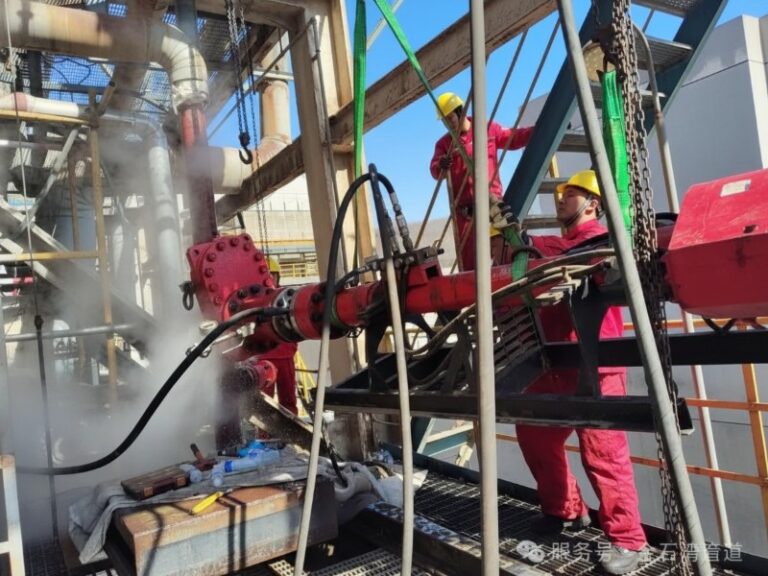
Evaluating a hot tapping service provider requires a meticulous assessment of their technical certifications, safety culture, equipment standards, and operational experience to ensure they can safely modify live pipelines. This process is critical because hot tapping involves drilling into pressurized systems carrying oil, gas, water, or chemicals, where errors can lead to catastrophic failures. This guide outlines a comprehensive, seven-point framework that moves beyond basic checks, covering everything from interpreting complex safety standards and verifying project-specific experience to analyzing their approach to risk management and long-term reliability. By the end, you will know exactly what questions to ask and what documentation to demand from any contractor.
1. How Do Safety Certifications and Practices Ensure Reliable Operations?
Safety is the non-negotiable foundation of any credible hot tapping operation. A provider’s safety record is not just about compliance; it is a direct indicator of their operational discipline and corporate culture.
A great contractor embeds safety in every process, from initial risk assessment to final execution. This commitment should be verifiable through both formal accreditations and tangible on-site practices. Look for certifications like ISO 45001 (Occupational Health and Safety), which signifies a structured management system, or regional safety schemes like SafeContractor or CHAS-2-5. More importantly, these should be backed by a demonstrable safety record. Ask potential providers for their Experience Modification Rate (EMR)—a metric used in insurance to compare a company’s injury history to industry averages. An EMR below 1.0 indicates a better-than-average safety record.
Providers should follow globally recognized procedures such as those outlined in API RP 2201 (Safe Hot Tapping Practices in the Petroleum and Petrochemical Industries), which mandates detailed job-specific planning and hazard analysis for every project-9. For projects in specific regions like the Gulf, adherence to standards like GSO 2492:2015 is also crucial-10. In practice, you should expect:
- Detailed Method Statements: Written, project-specific procedures reviewed before work begins.
- Comprehensive Job Safety Analysis (JSA): Documentation identifying all potential hazards (e.g., flammable atmospheres, pressure excursions) and mitigation controls.
- Evidence of Continuous Training: Records showing regular, mandatory safety drills and competency assessments for all field personnel.
2. Why Are Technical Credentials and Specialized Training Non-Negotiable?
The technical complexity of hot tapping demands a team with formal, verified credentials. This is because the process involves specialized welding on live systems, precise metallurgical understanding, and operating sophisticated machinery under pressure.
A provider’s workforce must possess more than general trade experience. Core qualifications for key personnel should include:
- Certified Welding Inspectors (CWI) and Welders: Welding onto a live pipe requires procedures qualified for “in-service welding” to prevent burn-through. Welders must hold certifications specific to the pipeline material (e.g., carbon steel, stainless steel) and the welding process being used.
- Nondestructive Testing (NDT) Personnel: Critical welds, such as the branch connection, must be inspected. Technicians should hold Level II or III certifications in methods like Ultrasonic Testing (UT) or Radiographic Testing (RT).
- Pressure Vessel and Piping Inspectors: Personnel certified under API 510 (Pressure Vessel Inspection) and API 570 (Piping Inspection) bring essential knowledge for assessing the integrity of the system being tapped.
- Ongoing Operator Qualification (OQ) Programs: Reputable companies invest in continuous training. Ask if they have a structured Technician Advancement Program that includes annual recertification through classroom and hands-on skill demonstrations.
3. What Equipment Capabilities Separate Adequate from Exceptional Providers?
The range, quality, and maintenance of a provider’s equipment directly dictate their capability, efficiency, and safety margin. An exceptional provider views equipment as a core competency, not just a tool.
A contractor with a limited or poorly maintained fleet poses significant project risks, including delays, unsafe operations, and inability to handle complexities. Focus on these aspects:
- Ownership and Range: Does the provider own a comprehensive inventory of hot tapping machines, fittings (e.g., split tees, welding saddles), and isolation valves? Ownership typically correlates with better maintenance and faster mobilization. The equipment should cover a wide range of pipeline sizes (from 1/2 inch to over 42 inches in diameter) and pressure ratings (e.g., up to ANSI 900).
- Maintenance and Calibration: Inquire about their preventive maintenance and calibration schedules. Well-maintained machinery ensures precision drilling, reduces the risk of mechanical failure, and is inherently safer.
- Technology and Adaptability: Does the provider invest in modern technology? This includes pressure-balanced drilling machines that prevent tool ejection, Bore-Up™ plugging systems for advanced isolation, and digital monitoring systems for real-time data during the tap.
Key Equipment Checklist for Hot Tapping Contractors
Table: Essential equipment categories and their purpose for a qualified hot tapping service provider.
| Equipment Category | Key Items | Purpose & Importance |
|---|---|---|
| Drilling Rig & Machine | Pressure-balanced hot tap machine, hydraulic power unit, drill stem, cutter. | The core tool for safely cutting into the live pipe. Must match pipe diameter and pressure. |
| Branch Connection Fittings | Split tees, welded saddles, full-encirclement saddles. | Provides the reinforced connection point for the new branch. Material must be compatible. |
| Isolation & Plugging | Temporary stopple fittings, bypass piping, plugging heads. | Allows for system isolation downstream of the tap for safe valve installation or repair. |
| Welding & Fabrication | Welding generators, pipe beveling machines, welding rod ovens. | For permanently attaching fittings. Equipment must support qualified in-service welding procedures. |
| Testing & Inspection | Hydrostatic test pumps, NDT equipment (UT, RT), pressure gauges. | Verifies integrity of welds and the completed assembly before commissioning. |
4. How Does Relevant Project Experience Build a Foundation of Trust?
Experience is the context that turns theoretical knowledge into practical, reliable execution. A provider’s history in projects similar to yours is a powerful predictor of success.
Look for a portfolio demonstrating experience with the specific pipe material (e.g., carbon steel, HDPE), product (e.g., crude oil, natural gas, potable water, chemicals), and operating conditions (pressure, temperature) of your system. A provider specializing in municipal water lines may not be the best fit for a high-pressure oil pipeline, and vice-versa. Request detailed case studies or references for at least three comparable projects completed in the last 24 months. Specifically, ask about:
- Project Complexity: Have they handled taps on critical lines, in confined spaces, or within live plant environments?
- Problem-Solving: Can they describe a challenging situation (e.g., unexpected wall thickness, difficult metallurgy) and how they safely resolved it?
- Sector-Specific Knowledge: For industrial or petrochemical work, familiarity with API, ASME B31.3/B31.8, and PSM (Process Safety Management) standards is essential.
5. Why Is Transparent Pricing and Detailed Scoping Critical?
Transparency in costing and project definition is a hallmark of professionalism and prevents costly misunderstandings. A vague quote often precedes unexpected change orders and disputes.
A trustworthy provider will insist on a thorough site survey or a detailed review of pipeline schematics and operating data before providing a fixed-price quote. Their proposal should clearly break down costs, including:
- Mobilization/Demobilization: Costs for transporting personnel and equipment to your site.
- Labor: Rates for skilled technicians, inspectors, and project supervision.
- Equipment Rental: Line items for the specific tapping machine, fittings, and support equipment.
- Materials: Cost of custom-fabricated fittings, valves, and consumables.
- Contingency Planning: While not always a separate line item, the proposal should discuss how potential unknowns (like poor pipe condition) would be handled.
Be wary of quotes significantly lower than others; this can indicate a lack of proper insurance, use of substandard materials, or insufficient risk assessment. As noted in industry discussions, cutting corners on hot tapping is a false economy with potentially serious consequences.
6. What Insurance and Liability Coverage Must a Provider Carry?
Comprehensive insurance is your primary financial and legal protection if something goes wrong. Verifying this coverage is a fundamental step in your evaluation.
Any credible hot tapping service provider must carry, at a minimum, the following policies, and they should provide you with current certificates of insurance upon request:
- General Liability Insurance: Covers third-party property damage or bodily injury. Limits should be substantial, often $2 million per occurrence or higher.
- Workers’ Compensation Insurance: Mandatory coverage for their employees in case of injury.
- Professional Liability (Errors & Omissions) Insurance: Crucial for engineering services. This covers financial losses due to design errors, negligence, or failure in professional duty.
- Automobile Liability Insurance: For company vehicles.
- Pollution Liability Insurance: Especially important for work on hydrocarbon or chemical lines, covering costs associated with accidental release.
7. How Do Communication and Project Management Affect Outcomes?
Effective communication is the glue that binds all other qualifications together. A technically brilliant contractor who fails to communicate can still derail a project.
From the first inquiry, assess their responsiveness, clarity, and willingness to listen. A qualified provider acts as a consultant, asking detailed questions about your operational goals and constraints. They should assign a dedicated Project Manager or Site Supervisor as your single point of contact. Key indicators of strong project management include:
- Pre-Job Meeting: Conducting a formal meeting to review all procedures, safety plans, roles, and communication protocols.
- Daily Updates: Providing briefings at the start and end of each shift.
- Management of Change (MOC) Process: A formal procedure to document and approve any deviation from the agreed plan, a core tenet of process safety and standards like API RP 2201.
- Post-Job Documentation: Delivering a complete as-built dossier, including welder logs, NDT reports, pressure test records, and video documentation of the tap.
Final Evaluation Checklist Before Hiring
Use this list to systematically compare potential hot tapping service providers:
- Safety & Compliance: Verified API RP 2201/GSO 2492 adherence, strong EMR, and project-specific JSA.
- Personnel: Certified welders, NDT inspectors, and documented ongoing training programs.
- Equipment: Owned, well-maintained fleet suitable for your pipe size and pressure.
- Experience: Proven track record with similar projects in your industry (oil, water, construction, etc.).
- Financial Clarity: Detailed, transparent fixed-price quote with a clear scope of work.
- Insurance: Valid certificates for General Liability, Workers’ Comp, and Professional Liability.
- Communication: Designated point of contact and a clear project communication plan.
About the Author
Alex Chen is a Senior Pipeline Integrity Engineer with over 15 years of experience in pipeline modification, trenchless rehabilitation, and risk assessment for the oil, gas, and municipal water sectors. He specializes in the planning and execution of complex hot tapping and line stopping projects.
Article last updated: February 2026.
JSW Brand Introduction & Value Proposition
In the field of pipeline system maintenance and modification, choosing a partner is more than just purchasing a service; it is about investing in the integrity of your assets and the continuity of your operations. JSW Pipeline Solutions was founded on this deep sense of responsibility.
We understand that the success of critical operations like hot tapping depends not just on equipment, but on a complete, integrated system. JSW’s core strength lies in our “Systematic Integration of Safety and Technology.” This goes beyond mere compliance with standards like API RP 2201. It is about deeply coupling safety protocols with engineering precision. From feasibility simulations using digital twin models before project initiation, to our proprietary “Triple-Verification” welding procedures (encompassing material, operating conditions, and technique), and down to the real-time operational reports generated by every piece of our IoT-sensor-equipped, company-owned hot tapping machinery, we have built a closed-loop, fully traceable quality control system. This means you are not just hiring a contractor to perform a task; you are partnering with an engineering team capable of proactively anticipating risks and guaranteeing outcomes with data.
Our engineering team boasts an average of over 10 years of specialized industry experience and undergoes quarterly advanced training based on real-world failure simulations. Our equipment inventory comprehensively covers pipe diameters from ½ inch to 48 inches. More critically, for every task, we deploy not just “a machine,” but a proven “Integrated Equipment Solution”—including fully compatible custom fittings and isolation systems—eliminating compatibility risks at the source.
If you are planning a pipeline connection, modification, or emergency repair and wish to collaborate with a team that fundamentally integrates safety with technology, we invite you to engage in a deeper conversation. Contact our engineering consultants to receive a preliminary risk assessment and project brief based on your specific pipeline data. Let us demonstrate how true professional qualifications translate into smooth, reliable project execution.
Consult with the JSW expert team today to build a solid technical foundation for your next pipeline intervention.




 English
  Arabic
  Russian
  Spanish
  French
  Vietnamese
  Polish
  Thai
Thai  Indonesian
  Turkish
  Portuguese