
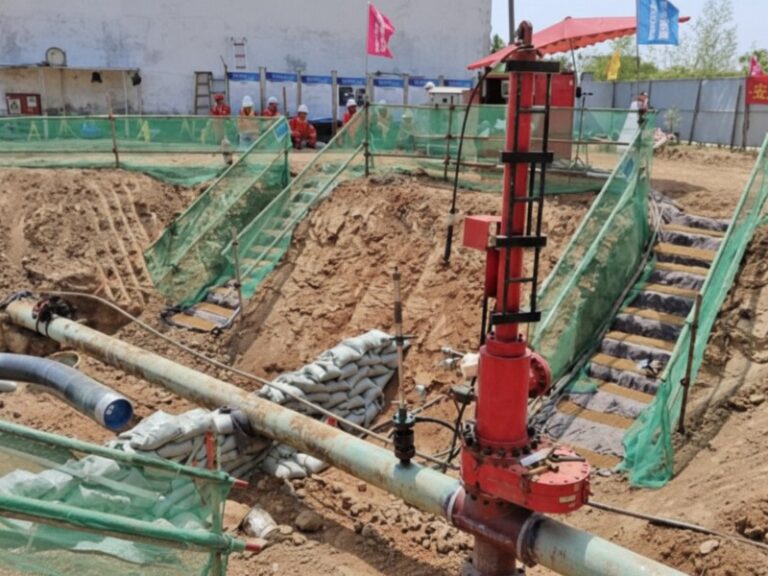
A hot tapping machine creates a pressure-tight seal during the cut through a combination of a permanently attached valve and a dynamic stuffing box packed with compressible sealing elements that close the annulus around the rotating drill rod, ensuring zero leakage even when penetrating a pipeline carrying up to 1,440 psi or more. This method, also known as pressure tapping, allows operators to connect new branches or install sensors without interrupting the flow of oil, air, water, or gas. This article explains the fundamental principles of this seal, provides a step-by-step breakdown of the hot tapping procedure, examines the critical mechanical components involved, and discusses how different industry applications—from water construction to oil and gas maintenance—rely on this trenchless technology.
1. What is the Primary Mechanism That Prevents Leaks During Hot Tapping?
The primary mechanism preventing leaks is a multi-component sealing system that isolates the moving parts of the machine from the line pressure while allowing the cutter to advance and retract.
The Role of the Isolation Valve
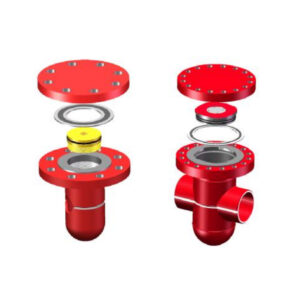
The first and most critical line of defense is the full-bore isolation valve (often a gate valve or ball valve) permanently attached to the fitting on the pipeline. Before any cutting begins, the hot tapping machine is bolted onto this valve. The valve remains open during the cut to allow the cutter to pass through, but its primary function is to provide a method to seal the pipeline after the machine is removed. It is the foundation upon which all subsequent sealing depends.
The Stuffing Box and Packing Gland
As the drill rod must rotate and move axially, a dynamic seal is required. This is achieved by a stuffing box (also known as a packing gland) located at the top of the machine’s pressure-containing housing. This box contains multiple rings of compressible, resilient sealing material—typically chevron-shaped packing made of graphite or PTFE—that are compressed around the rotating drill rod. The seal is energized by line pressure; the higher the internal pressure, the tighter the packing is forced against the rod and the housing bore.
Secondary and Emergency Sealing Systems
Modern equipment often includes redundant systems. For high-pressure operations (above 500 psia), a secondary seal or “pack-off” is common. This acts as a backup if the primary packing develops a leak. In some advanced designs, this secondary element is a piston-actuated sleeve that, when engaged, longitudinally compresses an elastic element, causing it to radially expand and form an emergency fluid-tight seal around the drill rod. The system is designed to contain pressures up to 10,000 or even 15,000 psi in specialized applications.
2. Step-by-Step: How the Seal is Maintained Throughout the Cutting Process
The integrity of the seal is not a static condition but a dynamic process managed at every stage of the operation.
Phase 1: Preparation and Equipment Setup
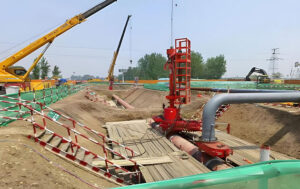
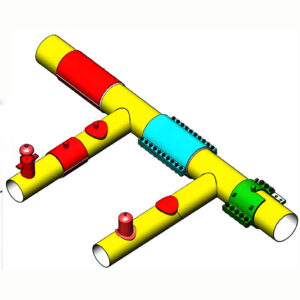
Before the machine is even mounted, a technician will weld or bolt a hot tap fitting (like a Reinforcing Pad or Split Tee) onto the mother pipeline. A full-bore valve is then attached to this fitting. The hot tapping machine, with its cutter retracted into its adapter housing, is bolted onto the valve. At this point, all connections are mechanical flanges with gaskets, creating a static, pressure-holding boundary. The machine’s internal seals are inspected to ensure they are compatible with the medium (e.g., oil, air, water).
Phase 2: Pilot Drill Penetration
The valve is opened, and the operator advances the cutter assembly. The pilot drill is the first part to contact and penetrate the pipe wall. This is the most critical moment for the seal system. When the pilot drill breaks through, the pipeline’s internal pressure immediately fills the void inside the cutter and the machine body. The stuffing box seals must instantly and effectively seal against the rotating shaft to prevent blow-by. Operators often open a purge valve on the machine to bleed off trapped air, confirming that the machine is pressurized and the seals are holding.
Phase 3: Cutting and Coupon Retention
As the main hole saw cuts the pipeline, the system maintains pressure integrity. The annulus (the space between the rotating drill rod and the stationary bore wall of the housing) is completely isolated by the packing. After the cut is complete, the coupon (the cut-out piece of pipe) is retained by the pilot drill’s U-wires. The cutter and its shaft are retracted fully into the machine’s adapter housing.
Phase 4: Isolation and Machine Removal
With the cutter safely retracted behind the valve, the full-bore valve is closed. This isolates the pipeline from the tapping machine. At this point, the pressure is trapped in the machine’s adapter housing. A small bleed valve is opened to safely vent this pressure. Once the pressure gauge reads zero, the hot tapping machine can be safely unbolted and removed, leaving the new branch connection securely sealed by the closed valve.
3. What Are the Key Components of the Sealing System?
To understand how the seal is guaranteed, one must look at the specific engineered components inside the hot tapping machine.
| Component | Function | Material / Type | Pressure Context |
|---|---|---|---|
| Stuffing Box Packing | Seals the rotating shaft; primary dynamic seal | Chevron Graphite/PTFE | Seals up to 1,440+ psi during rotation |
| Isolation Valve | Isolates pipeline after tapping; foundation of the system | Full-bore Gate/Ball Valve | Holds full line pressure (Class 150 to 2500+) |
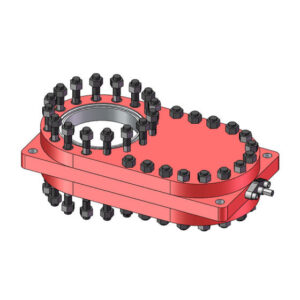
| O-Rings / Gaskets | Static seals at flange connections | Viton, Nitrile, Metal | Prevents external leaks at bolted connections |
| Secondary Pack-Off | Backup seal if primary packing leaks | Hydraulic Piston/Elastomer | Emergency seal for high-pressure operations |
The Importance of the “Chevron” Pattern
The chevron (V-shaped) packing rings are designed specifically for high-pressure reciprocating and rotating services. Under pressure, the legs of the “V” expand outward, pressing harder against the shaft and the housing wall. This is a self-energizing feature; as line pressure increases, the sealing force increases proportionally.
Seal Monitoring Ports
On high-integrity systems, especially those used in the oil and gas industry, the machine includes seal monitoring ports. These are small taps located between two sets of seals. If the primary (inner) seal leaks, pressure will build up in the monitoring port, alerting the operator to a failing seal before the secondary (outer) seal is compromised, allowing for a controlled shutdown or activation of backup systems.
4. How Do Industry Applications Influence the Sealing Requirements?
The specific fluid being transported dictates the materials and design of the sealing system. A contractor performing work on a municipal water line faces different challenges than one working on a high-pressure gas transmission line.
- Oil and Gas (Hydrocarbons): Safety is paramount due to flammability. Systems must be leak-proof to prevent explosions. Equipment often uses fire-safe seals and requires secondary backup seals. Pressures can range from 500 to 15,000 psi, demanding heavy-duty equipment from a reputable equipment manufacturer.
- Water and Wastewater: The primary concern is maintaining pressure to avoid service disruption and contamination. While pressures are lower, seals must handle large diameters and prevent groundwater infiltration during trenchless pipe rehabilitation.
- Chemical and Air Systems: Chemical compatibility is the key driver. A Material Supplier must provide seals resistant to specific solvents or acids. For compressed air systems, seal integrity prevents loss of pressure (energy efficiency) and contamination of the product.
5. What is the Coupon Catcher and How Does it Relate to Sealing?
While not a seal itself, the coupon catcher is integral to the safe completion of the tap. If the coupon (the cut-out circle of pipe) falls into the flowing pipeline, it could damage downstream valves, pumps, or instrumentation, effectively breaking the system’s integrity downstream.
The coupon is typically held by the pilot drill using retractable “U-wires” or a similar mechanism. After the cut, the operator retracts the cutter. If the coupon is not securely held, it could jam the cutter inside the valve, preventing it from closing. Therefore, a successful coupon capture is a prerequisite to closing the isolation valve and maintaining the system’s pressure boundary. This is often checked by “feel” or by observing the torque on the retraction mechanism, confirming the coupon is clear of the bore before the valve is closed.
6. Maintaining Integrity Post-Tap: Pipeline Stopple and Modifications
Once the hot tap is complete and the machine is removed, the isolation valve remains. This valve becomes the access point for future pipeline modification or pipeline stopple (plugging) operations.
If a section of pipe downstream needs repair, a technician can attach a stopple machine to this valve. The stopple machine uses a similar principle of a sealed housing, but instead of a cutter, it inserts a plugging head (like a folding head or a “stopple” plugging head) into the pipeline to block the flow. This allows the downstream section to be depressurized and worked on while the upstream line remains hot. This entire ecosystem of maintenance—from the initial tap to the final restoration of service—depends on the initial hot tap’s sealing integrity being flawless. Our services include comprehensive support for these operations, ensuring that whether you are an operator or a company managing a complex network, your solution is handled by experts.
Author & Updates
Author: Michael Chen, Senior Pipeline Integrity Engineer
Experience: 15+ years in trenchless technologies and high-pressure pipeline maintenance for the oil, gas, and utility sectors.
Last Updated: October 26, 2023
About JSW: Your Partner in Pressurized Pipeline Solutions
At JSW, we understand that a leak is not just a loss of product—it’s a risk to safety, a threat to the environment, and a cause of costly downtime. As a leading provider in the pipeline maintenance and construction industry, we combine decades of engineering experience with a vast inventory of high-integrity equipment. Whether you are a contractor needing a reliable pipeline plug for a temporary stopple, an equipment manufacturer seeking specific components, or a company managing a complex network of oil, air, or water, we provide the technical expertise and material support you need. Our commitment to rigorous safety standards and trenchless solutions ensures that your pipeline modifications are executed with precision, maintaining flow and integrity from the first cut to the final restoration.
Ready to discuss your next project? Contact our engineering team for a consultation on equipment selection or to find an authorized contractor in your area.










 English
  Arabic
  Russian
  Spanish
  French
  Vietnamese
  Polish
  Thai
Thai  Indonesian
  Turkish
  Portuguese