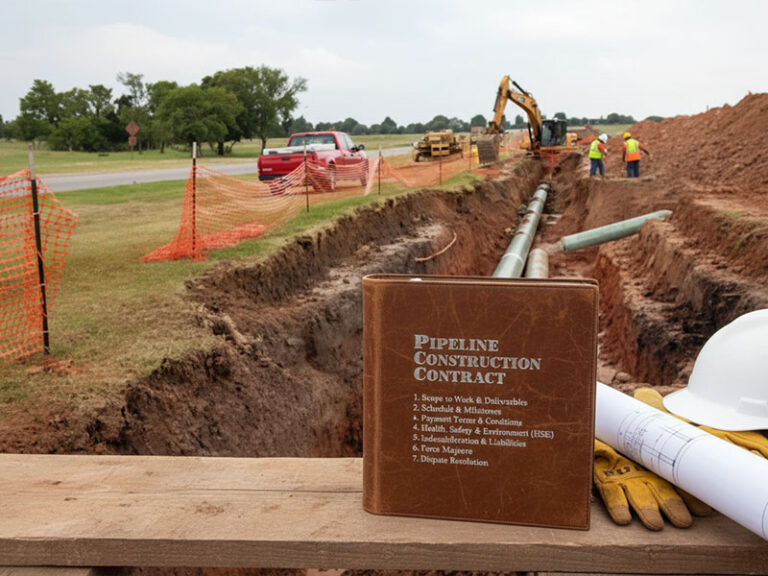
A leather-bound pipeline construction contract book, blueprints, and a hard hat in the foreground of an active construction site featuring a deep trench, pipes, and heavy machinery.

What should I look for in a pipeline construction contract?

When reviewing a pipeline construction contract, you must look for clear terms on scope, price, schedule, liability, compliance, and change management to protect your project and finances. A well-structured contract acts as the foundational blueprint for project success, risk mitigation, and legal protection. This guide breaks down the seven most critical
اقرأ المزيد »
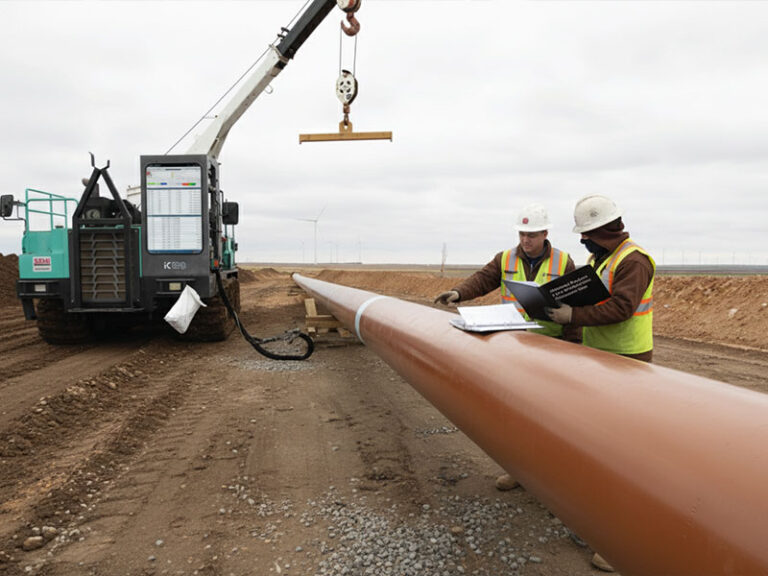
Two construction workers wearing hard hats and high-visibility vests reviewing project plans beside a large orange pipeline at a job site with heavy machinery.

How do I vet the financial stability and project history of a pipeline builder?

Vetting the financial stability and project history of a pipeline builder requires a systematic approach combining direct data requests, analysis of audited financial documents, verification of past project performance, and consultation with industry rating agencies. This process is critical to mitigate risks in pipeline construction, maintenance, and complex services like hot tapping or trenchless pipe rehabilitation. A

اقرأ المزيد »
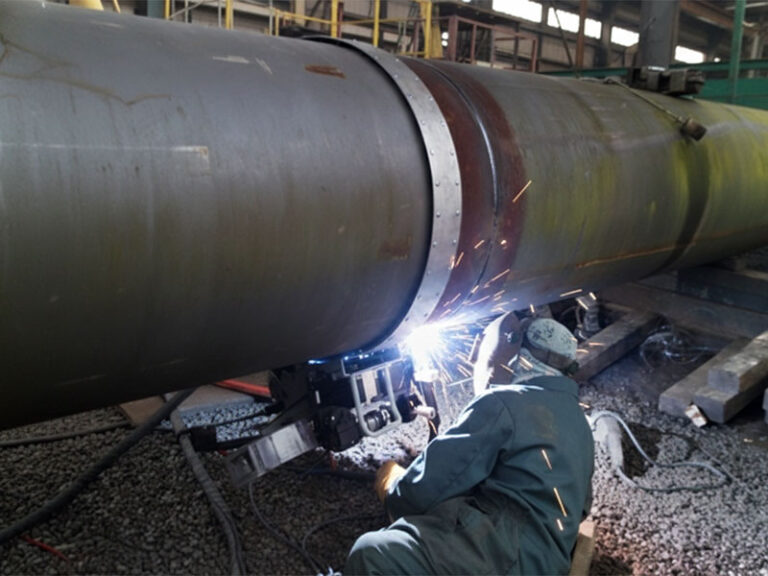
A professional welder using automated orbital welding equipment on a large-diameter industrial pipeline with bright sparks and protective gear.

What are the advantages of automated welding over manual welding in pipeline projects?

In the world of construction and maintenance for oil, gas, and water pipelines, welding is the critical operation that ensures structural integrity, safety, and longevity. As project demands escalate and quality standards tighten, the industry is decisively shifting from manual techniques to automated welding for pipeline applications. But what are the concrete, measurable benefits driving this change? Automated welding surpasses

اقرأ المزيد »
ماكينات التنصت الساخن الاحترافية لخدمات إنشاء خطوط الأنابيب وإصلاحها.

من هم أبرز المصنعين العالميين لمعدات الحفر الساخن وسد الأنابيب؟

The leading global manufacturers of hot tapping and plugging equipment include established multinational solution providers like TD Williamson, STATS Group, and Enerpac, specialized engineering firms such as Schallert Enterprises and Petersen Products, and a growing number of capable regional manufacturers. This article provides a comprehensive analysis of these key players, explaining the

اقرأ المزيد »
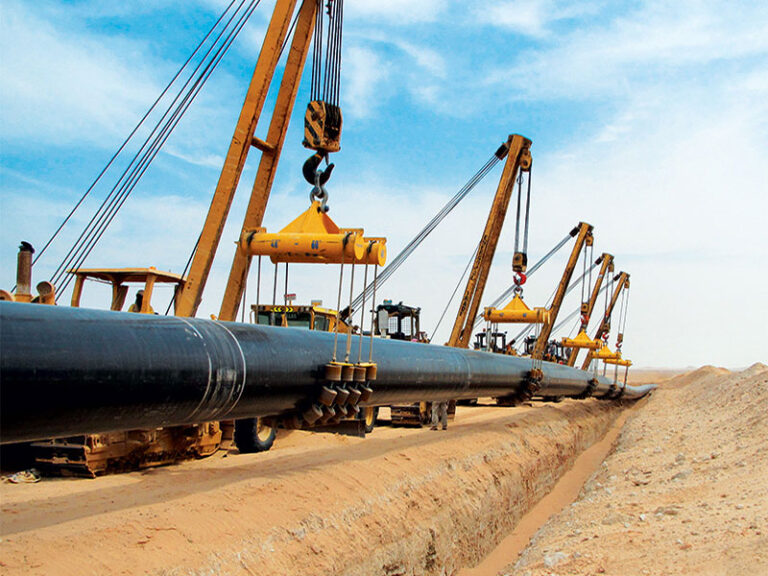
A construction crew using sideboom tractors to lift a 12-inch natural gas pipeline into a desert trench, featuring cost estimation labels for steel, labor, and total price per milefoot.

ما هو السعر الحالي لكل ميل/قدم لتركيب خط أنابيب غاز طبيعي بقطر 12 بوصة؟

Installing a 12-inch natural gas pipeline typically costs between $800,000 and $2.5 million per mile, translating to approximately $150 to $475 per linear foot. However, quoting a single, universal price is impossible and misleading. The final 12-inch natural gas pipeline installation cost is a dynamic equation, heavily influenced by a complex interplay of

اقرأ المزيد »
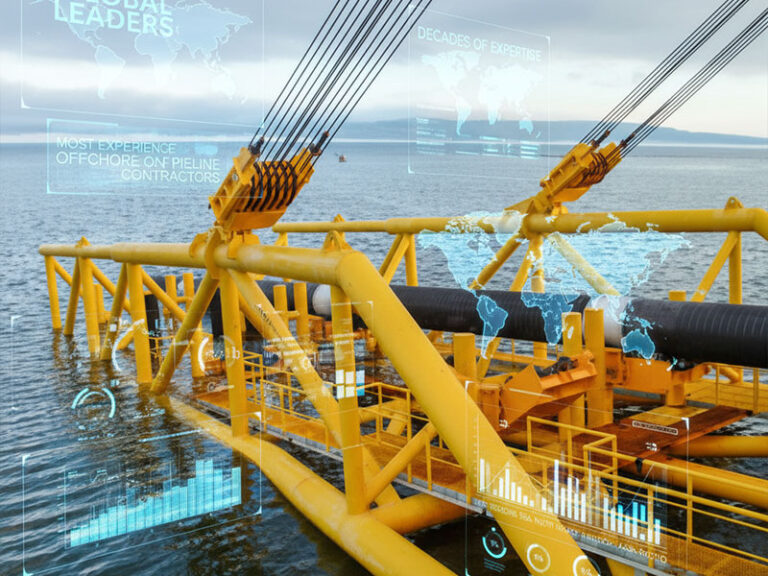
An industrial offshore pipeline installation scene featuring a large yellow support structure and digital data overlays highlighting global subsea engineering expertise and performance metrics.

ما هي البلدان أو المناطق التي تضم أكثر مقاولي خطوط الأنابيب البحرية خبرةً؟

The world’s most experienced offshore pipeline contractors are concentrated in countries with extensive maritime oil and gas operations, namely the United States, key European nations (Italy, France, the UK), South Korea, and China. This industry expertise stems from decades of involvement in complex offshore projects, driving the development of specialized skills

اقرأ المزيد »
Workers operating equipment during Pipeline Encroachment Remediation for Wuxin pipeline in Xianggan

How to Evaluate and Select a Competent Pipeline Engineering Firm: A Comprehensive Guide

Selecting a competent pipeline engineering firm requires a structured evaluation of their technical capabilities, proven experience, financial health, and commitment to safety. This process involves scrutinizing formal credentials like industry-specific certifications and project portfolios, assessing technical expertise in critical areas like trenchless rehabilitation and hot tapping, and verifying their operational and

اقرأ المزيد »
Workers apply a protective repair sleeve to an excavated pipeline in a trench, addressing damage from pipeline deterioration to restore functionality.

What are the main causes of pipeline deterioration that necessitate rehabilitation?

The Main Causes of Pipeline Deterioration That Necessitate Rehabilitation Pipeline deterioration is primarily caused by aging infrastructure, material corrosion, environmental stresses, operational factors, and third-party damage, all of which necessitate timely rehabilitation to prevent failures. This article systematically examines these causes, explaining the underlying mechanisms, providing real-world examples, and citing relevant

اقرأ المزيد »
Engineering infographic comparing pulling-distance concepts for HDD, pipe bursting, E-Power Pipe, and pull-in-place lining in underground pipelines

Maximum Distance a Pipe Can Be Pulled Using Trenchless Methods: HDD Pull Length, Pipe Bursting & Lining Limits

The maximum distance a pipe can be pulled using trenchless methods ranges from approximately 50 meters to more than 3,000 meters, depending on the installation technology, pipe characteristics, ground conditions, and equipment limitations. For new pipeline construction, Horizontal Directional Drilling (HDD) typically achieves 200–800 meters per pull. For pipeline rehabilitation, specialized

اقرأ المزيد »
Engineering cutaway illustration comparing CIPP resin liners, spray-applied polyurea, HDPE sliplining, and UHPC structural lining segments in underground sewer pipes.

Best Trenchless Pipe Rehabilitation Materials: CIPP, Polyurea, HDPE Comparison

Best Materials for Trenchless Pipe Rehabilitation The most widely used and effective materials for trenchless pipe rehabilitation are thermosetting resin systems—specifically epoxy, polyester, and vinyl ester—combined with reinforcement fabrics such as fiberglass or polyester felt. For most municipal sewer rehabilitation projects, polyester CIPP offers the best cost-to-performance balance, while epoxy CIPP is preferred for pipes

اقرأ المزيد »