Pipeline Cold Bending Service
JSW Pipeline Cold Bending Services – Precision Bends for Oil & Gas Construction
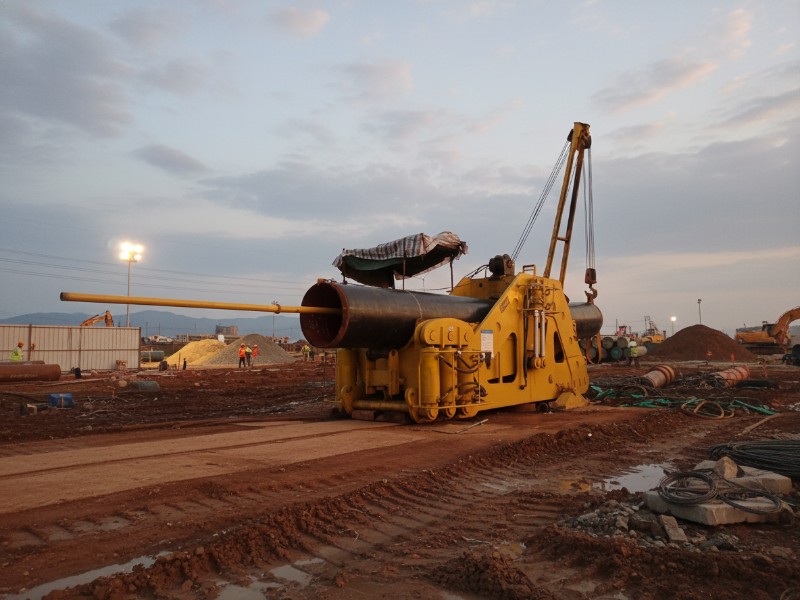
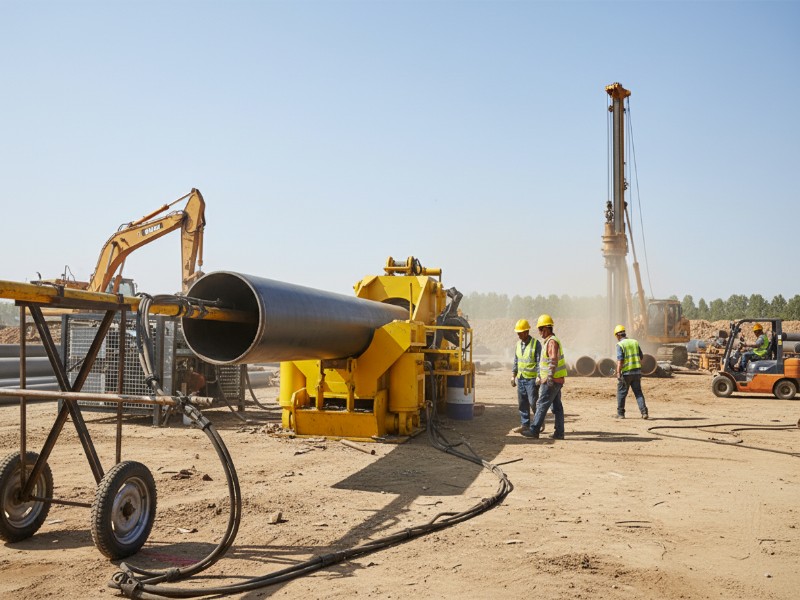
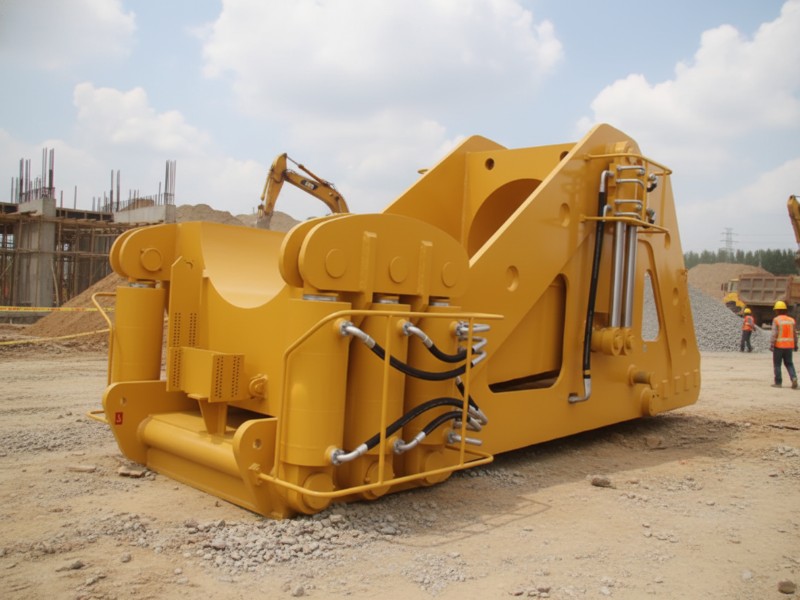
JSW provides professional pipeline cold bending services for EPC contractors and pipeline operators across North America, the Middle East, and Southeast Asia. Our cold bending operations comply with API 5L PSL2 requirements and support steel grades from X42 through X80, with pipe diameters ranging from 6″ to 48″ (DN150 to DN1200). This page details our bending capabilities, quality control metrics, applicable standards, and how JSW supports pipeline construction and maintenance projects worldwide.
JSW Cold Bending Capabilities at a Glance
JSW operates CNC-controlled hydraulic bending equipment designed for high-volume pipeline construction projects. The following table summarizes our core capabilities:
| Parámetro | JSW Capability | Notas |
|---|---|---|
| Pipe diameter range | 6″ – 48″ (DN150 – DN1200) | Larger diameters available upon request |
| Wall thickness | Up to 40mm | Schedule 10 through Schedule 160 |
| Steel grades | API 5L Gr B, X42, X52, X60, X65, X70, X80 | PSL1 and PSL2 compliant |
| Minimum bending radius | 40D (standard), 30D (engineering review) | D = nominal pipe diameter |
| Maximum bend angle per pipe | 12° – 30° | Depends on D/t ratio and steel grade |
| Ovality control | ≤ 2% (typical), ≤ 3% (maximum per API 5L) | Measured at bend apex |
| Wall thinning limit | ≤ 8% of nominal wall thickness | Exceeding requires engineering approval |
| Coated pipe support | FBE, 3LPE, 3LPP, liquid epoxy | Split dies and protective tooling available |
Our bending factory maintains tooling for all standard pipe diameters, enabling rapid changeover between production runs. For project-specific requirements, custom die sets can be manufactured within standard lead times.
Applicable Standards and Certifications
JSW executes all cold bending operations in accordance with internationally recognized pipeline standards. This ensures acceptance by major oil and gas companies and EPC contractors across all target markets.
Primary Standards
| Estándar | Ámbito de aplicación | Aplicación |
|---|---|---|
| API 5L (45th Edition) | Line pipe specification | Annex G covers cold bending requirements |
| ASME B31.4 | Liquid transportation systems | Onshore liquid pipelines |
| ASME B31.8 | Gas transmission systems | Onshore gas pipelines |
| DNV-ST-F101 | Submarine pipeline systems | Offshore pipelines |
Quality Management
JSW operates under a documented quality management system that includes:
Written procedures for all bending operations
Calibrated measurement equipment (traceable to national standards)
Operator training and qualification records
Non-conformance reporting and corrective action processes
Compatibilidad de materiales
Our cold bending process is validated for the following API 5L pipe grades -1:
PSL1: Gr B, X42, X46, X52, X56, X60, X65, X70
PSL2: B, X42, X46, X52, X56, X60, X65, X70, X80
Higher grades (X90, X100) are evaluated on a project basis with additional process validation.
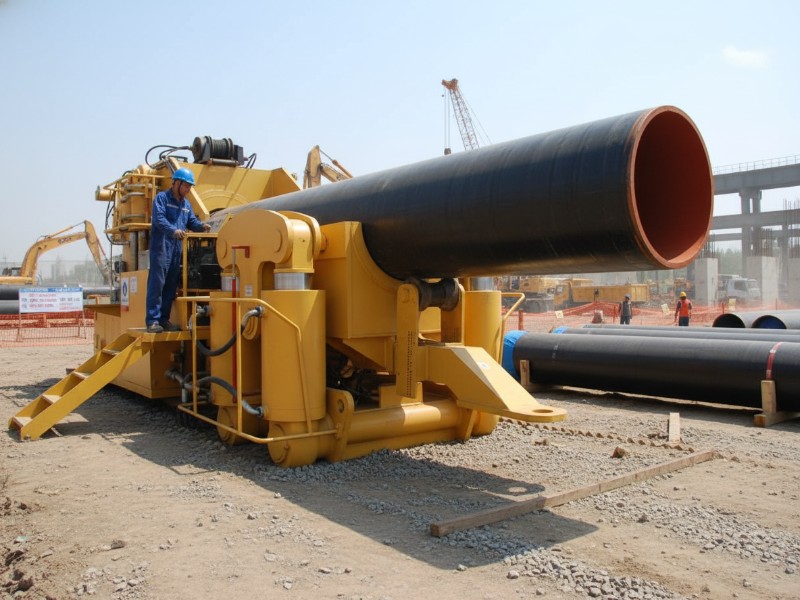
The JSW Cold Bending Process
Understanding our workflow helps project planners coordinate pipe delivery, inspection hold points, and shipping schedules.
Step 1: Material Receiving and Verification
Incoming pipes are inspected against mill certificates for:
Grade designation and heat number
Outside diameter and wall thickness measurements
Surface condition (no unacceptable defects per API 5L)
End preparation and bevel condition
Pipes failing incoming inspection are segregated and reported to the customer for disposition.
Step 2: Bend Planning and Marking
Based on the customer’s bend schedule, each pipe is marked with:
Bend location (distance from pipe end)
Direction of bend (vertical or horizontal plane)
Target angle
Reference to isometric drawing number
Step 3: Machine Setup
The appropriate bending die is installed based on pipe diameter. CNC parameters are programmed including:
Clamp pressure (calculated from pipe D/t ratio)
Feed increment length
Target angle with springback compensation
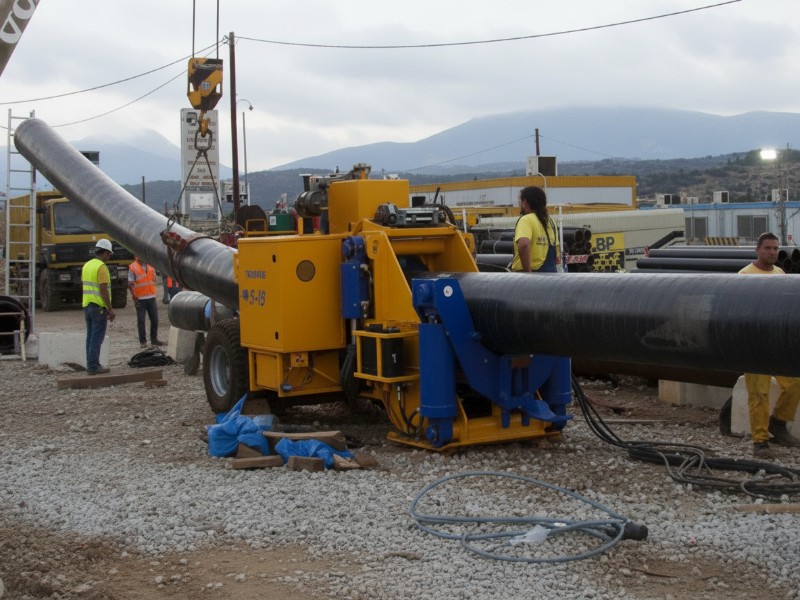
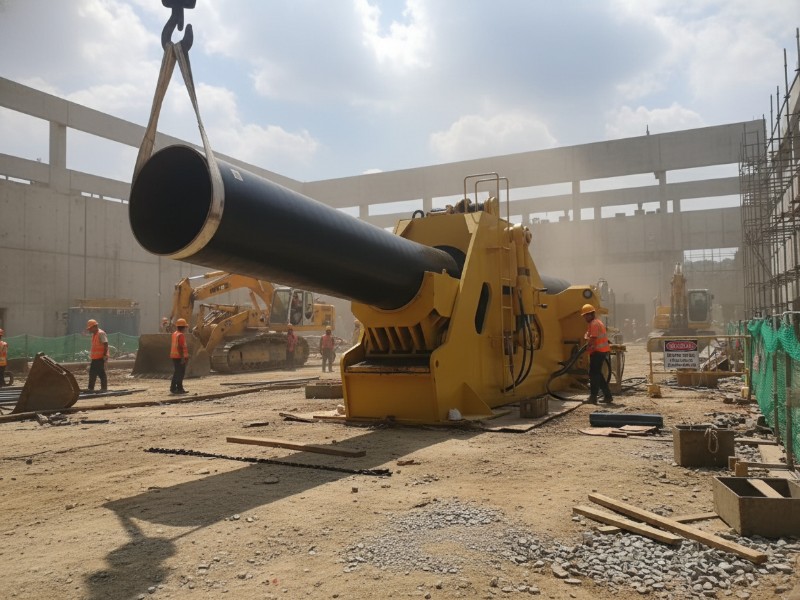
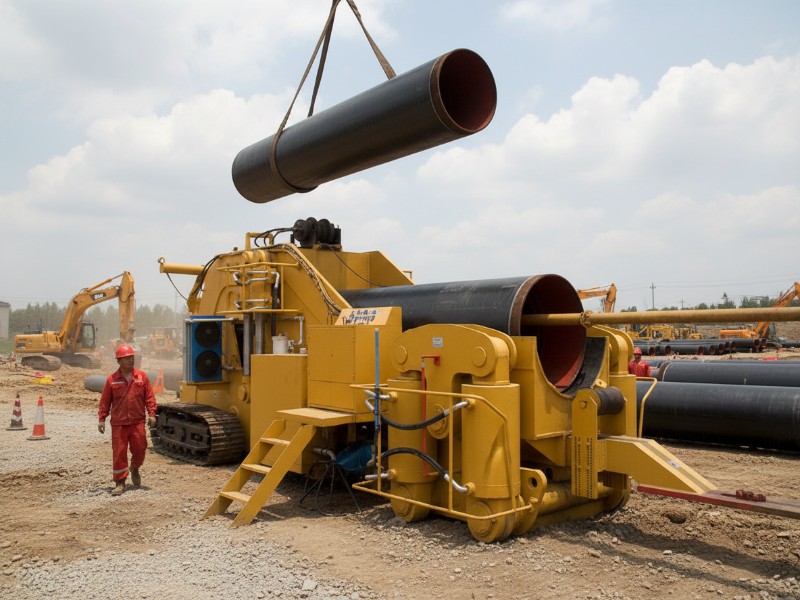
Step 4: Incremental Bending
The bending process uses incremental advancement:
Pipe advances 1–3 inches per cycle
Hydraulic ram applies bending force
Angle is measured after each increment
Process repeats until target angle achieved
This incremental method controls ovality and prevents wrinkling, particularly for thin-wall pipes.
Step 5: In-Process Inspection
Digital protractors verify bend angle immediately after forming. Any deviation beyond tolerance triggers adjustment of CNC parameters for subsequent bends.
Step 6: Final Inspection
Each completed bend undergoes:
Angle verification (tolerance ±0.5°)
Ovality measurement at bend apex, mid-point, and end
Visual inspection for wrinkles, cracks, or surface damage
Wall thickness measurement at intrados and extrados (sampling plan)
Step 7: Marking and Documentation
Each bend receives a unique traceability number. Inspection data is recorded and linked to the original pipe mill certificate.
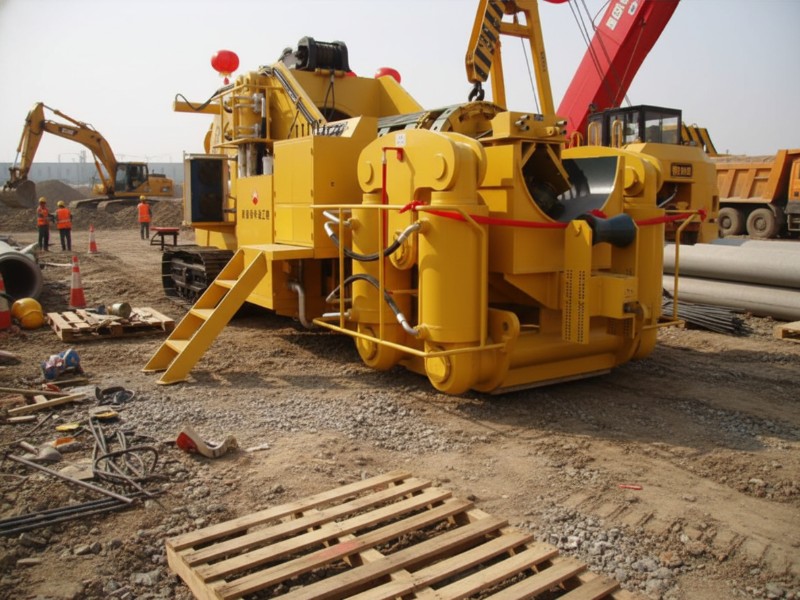
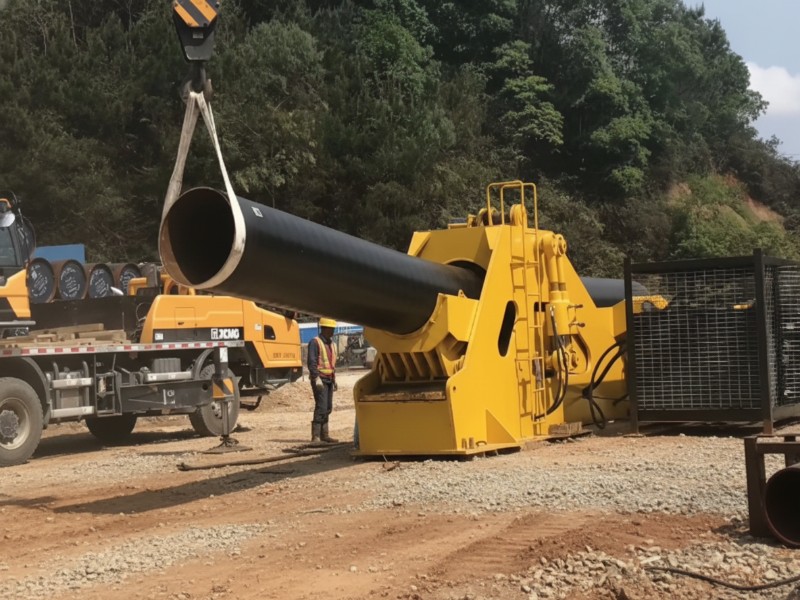
Quality Control Metrics
Pipeline integrity depends on controlled bending parameters. JSW measures and documents the following metrics for every bend.
Ovality Control
Ovality (out-of-roundness) is the primary quality metric for cold bends. Excessive ovality causes fit-up difficulties during welding and creates stress concentrations.
Formula: Ovality % = (Max OD – Min OD) / Nominal OD × 100
JSW Control Limits:
| Aplicación | Target | Maximum | Standard Reference |
|---|---|---|---|
| Onshore gas pipelines | ≤ 2% | ≤ 3% | ASME B31.8 |
| Onshore liquid pipelines | ≤ 2% | ≤ 3% | ASME B31.4 |
| Offshore pipelines | ≤ 1.5% | ≤ 2% | DNV-ST-F101 |
| Sour service (H₂S) | ≤ 2% | ≤ 2% | NACE MR0175 |
Ovality is measured using digital calipers or OD tape at three positions around the bend circumference.
Wall Thinning Management
During cold bending, the extrados (outer curve) undergoes tension, reducing wall thickness. The intrados (inner curve) undergoes compression, increasing wall thickness.
JSW Limits:
Maximum wall thinning: 8% of nominal wall thickness
Alert threshold: 6% (triggers process review)
Rejection threshold: 10% (requires engineering evaluation)
Wall thickness is measured using ultrasonic thickness gauges at the bend apex.
Wrinkle Prevention
Wrinkles on the intrados are unacceptable for pipeline service as they create stress concentration points and interfere with ILI tool passage.
JSW acceptance criteria: No visible wrinkles or ripples on the intrados surface. Any indication of wrinkling results in immediate process shutdown and die inspection.
Springback Compensation
Steel exhibits elastic recovery after bending forces are released. This springback varies by:
| Factor | Effect on Springback |
|---|---|
| Higher steel grade (X70 vs X52) | Increased springback |
| Higher D/t ratio (thinner wall) | Increased springback |
| Larger bend radius | Increased springback |
| Cold working history | Decreased springback |
JSW’s CNC system compensates for springback by over-bending based on material-specific data collected during setup bends.
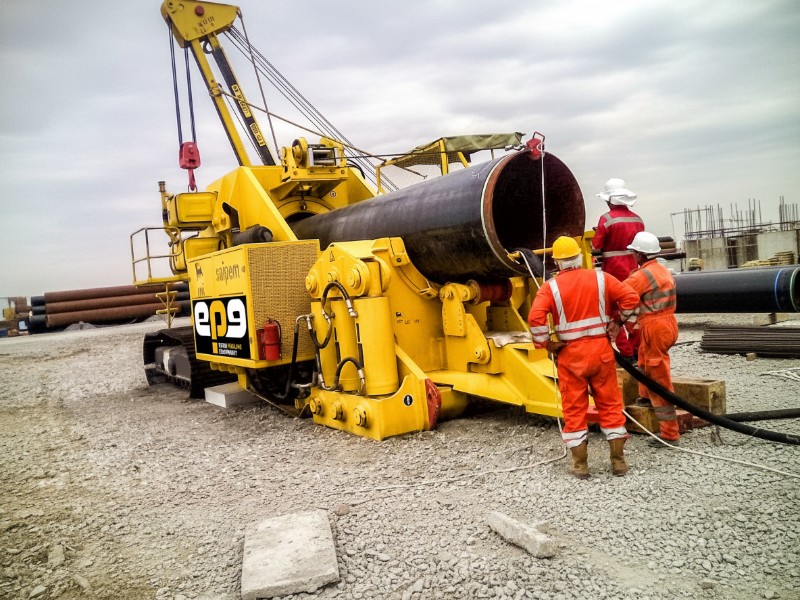
JSW Differentiators
EPC contractors choose JSW for cold bending services based on the following technical advantages.
High-Grade Steel Capability
JSW routinely bends X70 and X80 pipe grades for high-pressure gas transmission projects. These grades require higher clamping forces and precise springback compensation, which our CNC equipment provides.
Coated Pipe Expertise
Many pipeline projects require bending of pre-coated pipe (FBE, 3LPE, 3LPP). JSW uses:
Split bending dies that contact only bare pipe ends
Polyurethane die liners for coated surface protection
Field-applied coating repair protocols for bend areas
Our experience shows coating damage rates below 2% with proper tooling and procedures.
Large Diameter Thin-Wall Bending
Large diameter pipes with high D/t ratios (thin walls) present ovality control challenges. JSW’s mandrel support system and optimized feed parameters maintain ovality under 2% for D/t ratios up to 60.
Field Technical Support
For projects requiring on-site bending, JSW can deploy technical personnel to:
Verify pipe grades and dimensions prior to bending
Provide bending procedure qualifications
Train customer personnel on quality inspection methods
Troubleshoot bending issues during construction
Integrated Service Offering
JSW combines cold bending with complementary pipeline services:
| Servicio | Aplicación |
|---|---|
| Roscado en caliente | Live connection to operating pipelines |
| Line stopping (Stopple) | Isolation of pipeline sections for maintenance |
| Pipeline plugging | Temporary blockage for repair work |
| Modificación de tuberías | Rerouting and tie-in construction |
| Rehabilitación sin zanjas | Cured-in-place pipe (CIPP) and slip lining |
| Pipeline maintenance | Integrity repairs and restoration |
This single-source capability reduces contractor coordination requirements and ensures quality consistency across project phases.
Project Applications
Cold bending supports multiple pipeline construction and maintenance scenarios.
Terrain Following
Pipelines crossing mountainous or hilly terrain require vertical and horizontal bends to match ground contours. JSW produces site-specific bends based on survey data, eliminating wait times for factory fittings.
Road and Railway Crossings
Horizontal directional drilling (HDD) installations often require pre-bent pipe strings. JSW provides cold bends with controlled radii suitable for HDD pullback operations.
Utility Corridor Navigation
In congested areas, pipelines must avoid existing water lines, electrical cables, and communication conduits. Cold bends allow real-time adjustments during trenching.
Pipeline Maintenance and Modification
During pipeline stopple and hot tapping operations, temporary bypass lines require custom bends. JSW provides rapid turnaround for these maintenance spools, typically 5–10 business days depending on quantity.
Trenchless Rehabilitation Entry/Exit
When installing liners for trenchless pipe rehabilitation, entry and exit bends guide the liner from surface access points into the existing pipe.
Cost Factors and Lead Times
Pricing Structure
JSW quotes cold bending services based on:
| Factor | Impact |
|---|---|
| Diámetro de la tubería | Primary cost driver (larger = higher) |
| Steel grade | X70/X80 premium over X52 |
| Bend angle | Per-degree pricing typical |
| Quantity | Volume discounts for 200+ bends |
| Coating protection | Additional tooling and labor |
| Documentation requirements | Enhanced reporting adds cost |
Typical Lead Times
| Project Size | Standard Lead Time | Expedited (additional fee) |
|---|---|---|
| Under 50 bends | 5–7 business days | 2–3 business days |
| 50–200 bends | 10–15 business days | 5–7 business days |
| Over 200 bends | 3–4 weeks | 2 weeks |
Lead times exclude pipe material procurement if customer does not supply pipe.
Cost Comparison to Alternatives
For a typical 24″ API 5L X70 pipeline requiring 30 total degrees of bend:
JSW cold bending: Baseline cost (1.0x)
Induction bends (pre-fabricated): 2.5x – 3.5x
Mitered fittings: 1.8x – 2.5x plus additional weld inspections
Cold bending becomes increasingly cost-effective as the number of bend locations increases.
JSW Pipeline Partner Across North America, Middle East, and Southeast Asia
JSW combines technical expertise with responsive service to support pipeline contractors throughout the project lifecycle. From initial bend planning to final documentation, our team focuses on delivering bends that fit correctly the first time.
For inquiries about cold bending services, pipeline modification, hot tapping, or line stopping, contact JSW today.
Preguntas frecuentes
Can JSW perform cold bending on site at my project location?
Yes. JSW can deploy mobile bending equipment for on-site operations where project scale justifies mobilization. Site requirements include level ground, crane access, and electrical power (or generator). Contact our project team with your specific location and volume for a feasibility assessment.
What documentation does JSW provide with each bend?
JSW provides a complete documentation package including:
Incoming pipe inspection records
In-process angle verification logs
Final dimensional report (ovality, wall thickness, angle)
Traceability matrix linking each bend to mill certificate
Coating inspection report (for coated pipes)
How does JSW ensure ovality remains within specification?
Ovality control relies on three factors: correct die fit, proper clamp pressure, and controlled feed increments. JSW validates die fit before each production run, calculates clamp pressure based on pipe D/t ratio, and uses CNC-controlled feed increments. In-process measurements verify ovality before the pipe moves to the next bend position.
What is the maximum pipe diameter JSW can bend?
Our standard equipment handles up to 48″ (DN1200). For diameters up to 56″, please contact our engineering team to discuss feasibility and lead time for custom tooling.
Can JSW bend sour service pipes (NACE MR0175)?
Yes. JSW has procedures for bending sour service pipes with additional controls including:
Hardness testing before and after bending
Reduced strain rates during bending
Enhanced surface inspection for cracks
Compliance with NACE MR0175/ISO 15156
How does cold bending compare to using prefabricated elbows?
| Aspecto | Cold Bending | Prefabricated Elbows |
|---|---|---|
| Best use | Gradual direction changes | Sharp, concentrated direction changes |
| Cost per degree | Lower for gradual curves | Más alto |
| Weld requirement | No additional welds | Two welds per elbow |
| Lead time | Days to weeks | Weeks to months |
| Field adjustability | High (made to site conditions) | Low (must be ordered) |
Solicite una consulta gratuita sobre el servicio de tuberías
Más información
¿Se enfrenta a un problema de tuberías? Obtenga una solución a medida de nuestros expertos. Facilítenos sus datos a continuación y nos pondremos en contacto con usted en menos de 24 horas para hablar de los requisitos, los plazos y el presupuesto de su proyecto.
Beijing Jinshiwan es un proveedor líder integrado de tecnología y servicios para oleoductos y gasoductos, que combina la fabricación de equipos de alta gama con conocimientos profesionales de ingeniería. Ofrecemos soluciones de tuberías seguras, fiables e innovadoras durante todo el ciclo de vida para los sectores petrolífero y gasístico, químico y de servicios públicos de todo el mundo.
Construcción e instalación de tuberías
- Construcción de oleoductos transfronterizos
- Instalación y puesta en servicio de tuberías
- Instalación de sistemas de tuberías de planta
- Reubicación y modificación de tuberías
Mantenimiento y reparación de tuberías
- Servicios de roscado en caliente y roscado a presión
- Servicios de taponamiento y aislamiento de tuberías
- Reparación urgente de tuberías
- Rehabilitación y revestimiento de tuberías
- Reparación de manguitos compuestos (instalación de manguitos B)
- Protección contra la corrosión y reparación
Servicios técnicos especializados
- Gestión de la integridad de las tuberías
- Servicios de apoyo a la inspección en línea
- Modificaciones no disruptivas de la línea viva
- Pruebas de presión de tuberías
- Limpieza y secado de tuberías
Equipamiento y fabricación
- Fabricación de roscadoras en caliente
- Producción de equipos de taponamiento de tuberías
- Fabricación de accesorios de tubería a medida
- Fabricación de válvulas especiales
Ventajas de nuestro servicio internacional:
- Capacidad de respuesta en caso de emergencia 24 horas al día, 7 días a la semana
- Cumplimiento de las normas API y ASME
- Gestión multilingüe de proyectos
- Envíos internacionales y apoyo logístico
- Supervisión técnica in situ en todo el mundo
 English
  Arabic
  Russian
  Spanish
  French
  Vietnamese
  Polish
  Thai
Thai  Indonesian
  Turkish
  Portuguese