
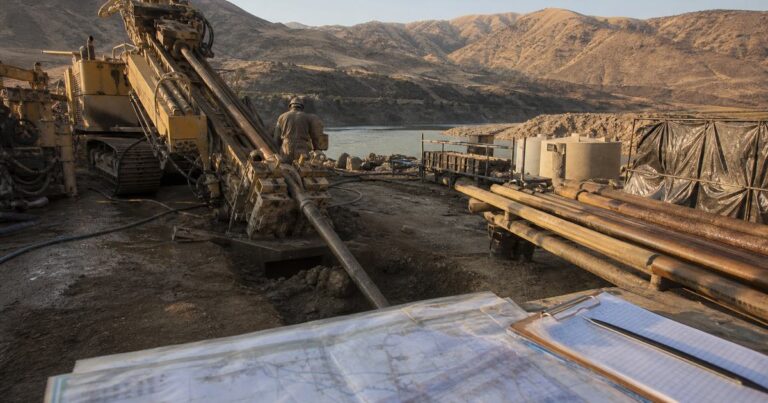
HDD risks are the physical, financial and regulatory exposures that can turn a horizontal directional drilling crossing into a schedule and cost problem, and minimizing them starts with a written risk register that spans the whole project life cycle. This guide organises the main hazards into seven families, from geotechnical surprises to commercial overruns. It also sets out the design-side controls that reduce risk before mobilisation, including geotechnical investigation, frac-out analysis, allowable pull force and depth of cover.
Who Should Own an Owner-Level HDD Risks Register, and Which Seven Families Does It Track?
A risk register is most useful when the owner keeps it, not the contractor, because the owner carries the consequences of a failed crossing long after the crew leaves site. In our bid reviews, the crossings that go wrong are rarely the unforeseen technical problems; they are those where nobody owned the response. This register groups these risks into seven families: geotechnical, drilling, pipeline, guidance, surface and third-party, environmental and regulatory, and commercial. For each entry it records a cause, an early indicator, a mitigation, the residual risk that remains after mitigation, and a single accountable owner.
Table 1 is the working form of that HDD risk register. This register is owner-level: it records exposure and ownership for the seven families below, and it does not list the field-level blunders collected in the HDD mistakes guide. Its purpose is to make the exposure visible to the people who fund the contingency and sign the permit applications.
A practical HDD risk mitigation plan turns the register into dated actions, and an HDD crossing risk assessment is usually what a regulator or lender asks for at financial close. Both should speak the language of the design basis.
| Risk | Cause | Mitigation | Residual risk |
|---|---|---|---|
| Unexpected rock or boulder field | Boreholes too widely spaced to model the section between them | Investigation to ASCE 36-15 and NASTT guidance; contingency for hard spots | Lower but not zero; local hard zones can still be met |
| Karst, voids or artesian flow | Soluble bedrock or a confined aquifer along the alignment | Desktop study, targeted test bores, pressure monitoring, contingency casing and heavier fluid | Local fluid loss or ground loss remains possible |
| Inadvertent return (frac-out) | Annular pressure above what the formation can resist; shallow cover | Frac-out analysis, pressure sub against the modelled limit, adequate cover, response plan | Short stoppage, cleanup and permit reporting |
| Hole collapse or lost circulation | Unstable soils, excessive reaming rate, wrong fluid properties | Fluid programme per API RP 13B-1, controlled reaming, staged enlargement | Rework or partial redrill of a section |
| Stuck pipe or cuttings bed | Poor hole cleaning and low annular velocity | Measured fluid properties, correctly sized reamers, wiper passes before pullback | Tooling loss or a costly sidetrack |
| Pipe overstress or ovalisation | Pullback force above allowable; bend radius tighter than the pipe accepts | Allowable pull force with a safety factor of 1.5 to 2.0; bending-stress check | Minor ovality may need assessment and documentation |
| Coating damage | Rough bore, protrusions, unguarded pipe contact | Rollers, coating protection, controlled pullback speed, inspection after pullback | Local repairs and possible localised rework |
| Buckling in pullback | Compressive loading in a curved bore | Breakover check, tension-only design intent, buoyancy and speed control | Localised buckling if control is lost |
| Guidance deflection or magnetic interference | Steel or existing services near the survey; difficult ground | Survey method chosen for depth and interference; redundant position checks; defined tolerance | Extra survey time or tie-in rework |
| Surface settlement, heave or third-party utility strike | Shallow cover, over-pressure, incomplete utility survey | Settlement monitoring, adequate cover, utility survey to a defined quality level | Third-party damage claims and localised repair |
What Should a Geotechnical Investigation Cover to Price HDD Risks Before the Bid?
Where does geotechnical risk come from on an HDD crossing? It is the gap between what the boreholes show and what the bore meets. Borings are spaced tens to hundreds of metres apart, so the section between them is where a boulder, a void or a hard rock band hides. The owner usually funds the investigation before the contractor is selected, so this family sits squarely with the owner.
The evidence signals are ones the owner can read before mobilisation. A geotechnical report that shows borehole spacing rather than coverage of the alignment, bid documents that show rig capacity against the governing case rather than the average, and a frac-out analysis that exists as a document without an allowable pressure curve are all register entries, not field events.
Mitigation is investigative. A geotechnical programme scoped to ASCE 36-15 and the NASTT HDD Good Practices Guidelines should test the whole alignment, not just the entry and exit, and should report the governing case. Where karst or artesian flow is plausible, the design needs contingency casing, a heavier fluid and a plan for losing returns. Residual risk is lower but never zero, because even a well-investigated path can hold a local hard spot.
How Should You Manage HDD Risks Such As Inadvertent Return, Lost Circulation and Stuck Pipe?
The drilling risks happen downhole and show up either at the rig or on the surface. An inadvertent return, or frac-out, is the loss of drilling fluid to the ground surface away from the entry and exit points, and it occurs when annular pressure exceeds what the formation can resist. Here it is one line in the register; the companion inadvertent return guide covers the mechanism and the prevention programme.
Hole collapse, lost circulation, stuck pipe and cuttings beds share a common root: the drilling fluid is not doing its job. Fluid that is too thin drops cuttings into a bed along the low side of the bore, degrades return flow and raises pullback loads. Fluid that is too thick raises downhole pressure and can itself trigger an inadvertent release, so both failure modes are avoidable with measured properties.
Mitigation is a fluid programme built on measurement to API RP 13B-1, controlled reaming in correctly sized passes, and enough annular velocity to move cuttings toward the exit. The pressure sub reading plotted against the modelled allowable curve is the most useful early indicator. Residual risk after mitigation is a small chance of rework or moderate fluid loss, not an uncontrolled surface release.
Pipeline HDD Risks: Overstress, Ovalisation, Coating Damage and Buckling in Pullback
When does pipeline risk peak on an HDD crossing? It appears during pullback, when the product pipe is the most valuable and least protected element on site. Overstress and ovalisation come from pullback force or bending that exceeds the pipe’s allowable limits; buckling comes from running the pipe in compression through a curved bore; coating damage comes from friction and point loads against rough rock or an unreamed step. For PE installations, allowable pull stress is commonly held to about 1,000 psi.
Design mitigation is arithmetic that must be done before bid. Allowable pull force is calculated from steady-state and transient loads and then held to a safety factor of about 1.5 to 2.0 against rig capacity, so the rig is selected on the governing case rather than the average. The reamed hole is sized at about 1.2 to 1.5 times the product outside diameter, and a bending-stress and breakover check confirms the bore radius the pipe can accept.
Field mitigation is protective. Rollers, coating protection, controlled pullback speed and continuous tension monitoring keep loads inside the design envelope, and a post-pullback inspection service confirms coating integrity and flags coating damage before handover. Where a fabricated or field bend is required at the tie-in, cold bending provides a controlled radius instead of a shop-made elbow. Coating damage has cost more in repairs and schedule than the protection would have cost up front.
Guidance, Surface and Third-Party HDD Risks
Guidance risk is about position: deflection, magnetic interference and tolerance. Deflection means the bore drifts off the designed line, often because steering corrections are made late. Magnetic interference from steel casing, rebar or existing pipelines distorts the survey and can make a correct heading look wrong. Tolerance is the risk that the bore arrives at the exit outside the window the tie-in can absorb.
Mitigation combines survey and design. Walkover and wireline systems are chosen to suit depth and interference, redundant survey methods cross-check position near steel, and the design sets a tolerance the tie-in can actually accommodate. An as-drilled survey recorded at every rod gives the owner a defensible record of where the pipe really sits.
Surface and third-party risks are settlement, heave, adjacent utilities and permits. Settlement and heave follow shallow cover, over-pressure or poor bore support. Adjacent utilities are damaged because the survey missed them or because the bore tracked closer than intended. Mitigation is a utility survey to a defined quality level, settlement monitoring, adequate cover, and permits secured before mobilisation rather than during it.
Environmental, Regulatory and Commercial HDD Risks
Environmental and regulatory risk turns a technical event into a legal and public one. Under FERC-regulated projects and comparable state regimes, the applicant submits an HDD plan and an inadvertent return plan covering monitoring along the alignment, immediate response actions, containment and collection of released fluid, and notification. Continuous examination of drilling-fluid pressures and return flows is a standard permit condition, not an optional extra.
The commercial and productivity family is quieter but no less real. Schedule overrun, lower-than-planned rates and changed scope are the risks that most often reach the owner’s budget, and they usually trace back to a technical risk that was under-priced at bid. Published HDD market estimates vary widely by scope, commonly quoted in a broad range around USD 5-11 billion in 2024-2025. The spread is a definition problem as much as a forecast problem: estimates differ by whether they count rig services, fluids and solids control, or the full installed crossing, so any figure should be read against the scope it was built on, and forecasts covering the rest of the decade point the same market higher.
Mitigation is procedural. A response plan with pre-agreed stop-and-notify criteria, containment standing by, and a contractor able to mobilise emergency response and contingency maintenance limits both the environmental and the financial consequence. The exposure that remains is then a short stoppage and a documented report rather than an uncontrolled release.
Which Design Decisions Lower HDD Risks Before a Rig Ever Mobilises?
The cheapest place to remove these risks is the design office. Five design decisions carry most of the load: the geotechnical investigation, the frac-out analysis, the allowable pull force, the depth of cover including scour, and the breakover and bending-stress checks. Each one converts an unpredictable field problem into a number the crew can work to.
- Geotechnical investigation: characterise the full alignment to ASCE 36-15 and NASTT guidance, and design on the governing case rather than the average borehole.
- Frac-out analysis: estimate the fracture gradient along the path, commonly taken at roughly 0.7 to 1.0 psi per foot of overburden depth, and set a maximum allowable annular pressure.
- Allowable pull force: calculate steady-state and transient loads and hold a safety factor of about 1.5 to 2.0 against rig capacity.
- Depth of cover including scour: confirm the cover that keeps annular pressure safe, and add scour depth at watercourses.
- Breakover and bending-stress checks: prove the pipe can pass the bore radius and the entry and exit curves within allowable stress.
Close residual risk with money and wording, not with optimism. Each register line should end in one of three states: funded as a priced allowance, transferred through a defined contract clause, or formally accepted in writing by the owner. The unclosed risk that is none of the three is an unfunded exposure. Review the register whenever the bore plan, the geotechnical interpretation or the permit conditions change, because any of the three moves the governing case.
- Pipeline owner at financial close: the register and the crossing risk assessment are the two documents a lender or regulator asks for, so both must speak the design basis language.
- EPC contractor bidding a fixed price: the governing-case rig selection and the priced allowances are what protect the margin, not the average-condition estimate.
- Asset manager inheriting a completed crossing: the as-built record, coating inspection and closed register are the evidence of the risk position handed over.
Table 2 shows how these controls fall across the project stages, and who should hold them. A register is only credible when every line carries an owner and a date, not just a mitigation.
| Project stage | Contrôle primaire | Owner | Evidence at the gate |
|---|---|---|---|
| Pre-bid / design | Geotechnical investigation to ASCE 36-15 and NASTT guidance; frac-out and cover analysis; allowable pull force with a 1.5 to 2.0 safety factor | Owner and design engineer | Geotechnical report, bore plan, pull-force calculation |
| Pre-bid / commercial | Rig sized on the governing case; risk register priced line by line and owned | Owner and contractor | Register, priced contingency, method statement |
| Construction | Fluid properties per API RP 13B-1; pressure sub plotted against the modelled limit; controlled reaming and pullback | Contractor | Daily drilling and fluid logs |
| Construction | Settlement and utility monitoring; containment and response resources on standby | Contractor and owner | Monitoring records, inadvertent return plan |
| Post-construction | As-built survey, coating inspection and tie-in verification | Contractor and owner | As-built record, inspection report |
| Post-construction | Register review; lessons captured; residual risk closed, transferred or formally accepted | Owner | Closed register, warranty and handover records |
Questions fréquemment posées
What are the biggest HDD risks on a pipeline job?
The biggest risks on a crossing are geotechnical surprises, an inadvertent return of drilling fluid, hole instability and pipe damage during pullback. Geotechnical and pullback risks carry the largest repair cost if they occur, while an inadvertent return carries the largest regulatory exposure.
How can a surface release during an HDD crossing be prevented?
An inadvertent return is managed by keeping annular pressure below the fracture gradient and watching the surface. That means a modelled allowable-pressure curve, a pressure sub read in real time, a controlled mud weight and a written response plan.
What safety factor should be applied to the HDD pull force?
Design pull force normally carries a 1.5 to 2.0 safety factor against rig capacity, set by the governing load case.
What should a geotechnical investigation cover before an HDD crossing is priced?
The geotechnical investigation should characterise the whole bore path, not just the entry and exit. It is commonly scoped to ASCE 36-15 and NASTT guidance, which identify rock, boulders, karst and groundwater.
Who should carry the risk on an HDD crossing, owner or contractor?
Ownership should be assigned risk by risk, not bundled by contract. Permits, utilities and scope sit naturally with the owner, while method, crews and equipment sit with the contractor, and the register should say which is which.
How deep should cover be over an HDD bore?
Cover is set by the frac-out analysis, not by a single fixed number. Typical practice checks the fracture gradient along the path, adds scour depth at watercourses and increases depth near surface features.
Can the risks of an HDD crossing be eliminated entirely?
A register lowers probability and cost; it does not remove the exposure. Applies to every register line: each closes only when the residual risk has been priced, transferred by a clause, or accepted in writing by the owner.
Points clés à retenir
- A written, owner-level HDD risks register should name one accountable owner for every line.
- Geotechnical risk is managed before mobilisation, through investigation sized on the governing case.
- Inadvertent return is controlled by holding annular pressure under the fracture gradient and monitoring returns.
- Pipe risk is controlled by an allowable pull force with a 1.5 to 2.0 safety factor, plus bending-stress and coating checks.
- Residual risk should be explicit and funded, carried from pre-bid through construction to post-construction records.
How JSW Supports Risk-Managed HDD Pipeline Jobs
JSW is a pipeline engineering and construction company that executes trenchless crossings with its own crews and equipment. Our scope covers HDD crossing services, services d'installation de pipelines, pipeline cold bending et pipeline inspection service, so the crossing, the product pipe and its verification sit with one accountable team.
We work risk-explicitly: bore plans, fluid programmes and pull-force calculations are documented and reviewed by professional engineers before bid, with as-built records handed over at completion. That approach suits owners who need a crossing delivered to a permit, a standard and a tolerance, with the records to prove it.
- Design through inspection: crossing design, installation, bending and inspection under one scope.
- Records against design limits: drilling, fluid, pressure and pullback records captured against the design limits.
- Contingency tied to risks: contingency tied to named risks, not a single lump sum.
- Permits and standards: work planned to permit conditions and recognised standards.
Have an HDD crossing that needs a risk-managed review? Send your bore plan, geotechnical data and pipe specification for a free technical review. Our engineers reply with a scoped recommendation and budget range.





































 English
  Arabic
  Russian
  Spanish
  French
  Vietnamese
  Polish
  Thai
Thai  Indonesian
  Turkish
  Portuguese