
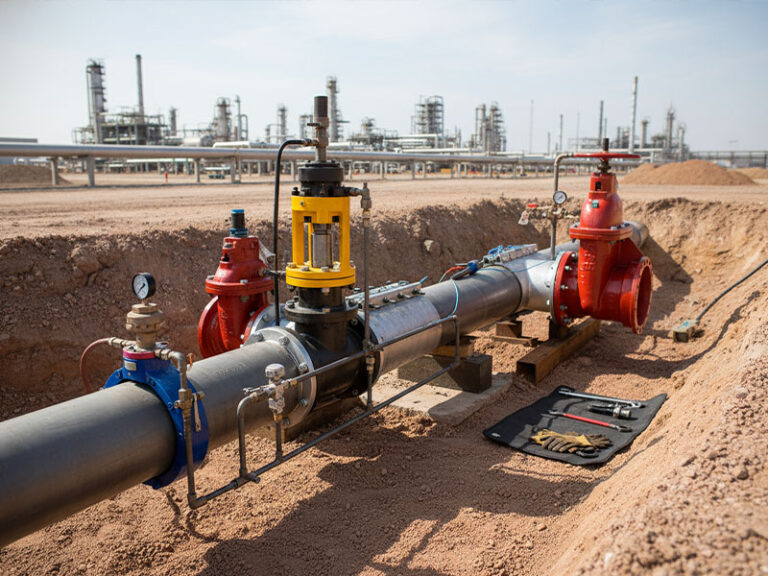
Hot tapping is applied in chemical and petrochemical plant piping to safely create new connections, install instruments, or perform maintenance on pipelines that remain in service, pressurized, and carrying product, thereby avoiding costly and hazardous shutdowns. This engineered procedure, which involves controlled welding and drilling on a live system, is a cornerstone of modern industrial maintenance and expansion strategies. Its application spans from simple branch additions to complex double isolations for valve replacements, governed by stringent international standards like API RP 2201 and ASME B31.3 to mitigate inherent risks. This guide details the precise methodologies, critical safety protocols, and advanced techniques that define hot tapping’s role in ensuring operational continuity, safety, and environmental compliance within these high-stakes facilities.
1. What Is Hot Tapping and Why Is It Critical for Plant Operations?
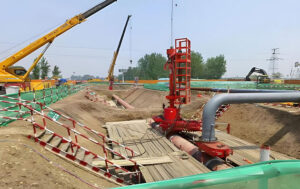
Hot tapping, also known as pressure tapping or in-service tapping, is a two-step engineered process. First, a branch connection (like a tee or nipple) is welded onto a live, pressurized pipeline. Second, a specialized drilling machine, mounted through a valve on that branch, cuts through the pipe wall to create an opening, capturing and removing a section of the pipe wall called a “coupon”. This allows for a new connection without depressurizing the line.
For plant managers and engineers, the value is measured in risk mitigation and cost avoidance. A full shutdown for a simple modification often requires:
- Flaring or venting valuable or hazardous product.
- A complete purge and clean of the system.
- Lost production time, which can cost hundreds of thousands of dollars per day in large facilities.
An equipment manufacturer or specialized contractor offering hot tapping services provides a vital solution to this problem. For example, in one documented case at a chemical facility, applying hot tapping to resolve a heat exchanger issue saved over $500,000 in potential lost production and created additional operational efficiencies. This technique transforms what would be a major, schedule-disrupting event into a planned, localized, and controlled maintenance activity.
2. The Core Applications: Where is Hot Tapping Used in Plants?
Hot tapping serves a wide range of operational needs within a chemical or petrochemical complex. These applications generally fall into three categories: expansion, maintenance, and instrumentation.
- System Expansion and Modification: This is the most common application. It includes adding new branch lines for process flow, connecting new equipment like reactors or storage tanks to existing networks, and performing pipeline tie-ins during plant expansions—all while the main system remains online.
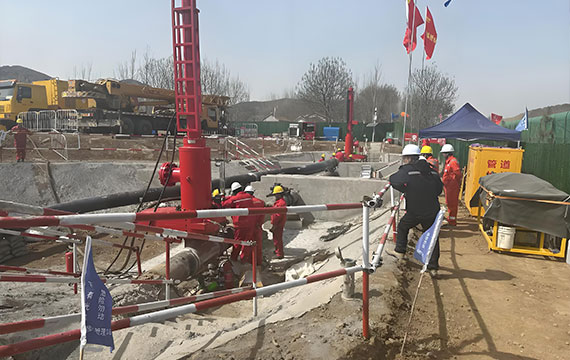
- Critical Maintenance and Repair: Hot tapping is often the preparatory step for more complex interventions like line plugging (stoppling). It allows for the safe isolation of a section of pipe (e.g., to replace a faulty valve or a damaged pipe segment) by installing plugging heads through the hot tap connections. A temporary bypass line can be installed to maintain flow during the maintenance-1-10.
- Installation of Monitoring Points: The technique is used to install connections for sampling points, pressure gauges, temperature probes, or corrosion monitoring devices without taking the system offline.
The following table summarizes key applications, their objectives, and typical scenarios:
Table 1: Common Applications of Hot Tapping in Process Plants
| Application Category | Primary Objective | Typical Plant Scenario |
|---|---|---|
| New Branch Connection | Add capability or reroute flow | Connecting a new purification unit to a main petrochemical product line. |
| Isolation for Maintenance | Enable safe repair without shutdown | Replacing a control valve on a high-pressure chemical feed line. |
| Pipeline Tie-In / Modification | Expand or alter pipeline routing | Connecting a new section of pipeline during a capacity expansion project. |
| Instrumentation Installation | Add monitoring or sampling points | Installing a real-time water quality analyzer on a cooling water return header. |
3. A Step-by-Step Breakdown of the Hot Tapping Procedure
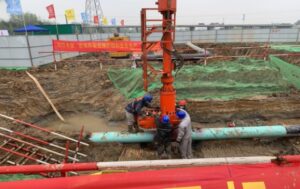
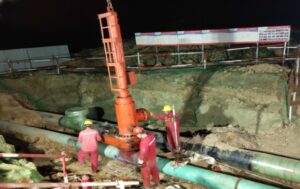
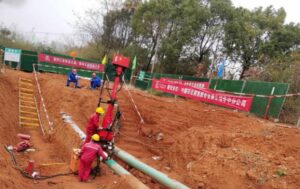
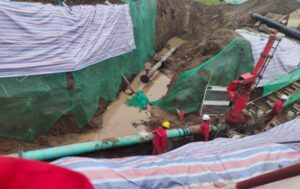
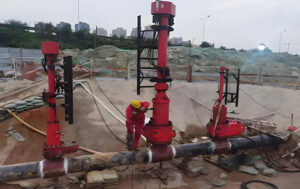
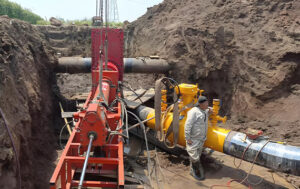
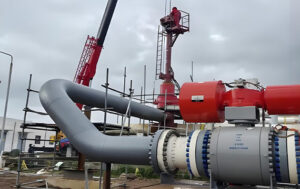
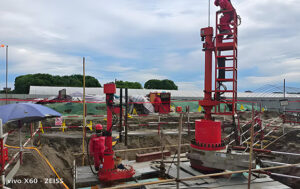
Executing a hot tap requires meticulous planning and strict adherence to procedure. Each step is designed to control risk and ensure integrity. The following visual outlines the key stages of a standard hot tap.
Step 1: Feasibility and Planning. This is the most critical phase. A detailed job-specific procedure is mandatory. Engineers must assess:
- Pipe Condition: Is the parent pipe wall thickness sufficient? Internal or external corrosion can disqualify a line for hot tapping.
- Process Fluid: What are the properties of the oil, chemical, gas, or water inside? The fluid must carry away welding heat to prevent burn-through, and its flammability/toxicity dictates safety plans.
- Welding Procedure: A qualified procedure for in-service welding must account for heat sink effects to avoid hydrogen cracking or excessive hardening in the heat-affected zone.
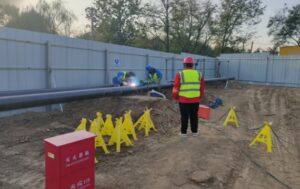
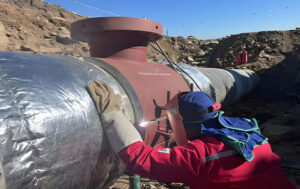
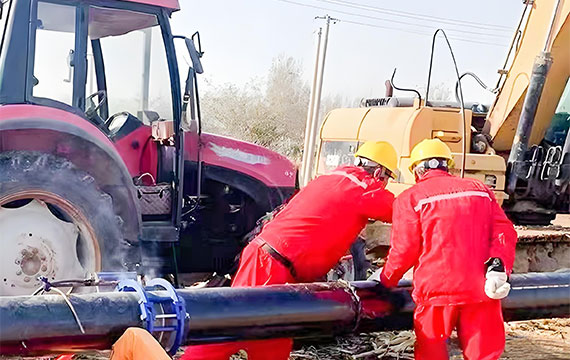
Step 2: Welding the Branch Fitting. After thorough site preparation, a branch fitting (e.g., a split-sleeve tee for maximum reinforcement or a welded nipple) is attached to the pipeline. This is a live-welding operation. The flowing contents help carry heat away, but welders must carefully control heat input to prevent burn-through, a failure where the arc penetrates the pipe wall.
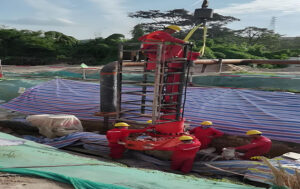
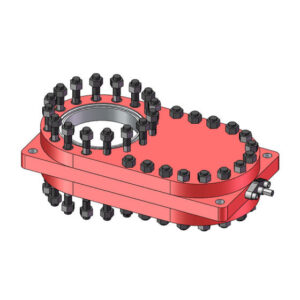
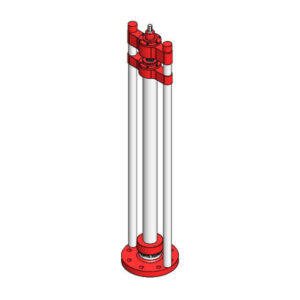
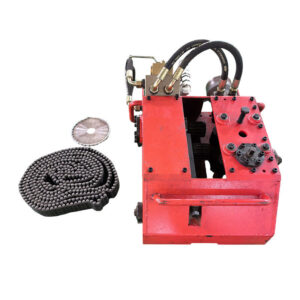
Step 3: Installing the Valve and Drilling Machine. A full-bore valve (typically a gate or ball valve) is mounted on the fitting. Once secured and pressure-tested, the hot tapping drilling machine is attached to the valve. The machine houses a cutting tool and a sealed chamber to contain the pressure during cutting.
Step 4: Performing the Tap. The valve is opened, and the cutting tool is advanced. It drills a pilot hole and then uses a hole saw to cut out the coupon. A key safety feature is the “coupon retriever,” which catches the cut piece of pipe wall to prevent it from falling into the live pipeline. The cutting assembly and the coupon are then withdrawn into the machine, the valve is closed, and the drilling machine is depressurized and removed.
Step 5: Completion. The new branch is now ready. The valve can be used to connect the new pipeline, instrument, or—in the case of a pipeline plugging operation—to insert a pipeline stopper or plugging head for isolation.
4. Safety First: Understanding the Risks and Mandatory Protocols
Hot tapping is an inherently hazardous activity as it constitutes a controlled, planned loss of containment event. The primary risks include fire or explosion from igniting flammable contents, exposure to toxic chemicals, and mechanical failure during welding or cutting. Therefore, its application is governed by a fundamental safety hierarchy:
- Avoid hot tapping if possible. Can the work be done during a scheduled shutdown (“cold tap”)?-9
- Isolate and purge if feasible (“warm tap”) to reduce the hazard level-9.
- Execute a hot tap only when the above are not viable, and only with a robust safety plan.
Industry standards are explicit. For example, the Gulf Standard GSO 2492:2015 notes that hot tapping is “not common practice… due to high risk involved” and should only be performed when taking equipment out of service is not feasible-5. Key safety mandates include:
- Fitness-for-Service Certification: A formal inspection (often using ultrasonics) must verify the pipeline wall has sufficient thickness and integrity to withstand the welding and pressure stresses.
- Formal Procedure and Authorization: A written, job-specific procedure reviewed and authorized by plant management, operations, and safety personnel is required before any work begins.
- Absolute Prohibitions: Standards explicitly forbid hot tapping on certain systems, such as those containing highly toxic materials, some heat transfer fluids above specific temperatures, or steam above 600 psig.
- Trained Personnel: Only crews certified and extensively trained in in-service welding and hot tap procedures should perform the work. The expertise of a seasoned contractor is often indispensable here.
5. Advanced Techniques: Plugging, Bypassing, and Pipe Freezing
While basic hot tapping creates an opening, it is frequently part of a larger trenchless pipe rehabilitation or modification strategy.
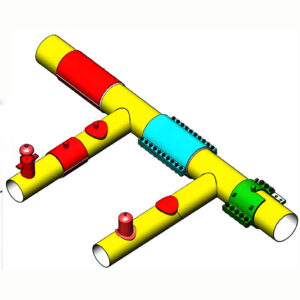
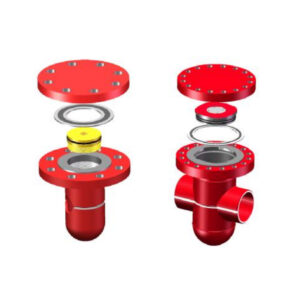
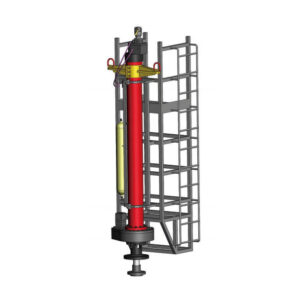
- Line Stopping (Stoppling): This follows a hot tap. A plugging head (or pipeline stopple) is inserted through the hot tap valve to internally seal the pipeline. This allows for double isolation—sealing both upstream and downstream of a work section—enabling the replacement of valves, tees, or entire pipe segments.
- Double Isolation and Bypass: A traditional double isolation for a valve replacement requires four hot taps (two on each side). Innovative systems like the Stopple Train technology can halve this number by allowing double-block-and-bleed isolation and product bypass through a single fitting. This reduces welding, inspection time, potential leak paths, and overall project cost and risk.
- Pipe Freezing: An alternative to mechanical plugging, this technique forms a solid plug of ice inside the pipe by circulating liquid nitrogen around the external pipe wall. This creates a pressure-tight isolation for work downstream, useful for lines where installing a mechanical plug is difficult. The formed ice plug can withstand significant system pressure.
FAQ: Common Questions About Hot Tapping
Q: What materials can be hot tapped?
A: Most common pipeline materials can be tapped, including carbon steel, stainless steel, and various plastics like PE. The metallurgy is a critical factor in developing the correct welding procedure.
Q: How large of a tap can be made?
A: Hot taps can range from small, 1-inch connections for instruments to full-size taps matching the diameter of the main pipeline, using reinforced split-tee fittings.
Q: What are the primary cost benefits?
A: Benefits include elimination of production loss, avoidance of product flaring/venting (with significant environmental and economic benefit), and reduced downtime from days or weeks to hours.
Q: Who is responsible for ensuring the tap is safe?
A: Ultimate responsibility lies with the plant owner/operator. However, they rely on the engineered solutions and certified procedures provided by the equipment manufacturer and the proven field expertise of the specialized contractor performing the work.
6. JSW Technical Solutions: Your Partner for Safe and Reliable Pipeline Interventions
At JSW Technical Solutions, we understand that hot tapping is more than a procedure—it’s a critical risk-management decision. Our role is to provide the engineering confidence and field excellence that makes that decision straightforward. As a premier provider of pipeline intervention services and solutions, we differentiate ourselves through:
- Engineered Safety by Default: We don’t just follow standards; we engineer safety into every project plan. Our feasibility studies are exhaustive, using advanced modeling to predict thermal profiles during in-service welding, ensuring every procedure is optimized to prevent burn-through and cracking.
- Proven Technology Portfolio: We offer a full spectrum of technologies, from standard hot tapping and pipeline plugging to advanced double isolation systems that minimize welds and excavation requirements. This allows us to recommend the most efficient, cost-effective, and safest solution for your specific challenge, whether it’s a routine maintenance task or an emergency restoration.
- End-to-End Expertise: Our team comprises seasoned engineers and certified field technicians who manage the entire process, from initial pipe assessment and procedure development to on-site execution and final commissioning. We function as a seamless extension of your maintenance team.
We invite you to consult with our engineering team for your next pipeline modification, maintenance, or expansion project. Contact JSW Technical Solutions today for a detailed, no-obligation feasibility assessment. Let us show you how our methodical approach to hot tapping and line stopping can safeguard your operations, protect your personnel, and optimize your maintenance budget.
Author: David Chen, Senior Pipeline Integrity Engineer
Authority: Over 15 years of experience in pipeline engineering, specializing in in-service intervention technologies, and a certified API 570 Piping Inspector.
Last Updated: January 25, 2026








 English
  Arabic
  Russian
  Spanish
  French