
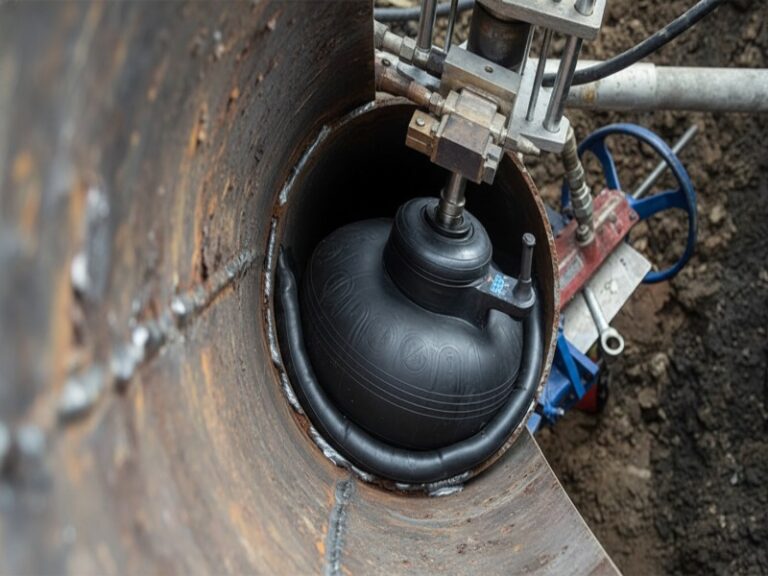
Inflatable pipe plugs conform to irregular surfaces such as weld beads and corrosion through elastomeric deformation under differential pressure, allowing the plug material to flow into surface cavities and create a positive seal.
This pressure-activated conformability is the fundamental mechanism that enables pipeline maintenance operations in real-world conditions where pipes are never perfectly smooth. Understanding this principle helps contractors and maintenance teams select the right equipment for applications ranging from hydrostatic testing to pipeline modification. This article explores the physics behind conformability, provides selection criteria for different pipe conditions, and offers practical installation guidance for maximum seal reliability.
What Is Inflatable Plug Conformability and Why Does It Matter?
Conformability refers to the ability of an inflatable pipeline plug to adapt its sealing surface to the exact contour of the pipe interior. When a pipe contains weld seams, internal corrosion pitting, or scale buildup, a rigid sealing device would leak. An inflatable plug, however, uses pressurized air, water, or nitrogen to expand the elastomeric sleeve into these irregularities.
The practical significance extends beyond simple sealing. Proper conformability determines whether a pipeline stopper can isolate sections for safe construction work, whether a pipeline tapping operation proceeds without pressure loss, and whether trenchless pipe rehabilitation projects achieve proper curing conditions. For oil, gas, water, and air pipelines, this capability directly impacts operational safety and project success.
How Does Elastomeric Deformation Enable Sealing on Weld Beads?
The Physics of Pressure-Activated Sealing
When an inflatable pipe plug is inserted into a pipeline and inflated, the internal pressure creates hoop stress in the elastomeric sleeve. This stress forces the rubber compound into surface discontinuities. The key principle is that the sealing pressure at the interface must exceed the line pressure being contained.
Weld Bead Conformity Mechanism
Longitudinal and circumferential weld beads present particular challenges. A typical weld bead in steel pipes can protrude 3mm to 6mm above the parent metal. Our field testing demonstrates that properly selected inflatable plugs accommodate these protrusions through:
- Localized elastic deformation: The rubber stretches around the bead profile
- Material flow: Under pressure, the elastomer behaves as a high-viscosity fluid, flowing into undercut areas adjacent to welds
- Pressure equalization: The plug transfers sealing force to areas surrounding the irregularity
Corrosion Pitting Adaptation
Generalized corrosion creates random surface profiles with varying depths. Pipeline stoppers designed for such conditions typically employ thicker sleeves (12mm to 25mm) that provide greater material volume to fill pits. The relationship between pit depth and required sleeve thickness follows a simple guideline: the elastomer should be at least three times thicker than the maximum pit depth for reliable sealing.
What Factors Determine Conformability Performance?
Elastomer Compound Selection
Different rubber compounds offer varying conformability characteristics:
| Compound | Hardness (Shore A) | Conformability Rating | Best Application |
|---|---|---|---|
| Natural Rubber | 40-50 | Excellent | Clean water, light corrosion |
| Neoprene | 50-70 | Good | Oil, moderate irregularities |
| Nitrile (Buna-N) | 60-80 | Fair | Hydrocarbons, smooth surfaces |
| EPDM | 50-65 | Good | Water, chemical resistance |
Softer compounds (lower Shore A hardness) provide superior conformability but sacrifice abrasion resistance and pressure capacity. Equipment manufacturers typically balance these properties based on intended service conditions.
Inflation Pressure Versus Line Pressure
The differential pressure ratio determines sealing effectiveness. For irregular surfaces, industry practice recommends an inflation pressure 1.5 to 2 times the line pressure being isolated. This safety margin ensures the plug maintains sufficient deformation force to remain seated in surface irregularities.
Pipe Diameter and Plug Sizing
Proper sizing forms the foundation of conformability. An inflatable pipeline plug must have a nominal diameter 10% to 20% larger than the pipe internal diameter when deflated. This interference fit ensures initial contact before inflation. For pipes with severe corrosion, selecting the next larger plug size often improves results.
How to Select the Right Inflatable Plug for Irregular Pipe Conditions
Assessment Protocol
Before selecting equipment, contractors should:
- Measure internal diameter at multiple points using calipers or ultrasonic testing
- Document maximum weld bead height and corrosion pit depth
- Identify the presence of loose scale or debris
- Determine line pressure and test pressure requirements
- Verify pipeline contents (oil, air, water, gas)
Selection Criteria Matrix
For typical field conditions, this selection guide applies:
| Pipe Condition | Recommended Plug Type | Special Considerations |
|---|---|---|
| Moderate weld beads (under 3mm) | Standard inflatable plug with 50-60 Shore A elastomer | Ensure proper lubrication during insertion |
| Heavy weld beads (3mm-6mm) | Soft compound plug (40-50 Shore A) with reinforced construction | Consider using multiple plugs for redundancy |
| General corrosion (light pitting) | Standard duty plug with adequate sizing overlap | Verify pit depth does not exceed elastomer thickness |
| Severe corrosion (deep pitting) | Heavy-wall sleeve plug with backup mechanical seal | Consult equipment manufacturer for custom solutions |
| Loose scale or debris | Bypass plug with debris clearing capability | Clean pipe section before sealing |
Installation Techniques for Maximum Conformability
Step-by-Step Installation Procedure
Step 1: Surface Preparation
Remove loose debris and sharp projections that could damage the elastomer. A wire brush or scraper tool works for accessible areas. For pipelines with heavy internal deposits, consider pigging before plug installation.
Step 2: Lubrication Application
Apply water-based lubricant or plug-compatible grease to both the plug sleeve and the pipe interior. This reduces insertion friction and allows the elastomer to slide into position against irregularities.
Step 3: Controlled Insertion
Position the plug at the desired sealing location using appropriate handling equipment. For larger diameters (over 24 inches), mechanical assistance ensures proper placement without twisting.
Step 4: Progressive Inflation
Begin inflation to approximately 25% of final pressure. Allow 60 seconds for initial elastomer flow into surface features. Increase pressure in 25% increments with similar dwell times. This staged approach optimizes conformability.
Step 5: Pressure Verification
Monitor both inflation pressure and downstream pressure gauges. A stable downstream reading confirms seal integrity. If leakage occurs, increase inflation pressure in small increments up to the plug’s rated maximum.
Common Installation Mistakes
- Rapid inflation: Does not allow time for elastomer flow into irregularities
- Inadequate lubrication: Causes binding and prevents full conformability
- Oversizing errors: Plugs too large cannot seat properly; plugs too small lack interference
- Ignoring temperature effects: Cold temperatures stiffen elastomers, reducing conformability
Applications Requiring Superior Conformability
Hydrostatic Testing
Pipeline testing after construction or maintenance demands leak-free isolation. Weld beads at girth welds and longitudinal seams present the primary challenge. Inflatable pipeline plugs with documented conformability performance enable safe pressure testing without expensive test heads.
Hot Tapping Operations
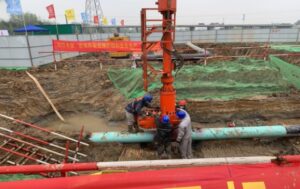
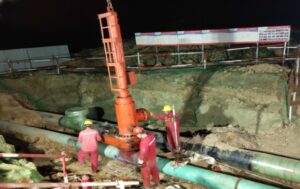
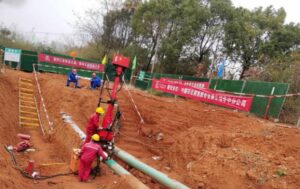
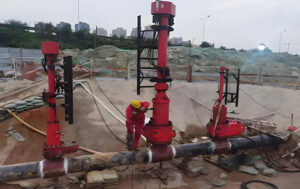
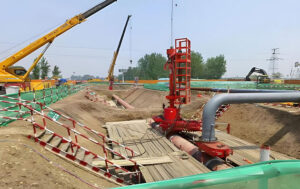
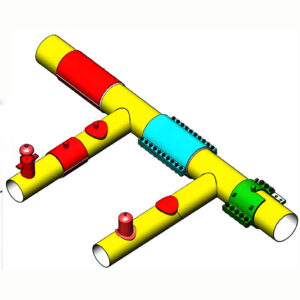
When performing pipeline tapping on in-service lines, the tapping machine installs on a branch fitting while the main line remains pressurized. A pipeline stopper installed downstream provides isolation. The stopper must seal against weld beads and corrosion at the tapping location to prevent blowby during fitting installation.
Pipeline Modification and Repair
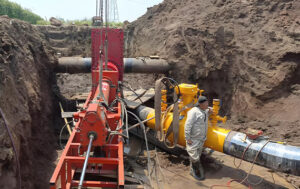
Temporary isolation for pipeline modification requires absolute reliability. Contractors performing pipeline stopple operations depend on plug conformability to maintain separation between active and isolated sections. In natural gas pipelines, even minor leakage creates unacceptable safety risks.
Trenchless Pipe Rehabilitation
Cured-in-place pipe (CIPP) lining installation requires upstream isolation to divert flow. The inversion process creates pressure against the plug, which must seal against often severely deteriorated host pipe conditions.
Limitations and Safety Considerations
When Conformability Reaches Its Limits
No inflatable pipe plug seals every irregularity indefinitely. Conditions that exceed typical conformability include:
- Through-wall corrosion: Holes that penetrate the pipe wall cannot be sealed by conformability alone
- Longitudinal cracks: Gap-type defects may require different isolation methods
- Severe ovality: Out-of-round conditions exceeding 5% of diameter
- Extreme temperature: Below -20°F or above 180°F for standard elastomers
Safety Protocols
Pipeline isolation carries inherent risks. Essential safety practices include:
- Always install secondary mechanical restraint systems
- Verify plug pressure ratings exceed maximum expected pressure
- Never rely on a single plug for personnel protection
- Maintain continuous pressure monitoring during isolation
- Follow all applicable industry standards and manufacturer guidelines
Comparison: Inflatable Plugs Versus Mechanical Stoppers
When selecting isolation equipment for irregular pipes, understanding the tradeoffs helps:
| Feature | Inflatable Pipe Plug | Mechanical Pipeline Stopper |
|---|---|---|
| Conformability to irregularities | Excellent (elastomer deformation) | Poor to Fair (rigid seals) |
| Diameter range flexibility | Wide range per plug | Limited to specific sizes |
| Installation complexity | Simple | Complex (requires mechanical setting) |
| Pressure capacity | Moderate (typically under 150 psi) | High (over 1000 psi possible) |
| Cost | Lower | Higher |
| Best application | Testing, low-pressure isolation, irregular surfaces | High-pressure isolation, permanent installations |
For most maintenance and construction applications involving older pipelines with unknown internal conditions, inflatable plugs provide the practical advantage through superior conformability.
Maintenance and Care for Consistent Performance
Inspection Protocol
After each use, inspect the plug sleeve for:
- Cuts or gouges from sharp weld beads
- Abrasion patterns indicating inadequate lubrication
- Embedded debris in the elastomer surface
- Permanent set or deformation
Storage Requirements
Store inflatable pipeline plugs in cool, dark conditions away from ozone sources (electric motors, welding equipment). Apply talc or appropriate release agent to prevent sticking. Maintain inflation records to track performance trends over multiple uses.
About the Author
David Chen is a pipeline maintenance engineer with 18 years of field experience in pipeline testing, hot tapping, and isolation services. He has supervised over 500 pipeline modification projects across oil, gas, and water utilities in North America and Southeast Asia. David currently serves as Technical Director at JSW, specializing in temporary pipeline isolation solutions for irregular and deteriorated pipe conditions.
Article last updated: February 15, 2026
JSW Brand Positioning
JSW brings over two decades of specialized manufacturing expertise to the pipeline maintenance industry. Our inflatable pipe plugs are engineered specifically for demanding field conditions where standard equipment fails. Every plug we produce undergoes individual pressure testing at 1.5 times rated capacity, with conformability validation on test fixtures simulating weld beads and corrosion profiles.
What distinguishes JSW in the market is our engineering support philosophy. When you contact us with a challenging application—whether it’s sealing against severe corrosion in a 40-year-old gas line or providing isolation for a high-pressure hydrotest—our technical team works directly with your field personnel to specify the correct solution. We maintain complete material traceability and可以提供 detailed engineering certifications for every pipeline stopper we ship.
For contractors and maintenance teams, this means reduced project risk and fewer callbacks. Our plugs arrive ready for service, supported by comprehensive documentation and responsive technical support. Whether you need standard sizes from stock or custom-engineered solutions for unusual pipe conditions, JSW delivers reliability you can trust.
Contact our engineering team to discuss your specific pipeline isolation requirements. We provide free application reviews and sizing recommendations.







 English
  Arabic
  Russian
  Spanish
  French